













































Advanced Data Analytics Certification Course
Understand advanced data analytics certification courses to enhance your analytical skills and gain a competitive advantage in your career.

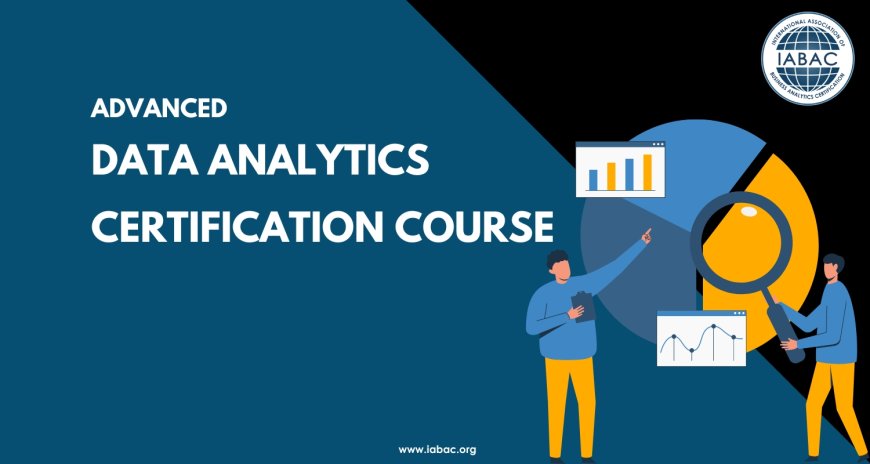
Students, data enthusiasts, and aspiring AI specialists are ready to transform raw data into valuable insights through the Advanced Data Analytics Certification Course. With practical projects, real-world case studies, and the latest AI, machine learning, and big data techniques, students develop hands-on skills.
This certification is well-recognized in the industry and helps students build credibility, enhance problem-solving skills, and stay competitive in a tough job market. Start your journey now to become a confident and skilled data analyst professional.
The Evolving Importance of Data Analytics
Data has emerged as the foundation for strategic decision-making in enterprises around the world. Businesses are becoming overloaded with data as a result of the growth of digital platforms and IoT devices. The capacity to evaluate this data and extract useful insights was recognized as an essential skill. According to current trends, the way businesses obtain insights and make decisions is being completely transformed by the combination of big data with artificial intelligence and machine learning.
Key Trends Shaping Data Analytics in 2025

1. AI and ML Integration
The combination of AI and ML with big data analytics is altering industries by allowing for predictive analytics, automation, and improved decision-making processes. Businesses can provide customized customer experiences, improve processes, and predict market trends because of this connection.
2. Real-time Data Processing
The ability to handle and evaluate data in real-time is essential in the fast-paced world of today. Stream processing is made possible by technologies like Apache Kafka and Apache Spark, which help companies respond quickly to new trends and problems.
3. Cloud-based Analytics
Access to strong analytics tools has become more accessible because of cloud platforms like Microsoft Azure, AWS, and Google Cloud. Because of these system's scalability, versatility, and affordability, businesses of all sizes may now access advanced analytics.
4. Data Governance and Privacy
Data security and adherence to laws like GDPR have become important due to our growing reliance on it. Organisations are investing in strong data governance frameworks to ensure data integrity and trust for stakeholders.
5. Low-Code/No-Code Tools
Non-technical individuals can now analyze data and create apps thanks to the growth of low-code/no-code platforms. By reducing the skill gap, these tools make data analytics accessible to more people.
Syllabus Overview of the Advanced Data Analytics Certification Course
Students who complete the Advanced Data Analytics Certification Course will have the skills they need to succeed in the data analytics field. The syllabus includes:
-
Data Visualization: The use of tools such as Tableau and Power BI to represent data insights.
-
Statistical Analysis: Using statistical techniques to interpret data trends and patterns.
-
Machine Learning: Understanding algorithms and how they are used in predictive modeling.
-
Big Data Technologies: Investigating tools for managing huge collections of data, such as Hadoop and Spark.
-
Data Governance: Understanding data privacy, security, and compliance standards.
Benefits of Obtaining a Data Analytics Certification
1. Enhanced Employability
A certification proves your proficiency and increases your employability in positions like data scientist, business intelligence analyst, and data analyst.
2. Career Advancement
Professionals with certifications frequently advance in their careers more quickly and are given preference for higher-level roles in companies.
3. Increased Earning Potential
Because of the value they add to companies, certified data professionals get paid more than their non-certified competitors.
4. Industry Recognition
Obtaining a certification from a recognized organization like IABAC proves your credibility and shows that you are dedicated to your career advancement.
Emerging Trends Students Should Know
Predictive and Prescriptive Analytics
Prescriptive analytics helps companies stay proactive by suggesting the best course of action, whereas predictive analytics predicts future trends.
AI-Powered Automation
Professionals may focus on higher-value work by using intelligent solutions to automate repetitive analytical tasks.
Natural Language Processing (NLP)
Businesses can effectively evaluate unstructured text data from surveys, social media, and customer feedback by using natural language processing (NLP).
Data Ethics and Responsible AI
Ethical data usage provides transparency, fairness, and regulatory compliance, which are essential skills in modern business.
Edge Analytics
IoT devices, which process data closer to its source, enable faster insights and reduce dependency on the cloud.
Real-World Applications of Data Analytics Skills
Advanced Data Analytics Certified professionals can find work in:
-
Finance: Market prediction, risk assessment, and fraud detection.
-
Healthcare: Clinical research analytics, hospital resource efficiency, and patient outcome prediction.
-
E-commerce: Demand forecasts, recommendation systems, and customer segmentation.
-
Supply Chain: Inventory control, predictive maintenance, and logistics optimization.
Certified experts are in high demand across industries due to the variety of their skills.
Why Students Should Get Certified in Data Analytics
Earning a professional data analytics certification comes with multiple benefits:
1. Competitive Edge in the Job Market
A certification sets you apart from other applicants and provides employers with validation of your skills.
2. Career Advancement Opportunities
Higher-level positions like Data Scientist, Business Analyst Lead, or AI Specialist are frequently available for certified professionals.
3. Practical Hands-On Skills
Real-world projects are included in the courses, allowing students to work on issues that are similar to those in the field.
4. Networking and Mentorship
Certification programs connect students with professionals and colleagues, offering collaborations and mentorship.
5. Staying Current with Industry Trends
Analytics is changing quickly. Certifications ensure that students acquire cutting-edge tools and techniques that will be useful in 2025.
6. Confidence in Data-Driven Decision-Making
Professionals with a strong analytics background can offer practical suggestions that impact company strategy.
Future Scope of Data Analytics Careers
The demand for qualified data scientists and analysts is expected to grow significantly over the next decade. Important career pathways consist of:
-
Data Scientist
-
Machine Learning Engineer
-
Business Intelligence Analyst
-
Data Governance Manager
These roles are high-paid, intellectually stimulating, and becoming more necessary in several sectors.
In the ever-changing field of data analytics, staying current with the latest trends and obtaining relevant certifications is critical. The broad syllabus of the Advanced Data Analytics Certification Course equips students for the opportunities and difficulties in this field. You can put yourself at the center of the data revolution and be prepared to contribute significantly to any company by investing in such a qualification.
Consider the Data Analytics certification if you're looking for a structured and industry-recognized certification that will help you succeed in the data analytics sector and will match current industry standards.