
















































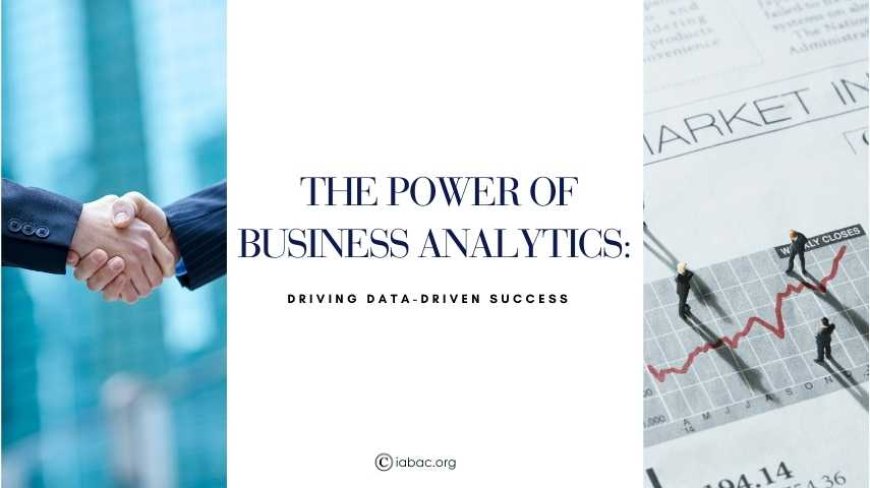
The Power of Business Analytics: Driving Data-Driven Success
How business analytics empowers organizations to make smarter decisions, optimize performance, and unlock sustainable, data-driven growth.

When I first started in business analytics, it felt like finding a hidden treasure. I realized data isn’t just numbers it tells stories about why businesses succeed or fail. Over time, I learned to follow these clues to make better decisions and plan smarter strategies. Now, I even get excited about dashboards those colorful charts really make my day! I enjoy sharing this passion and helping others see how data can guide success with confidence and a smile.
If companies had a best friend, it would be business analytics.
It’s the friend who tells the truth, even when it hurts.
The friend who says:
“Please stop wasting money on the wrong ads.”
Today, businesses can’t depend on guessing.
They need facts.
They need numbers.
They need insights.
That is exactly what business analytics gives.
It turns confusion into clarity.
It turns mistakes into learning.
It turns data into direction.
And yes — it sometimes saves a company from making a very embarrassing decision.
What Is Business Analytics
Think of your business like a car.
- The product is the engine
- Marketing is the fuel
- Sales is the road
- The team is the driver
But Business Analytics?
That’s the voice in the car saying:
“Slow down. Turn right. Fuel is low. Also, your customers prefer automatic instead of manual.”
"Business analytics" means studying data to understand what happened, why it happened, what might happen next, and what choices will bring the best results.
Technical meaning:
Using data, statistics, reports, and models to make better decisions.
It helps people make smarter choices without guessing.
Business Analyst Courses & Certifications
A structured business analyst course or business analyst certification helps build confidence and credibility. Certifications show employers that you understand:
- business analysis frameworks
- data interpretation
- requirement gathering
- project planning
- tools used in analysis
IABAC (International Association of Business Analytics Certifications) is popularly known for offering globally recognized certifications that help students and professionals build strong careers.
Types of Business Analytics
There are three major types:
1. Descriptive Analytics
It explains what happened in the past using reports and charts.
It uses trends and patterns to estimate what might happen in the future.
3. Prescriptive Analytics
It suggests the best actions a business should take next.
Together, these help companies plan better, save money, and grow smarter.
Why Business Analytics Matters More Than Ever in 2026
The world in 2026 will run on data.
Every action will be measured:
- What customers like
- What they don’t like
- Why sales dropped
- Why sales increased
- Which product works
- Which product doesn’t
Companies no longer want “maybe.”
They want:
- Proof
- Patterns
- Facts
- Clear direction
And this demand creates a huge opportunity for people who understand business analytics.
Who Is a Business Analyst?
A Business Analyst is someone who listens to the business, studies the data, and suggests the smartest solution.
When sales fall, the business analyst checks the data and says:
“Your website loads slowly; that’s why customers left.”
When a marketing campaign performs poorly, the analyst says:
“It reached the wrong audience. Let’s fix it.”
They understand problems.
They understand people.
They understand numbers.
They become the bridge between:
- The business
- The tech team
- The customers
Simply put, a business analyst helps a company make better choices every day.
What Does a Business Analyst Do?
The role includes:
✔ Understanding business needs
Talking to teams, asking questions, finding the real problem.
✔ Studying data
Reports, dashboards, charts, tables — they read everything.
✔ Suggesting improvements
Small changes that create big results.
✔ Communicating clearly
Explaining insights in simple words everyone can understand.
✔ Supporting decisions
Providing facts that guide the next step.
✔ Working with multiple teams
Sales, marketing, product, and tech, they work with all.
This role is a mix of logic, communication, and smart thinking.
Skills Needed to Become a Business Analyst (2026 Ready)
Before mastering advanced tools and techniques, professionals should develop a strong foundation in business analytics, problem-solving, and data-driven decision-making.
Technical Skills
- Business Analytics
- Excel
- SQL
- Dashboard tools
- Reporting
- Understanding KPIs
- Basic statistics
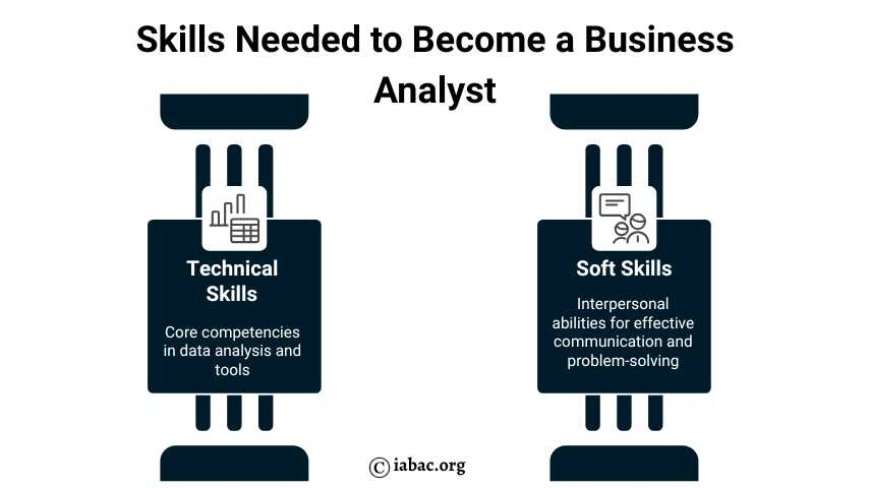
Soft Skills
- Problem-solving
- Clear communication
- Listening
- Storytelling through data
- Patience
- Logical thinking
A business analyst does not need to be a full-time coder.
Just enough knowledge to work with technical teams.
What Is the Best Business Analytics Course?
The best course is one that:
- Teaches real projects
- Builds practical skills
- Helps with job readiness
- Gives recognized certification
And this is exactly what IABAC provides.
Learners from many countries trust IABAC because the certificates are respected and accepted by companies worldwide.
Why Choose IABAC Business Analyst Certification?
Choosing IABAC means:
- You learn skills that companies want
- You study using practical, job-focused material
- You gain confidence in handling real business problems
- You earn a certificate recognized internationally
- You stand out in interviews
IABAC is built on strong global standards, and companies appreciate its quality.
Top Business Analytics Trends Expected in 2026
Here’s what Business Analytics will look like in 2026:
AI will support analysts
Reports will be generated faster, helping analysts focus on decisions.
Predictions will become common
Companies will estimate:
- Customer behavior
- Sales for next month
- Product performance
Reports will become instant
Real-time dashboards will guide teams every hour.
Data storytelling will be important
People don’t want boring reports.
They want clear stories that make sense.
Customer personalization
Every customer will receive
the right message
at the right time
in the right place.
This makes analysts extremely valuable.
Best Career Paths in Business Analytics
After learning business analytics, you can become:
- Business Analyst
- Data Analyst
- Product Analyst
- Marketing Analyst
- Operations Analyst
- Business Intelligence Analyst
- Consultant
- Analytics Manager
The industry needs thousands of new analysts each year.
Business Analyst Job Description
A business analyst usually:
- Understands business needs
- Collects and studies data
- Finds the root cause of problems
- Suggests the best solution
- Prepares reports and dashboards
- Works with tech and non-tech teams
- Supports leadership with insights
They help the business make smart and confident decisions.
What Is It Like Working as a Business Analyst?
It feels like solving puzzles every day.
- Some days are exciting
- Some days are challenging
- Some days you save the company from a costly decision
- Some days you teach people why data matters
But every day, you add value.
You help people understand what’s working and what’s not.
You help teams improve.
You help the company grow.
Why Business Analytics Is the Future
The future of analytics is exciting because:
- Data is growing every second
- Tools are becoming easier to use
- Businesses depend more on evidence than opinions
- Job opportunities for analysts are increasing worldwide
By 2026 and beyond, companies of all sizes from startups to global brands will rely heavily on business analytics to stay ahead of the competition.



-
 Fareena begumBusiness analytics is a game-changer that empowers students like me to unlock the potential of data !
 -
Ravindar kuberaSending a big thank you to business analytics for equipping me with the skills to make smarter choices and excel in my studies.
-
Avinash kGrateful for the powerful tool it has become for students!
-
Iniya RajashekarBusiness analytics has transformed the way I view information.









