


























































What is a Business Analyst Certificate
Learn what a Business Analyst Certificate is, its importance, and how it can boost your career in business analysis.


A few years ago, I decided to take my career to the next level by earning a Business Analyst Certification. It wasn’t just about adding a credential to my résumé—it was about changing the way I approached problem-solving and decision-making. This certification taught me how to turn raw data into clear, actionable insights, which is a skill businesses need today. I remember focusing on areas like process modeling, data analysis, and how to communicate with stakeholders. I quickly saw how much easier it became to solve real business problems. This certification not only helped me build credibility but also improved my skills and opened up new career opportunities in the business world.
What is a Business Analyst?
A Business Analyst (BA) is a professional who helps connect the business side of a company with the technical side. They work closely with people like management, clients, and tech teams to find business problems, gather important information, and suggest the best solutions. Their job is important in making sure that projects meet business goals and provide value.
Skills Needed for a Business Analyst:
- Analytical Thinking: Ability to break down problems and come up with clear, practical solutions.
- Communication: Strong skills in speaking and writing to clearly interact with different people.
- Technical Knowledge: Understanding of technology, such as software, databases, and relevant tools.
- Problem-Solving: Being able to find the root cause of problems and suggest solutions.
- Project Management: Knowing how projects work, managing timelines, and prioritizing tasks.
Common Tools Used by Business Analysts:
- Requirement Gathering Tools: JIRA, Confluence, Trello
- Diagramming Tools: Visio, Lucidchart
- Data Analysis Tools: Excel, Power BI, SQL
- Modeling Techniques: Use case diagrams, process models, wireframes
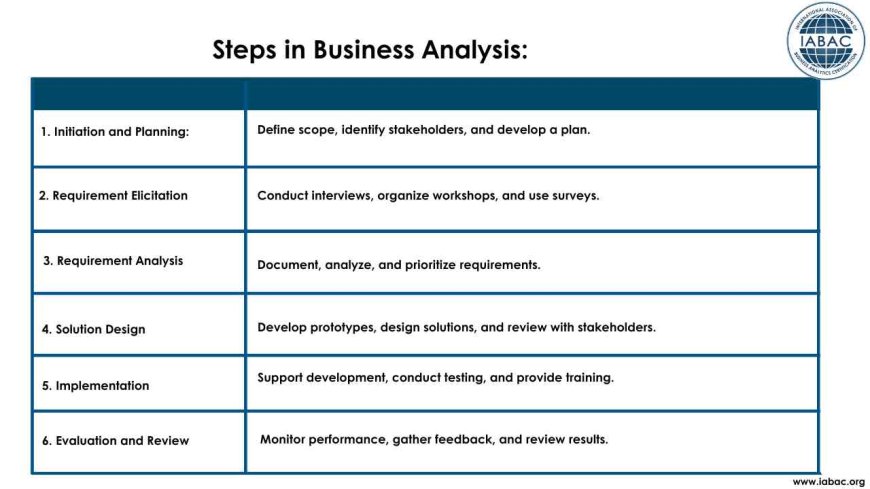
What Does a Business Analyst Do?
A Business Analyst (BA) helps companies improve their processes, products, and services. They do this by studying data and finding ways to make things better. Their job is to understand business needs, propose solutions, and make sure everything aligns with the company's goals.
Key Responsibilities:
- Gather Requirements: Understand what the business needs and document it.
- Analyze Data: Look for patterns or problems in the data.
- Improve Processes: Suggest ways to make work more efficient.
- Design Solutions: Work with IT teams to create and apply new solutions.
- Test and Validate: Make sure the solutions work and meet business needs.
- Communicate: Be the link between business and tech teams to ensure everything runs smoothly.
Skills:
- Strong problem-solving, analytical, and communication skills.
- Basic knowledge of business operations and tools like Excel or SQL.
Result:
Business Analysts help companies run more efficiently, save costs, and reach their goals by using data-driven solutions.
The challenge of Understanding Business Analyst Certification
Figuring out a Business Analyst Certification can be challenging because it covers a lot of different areas and has various specialized tracks. This challenge grows when you consider the different certifications designed for specific industries, like Healthcare, Logistics, Insurance, and Retail. Each industry requires different skills and knowledge, making it tough to choose the right certification for your career goals. For example, a Business Analyst Certificate for Healthcare might be very different from one for Retail. To make the best choice, you need to carefully look at what each certification covers and how it matches your career plans.
Why Is It Important
A Business Analyst Certificate is a credential that shows you have the skills and knowledge needed for business analysis. It proves you can understand business needs, examine processes, and suggest ways to make things run better.
1. Career Growth: Getting a Business Analyst Certificate can help you find new job opportunities and move up in your career. It shows employers you have the skills and commitment to do well in the field.
2. Skill Confirmation: This certificate confirms your expertise in business analysis. It assures employers you understand business processes, data analysis, and project management.
3. Higher Salary: Professionals with a Business Analyst Certificate often earn more than those without it. The certification can make you more appealing to employers and lead to better salary offers.
4. Professional Credibility: Having a recognized certificate boosts your credibility as a business analyst. It can increase your confidence and prepare you for more challenging projects.
What Qualifications Do I Need to Be a Business Analyst
To become a business analyst, you usually need a mix of education, experience, and skills. While some jobs require a degree in business, finance, or a related field, many value practical experience and specific certifications. A Business Analyst Certificate can help meet these requirements and show you are ready for the role.
What Does a Business Analyst Do
A business analyst's job is to identify business needs, examine processes, and recommend ways to improve performance. They work closely with stakeholders to understand their needs, develop strategies, and make changes to achieve business goals.
For more information on Business Analyst Certificates and related qualifications, visit iabac.org.

Understanding the Value of a Business Analyst Certificate
Business analysts are essential for guiding organizations in making smart decisions. A Business Analyst Certificate can greatly boost your career and show off your expertise in the field. Here’s a clear look at why earning such a certificate is valuable.
How a Business Analyst Certificate Benefits You
- Career Growth: Getting a Business Analyst Certificate, like the Certified Visual Analytics Expert or Certified Business Analytics Expert, can open up new career opportunities. It shows your dedication to the field and can help you stand out when looking for promotions or new roles.
- Improved Skills: These certifications ensure you have a strong grasp of business analytics. Programs like Business Analytics Foundation and Certified Business Analytics for Managers cover key areas like data visualization, data analysis, and strategic decision-making.
- Industry Recognition: Certifications such as Certified Business Analytics Specialist or Certified Business Analytics for Manager provide recognition in the industry. They confirm your skills and knowledge, making you a more appealing candidate to employers.
- Better Job Performance: The practical skills from these courses improve your ability to analyze and understand business data. This results in more precise and useful reporting, which is crucial for business strategy.
- Networking Opportunities: Certification programs often offer chances to connect with industry professionals. This can lead to valuable relationships and insights into best practices and new trends in business analytics.
- Higher Earning Potential: With specialized skills and certifications, you may qualify for higher-paying jobs. Certified professionals often earn more because of their proven skills and advanced knowledge.
Tips for Getting the Most from Your Certificate
- Choose the Right Certification: Pick a certification that matches your career goals. For instance, if you aim for a managerial position, the Certified Business Analytics for Manager might be a better fit.
- Stay Current: Business analytics is constantly changing. Keep up with the latest tools and techniques through ongoing education and training.
- Use Networking Opportunities: Make the most of the connections and resources from your certification courses to grow your professional network and stay updated on industry trends.
- Apply Your Skills: Use the knowledge from your certification in real-life situations to reinforce your learning and show off your expertise.
- Consider Additional Certifications: Building on your initial certification with advanced courses, such as Certified Business Analytics Specialist or Certified Visual Analytics Expert, can further boost your skills and career prospects.
Obtaining a Business Analyst Certificate can be a game-changer for your career. It not only validates your skills but also improves your abilities and opens up new opportunities. By investing in business analytics certification courses, such as those offered by IABAC, you set yourself up for long-term success in the field.