

Learn from
Authorized Training Institute

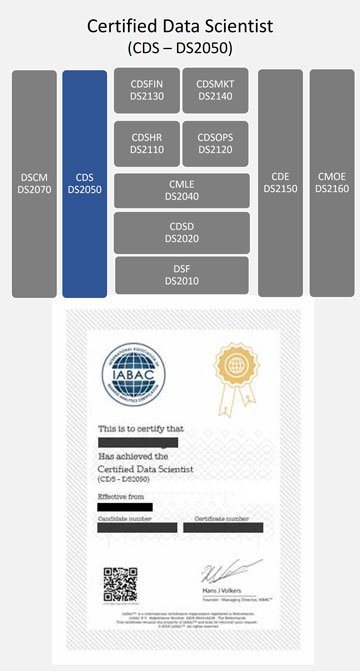
The Certified Data Scientist (CDS) is a well-known certification in data science, earned by 30,000+ people to show their skills and gain respect in the industry. The certification follows the EDISON European Commission framework, ensuring that the skills learned are perfectly aligned with what the industry needs. It covers key areas such as statistics, big data, programming, machine learning, and other important topics in data analysis. Data is a powerful asset, often compared to oil, because it’s essential for driving success. But to make the most of data, we need experts who can understand, analyze, and use it effectively. This is where the Certified Data Scientist comes in. These professionals have the ability to solve complex problems by using advanced skills in data analysis, machine learning, and statistical modeling. They know how to take large data sets, find meaningful patterns, and turn those insights into decisions that help organizations grow.
A Data Science Certification like the CDS gives you a valuable skill set. You will learn how to work with big data, perform statistical analysis, and apply data mining techniques to extract useful information. This knowledge helps companies understand their customers, markets, and business performance better, leading to smarter decisions. One of the key areas of this certification is machine learning. Here, you will learn about algorithms and predictive models that can forecast trends and behavior. This skill is important because it allows businesses to make decisions based on future predictions, which can have a major impact on growth and profitability.
Another essential part of the Certified Data Scientist program is statistical modeling. By mastering this skill, you will be able to analyze and predict data more effectively. In today’s world, where data is everywhere, being good at statistical modeling gives you the ability to make better decisions based on facts rather than assumptions.
The certification also teaches data visualization, which is the ability to present complex data in a clear and easy-to-understand way. This is crucial because being able to communicate data insights visually helps teams and decision-makers quickly grasp important information and make faster decisions. The Certified Data Scientist program provides a well-rounded education in data science. From data analysis and predictive analytics to machine learning and AI, it prepares you for a career in one of the most in-demand fields today. With this Data Science Certification, you will be equipped to turn big data into valuable insights, making you a highly sought-after professional in the world of business and technology.
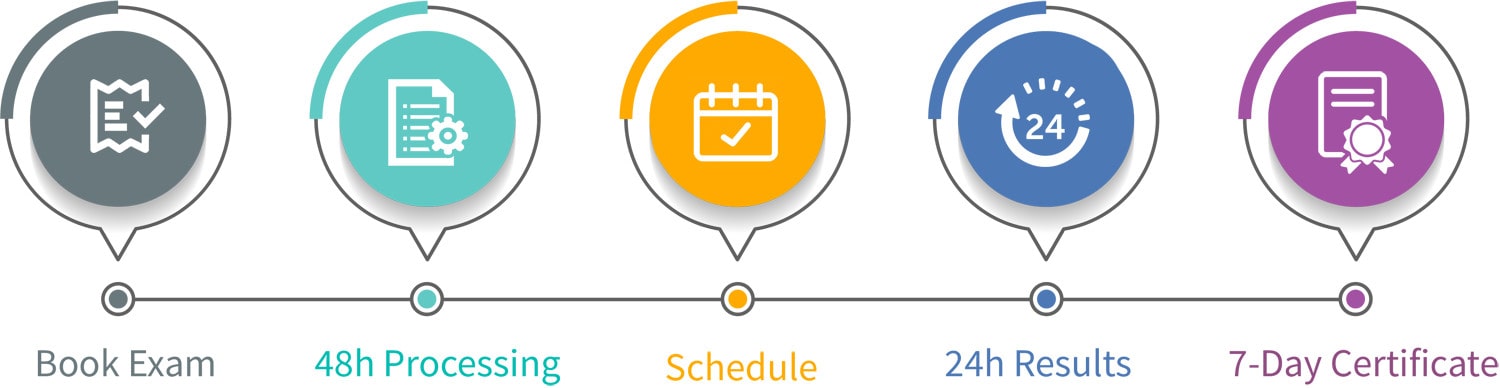
1. Check Eligibility: Before starting, make sure you meet the basic requirements. There are no strict rules, but having some knowledge of data science and statistics is recommended.
2. Prepare for the Exam: You can join a CDS training program from an IABAC-approved institute or study on your own using books, online resources, and practice exams. Create a study plan and make sure you cover all topics in the syllabus.
3. Book the Exam: Once you are ready, book your exam. If you joined a training program, your provider can help with booking. You can also book it yourself through the IABAC website. Give yourself enough time to revise before the test.
4. Take the Web-Proctored Exam: The exam is online and supervised remotely. Make sure you have a good internet connection, a quiet place, and a working computer. Learn how the exam system works ahead of time and follow all rules during the test.
5. Get Results and Certification: Results are usually available within 10 working days. If you pass, you will receive your e-certificate by email. If not, review your results, improve where needed, and try again after more preparation.
Boost your data science career with the Certified Data Scientist certification. Get a free study guide now!
International Credential
IABAC is a widely recognized credentialing framework based on European commission funded EDISON Data Science body of knowledge. This credential provides distinction as high potential certified Data Science Professionals enabling better career prospects.
Global Opportunities
IABAC certification provides global recognition of the relevant skills, thereby opening opportunities across the world.
Specialization
IABAC Certification designed to cater to the job requirements of all experience levels and specializations, which suits roles aligned with the industry standards.
Relevant and updated
IABAC CPD (Continuing Professional Development) program enables credential holders to update their skills and stay relevant to the industry requirements.
Higher Salaries
On an average, a certified professional earns 30-40% more than their non-certified as per recent study by Forbes.
Summits & Webinars
In addition, IABAC members will have exclusive access to seminars and Data Science summits organised by IABAC partners across the globe.
Certified Data Scientist (CDS) certification exam is an open book assessment, this means the candidates can refer any material during the exam period.
The exam required the candidate to submit a case-study project along with the predictive ML model and project report as per the exam objectives.
The project is graded for three areas: Project Summary with recommendations, Machine Learning model performance and Exploratory Data Analysis
Exam pass criteria:
IABAC does not directly provide training for the Certified Data Scientist Certification. However, IABAC has a worldwide network of authorized training partners who offer courses that follow the IABAC program syllabus. These partners help learners prepare effectively for Data Science Certifications and related exams.
Yes, the Certified Data Scientist (CDS) Certification is an advanced-level program, and according to IABAC guidelines, it needs to be renewed every 3 years. This helps ensure that professionals stay updated with the latest tools and practices in Data Science Certifications.
The process to re-take the CDS exam is the same as booking a regular exam. If you registered through an IABAC authorized partner, your training institute can help you book the re-take at a discounted rate. This applies to all Data Science Certifications offered through IABAC and its partners.
It usually takes about 10 working days to receive the CDS certificate after you complete the exam. This process time is similar for other Data Science Certifications offered by IABAC.
The IABAC Certified Data Scientist (CDS) Certification is highly respected worldwide. IABAC is the first global Data Science certification board based on the European Commission’s EDISON framework. It is well recognized in regions such as the USA, UK, Singapore, India, and the Middle East. Many international companies mention IABAC Data Science Certifications as a preferred qualification in their job descriptions.
You can find mock exam questions on the official IABAC website. There are also several unofficial sources that provide practice materials for the IABAC CDS exam. These resources can help you prepare well for Data Science Certifications and improve your understanding of key topics
No, it’s not mandatory to take training from IABAC-authorized institutes. However, it’s highly recommended because the pass rate for learners from authorized institutes is above 95%. Their training is closely aligned with the exam requirements for Data Science Certifications, which helps you prepare more effectively.
The EDISON Data Science Framework (EDSF) is a European Commission program that defines the key skills, knowledge, and learning structure needed in data science. It includes important documents like the Competence Framework, the Body of Knowledge, and the Model Curriculum. The program also involves experts, educators, and researchers who keep the framework updated. This framework forms the base for many Data Science Certifications, including IABAC programs..
To change your name on the certificate, you need to send a request by email to [email protected]. Make sure to include an identity proof showing the correct name. The name change process usually takes around 15 working days. This process applies to all Data Science Certifications issued by IABAC.
Yes, an Indian data scientist can work in the USA. Many companies hire skilled professionals from different countries for data science roles. Having a strong skill set, good project experience, and relevant certifications can improve your chances. Certifications from recognized organizations like International Association of Business Analytics Certification can help strengthen your profile and show your knowledge in data science. You will also need the right work visa, but with the right skills and preparation, working in the USA is possible.
To get a Data Scientist job in the USA:
A data scientist is a person who works with data to find useful information. They study data to understand patterns and help businesses make better decisions.
They clean and analyze data, build simple models, and use tools like Python, SQL, and data visualization to explain results.
In simple words, a data scientist turns raw data into clear insights that help companies solve problems and improve their work.
A data scientist works with data to help businesses make better decisions. They collect data, clean it, and study it to find useful patterns.
They use tools like Python and SQL to analyze data and build models. They also create charts and reports to explain their findings in a simple way.
In short, a data scientist turns data into insights that help solve problems and improve business results.
A data scientist course is a training program that teaches you how to work with data. It helps you learn how to collect, clean, and analyze data to find useful insights.
In this course, you learn skills like Python, SQL, data analysis, basic machine learning, and data visualization. You also work on projects to understand how data is used in real situations.
In simple terms, a data scientist course helps you build the skills needed to start a career in data science.
To become a data scientist, you need a mix of basic skills and practical knowledge.
You should understand math and statistics, as they help you work with data and find patterns. Programming skills, especially in Python or R, are also important to analyze data and build models.
You also need to learn how to collect, clean, and study data, along with creating simple charts or reports to explain your findings.
Working on small projects can help you practice these skills and gain confidence.
A data scientist works with data to help businesses make better decisions. Their main work is to collect data, clean it, and study it to find useful information.
They analyze data, build simple models, and find patterns that can solve problems or improve results. They also create charts and reports to explain their findings in an easy way.
In simple terms, a data scientist turns data into useful insights that help companies grow and make smarter decisions.