


















































Organizations operate in environments where most activities generate data. Customer interactions, operations, and internal processes produce information that can be examined and tested. Decision-making has shifted as a result. Experience remains relevant, but it is often supported or questioned by evidence.
Data analytics helps reveal patterns, surface risks, and support forecasts based on observed behavior. Decisions become easier to justify when they are linked to measurable inputs rather than assumption alone. This approach also allows teams to review outcomes and refine future actions.
The impact of analytics depends on more than data volume. Clear goals, suitable tools, and analytical skills are required to convert raw information into useful insight. When these elements align, data supports decisions that are structured, transparent, and adaptable over time.
What Is Data Analytics?
Data analytics is the process of collecting, cleaning, analyzing, and interpreting data to extract meaningful insights that support decision-making. It transforms raw data into useful information that organizations can use to improve performance, reduce risks, and identify opportunities.
At its core, data analytics helps answer important business questions such as:
-
What happened?
-
Why did it happen?
-
What is likely to happen next?
-
What action should be taken?
Data analytics sits at the intersection of statistics, technology, and business knowledge. It works closely with business intelligence, artificial intelligence, and machine learning to turn data into actionable intelligence.
Types of Data Analytics Used in Decision-Making
Understanding the types of analytics is essential because each type plays a different role in decision-making.
1. Descriptive Analytics – Understanding What Happened
Descriptive analytics focuses on turning past data into clear summaries that help organizations understand what has already happened. It answers the basic but important question: “What happened?” By organizing raw data into meaningful reports and visuals, it provides a clear snapshot of performance over a specific period.
Common examples include:
-
Sales performance reports
-
Website traffic dashboards
-
Monthly or quarterly revenue summaries
-
Key performance indicators (KPIs)
To do this, descriptive analytics uses techniques such as:
-
Aggregation to combine large volumes of data
-
Data visualization to present insights clearly
-
Dashboards and scorecards to track performance at a glance
While descriptive analytics does not explain why something happened or predict future outcomes, it plays a crucial role by offering clarity, transparency, and a strong foundation for deeper analysis and better decision-making.
2. Diagnostic Analytics – Understanding Why It Happened
Diagnostic analytics goes a step further by uncovering the reasons behind past results. It focuses on answering the question: “Why did this happen?” By digging deeper into data, it helps organizations understand the factors that influenced performance changes.
Common techniques used in diagnostic analytics include:
-
Drill-down analysis to explore detailed data behind summary reports
-
Correlation analysis to identify relationships between variables
-
Root cause analysis to find the true source of a problem
-
Data slicing and filtering to compare performance across different segments
For example, if sales suddenly decline in a specific region, diagnostic analytics can reveal whether the issue is related to pricing changes, supply shortages, shifting customer behavior, or weak marketing performance. This deeper understanding helps businesses take targeted corrective actions instead of relying on assumptions.
3. Predictive Analytics – Understanding What Is Likely to Happen
Predictive analytics uses historical data along with statistical and machine learning models to forecast future outcomes. It helps organizations move from understanding the past to anticipating what is likely to happen next. This type of analytics answers questions such as “What will happen next?” and “How likely is a specific outcome?”
Common use cases of predictive analytics include:
-
Demand forecasting to plan inventory and supply
-
Customer churn prediction to identify users who may stop using a product or service
-
Risk assessment to evaluate potential financial or operational risks
-
Sales forecasting to estimate future revenue and performance
Predictive analytics relies heavily on techniques such as regression models, classification algorithms, and time-series analysis to identify patterns and make accurate, data-driven predictions that support proactive decision-making.
4. Prescriptive Analytics – Deciding What Should Be Done
Prescriptive analytics takes analytics to the next level by not only predicting outcomes but also recommending the best actions to take. It helps organizations decide what should be done when multiple options are available, considering goals, constraints, and possible outcomes.
It uses techniques such as:
-
Optimization models to find the most efficient solutions
-
Simulation techniques to test different scenarios before making decisions
-
Decision trees to evaluate possible choices and outcomes
-
Recommendation systems to suggest the best actions or options
Prescriptive analytics supports automated and strategic decision-making by helping organizations choose optimal solutions that balance performance, cost, and risk under real-world constraints.
Core Data Analytics Skills for Effective Decision-Making
To make meaningful decisions with data, professionals need a balanced mix of technical, analytical, and business-oriented skills.
1. Data Collection and Data Preparation Skills
Data preparation is one of the most time-consuming and important steps in analytics.
Key skills include:
-
Collecting structured and unstructured data
-
Cleaning inaccurate or incomplete data
-
Handling missing values
-
Removing duplicates
-
Formatting and transforming data
-
Ensuring consistency and accuracy
High-quality decisions depend on high-quality data.
2. Statistical and Mathematical Skills
Statistics form the foundation of data analytics and decision-making.
Important concepts include:
-
Descriptive statistics (mean, median, variance)
-
Probability concepts
-
Sampling techniques
-
Hypothesis testing
-
Correlation and causation
-
Regression analysis
These concepts help analysts interpret data correctly and avoid misleading conclusions.
3. Programming Skills for Data Analytics
Programming allows automation, advanced analysis, and scalability.
Commonly used languages:
-
Python for data analysis and machine learning
-
R for statistical computing
Important capabilities include:
-
Working with libraries like Pandas, NumPy, Matplotlib, and Seaborn
-
Writing reusable scripts
-
Automating workflows
-
Handling large datasets
Programming empowers analysts to go beyond spreadsheets.
4. Data Visualization and Storytelling Skills
Data alone does not create impact — insights do. Visualization helps communicate insights clearly.
Key skills include:
-
Choosing appropriate charts
-
Designing intuitive dashboards
-
Highlighting key insights
-
Avoiding misleading visuals
-
Creating narratives from data
Effective data storytelling bridges the gap between technical analysis and business decision-making.
5. Business and Domain Knowledge
Understanding the business context is essential for meaningful analysis.
This includes:
-
Knowing business goals and KPIs
-
Understanding industry metrics
-
Identifying decision constraints
-
Translating business problems into analytical questions
Strong domain knowledge ensures analytics aligns with real-world objectives.
6. Critical Thinking and Problem-Solving
Analytical professionals must think logically and critically.
Important abilities include:
-
Asking the right questions
-
Framing problems effectively
-
Evaluating assumptions
-
Interpreting results logically
-
Avoiding bias in conclusions
These skills help ensure that insights are reliable and actionable.
7. Communication and Stakeholder Skills
Data insights must be communicated clearly to non-technical audiences.
Key communication skills:
-
Explaining findings simply
-
Creating executive summaries
-
Using visuals to support insights
-
Persuading stakeholders using evidence
-
Supporting data-driven decisions
Strong communication ensures insights lead to action.
Essential Tools Used in Data Analytics
Data Collection and Storage Tools
-
Excel and Google Sheets
-
SQL databases
-
Cloud data warehouses
-
APIs for data extraction
These tools help store, organize, and retrieve data efficiently.
Data Cleaning and Preparation Tools
-
Excel Power Query
-
Python (Pandas)
-
OpenRefine
They help clean, transform, and structure data for analysis.
Statistical and Analytical Tools
-
Python
-
R
-
SAS
-
SPSS
These tools support statistical modeling, analysis, and hypothesis testing.
Business Intelligence and Visualization Tools
-
Tableau
-
Power BI
-
Looker
-
Google Data Studio
These platforms help build dashboards and visualize insights for decision-makers.
Big Data and Advanced Analytics Tools
-
Hadoop
-
Apache Spark
-
Cloud analytics platforms
-
AI-powered analytics solutions
They enable large-scale data processing and advanced analytics.
Collaboration and Workflow Tools
-
Jupyter Notebook
-
Git and GitHub
-
Documentation platforms
-
Version control systems
These tools support teamwork, reproducibility, and knowledge sharing.
Key Data Analytics Techniques for Better Decision-Making
Data Cleaning and Preprocessing Techniques
-
Handling missing values
-
Removing duplicates
-
Outlier detection
-
Normalization and scaling
-
Data transformation
Clean data leads to more reliable decisions.
Exploratory Data Analysis (EDA)
EDA helps uncover patterns and relationships.
Key activities include:
-
Summary statistics
-
Visualization
-
Distribution analysis
-
Correlation analysis
EDA builds understanding before modeling.
Statistical Analysis Techniques
-
Hypothesis testing
-
Regression analysis
-
A/B testing
-
Time-series analysis
These techniques support evidence-based decisions.
Machine Learning Techniques
-
Classification models
-
Clustering algorithms
-
Regression models
-
Recommendation systems
Machine learning enhances predictive and prescriptive analytics.
Forecasting and Predictive Techniques
-
Trend analysis
-
Time-series forecasting
-
Demand forecasting
-
Scenario modeling
Forecasting supports planning and risk management.
Optimization and Decision Modeling
-
Linear programming
-
Resource optimization
-
Decision trees
-
What-if analysis
These methods help choose the best possible action.
How Data Analytics Improves Decision-Making
Data analytics improves decision-making by:
-
Reducing guesswork
-
Increasing accuracy
-
Identifying risks early
-
Supporting strategic planning
-
Enhancing operational efficiency
-
Enabling real-time insights
-
Improving customer experiences
Organizations that adopt data-driven approaches make faster, smarter, and more confident decisions.
Industry Use Cases of Data Analytics in Decision-Making
Business and Management
-
Performance tracking: Uses data to monitor KPIs and measure how well teams and processes are performing.
-
Cost optimization: Analyzes expenses to reduce waste and improve resource utilization.
-
Strategic planning: Uses data insights to support long-term business goals and decision-making.
Marketing and Sales
-
Customer segmentation: Groups customers based on behavior and preferences for targeted marketing.
-
Campaign optimization: Measures campaign performance to improve reach, engagement, and ROI.
-
Sales forecasting: Predicts future sales using historical data and market trends.
Finance
-
Risk assessment: Identifies and evaluates financial risks using historical and real-time data.
-
Fraud detection: Detects unusual patterns to prevent fraudulent transactions.
-
Budget forecasting: Estimates future income and expenses to support financial planning.
Healthcare
-
Patient outcome prediction: Uses data to predict health outcomes and improve treatment decisions.
-
Resource planning: Optimizes staff, equipment, and facility usage based on demand patterns.
-
Operational efficiency: Improves hospital workflows and reduces delays through data insights.
Retail and E-commerce
-
Demand forecasting: Predicts product demand to manage inventory effectively.
-
Pricing optimization: Adjusts prices using data to maximize revenue and competitiveness.
-
Recommendation engines: Suggests relevant products based on user behavior and preferences.
Human Resources
-
Hiring decisions: Uses data to identify the best-fit candidates for open roles.
-
Attrition prediction: Predicts employee turnover risk to improve retention strategies.
-
Performance analysis: Evaluates employee productivity and growth using measurable data.
Challenges in Using Data Analytics for Decision-Making
-
Poor data quality: Inaccurate or incomplete data can lead to misleading insights and wrong decisions.
-
Data silos: Data stored across disconnected systems makes analysis and collaboration difficult.
-
Skill shortages: Lack of skilled professionals limits the effective use of analytics tools and insights.
-
Tool complexity: Advanced analytics tools can be hard to learn and integrate without proper training.
-
Bias in data or models: Biased data can produce unfair or inaccurate results that affect decisions.
-
Privacy and security concerns: Sensitive data must be protected to prevent misuse and compliance issues.
-
Resistance to change: Teams may hesitate to adopt data-driven approaches over traditional methods.
Addressing these challenges is essential for building reliable, scalable, and long-term data-driven decision-making practices.
Best Practices for Effective Data-Driven Decision-Making
-
Start with clear objectives
-
Focus on data quality
-
Choose the right tools
-
Combine analytics with domain knowledge
-
Validate insights before acting
-
Encourage a data-driven culture
-
Continuously improve models and processes
Skills Roadmap for Aspiring Data Analysts
Beginner Level
-
Excel fundamentals: Learn to organize, analyze, and summarize data using formulas and functions.
-
Basic statistics: Understand averages, variability, and distributions to interpret data correctly.
-
SQL basics: Learn to extract and filter data from databases using queries.
-
Data visualization: Create simple charts and dashboards to communicate insights clearly.
Intermediate Level
-
Python or R: Use programming languages to automate analysis and handle larger datasets.
-
Data cleaning: Prepare raw data by fixing errors, handling missing values, and standardizing formats.
-
EDA (Exploratory Data Analysis): Explore data to find patterns, trends, and relationships.
-
BI tools: Build interactive dashboards using tools like Power BI or Tableau.
-
Applied statistics: Use statistical methods to support data-driven decisions.
Advanced Level
-
Machine learning: Build predictive models to classify data and make forecasts.
-
Forecasting: Predict future trends using time-series and predictive techniques.
-
Big data tools: Work with large-scale datasets using platforms like Hadoop or Spark.
-
Optimization techniques: Apply mathematical methods to find the best possible solutions to problems.
Hands-on projects and real-world practice are essential at every stage to strengthen skills and gain practical experience.
Role of Certifications and Structured Learning
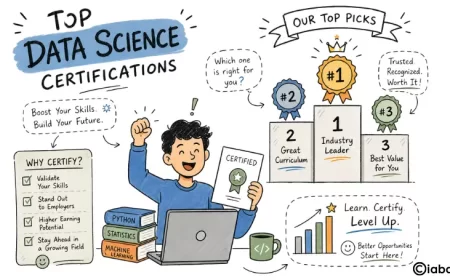
Structured learning programs help individuals build skills in a systematic way. Industry-recognized certifications validate knowledge, improve credibility, and provide guided learning paths. Global certification bodies such as IABAC offer structured analytics programs aligned with industry needs. Certifications complement practical experience and support long-term professional growth.
Future Trends in Data Analytics and Decision-Making
Key trends shaping the future include:
-
Augmented analytics
-
AI-powered decision intelligence
-
Automated insights
-
Real-time analytics
-
Explainable and ethical AI
-
Increased focus on data governance
These trends will further integrate analytics into everyday decision-making.
Data analytics has become a cornerstone of effective decision-making in modern organizations. By combining the right skills, tools, and techniques, individuals and businesses can transform raw data into meaningful insights that drive better outcomes. From understanding historical trends to predicting future scenarios and optimizing decisions, analytics empowers smarter, faster, and more confident decision-making.
As data continues to grow in volume and importance, developing strong analytical capabilities and adopting structured learning approaches will remain essential. Whether you are starting your journey or advancing your expertise, mastering data analytics is a powerful step toward informed, impactful decision-making.