














































What Employers Expect From Modern courses for data science
Learn the skills employers value in modern data science programs, including Python, machine learning, analytics, projects, and industry-recognized certifications in 2026.

The world of data science is not just growing—it’s sprinting ahead like it has somewhere important to be (and clearly, it does). Every organization today, from startups to global enterprises, is trying to turn data to data-driven decisions. But here’s the twist: employers are no longer impressed by certificates alone. They want professionals who can think, build, fail, fix, and scale. So what exactly do employers expect from modern courses for data science? Why are some candidates landing jobs faster while others are stuck refreshing job portals like it’s a full-time job?
Let’s break it all down—deeply, practically, and honestly.
The Changing Landscape of Data Science Expectations in Data Science Courses
A few years ago, an introduction to data science course with basic Python and statistics was enough to get your foot in the door. Today? That’s just the beginning.
Employers now expect:
- Practical problem-solving skills
- Real-world data science project experience
- Strong foundations of data science
- Business understanding, not just coding
- Ability to work with messy, real-world data
Global Hiring Insight (2026 Trend)
|
Skill Area |
Demand Growth (%) |
|
Machine Learning |
38% |
|
Data Engineering Basics |
32% |
|
Data Visualization |
29% |
|
MLOps & Deployment |
41% |
|
Business Analytics |
27% |
This clearly shows that Data Science Courses must go beyond theory.
Why Traditional Data Science Certification Is No Longer Enough
Let’s be real—completing a Data Science Certification without hands-on exposure is like learning to swim by reading a manual. You understand the idea, but throw you into the water, and suddenly it’s chaos.
Employers now expect:
- Real datasets (not just clean classroom data)
- End-to-end project exposure
- Version control (Git)
- Model deployment experience
That’s why modern Certifications for Data Science are evolving fast.
Core Foundations of Data Science Employers Expect
Every strong data science roadmap begins with fundamentals. Without these, even advanced tools won’t help much.
Key Foundations:
- Statistics & Probability
- Linear Algebra Basics
- Programming (Python/R)
- Data Handling (Pandas, SQL)
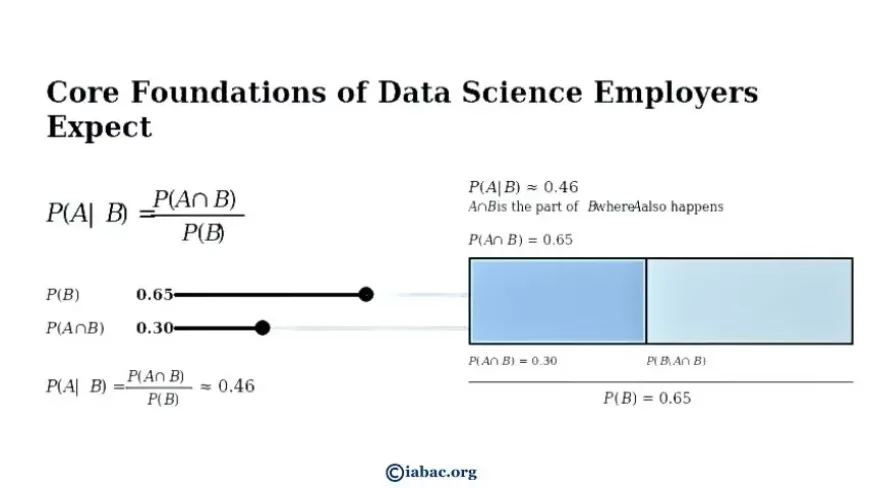
Important Concept Example:
P(A \mid B) = \frac{P(A \cap B)}{P(B)}
What a Modern Data Science Syllabus Must Include
A strong data science syllabus today must balance theory with application.
Ideal Structure:
Stage 1: Introduction to Data Science
Stage 2: Programming + Data Wrangling
Stage 3: Statistics & Visualization
Stage 4: Machine Learning Models
Stage 5: Real-world Data Science Projects
Stage 6: Deployment & MLOps
This pipeline is what employers expect you to master, not just memorize.
Real-World Data Science Project Experience Is Mandatory
Let’s talk about the elephant in the room.
If your resume says “Completed 10 modules,” but doesn’t include a single meaningful data science project, employers will scroll past faster than you can say “machine learning.”
What Employers Want in Projects:
- Business problem definition
- Data cleaning (messy datasets preferred)
- Feature engineering
- Model selection and tuning
- Insights and storytelling
Example Project Ideas:
- Customer churn prediction
- Sales forecasting
- Fraud detection system
- Recommendation engine
Data Science Courses Must Teach Storytelling
Yes, storytelling.
Because no matter how powerful your model is, if you can’t explain it, it’s useless.
Employers expect:
- Data visualization skills
- Dashboard creation
- Clear communication
Example: Instead of saying: “Model accuracy = 92%”
Say: “This model helps reduce customer loss by predicting churn early, potentially saving millions annually.”
That’s what gets attention.
The Rise of MLOps in Data Science Certification
Modern data science certification programs now include MLOps—and for good reason.
Employers want people who can:
- Deploy models
- Monitor performance
- Update models with new data
Why This Matters
A model that sits in a notebook is like a car that never leaves the garage.
Looks nice. Does nothing.
Data Science Roadmap: What Employers Expect You to Know
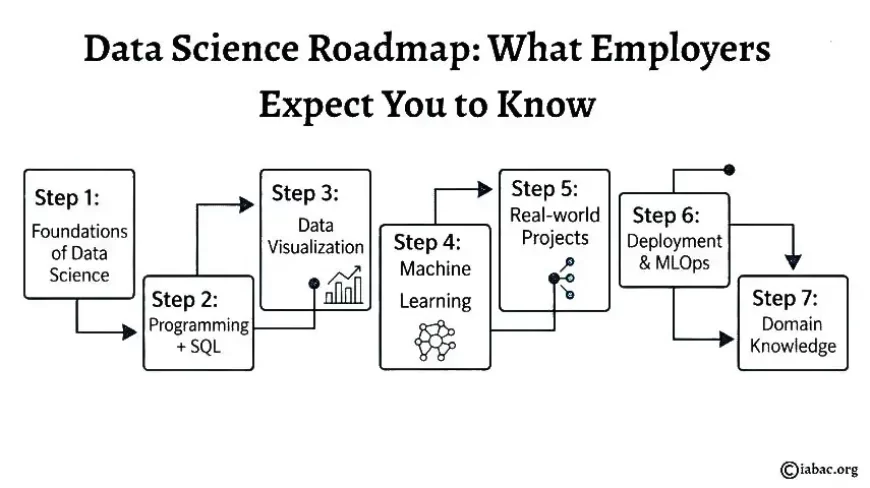
Here’s a realistic data science roadmap employers expect candidates to follow:
Step 1: Foundations of Data Science
Step 2: Programming + SQL
Step 3: Data Visualization
Step 4: Machine Learning
Step 5: Real-world Projects
Step 6: Deployment & MLOps
Step 7: Domain Knowledge
Notice something? It’s not just about coding.
Emotional Reality of Learning Data Science
At some point in your introduction to data science, you will:
- Question your life choices
- Debug code for hours
- Celebrate fixing one small error
- Break something else immediately after
That’s normal.
Every data scientist has been there—staring at a screen wondering why a model predicts everything wrong with confidence.
What Makes a Data Science Course Stand Out
Not all courses for data science are equal.
Employers prefer candidates from programs that offer:
- Industry-relevant curriculum
- Hands-on projects
- Real datasets
- Mentorship support
- Updated tools and technologies
One such example includes globally recognized certification frameworks available through platforms like IABAC, where structured learning meets practical application. You can explore more at: https://iabac.org/certifications
Data to Data Thinking: A Critical Shift
Modern data science is not just about analyzing data—it’s about transforming data to data-driven strategy.
Employers want:
- Decision-makers, not just analysts
- Problem-solvers, not just coders
Global Salary Insight for Data Science Roles
|
Experience Level |
Average Salary (Global) |
|
Entry-Level |
$70,000 – $95,000 |
|
Mid-Level |
$100,000 – $140,000 |
|
Senior-Level |
$150,000+ |
This explains why Data Science Courses are in massive demand worldwide.
Common Mistakes Learners Make in Data Science
- Focusing only on tools
- Ignoring fundamentals
- Skipping projects
- Avoiding real datasets
- Not building a portfolio
Employers can spot these instantly.
What Employers Secretly Test During Interviews
- Problem-solving approach
- Communication clarity
- Practical knowledge
- Ability to handle ambiguity
Not just: “Do you know Python?”
The Future of Data Science Certification
The future of Certifications for Data Science is:
- Skill-based, not theory-based
- Project-driven
- Continuously updated
- Industry-aligned
And honestly, that’s a good thing.
Final Thoughts on Data Science Courses and Career Growth
Modern Data Science Courses are no longer about finishing modules—they are about building capability.
Employers expect you to:
- Understand the foundations of data science
- Work on real-world data science project problems
- Follow a clear data science roadmap
- Communicate insights effectively
- Deploy solutions in real environments
If your learning path checks all these boxes, you’re not just job-ready—you’re future-ready.