





















































Think about the last time a business decision surprised you, maybe a product recommendation that felt spot-on or a pricing change that seemed perfectly timed. Behind moments like these, there’s usually more than just data at work; there’s advanced analytics shaping those decisions.
As organizations lean more on analytics to guide strategy and even automate choices, data becomes much more than numbers on a dashboard. It starts influencing real outcomes, how resources are used, how customers are treated, and how risks are managed. That’s where things get interesting.
Advanced business analytics isn’t just about building smarter models. It’s about making better decisions responsibly. And that’s exactly where concepts like governance, transparency, and ethics start playing a much bigger role.
Understanding Advanced Business Analytics
If you think about how decisions were made earlier, most of them were reactive based on past reports and historical performance. Today, that approach has shifted. Organizations now expect analytics to guide future actions, not just explain what already happened.
Advanced business analytics brings this shift to life. It introduces structured thinking, intelligent modeling, and a strong connection between data and strategy. Instead of simply reviewing numbers, businesses can now anticipate outcomes, evaluate different possibilities, and act with greater confidence.
To put it into perspective, advanced analytics allows organizations to:
-
Anticipate future outcomes by identifying patterns across historical and real-time business data
-
Evaluate multiple scenarios before committing to decisions that carry operational or strategic risks
-
Optimize resources in a way that ensures maximum efficiency with minimal wastage
-
Automate decision-making processes to improve speed, consistency, and operational accuracy
-
Align analytics initiatives closely with long-term business strategies and measurable goals
So, rather than being a support function, analytics becomes a core driver of business growth.
Core Components of Advanced Business Analytics
1. Predictive and Prescriptive Analytics
One of the biggest shifts in analytics comes from moving beyond insights into action. Predictive analytics helps organizations forecast what might happen next, using patterns hidden in data. But that’s only half the story.
Prescriptive analytics takes it further by suggesting what actions should be taken based on those predictions. Together, they create a powerful system where businesses are not just informed but also guided.
This combination allows teams to prepare ahead of time instead of reacting later. Whether it’s forecasting demand, identifying risks, or choosing the best strategy, predictive and prescriptive analytics bring clarity into decision-making.
2. Optimization Models
In real-world business scenarios, decisions are rarely simple. There are always constraints: limited budgets, tight timelines, or resource limitations. This is where optimization models become extremely valuable.
They help organizations figure out the best possible decision within those constraints. Instead of relying on guesswork, businesses can use structured models to arrive at solutions that maximize efficiency and outcomes.
From optimizing pricing strategies to improving scheduling and managing supply chains, these models ensure that every decision is both practical and effective.
3. Scenario Analysis and Simulation
Uncertainty is something every organization deals with. The challenge is not avoiding it but managing it better. Scenario analysis provides a way to do exactly that.
By testing different “what-if” situations, organizations can see how various decisions might play out before actually implementing them. This reduces risk and builds confidence.
-
Helps assess uncertainty by analyzing how different variables influence possible outcomes
-
Enables testing of strategies without facing real-world consequences or operational risks
-
Supports better planning by identifying potential challenges and opportunities early
Simulation takes this a step further by creating a controlled environment where different strategies can be tested safely.
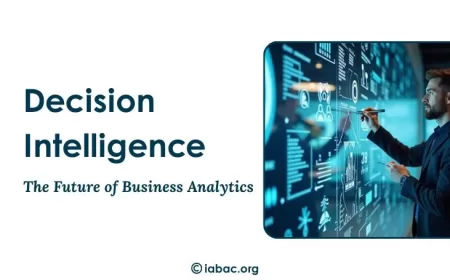
4. Decision Intelligence
Even with powerful insights, decisions can still fail if they are not applied correctly. That’s where decision intelligence comes in. It connects data, analytics, and human judgment into structured workflows.
Instead of leaving decisions to interpretation, this approach ensures consistency and clarity. Over time, it also improves decision quality through feedback and refinement.
In simple terms, decision intelligence makes sure that insights actually lead to action and that those actions are effective.
Advanced Analytical Frameworks
As analytics grows more complex, having a structured approach becomes essential. Without it, even the best tools and insights can become difficult to manage.
Frameworks bring order into this complexity. They ensure that analytics initiatives remain consistent, scalable, and aligned with business goals. More importantly, they help organizations grow their analytics capabilities without losing control over processes.
Analytics Maturity Models
Not every organization is at the same stage when it comes to analytics. Some are still focused on reporting, while others are using advanced decision systems. Analytics maturity models help bridge this gap.
They give organizations a clear picture of where they stand and what steps they need to take next.
-
Assess current analytics capabilities across tools, processes, and team expertise
-
Identify gaps that may be limiting performance or decision-making effectiveness
-
Create a roadmap for moving toward more advanced analytics capabilities
-
Align analytics growth with broader business objectives for meaningful outcomes
These models make progress structured rather than random.
Governance and Control Frameworks
As analytics becomes more powerful, the need for control becomes equally important. Governance frameworks ensure that data and analytics are used responsibly and consistently.
Without proper governance, analytics can quickly become disorganized, leading to unreliable results or even ethical issues. Clear roles, defined standards, and accountability help maintain stability and trust.
Performance Management Frameworks
Generating insights is only useful if they lead to results. Performance management frameworks focus on this exact connection.
They help organizations track outcomes, measure effectiveness, and refine strategies continuously. This creates a loop where analytics is not just used once but improved over time.
The Role of Ethics in Business Analytics
When analytics starts influencing decisions that affect people, ethics becomes unavoidable. It’s not just about accuracy anymore it’s about responsibility.
Ethical business analytics ensures that decisions are fair, transparent, and aligned with both organizational values and societal expectations. It also helps prevent misuse of data and protects against unintended consequences.
Key Ethical Challenges in Business Analytics
1. Bias and Fairness
Bias is one of the most common challenges in analytics. It can come from data, assumptions, or even the way models are designed.
-
Unfair treatment of individuals due to biased data or flawed analytical processes
-
Discriminatory outcomes that negatively impact certain groups or stakeholders
-
Reputational risks that arise when decisions are perceived as unfair or unethical
Addressing bias is not a one-time task; it requires continuous monitoring and improvement.
2. Transparency and Explainability
As models become more advanced, they also become harder to understand. This creates a gap between decision-making and explanation.
Organizations must ensure that decisions can be explained clearly. When stakeholders understand how conclusions are reached, trust naturally improves.
3. Privacy and Data Protection
Handling data responsibly is one of the biggest responsibilities organizations have today.
-
Minimizing data collection to only what is necessary for analysis
-
Ensuring proper consent before using personal or sensitive information
-
Implementing strong security measures to protect data from misuse
Privacy is not just about compliance it’s about trust.
4. Accountability and Ownership
When decisions are driven by analytics, accountability cannot be unclear. Organizations must define ownership at every stage.
This includes who builds models, who approves decisions, and who takes responsibility when things go wrong. Clear accountability ensures reliability and prevents misuse.
5. Responsible Automation
Automation can improve efficiency, but it should not remove human judgment entirely.
-
Introducing human-in-the-loop systems for decisions that require critical thinking
-
Providing override mechanisms to handle unexpected situations effectively
-
Continuously monitoring automated systems to ensure accuracy and fairness
The goal is to support human decisions, not replace them.
Governance in Business Analytics
Governance provides the structure needed to manage analytics activities effectively. It ensures consistency, accountability, and compliance across all analytics initiatives.
Key Governance Components
-
Policies and standards that guide how analytics processes are implemented and maintained
-
Data quality management practices that ensure accuracy and reliability of analytical data
-
Access control systems that protect sensitive information from unauthorized use
-
Model validation processes that ensure analytical models perform as expected
-
Audit trails that provide transparency into decision-making and analytics activities
-
Compliance monitoring to ensure adherence to legal and organizational requirements
Strong governance ensures that analytics is both effective and responsible.
Risk Management in Advanced Analytics
Advanced analytics introduces various risks that organizations must manage proactively. These risks can impact both operations and strategic outcomes.
Common risks include:
-
Model drift where analytics models lose accuracy due to changes in data patterns over time
-
Data leakage that exposes sensitive information and creates compliance and security risks for organizations
-
Misinterpretation of insights leading to incorrect decisions and negative business outcomes
-
Over-reliance on automation reducing critical thinking and increasing vulnerability to errors
-
Ethical blind spots that overlook fairness, transparency, and accountability in analytics practices
Proactive risk management ensures stability and reliability.
Building an Ethical Analytics Culture
Ethics must be embedded into the organization’s culture to ensure consistent and responsible use of analytics. It should not be treated as a separate initiative but as an integral part of daily operations.
Organizations can strengthen their ethical culture through structured efforts like:
-
Conducting training programs to educate employees about responsible data practices
-
Establishing clear guidelines and codes of conduct for analytics activities
-
Promoting leadership accountability to reinforce ethical behavior across teams
-
Encouraging transparent communication to build trust within the organization
-
Implementing continuous review processes to identify and address ethical concerns
A strong ethical culture ensures that responsible practices are followed consistently.
Regulatory and Compliance Considerations
Organizations must ensure that their analytics practices align with legal and regulatory requirements. Compliance is essential for maintaining trust and avoiding potential risks.
This includes adhering to data protection laws, respecting consumer rights, maintaining transparency in decision-making, and ensuring accountability in analytics processes. Staying compliant helps organizations operate responsibly and sustainably.
Future of Advanced and Ethical Business Analytics
The future of business analytics is shaped by the need to balance innovation with responsibility. As technologies evolve, ethical considerations will play an even greater role.
-
Increasing focus on explainable analytics to improve transparency and trust
-
Development of AI governance frameworks to ensure responsible technology usage
-
Growing importance of responsible automation with proper human oversight
-
Integration of ethical principles directly into analytics system design
-
Expansion of decision intelligence platforms to improve decision-making efficiency
These trends indicate that the success of analytics will depend not only on technology but also on how responsibly it is implemented.
Advanced business analytics gives organizations the ability to make smarter decisions, improve efficiency, and plan effectively. But the real impact comes from how responsibly these capabilities are used. When ethics, governance, and accountability are built into analytics practices, organizations don’t just perform better they build trust, resilience, and long-term success.