
























































What Are the Key Benefits of Finance Analytics for Growing Businesses?
Finance analytics gives growing businesses the clarity to cut waste, predict cash flow, and make confident decisions, here's how it works.

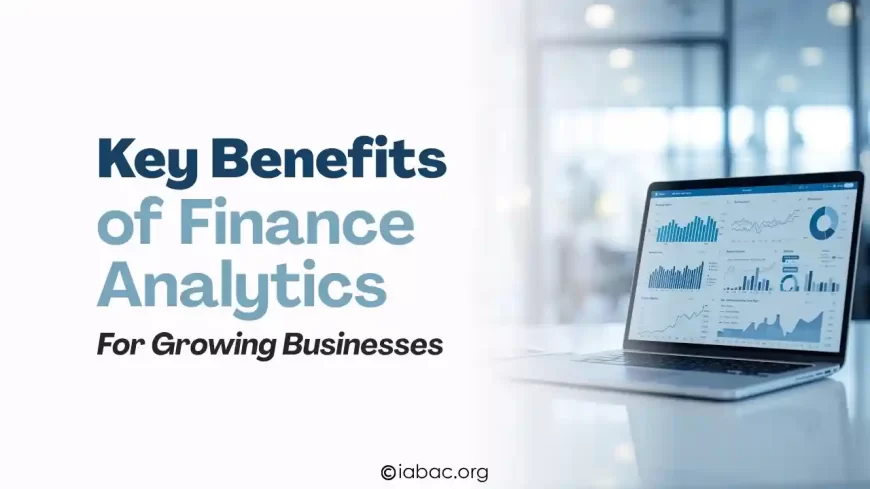
If you've ever stared at a stack of financial reports and still walked away unsure of what to do next, you're in good company.
Most business owners collect plenty of financial data. Revenue numbers, expense sheets, cash flow statements, quarterly reports. The data is there. But turning it into a clear, confident decision? That's where things get tricky.
This is exactly what finance analytics is built to do. It takes the numbers your business already produces and transforms them into something you can actually act on. For growing businesses especially, where every decision carries real weight, that shift from confusion to clarity can change everything.
Let's get into the benefits that actually matter.
What Is Finance Analytics?
Finance analytics is the process of collecting, analyzing, and interpreting your business's financial data to make smarter, faster, and more confident decisions.
Think of it this way: your business generates financial data every single day. Every sale, every expense, every invoice, every payroll run. That data tells a story. Finance analytics is how you read it.
It goes well beyond traditional accounting or standard financial reporting. Instead of just showing you what happened last month, finance analytics helps you understand why it happened, what's likely to happen next, and what you should do about it.
It typically works across four layers:
-
Descriptive analytics looks at historical data to show you what has already happened in your business
-
Diagnostic analytics digs into the reasons behind your financial results, good or bad
-
Predictive analytics uses patterns and trends to forecast what's likely coming next
-
Prescriptive analytics goes a step further and recommends specific actions based on the data
For a growing business, the real power is in combining all four. You're not just reviewing the past; you're building a clear, forward-looking picture of your financial health and using it to steer the business with intention.
1. You Make Decisions Based on Facts, Not Feelings
There's a huge difference between making a decision and making an informed one. Most business owners land somewhere in between; they have some data, but not enough context to use it well.
Finance analytics closes that gap. It gives you a clear, honest picture of your financial performance so you can answer the questions that actually keep you up at night:
-
Should we hire more people right now?
-
Is this product line worth keeping?
-
Can we afford to expand this quarter?
-
Where is our money actually going?
When those answers are grounded in data, the decisions you make are sharper, the outcomes are more predictable, and the risks are lower. For a growing business, that kind of confidence is genuinely hard to put a price on.
2. Cash Flow Stops Being a Guessing Game
Ask any small or mid-sized business owner what stresses them most, and cash flow will almost always come up. And it's not always because the business is struggling; sometimes things look fine on paper, but the money just isn't landing at the right time.
A client who's 60 days late. A tax bill that arrives right after a slow month. An unexpected cost just before a big investment. These things pile up fast.
Finance analytics helps you see them coming. By looking at your payment history, expense cycles, seasonal patterns, and customer behavior, it builds a forward-looking picture of your cash position, not just today, but 30, 60, even 90 days ahead.
That lead time is everything. When you can spot a cash flow problem two months out, you have real options:
-
Chase outstanding invoices before things get urgent
-
Adjust spending before the gap hits
-
Arrange short-term credit while you still have time to negotiate
-
Communicate proactively with suppliers or partners if needed
Compare that to discovering the problem the week it lands, and the value of that early warning becomes obvious.
3. Risks Get Caught Before They Cause Damage
Every business carries risk. That's not pessimism; it's just how business works. The difference between companies that handle risk well and those that don't isn't the amount of risk they face. It's whether they see it coming.
Finance analytics keeps a steady, ongoing eye on your numbers in a way that's nearly impossible to do manually. It surfaces patterns that are easy to miss when you're focused on running the day-to-day:
-
A supplier's prices have been quietly creeping up for six months
-
A revenue stream is slowly softening before it becomes a real gap
-
A cost category growing faster than revenue without a clear reason
-
A client whose order volume is gradually declining
None of these looks dramatic on their own. But left unchecked, they build into something serious. Finance analytics catches them early, while you still have options, rather than after the damage is done.
For growing businesses that often run lean and can't absorb big surprises, that early awareness isn't just useful. It's often what keeps the business on track.
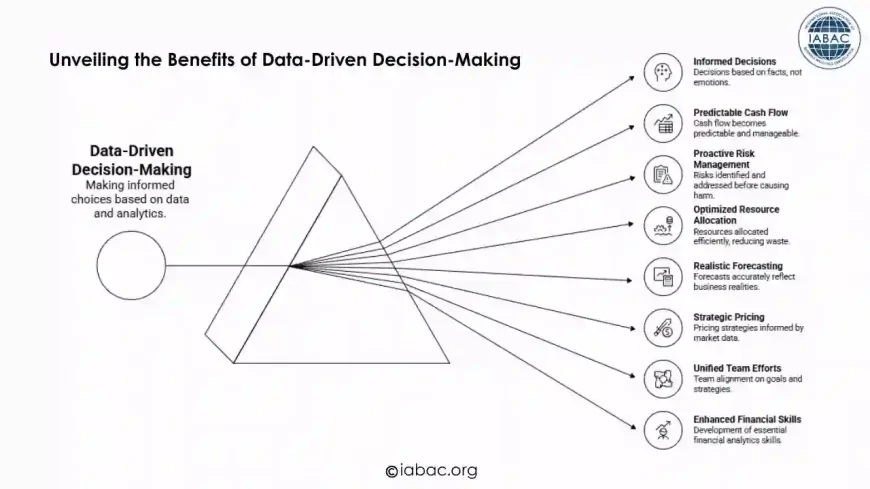
4. You Find Out Where Money Is Actually Being Wasted
This is one of the most eye-opening things finance analytics does for growing businesses and one of the least talked about.
Most businesses, when they properly dig into their expense data for the first time, find surprises. A vendor contract that made sense two years ago but doesn't anymore. A process that's consuming hours of labor without a clear return. A product line that looks active on the surface but isn't actually contributing to profit.
These aren't signs of bad management. They're just what happens when businesses grow quickly, and there isn't time to review everything. Finance analytics gives you the structure to do that review with data, not guesswork.
It shows you:
-
Which products or services are genuinely profitable, versus which are just keeping people busy?
-
Where are resources being used inefficiently compared to output?
-
Which expenses have quietly grown out of proportion with revenue?
-
Where does consolidating vendors or renegotiating contracts make financial sense?
The savings don't always show up in one dramatic cut. More often, it's a series of smaller improvements across several areas that compound into a meaningful improvement in margin over time.
5. Forecasting Starts Reflecting Reality
Here's a problem most business owners know well: by Q3, the annual budget they built in January has very little connection to what's actually happening.
Traditional financial planning has a built-in weakness. It's built once, from last year's data, and assumes a level of predictability that growing businesses rarely experience. The market shifts. A new competitor appears. A key hire changes the team's capacity. And the budget just sits there, increasingly out of date.
Finance analytics makes forecasting a living process rather than a once-a-year exercise. Projections update as real data comes in, and you can model different scenarios to see the financial impact before you're living through it:
-
What happens if revenue drops 20% next quarter?
-
What if a major client doubles their order?
-
How does a new hire affect our runway over the next six months?
That flexibility is especially valuable for growing businesses, where conditions can change quickly, and planning needs to keep up. And when you're sitting down with investors, a bank, or a board, presenting well-reasoned, data-backed projections instead of optimistic estimates builds the kind of credibility that's very hard to achieve any other way.
According to the Deloitte Finance Trends 2026 Report, which surveyed more than 1,300 global finance executives, 63% of finance teams have fully deployed and actively use analytics and AI solutions, and 64% of finance leaders are now prioritizing data analysis and analytics capabilities over traditional skillsets when building their teams. The shift is clear: data-driven finance is no longer optional; it's the direction every growing business is heading.
6. Pricing Becomes a Strategy, Not a Guess
A lot of growing businesses price their products and services based on what competitors charge, or a rough sense of what the market will accept. That's a reasonable starting point, but it's not a strategy.
Finance analytics helps you build pricing around real data. Your actual costs, your margins per product, your customer segments, and where value is genuinely being created. That means you stop leaving money on the table with customers who would comfortably pay more, and stop underpricing services that cost more to deliver than you realized.
More specifically, it helps you answer:
-
Which products carry the strongest margin and deserve more focus?
-
Which clients are genuinely profitable versus high-maintenance and low-return?
-
Which sales channels are worth investing in and which are draining more than they bring in?
-
Where does a small price adjustment create meaningful margin improvement?
Once you have that picture, pricing stops being reactive and becomes intentional, built around the business you're trying to grow, not just the one you have today.
7. Your Whole Team Works from the Same Page
This one might sound like an internal housekeeping issue, but it creates real problems that show up in how a business operates.
In many growing companies, different teams end up working from slightly different versions of financial information. Sales has its pipeline numbers. Finance has the actuals. Operations is referencing a budget that was updated two months ago. When everyone sits down to make a decision together, half the meeting is spent arguing about whose numbers are right.
Finance analytics creates one consistent, shared view of financial performance: the same data, updated regularly, accessible to the people who need it.
When your sales lead, finance manager, and operations director are all looking at the same picture:
-
Decisions get made faster because there's no data dispute to resolve first.
-
Everyone understands the financial context behind strategic choices.
-
Accountability improves because performance is visible across the whole organization.
-
Planning conversations become more productive and less political.
It sounds simple. But for growing businesses where speed and alignment matter, it makes a real difference.
8. Finance Analytics Is a Skill Your Business Needs
Here's something that often gets left out of the conversation: the tools are only as good as the person using them.
Software doesn't make decisions. People do. And the real value of finance analytics inside a growing business depends on having someone who knows how to read financial data, spot what matters, understand what patterns mean, and communicate those insights in a way that actually changes how decisions get made.
That's a distinct skill set. It's not just accounting. It's not just data science. It sits right at the intersection of financial thinking, analytical capability, and business judgment.
Businesses that have someone with this skill operate differently. Their planning is grounded in evidence. Their risks are managed proactively. Their growth decisions are made with a quiet confidence that comes from genuinely understanding the story behind the numbers.
If you're a finance professional who wants to build this capability or a business owner who wants to bring it into your team, getting certified in finance analytics is one of the most direct paths to making that happen.
Take the Next Step with IABAC
The Certified Finance Analytics Professional certification from IABAC is a globally recognized program built for finance professionals, analysts, and managers who want to work with data at a higher level.
The program covers everything that matters in practice:
-
Statistical analysis and financial modeling
-
Data visualization and reporting
-
Forecasting techniques and scenario planning
-
Data-driven decision-making in finance
-
Real-world application across business functions
IABAC operates under the European Commission's Edison Data Science Framework - a rigorous international standard, which means the certification carries genuine weight with employers and organizations around the world.
Whether you're looking to advance your own career or build stronger analytical capability inside your business, the Certified Finance Analytics Professional program gives you the knowledge, the skills, and the credential to do it.
Explore the program here: https://iabac.org/data-analytics-certifications/certified-finance-analytics-professional
Finance analytics won't eliminate every challenge your business faces. But it will make sure you're facing those challenges with clear information, solid footing, and the confidence that comes from actually understanding your numbers.
For a growing business trying to make smart decisions under real pressure, that's not a small advantage. It might be one of the most important ones you build.