
































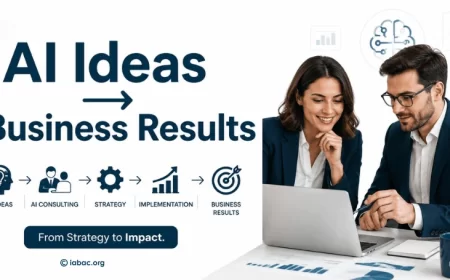















From AI Ideas to Business Results: What AI Consulting Actually Delivers
Learn why most AI initiatives stall before delivering value, the questions to ask before investing, and how AI consulting turns strategy into measurable results.

Somewhere in your organization right now, there's probably a Slack channel lively about a new AI pilot. A chatbot demo that got applause in a leadership meeting. A “let's use AI for this” idea someone floated three weeks ago that nobody has followed up on since.
Here's the uncomfortable pattern: most of these initiatives won't be mentioned again in six months.
Not because the technology failed. Because nobody answered the harder questions first — which business problem this AI was actually meant to solve, whether the data behind it could be trusted, and what success was even supposed to look like.
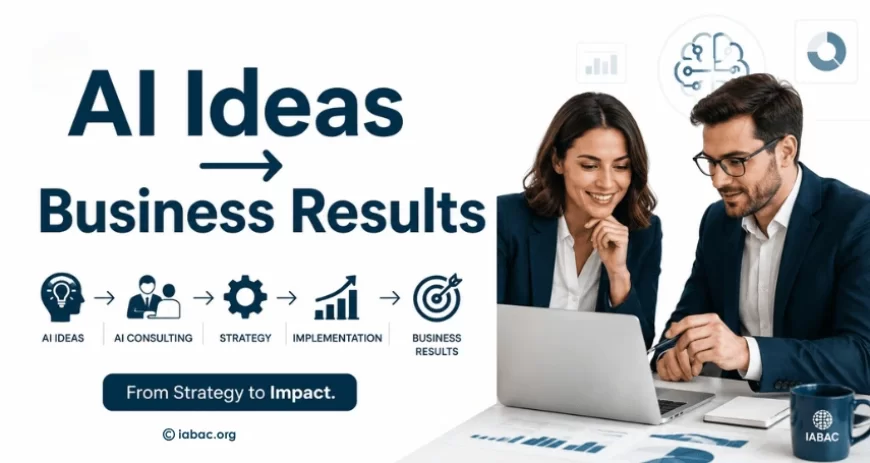
That gap between AI enthusiasm and AI results is exactly where AI consulting services earn their place. Instead of starting with tools, the right partner starts with your business objectives — helping you find where AI creates real value and how to get there without burning budget on an expensive experiment.
AI success rarely hinges on the model itself. It hinges on a clear strategy, realistic goals, usable data, and a plan that survives contact with the rest of the organization. This article walks through why so many AI initiatives stall, the questions worth asking before you commit budget, and what a good consulting partner actually does differently.
Why Most AI Projects Stall Before They Deliver
Every AI success story you hear about is backed by months of unglamorous planning. What you don't hear about are the far more common projects that quietly lose momentum, blow past budget, or never ship anything usable.
The assumption is usually that the technology wasn't advanced enough. In reality, technology is rarely the problem — sequencing is. Organizations buy a platform because it's trending, launch a chatbot because a competitor has one, or tell every department to “use AI” without defining what winning looks like. On paper, this looks like innovation. In practice, there's no line connecting the investment to a business outcome.
Poor data quality produces unreliable output. Teams build in isolation, without integrating into how work already gets done. Employees find out about the new tool after it's built, which makes adoption an uphill fight. Leadership expects a return before anyone has agreed on how that return will be measured. Momentum fades, the project quietly stalls, and AI gets filed away as “another costly initiative” instead of a business capability worth investing in again.
The most common reasons AI initiatives stall include:
- Investing in tools before defining a business strategy
- Following industry trends instead of solving an actual business problem
- Working with incomplete or inconsistent data
- No executive ownership or cross-functional alignment
- Limited employee buy-in and resistance to change
- No KPIs to measure business impact
- Treating AI as an IT project instead of a business transformation
None of this is caused by AI itself — it's the result of decisions made before implementation even begins. Organizations that get real results don't ask “which AI tool should we buy?” They ask “which business problem should we solve first?” That distinction changes everything downstream.
Key takeaway
AI rarely fails on technical merit. It fails when it's adopted as a trend rather than tied to a defined business outcome, clean data, and a way to measure success.
The Questions Worth Answering Before You Invest
Before choosing a platform, hiring developers, or signing a contract, a handful of questions determine whether an AI investment becomes an asset or a write-off.
What business problem are we actually solving?
AI should never be the objective — it should be the method. Reducing costs, speeding up support, catching fraud sooner, forecasting demand more accurately — the clearer the target, the easier it is to tell whether AI is even the right approach.
Do we have data AI can actually use?
AI is only as good as what it learns from. Many organizations discover too late that customer data is scattered across systems or historical records aren't clean enough for reliable output.
Which team should go first?
AI doesn't need to transform the whole company at once. The organizations that succeed usually pick one function, prove value there, and expand from a position of evidence rather than hope.
How will we know it worked?
Every business case needs a measurable definition of success — faster processing, better forecast accuracy, lower cost per ticket — set before implementation, not after.
What could go wrong, and who owns it?
Integration issues, compliance exposure, and model drift are normal parts of any AI rollout. The organizations that plan for them upfront spend far less time firefighting later.
Do we have the right people, not just the right platform?
AI adoption depends on collaboration between leadership, IT, data teams, and the people whose workflows are actually changing — not just a good vendor contract.
What happens after launch?
Deployment is the beginning, not the finish line. Models need monitoring, governance, and updates as the business evolves.
If your organization doesn't have confident answers to these yet, that's not a red flag — it's simply the starting point most AI consulting engagements are built to work through.
What an AI Consulting Partner Actually Does
The value of a consulting partner isn't recommending tools. It's helping you make the right decisions before you spend money on the wrong ones. A structured engagement typically moves through a few connected stages.
It starts with an honest readiness check. Plenty of organizations assume they're ready for AI because they've adopted cloud tools or collected years of data. Readiness goes deeper than that — it depends on data quality, process maturity, and whether leadership has real clarity on what they want. A retailer wanting AI-driven demand forecasting, for instance, may first need to fix inconsistent inventory data across locations before a model is worth building at all. That assessment isn't about finding reasons to say no — it's about identifying exactly what needs to be true before the investment can pay off, so the business isn't discovering gaps midway through a build.
It ties AI to business goals, not the other way around. Buying a platform doesn't solve a business problem by itself. A sound AI consulting engagement connects business priorities to specific, sequenced opportunities — so every initiative supports a roadmap instead of running as a disconnected experiment.
It prioritizes impact over volume. The instinct when exploring AI is to automate everything at once. The better question isn't “where can we use AI” — it's “where will AI create the most value first.” Prioritizing high-value use cases builds early wins and internal confidence for the larger initiatives that follow.
It builds in governance from day one. As AI touches more of the business, new questions become unavoidable: how are decisions being made, can results be explained, is customer data protected, who's accountable if something goes wrong. These aren't optional conversations anymore — customers, regulators, and employees all expect AI to be transparent and trustworthy. Governance isn't a brake on innovation — it's what lets AI scale without creating unmanaged risk.
It carries through to implementation, not just strategy. Choosing a platform is the easy part. AI implementation is where solutions actually get connected to existing systems, teams get trained, and workflows change. Without that follow-through, even a technically sound model can fail to get adopted. This is also where AI integration work matters most — connecting new models to the systems your teams already use daily, rather than bolting on a standalone tool nobody opens.
A successful engagement isn't measured by how many models get deployed. It's measured by whether the business achieves what it set out to — lower costs, faster decisions, better customer experience.
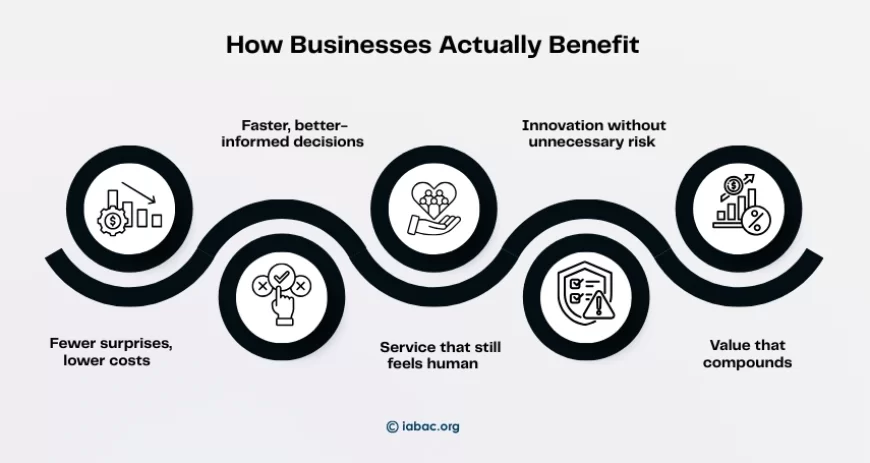
How Businesses Actually Benefit
The specifics vary by industry, but the pattern repeats. A manufacturer wants less downtime. A bank wants to catch fraud earlier. A retailer wants to understand buying patterns. A healthcare provider wants less time on paperwork and more on patients.
In each case, the win isn't “we deployed an AI model” — it's the operational outcome behind it:
- Fewer surprises, lower costs. Instead of reacting to equipment failure, AI can flag warning signs early — reducing downtime and maintenance spend.
- Faster, better-informed decisions. AI can process more data than any team can manually, but only if the business knows which decisions actually benefit from that input.
- Service that still feels human. AI handles the repetitive layer — routing, recommendations, first-response drafting — while people stay in charge of interactions that need judgment.
- Innovation without unnecessary risk. Embedding governance and accountability into every stage means the business can move faster with fewer compliance surprises later.
- Value that compounds. Organizations that treat AI as an ongoing capability — starting small, measuring results, expanding deliberately — get more from every dollar spent than those chasing one flagship project.
None of these outcomes are measured by how much AI got deployed. They're measured in hours saved, costs avoided, and decisions made with more confidence than before — which is the only scoreboard that matters to leadership.
Signs Your Business Is Ready for AI Consulting
Not every business needs outside help on day one. But a few situations are reliable signals that the right guidance would save time and money:
- You're excited about AI but have no roadmap connecting the ideas to priorities
- Different teams are experimenting independently, creating duplicated tools and inconsistent results
- Leadership keeps asking “what's the ROI here?” and nobody has a confident answer
- You're unsure which of the constantly-multiplying AI tools actually fit your business
- Governance, security, or compliance questions are coming up more often in AI discussions
- You'd rather avoid an expensive mistake than fix one after the fact
- You're looking for a strategic partner, not just another software vendor
If several of these sound familiar, you're not behind — you're at a decision point most growing organizations reach eventually. The businesses that get the most from AI aren't necessarily the ones that adopted it first; they're the ones that approached it with a clear strategy, real governance, and a focus on solving problems that actually matter to the business.
Why Businesses Choose IABAC Consulting
Choosing a consulting partner isn't only about technical depth. It's about finding a team that understands your business goals first and treats technology as the means, not the message. That's the philosophy behind IABAC's consulting services: understand the business, then identify where AI genuinely moves the needle — rather than recommending it for every problem that walks in the door.
A few things shape how that plays out in practice:
- Business-first, every engagement. Whether the priority is operational efficiency, fraud detection, or administrative relief in a regulated environment, the starting point is always your objective — not a product recommendation.
- Responsible AI as standard, not an add-on. Data privacy, transparency, and accountability are built into planning, model selection, deployment, and governance from the start — not addressed after something goes wrong.
- Structured frameworks, not generic playbooks. Engagements are built around proven methods for assessing readiness, prioritizing opportunities, and measuring outcomes, so leadership teams can make decisions with less guesswork.
- Support across the full lifecycle. From first opportunity assessment through pilot, scale, and continuous improvement — the same team stays engaged rather than handing off after a single deliverable.
- Access to a vetted global network. Every consultant in IABAC's network has gone through a licensing evaluation before taking on client work, and organizations that prefer to hire a certified consultant directly can be matched based on industry and project scope.
- Capability that stays after the engagement ends. Knowledge transfer is part of the process, so internal teams can sustain and expand what's been built rather than depending on outside support indefinitely. Professionals who want to build that expertise formally can pursue the Certified Artificial Intelligence Expert (CAIE) credential to lead AI initiatives internally going forward.
Key takeaway
The measure of a good AI consulting engagement isn't how many models get shipped — it's whether the business hits the outcome it defined at the start, and whether the team can sustain it afterward.
Frequently Asked Questions
How much does AI consulting typically cost?
It depends on scope — a short readiness assessment costs far less than an enterprise-wide transformation program. Rather than anchoring on cost alone, weigh it against the long-term value of better decisions and reduced operational risk.
How long does an engagement take?
A focused readiness assessment can take a few weeks; a full enterprise strategy or multi-department rollout can take several months. Most organizations succeed by starting with one clear objective, validating it through a pilot, and expanding in phases.
Can small and mid-sized businesses benefit?
Yes. AI consulting isn't limited to enterprises with dedicated data science teams — smaller businesses use it to automate repetitive work, improve support, and sharpen forecasting, matched to their budget and goals.
Do you only advise on strategy, or help with implementation too?
Both. A roadmap alone rarely delivers results — most engagements carry through technology evaluation, governance setup, change management, and outcome measurement.
How do we know if our AI initiative actually worked?
Tie it to a business metric defined before implementation — cost reduction, faster response times, higher forecast accuracy, stronger compliance posture, or increased revenue opportunities. Without a KPI set in advance, “success” becomes a matter of opinion, and opinions are exactly what stall the next round of investment.
From AI Ideas to Business Results Starts with the Right Strategy
Every organization can see the potential in AI. The harder part is turning that potential into something the business can actually measure. The organizations getting real value aren't necessarily spending the most or chasing the newest models — they're asking sharper questions, solving the right problem first, and following a structure that ties every initiative back to a business goal.
If your organization is weighing an AI investment or planning a broader digital transformation, that's exactly the conversation worth having before the budget gets committed.
|
Talk to an IABAC AI Consultant → For business leaders ready to build an AI roadmap grounded in strategy, not trends. |
Explore the CAIE Certification → For AI practitioners and technical leads ready to lead AI initiatives internally. |