





















































Why Your Institute Need Global Recognition?
Give your institute global recognition through accreditation. Build credibility, attract more students, expand partnerships, and strengthen your reputation.

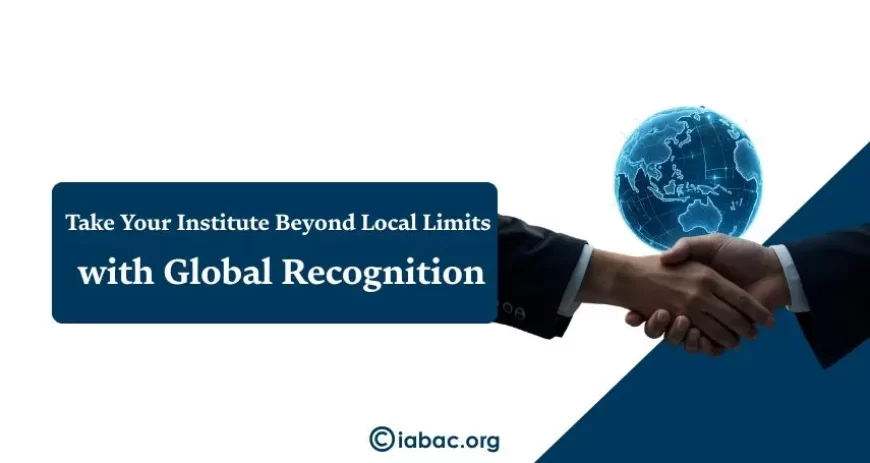
Many training institutes teach strong courses, keep good faculty, and still stay stuck with a local reputation. Students in the area know the institute. Employers in the area trust it. But outside that circle, the name means nothing. This creates a growth barrier that stays in place no matter how good the teaching is.
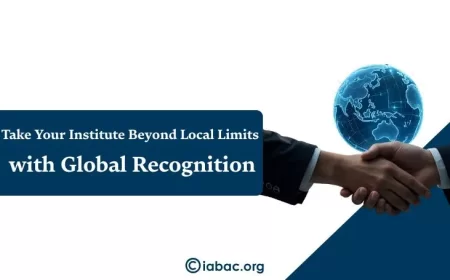
Accreditation is one of the strongest ways to earn global recognition, helping institutes build credibility beyond their local market.
This blog explains why your institute deserves global recognition and how accreditation can strengthen its reputation, attract more students, and create new growth opportunities.
What Global Recognition Actually Means for a Training Institute
Global recognition is a specific, verifiable status that changes how your institute is considered and evaluated.
For a training institute, global recognition means three concrete things:
Certifications accepted across countries
Students who complete your program hold a credential that employers recognize outside your local market, not just within it.
Listing in a global partner network
Your institute appears alongside other accredited providers worldwide, giving prospective students a reason to trust you before they ever speak with your team.
Curriculum matched to international standards
Your course content is benchmarked against a recognized framework, not built in isolation.
Here is the practical difference:
- A locally recognized institute can say, "We teach data science."
- A globally recognized institute can say, "We teach data science under an international standard, and our certification is accepted in over 50 countries."
The second statement does the work for you. It removes the burden of convincing every single prospective student from scratch, because the credential itself carries proof.
This distinction matters more than most institutes realize, because prospective students and corporate clients are not comparing you only to the institute down the street anymore. They are comparing you to every training provider they can find online, in any country.
Why Local Reputation Isn't Enough Anymore
A few years ago, institutes competed mainly within their city or region. That is no longer the full picture.
Online learning, remote hiring, and global job markets have widened the pool of institutes a student compares before enrolling. A student in Bangalore can now put your institute side by side with one in Singapore, Dubai, or London, all in the same browser tab. If your institute has no international standing, you lose that comparison before the student even reaches out.
This shift affects institutes in three direct ways:
You compete with institutes abroad for the same students: A student researching "data science certification" will see international options mixed with local ones, and international accreditation becomes a deciding factor.
Corporate clients prefer globally accepted certification bodies: Companies training their teams want certifications their global offices will also accept, not just certifications valid in one city.
You lose students to competitors with international recognition, even when your teaching quality is equal or better, because recognition is often the first filter students use before comparing course content.
Digital learning has also removed the need for students to enroll locally at all. A student choosing between an in-person local course and an online globally accredited one will often choose the credential with wider acceptance, even if it means learning remotely. This is the shift most local institutes underestimate, and it is exactly why global recognition has become a growth requirement, not a bonus feature.
What Changes When Your Institute Gets Globally Recognized
The effects of global recognition show up directly in enrollment numbers, client conversations, and staffing quality.
Impact on the institute:
Higher enrollment: Students actively search for institutes with recognized certifications, so your institute becomes visible to a segment of the market you were not reaching before.
Corporate training contracts: Companies looking to train employees at scale prefer providers with an internationally accepted credential, which opens a revenue stream beyond individual student enrollments.
Stronger trainer recruitment: Skilled trainers want to teach under an accredited framework, since it adds to their own professional credibility. This means your institute can attract better faculty, not just more students.
Stronger admissions conversations: Your admissions team stops having to convince prospects from zero. The accreditation itself answers the trust question before the conversation even starts.
Impact on students:
Global recognition does not only help the institute. It directly affects what your students get out of the program, which in turn strengthens your institute's reputation.
- Graduates hold a certification that employers recognize outside the local job market, widening their job search beyond one city or country.
- Students gain leverage in salary negotiations, since a globally accepted certification signals a verified skill standard to employers.
- Students trust the program more before enrolling, because they know the certification will hold value even if they relocate or apply for international roles.
When students succeed because of your program, they become your strongest form of proof. Their success stories, reviews, and referrals build trust faster than anything the institute can say about itself, and all of it depends on the certification actually holding value for employers.
What Makes a Certification Body Worth Partnering With
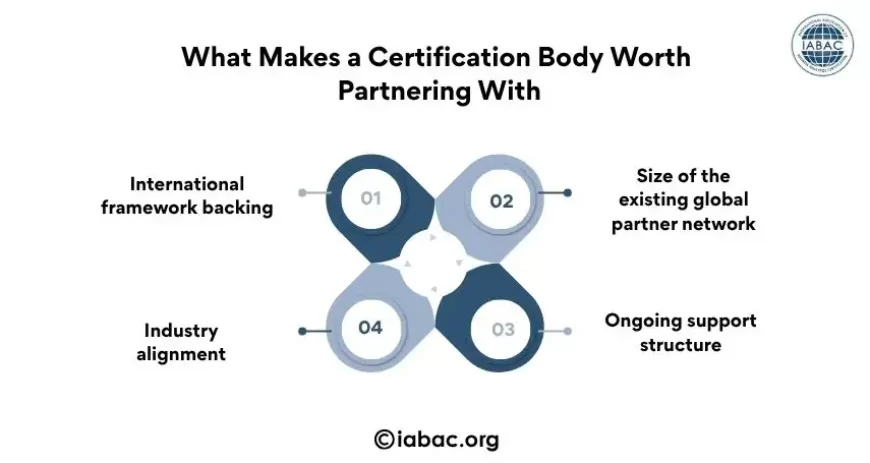
Not every accreditation body offers the same value. Before an institute partners with one, it helps to know what separates a strong certification body from a weak one.
Here are the factors worth checking:
International framework backing: Look for a certification body whose curriculum is built on a recognized standard, ideally one linked to an established institution or government-backed initiative, rather than a private framework with no external validation.
Size of the existing global partner network: A certification body with institutes across many countries shows the accreditation is actively used and trusted worldwide, not just a paper credential.
Industry alignment: The curriculum should match what employers in data science, business analytics, and related fields actually look for, not outdated academic content.
Ongoing support structure: A good certification body helps with curriculum alignment, trainer accreditation, and exam administration, rather than issuing a certificate and disappearing.
The Fastest Path to Global Recognition: Accreditation Partnership
The fastest and most structured way for an institute to gain global recognition is through becoming an Authorized Training Provider (ATP).
Here is what this partnership involves at a high level:
- Your institute gains the authority to teach internationally recognized certification courses.
- Your curriculum is aligned with a standard framework, so course content matches what other accredited institutes worldwide are teaching.
- Your institute gets listed publicly as a global partner, giving prospective students immediate proof of credibility.
- Your trainers go through an accreditation process, which strengthens the quality of instruction across your institute.
Is Your Institute Ready?
Before applying, it helps to know whether your institute already meets the basic requirements. The good news is that the bar is straightforward, not restrictive.
Three things matter:
- Is your institute a registered, legally incorporated entity?
- Does your institute have at least one year of business operations?
- Check whether your institute has a basic quality management system in place, meaning documented processes for how you design courses, deliver them, and collect feedback.
If your institute checks these three boxes, you already meet the starting requirement. This is not a bar meant to filter out smaller institutes. It exists to confirm the institute is stable and serious about maintaining teaching quality, which protects the value of the certification for everyone in the network.
Ready to Get Recognized?
Your institute already has the teaching quality. What it may be missing is the credential that proves it to students and employers outside your immediate market. Global recognition changes how prospective students evaluate you, how corporate clients approach you, and how your graduates perform in the job market.
The path to get there is direct: apply for an accreditation partnership, align your curriculum with an international standard, and join a network that already carries trust in the market.
Your institute deserves that recognition. The next step is yours to take.
Apply Now | Enquire Now