








































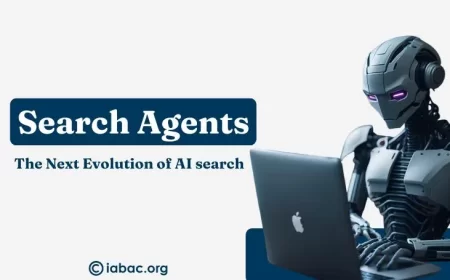















Search Agents: The Next Evolution of AI Search
Search agents are redefining AI search with smarter answers, multi-step reasoning, and task completion. Find out how they work and where they are used.

Search agents are changing the way people look for answers online. Instead of typing a query and scrolling through a list of blue links, users now ask a question and get a direct, task-completed response. A search agent combines artificial intelligence with reasoning and automation to do more than fetch information. It plans steps, uses tools, and takes action on behalf of the user. This shift is not a small update to search engines. It marks a new stage in how information systems work, and businesses that understand this change early will have a real advantage.
What Is a Search Agent?
A search agent is a software system that understands a user's goal, breaks it into steps, and completes those steps using different tools or data sources. In simple terms, it acts less like a search box and more like an assistant that gets things done.
Traditional search engines return a list of links. A search agent instead:
- Reads and understands the intent behind a question
- Pulls information from multiple sources at once
- Compares and filters that information
- Delivers a direct answer, summary, or completed task
For example, instead of searching "best artificial intelligence course" and clicking through five different pages, a search agent can compare course options, check reviews, and summarize the top choices in one response. This saves time and reduces the manual effort users once had to put in.
How Search Agents Work Behind the Scenes
Search agents rely on a mix of technologies working together. Each part plays a specific role in helping the agent understand a request and act on it.
- Large language models: These are AI systems trained on huge amounts of text, which allow the agent to understand natural language questions the way a person would ask them.
- Retrieval systems: These pull real-time or stored information from the web, databases, or documents so the agent's answer is based on current facts, not guesses.
- Tool use: Agents can call external tools, such as a calculator, a booking system, or a search index, to complete tasks that require more than just text generation.
- Memory: Some agents remember earlier parts of a conversation, which allows them to build on previous questions instead of starting from zero each time.
When a person asks a search agent a question, it typically follows this process. It interprets the intent, decides which tools or sources are needed, pulls the required information, checks it against multiple sources, and then presents a single, structured answer. This is a major departure from how search worked for the past two decades.
Search Agents vs. AI Chatbots
Many people confuse search agents with AI chatbots, but they are not the same thing. The difference comes down to what happens after you ask a question.
- A chatbot mainly generates a response using what it already learned during training. It is good at writing, explaining, and having a conversation, but it does not always check the web for current facts unless it is built with that add-on feature.
- A search agent is built around the opposite priority. Its main job is to go out, pull real information from live sources, compare it, and then answer based on what it finds right now.
- Chatbots answer from memory and language patterns. Search agents answer from active research.
- A chatbot can help you draft an email or explain a concept. A search agent can check five hotel booking sites, compare prices, and tell you which one has the best deal this week.
Some products blend both. A chatbot with search tools turned on starts to behave like a search agent, and a search agent often uses a language model to explain its findings in plain language.
Search Agents vs. Traditional Search
Traditional search
- You type a query, get a list of links, and do the reading yourself
- Fast, but the effort of comparing sources is on you
- Still dominant for simple, direct questions like checking a store's opening hours
Search agents — like Google's AI Mode information agents, OpenAI's agent tools inside ChatGPT, or Perplexity's research assistant
- These plans search in multiple steps, double-check sources, and can act on your behalf
- Built for harder, multi-part questions, not just "what is X" but "find me the best X for my situation and set it up."
- Can keep working on an ongoing task, not just answer once and stop
A search engine finds pages, while a search agent actively works through a problem the way a human researcher would, planning, checking, and sometimes acting on your behalf.
It's worth being honest that this technology is still young. Around a quarter of organizations are already scaling agentic AI systems, and another is experimenting with it. That means most companies are still testing this, not fully depending on it yet.
Why Search Is Changing Right Now
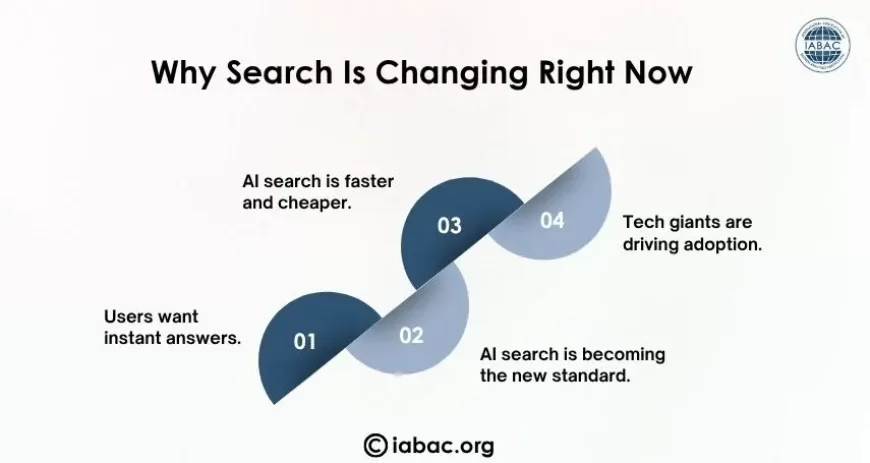
Three trends are pushing search agents into the mainstream.
People want answers, not homework
Search Engine Land found that 37% of consumers now begin their research with an AI tool rather than a traditional search engine. People are tired of opening ten tabs to answer one question.
The tools got faster and cheaper
Running an AI system that can search, reason, and re-check itself used to be slow and costly. That's improved enough that big platforms are now offering it to regular users, not just developers.
Big companies are racing to build it
This isn't a niche experiment anymore.
- Google's AI Mode passed one billion monthly users within a year of launch, with queries more than doubling every quarter
- Microsoft, OpenAI, and Perplexity are all building similar agent-style search features into their products
When the largest tech companies compete this hard on one feature, it usually means the feature is about to become normal, not optional.
Practical Use Cases: Where Search Agents Already Help
Search agents aren't just a future idea people are using early versions of them today, in fairly ordinary ways.
Research that spans many sources
Instead of opening ten browser tabs to compare, say, health insurance plans, an agent can read across sources and lay out the differences for you.
Shopping and price comparison
An agent can check multiple stores, compare prices and reviews, and narrow down options that match your budget and needs.
Ongoing monitoring
Rather than searching the same topic every day, you can ask an agent to track it and notify you when something changes, like a price drop, a news update, or a new product release. This matches Google's own description of its information agents, which run in the background so you don't have to repeat the same search every day.
Booking and task completion
Some agents go beyond information and take the next step — like finding an available slot and starting a reservation. Google demonstrated this with a request to find a private karaoke room for six people on a Friday night, where the agent pulled pricing and availability and linked directly to booking.
Business and customer service search
Retailers are using agent-style search so that, instead of a shopper typing exact product names, the system understands intent like "something warm for a winter hike" and plans the right steps to guide the shopper toward a decision, not just a list of matching products.
Benefits of Search Agents
Search agents offer clear advantages over traditional search, especially for complex or multi-step needs.
- Time-saving: Search agents can complete in minutes what would take a person much longer to research manually
- Better accuracy on complex questions: They can can cross-check multiple sources instead of relying on one
- Task completion, not just information: Search agents can act, not just inform
- Personalization: They remember context and preferences within a conversation
- Reduced effort: users do not need to open many tabs or compare data themselves
Challenges Search Agents Still Face
Search agents are powerful, but they are not without limits. Understanding these gaps helps businesses set realistic expectations.
- Trust gaps: Many users still prefer traditional search results because they can verify the source themselves. Agent-generated summaries can feel like a black box.
- Accuracy risks: Since agents pull from multiple sources automatically, errors or outdated information can sometimes get combined into a single confident-sounding answer.
- High cancellation rates: Gartner expects more than 40% of agentic AI projects to be canceled by 2027 due to unclear return on investment and weak governance.
- Governance and oversight: Businesses deploying agents need clear rules around what the agent can access, decide, and act on without human review.
These challenges mean search agents will continue to improve, but they are unlikely to fully replace traditional search in the near term. Instead, the two are likely to work side by side.
The Bottom Line
Search agents mark a real shift in how we find information online. Instead of just returning links, they plan, search across multiple sources, verify their findings, and can even complete tasks for you. This isn't futuristic; it's already built into tools like Google's AI Mode and shopping assistants. It won't replace simple searches, but for harder, multi-part questions, search agents are becoming the faster option.
Search is moving from "find it yourself" to "have it found for you." As these tools grow, understanding how AI works is becoming a real career advantage, and AI certification programs can help you get started.