



























































What Is an Accredited Body?
An accredited body is an organization authorized to certify or validate standards, ensuring quality, compliance, and credibility across industries and services.


Imagine spending months preparing for a certification, completing assignments, studying complex topics, and finally passing the exam. You proudly add the certification to your resume, share it on professional networks, and then someone asks a simple question:
“Is the certification approved by an accredited body?”
At that moment, the importance of accreditation becomes very clear.
In the world of professional certifications, an accredited body plays a crucial role in ensuring quality, credibility, and global recognition. Without proper accreditation, a certification may look impressive on paper but may not carry the same level of trust in professional environments. Across industries—from technology and analytics to healthcare and even Personal Trainer Certification programs—accreditation helps verify that certification programs meet internationally accepted standards.
Organizations that provide professional certifications often collaborate with recognized accreditation systems to ensure their programs meet global expectations. Certification ecosystems such as the one available through iabac.org follow structured frameworks that focus on quality, industry relevance, and professional competence.
This guide explains what an accredited body is, how accreditation works, and why it plays such an important role in professional education and certification programs.
What Is an Accredited Body
An accredited body is an authoritative organization responsible for evaluating and approving certification providers, educational institutions, and training programs to ensure they meet established standards of quality and reliability.
These bodies carefully review how certification programs are designed, delivered, and assessed. Their goal is to ensure that learners who complete certified programs gain real knowledge and skills rather than simply collecting certificates.
In simple terms, an accredited body acts like a quality inspector for education and certification programs.
When a certification program is recognized by an accredited body, it means the program has been reviewed against specific standards related to:
- Course structure
- Learning outcomes
- Assessment methods
- Instructor qualifications
- Ethical practices
- Quality assurance processes
This evaluation helps ensure that certifications represent real professional competence.
Across industries, accredited bodies monitor certification ecosystems involving Authorized Training Providers, Accredited Academic Institutions, and Accredited Corporate Partners.
Why Accreditation Matters in the Certification World
Professional certifications are now an important part of career development.
Many employers use certifications to evaluate whether candidates have the knowledge required for specific roles. However, employers also want to ensure those certifications come from credible systems.
This is where the role of an accredited body becomes essential.
Without accreditation, anyone could create a certification program with minimal standards. Imagine receiving a certificate after answering three multiple-choice questions while sitting comfortably with a cup of coffee. It may feel great, but it would not necessarily demonstrate professional expertise.
Accredited certification systems help prevent this situation by maintaining strict evaluation standards.
Why Is an Accredited Body Important for Certifications
An accredited body plays several critical roles in maintaining the credibility of professional certifications.
1 Ensuring Certification Quality
Accreditation bodies verify that certification programs meet structured educational and technical standards.
This includes reviewing:
- Course curriculum
- Assessment methods
- Practical training components
- Instructor qualifications
By evaluating these elements, accredited bodies help maintain consistent quality across certification programs.
2 Protecting Learners and Employers
Accreditation protects both learners and employers.
Learners invest time, effort, and money into certification programs. Accreditation helps ensure that their investment leads to meaningful professional recognition.
Employers benefit because they can trust that certified professionals have met specific competency standards.
3 Promoting Global Recognition
Certifications recognized through accredited systems are often accepted internationally.
This global credibility is especially important in fields such as:
- Data science
- Artificial intelligence
- business analytics
- healthcare technology
- fitness and wellness programs such as Personal Trainer Certification
Accreditation helps ensure certifications maintain consistent standards across regions.
4 Encouraging Continuous Improvement
Accredited bodies do not simply approve programs once and walk away.
They regularly review certification programs to ensure they remain relevant as industries evolve. This process encourages certification providers to update course materials and maintain high standards.
How Does an Accredited Body Approve Certification Programs
The approval process used by an accredited body involves multiple stages designed to verify quality and compliance with established standards.
Although the specific procedures vary depending on the accreditation system, the general process follows a structured evaluation model.
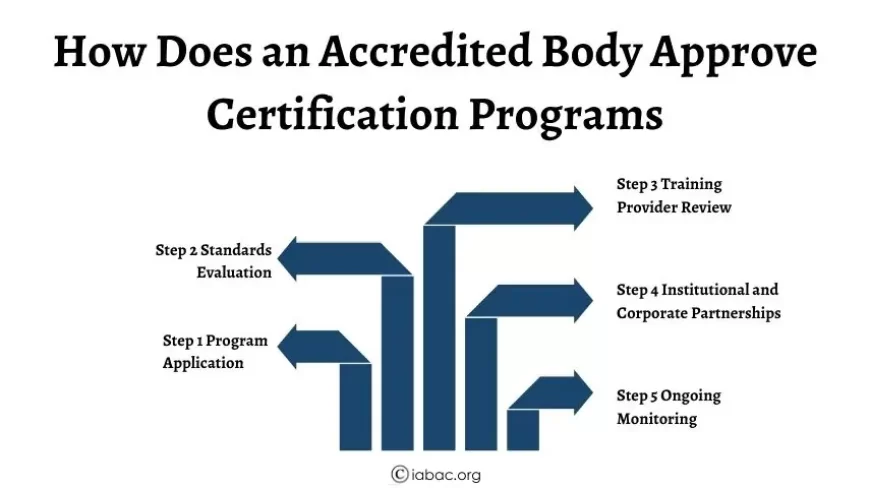
Step 1 Program Application
Certification providers submit detailed documentation describing their programs.
This typically includes:
- Curriculum structure
- Learning objectives
- Training materials
- Assessment frameworks
- Instructor qualifications
This documentation helps accreditation evaluators understand how the certification program operates.
Step 2 Standards Evaluation
The accredited body reviews the program using established evaluation frameworks.
These frameworks often align with international standards related to education quality, certification processes, and training effectiveness.
Evaluation criteria may include:
- alignment with industry needs
- fairness in assessment methods
- transparency in certification processes
- learning outcome measurement
Step 3 Training Provider Review
Many certification programs operate through networks of Authorized Training Providers.
Accredited bodies verify that these providers follow standardized teaching methods and maintain consistent training quality.
Training centers must demonstrate:
- qualified instructors
- approved learning materials
- structured assessment procedures
Step 4 Institutional and Corporate Partnerships
Certification ecosystems often include partnerships with educational and industry organizations.
These may include:
- Accredited Academic Institutions offering specialized programs
- Accredited Corporate Partners implementing certification training within organizations
Accredited bodies evaluate these partnerships to ensure they support the program’s learning objectives.
Step 5 Ongoing Monitoring
Accreditation is not a one-time event.
Certification programs are monitored regularly to ensure they continue meeting standards. Reviews may involve audits, program updates, and feedback analysis.
This continuous evaluation helps maintain certification credibility.
What Is the Role of an Accredited Body in Education
The influence of an accredited body extends beyond certifications into broader education systems.
Accredited bodies help maintain education quality by evaluating institutions and training providers.
Supporting Education Quality
Accredited bodies help ensure educational institutions follow structured teaching methods and maintain academic integrity.
They evaluate factors such as:
- course design
- learning outcomes
- faculty qualifications
- assessment methods
This process helps maintain consistent educational standards.
Connecting Education with Industry Needs
Education programs sometimes struggle to keep pace with industry changes.
Accredited bodies encourage institutions to update programs so learners gain practical skills relevant to current job markets.
This alignment helps bridge the gap between education and employment.
Building Trust in Certification Systems
Education and certification systems rely heavily on trust.
When a program is recognized by an accredited body, learners, employers, and institutions gain confidence in its credibility.
The Role of Authorized Training Providers
Many certification programs are delivered through Authorized Training Providers (ATP).
These training providers play a critical role in the certification ecosystem.
An Authorized Training Provider is an organization approved to deliver official certification training programs according to standardized guidelines.
ATP responsibilities include:
- delivering official training courses
- providing certified instructors
- conducting assessments
- supporting learners throughout the certification journey
ATP networks allow certification programs to reach learners worldwide while maintaining consistent quality standards.
The Role of Accredited Academic Institutions
Educational institutions also play an important role in professional certification systems.
Accredited Academic Institutions may collaborate with certification providers to integrate industry certifications into academic programs.
This collaboration allows learners to combine academic knowledge with practical industry skills.
For example, universities may include data analytics certification modules within degree programs to help learners gain job-ready skills.
The Role of Accredited Corporate Partners
Organizations across industries are increasingly adopting certification programs to support employee development.
Accredited Corporate Partners work with certification providers to implement structured training programs within their workforce development initiatives.
These partnerships allow organizations to:
- train employees in emerging technologies
- improve operational skills
- build internal expertise
- support professional development
Corporate certification programs help organizations remain competitive in rapidly evolving industries.
Accreditation Across Different Industries
Accreditation systems support certification programs across a wide range of industries.
Examples include:
- information technology
- data science
- artificial intelligence
- healthcare analytics
- project management
- cybersecurity
- fitness and wellness programs, such as Personal Trainer Certification
In each industry, accreditation helps maintain professional standards and competency requirements.
Metrics That Show the Impact of Accredited Certifications
Several studies highlight the growing importance of accredited certifications in professional development.
Industry reports suggest that:
- Over 70 percent of employers consider certifications when evaluating candidates
- Certified professionals may earn 15–20 percent higher salaries compared to non-certified peers in some industries
- The global demand for analytics and technology professionals continues to increase annually
These trends demonstrate why accreditation and certification systems are becoming increasingly important in modern education and workforce development.
The Certification Journey from Training to Recognition
A typical certification journey within an accredited ecosystem involves several stages.
1 Learning through an Authorized Training Provider
2 Completing assessments based on structured standards
3 Achieving certification validated through accredited systems
4 Applying knowledge in professional environments
5 Continuing professional development through advanced certifications
Each step helps ensure professionals build meaningful knowledge and skills.
A Reality Check About Certifications
While certifications can open many doors, they do not magically transform someone into an expert overnight. Completing a certification still requires learning, practice, and persistence.
Many professionals remember moments during their certification journey when a complex concept suddenly made sense after hours of effort. There are also moments when someone spends thirty minutes trying to understand a concept only to realize the solution was hidden in the previous slide of the training material.
Those moments are part of the learning experience.
Accredited certification systems ensure that learners truly gain skills rather than simply collecting certificates.
The Future of Accredited Certification Programs
Professional certification systems continue to evolve as industries adopt new technologies and skills. Emerging areas such as artificial intelligence, machine learning, and advanced data analytics require structured learning pathways supported by credible certification systems.
Certification ecosystems supported by organizations such as iabac.org provide globally accessible learning opportunities designed to prepare professionals for modern technology-driven careers. As industries continue to evolve, accredited certification systems will remain essential in maintaining quality, credibility, and professional trust.
Understanding the role of an accredited body helps learners make informed decisions about their education and certification pathways. Accredited bodies evaluate certification programs to ensure they meet established standards of quality, fairness, and professional relevance. Their work supports reliable certification systems involving Authorized Training Providers, Accredited Academic Institutions, and Accredited Corporate Partners.
For learners pursuing certifications—from advanced technology programs to professional pathways such as Personal Trainer Certification—accreditation helps ensure that the knowledge and skills gained are meaningful and respected in professional environments. In a world where certifications are becoming increasingly common, accreditation acts as the invisible quality checkpoint that ensures those certifications truly represent competence, learning, and professional growth.