




















































What is Predictive AI, and how does it work?
Predictive AI uses data, statistics, and machine learning to forecast future outcomes. Learn how it works, key algorithms, and real business use cases.

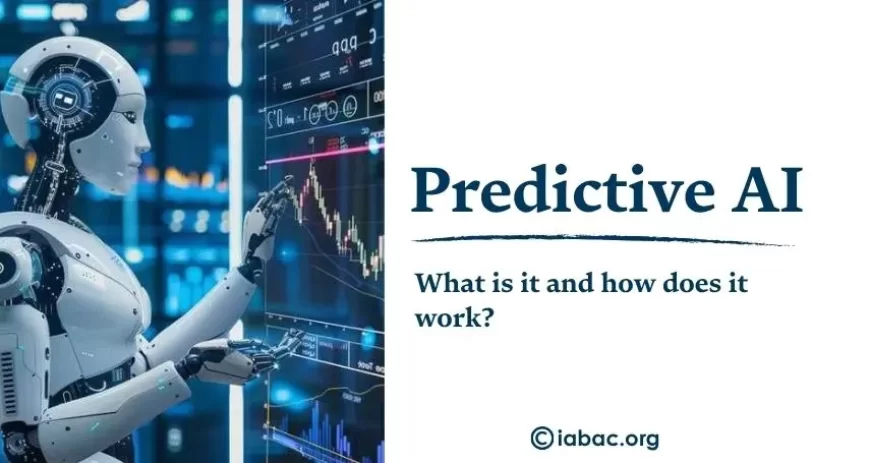
Artificial intelligence is changing the way businesses plan, operate, and make decisions. One area gaining a lot of attention is predictive AI, a technology that helps companies anticipate outcomes before they happen. From banks assessing loan risk to retailers planning inventory, predictive AI is becoming a core part of everyday business strategy. This blog explains what predictive AI means, how it works, the technology behind it, and where it is used across industries.
What is Predictive AI?
Predictive AI uses statistics, data, and machine learning to forecast future outcomes. It looks at patterns in historical data and uses those patterns to make an educated guess about what will happen next. Businesses use predictive AI to plan ahead, reduce risk, and make smarter decisions before a situation actually occurs.
Unlike traditional software that follows fixed rules, predictive AI learns from patterns instead of instructions. It does not rely on guesswork or assumptions. Every prediction is backed by numbers, trends, and probability calculated from real information
Predictive AI vs Descriptive vs Prescriptive Analytics
People often confuse predictive AI with other types of analytics. Here is a simple breakdown:
- Descriptive analytics looks at the past and explains what happened. Example: "Sales dropped by 15% last month."
- Predictive analytics looks at the past and future and explains what is likely to happen. Example: "Sales may drop by 10% next month based on current trends."
- Prescriptive analytics goes one step further and tells you what action to take. Example: "Increase ad spend by 20% to prevent the sales drop."
Predictive AI sits in the middle. It does not just report data. It uses that data to make forecasts businesses can act on.
How Does Predictive AI Work? Step-by-Step Process
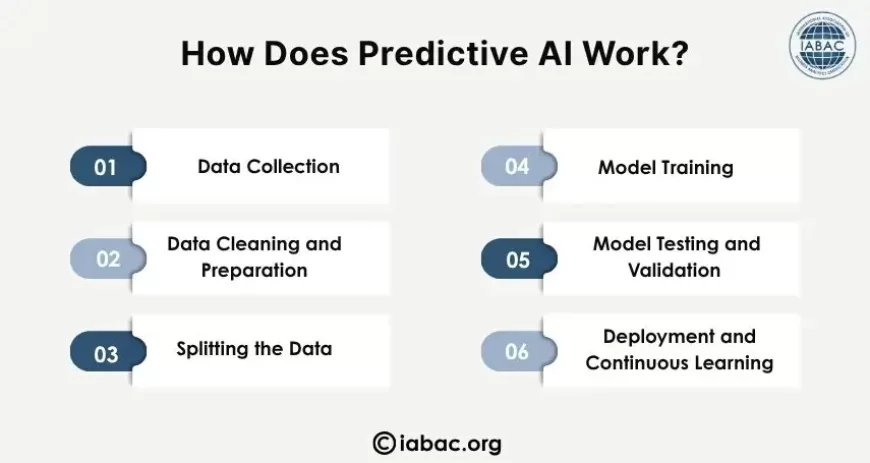
Predictive AI follows a structured process. Each step plays an important role in making sure the final prediction is accurate and useful.
1. Data Collection
The first step is gathering data from multiple sources. This can include customer transactions, website behavior, sensor readings, medical records, financial statements, or social media activity. The more relevant data available, the better the model can learn.
2. Data Cleaning and Preparation
Raw data is rarely perfect. It often has missing values, duplicate entries, incorrect formats, or outliers that can confuse the model. This stage includes cleaning the dataset by removing errors, filling gaps, and standardizing formats so the AI model can process it correctly.
3. Splitting the Data
Once the data is clean, it gets divided into two parts:
Training data – used to teach the model
Testing data – used to check how well the model performs on new, unseen data
This split is important because it helps confirm the model is not just memorizing the data but actually learning patterns from it.
4. Model Training
During training, the AI model studies the training data using machine learning techniques. It identifies relationships between different variables. For example, it may learn that customers who visit a website more than five times in a week are more likely to make a purchase.
5. Model Testing and Validation
After training, the model gets tested against the testing dataset to measure its accuracy. If the predictions are not close enough to actual results, the model gets adjusted and retrained.
6. Deployment and Continuous Learning
Once the model performs well, it gets deployed into a real business environment. As new data keeps coming in, the model keeps learning and improving its accuracy over time. This is why predictive AI systems tend to get smarter and more precise the longer they are used.
Common Algorithms Used in Predictive AI
Several algorithms power predictive AI systems. Each one works differently depending on the type of data and prediction needed.
- Linear Regression: Used when predicting a numeric value, such as predicting next month's revenue based on past revenue trends.
- Logistic Regression: Used when predicting a yes/no outcome, such as whether a customer will cancel a subscription.
- Decision Trees: These break down data into a tree-like structure of decisions, making it easier to understand why a prediction was made.
- Support Vector Machines (SVM): Used for classification tasks, such as separating spam emails from genuine ones.
- Neural Networks: Inspired by the human brain, these are used for more complex predictions like image recognition, speech patterns, or fraud detection.
- K-Means Clustering: Groups similar data points together, often used to segment customers based on buying behavior.
Each algorithm has strengths depending on the complexity of the data and the type of prediction required. Many predictive AI systems combine multiple algorithms to improve accuracy.
The Role of Embeddings in Predictive AI
Embedding is a way of converting data, like words, images, or customer behavior, into numbers that a machine can understand.
These numbers are arranged in a way that keeps meaning intact. For example, similar customer behaviors will have similar number patterns, even if the customers are completely different people. This helps the AI model compare, group, and relate data points more accurately, which improves prediction quality.
Why Explainability Matters in Predictive AI
Explainability means understanding why an AI model made a certain prediction, not just what the prediction is.
This matters a lot in industries like:
- Finance: A bank needs to explain why a loan application was rejected
- Healthcare: A doctor needs to understand why a model flagged a patient as high risk
- Insurance: A company needs to justify why a premium was priced a certain way
Without explainability, businesses risk making decisions they cannot justify to customers, regulators, or auditors. This is why many predictive AI systems now include tools that show which factors influenced a prediction the most.
The Importance of Data Diversity
A predictive AI model is only as strong as the data behind it. If the data used to train the model comes from a narrow or biased source, the predictions will also be narrow or biased.
For example, if a hiring prediction model is trained only on data from one type of candidate, it may unfairly favor similar candidates in the future. This is why diverse, well-rounded data is critical. It helps the model perform accurately across different groups, situations, and edge cases.
Predictive AI vs Generative AI
These two terms often get mixed up, but they serve very different purposes.
- Predictive AI analyzes existing data to forecast future outcomes. It answers questions like "What will happen next?"
- Generative AI creates new content, such as text, images, audio, or video, based on patterns it has learned. It answers questions like "Can you create something new for me?"
Both technologies rely on machine learning, but their end goals are different. Predictive AI is about foresight and planning. Generative AI is about creation and content generation. Some modern systems combine both, using predictive AI to guide decisions and generative AI to create supporting content, such as personalized marketing messages based on predicted customer behavior.
Real-World Use Cases of Predictive AI
Predictive AI is already shaping decisions across many industries. Here are some of the most common applications:
Inventory Management
Retailers predict how much stock to order based on seasonal demand and past sales patterns.
Supply Chain Optimization:
Companies predict delays, shortages, or disruptions before they happen, allowing for better planning. A January 2026 report from DemandSage found that 45% of global supply chains are expected to use predictive AI to forecast demand and manage operations.
Personalized Customer Experiences:
E-commerce platforms predict what products a customer is likely to buy next, improving recommendations and boosting sales.
Healthcare
Hospitals use predictive models to identify patients at risk of certain diseases or readmission, allowing for early intervention.
Marketing
Marketing teams predict which customers are likely to respond to a campaign, helping target the right audience and reduce wasted ad spend.
Finance
Banks and financial institutions predict credit risk, fraud probability, and loan default likelihood.
These examples show that predictive AI is not limited to one industry. It plays a role wherever forecasting, planning, and risk reduction matter.
Benefits of Using Predictive AI
Businesses that use predictive AI often see several advantages:
- Better decision-making backed by data instead of guesswork
- Reduced operational costs through early risk detection
- Improved customer satisfaction through personalized experiences
- Increased efficiency in supply chain and inventory planning
- Higher accuracy in financial forecasting and risk assessment
Challenges and Limitations of Predictive AI
While predictive AI offers many benefits, it also comes with challenges:
- Data Quality Issues: Poor or incomplete data can lead to inaccurate predictions
- Bias in Data: If training data reflects existing biases, predictions can reinforce those biases
- Complexity in Implementation: Building and maintaining predictive models requires skilled data scientists and proper infrastructure
- Explainability Concerns: Some advanced models, especially deep learning-based ones, can be difficult to interpret
Businesses need to address these challenges carefully to get reliable and fair results from predictive AI systems.
From predicting customer behavior to preventing equipment failure, predictive AI plays a growing role in how businesses operate and make decisions.
As organizations expand their use of predictive AI, professionals with practical knowledge gained through an AI certification are better equipped to build, interpret, and apply predictive models across different business functions.
As data quality improves and algorithms become more advanced, predictive AI will likely become an even bigger part of everyday business strategy across industries.