














































Best AI Certifications for Healthcare Workers: 2026 Guide
The best AI certifications for healthcare workers in 2026. Discover top programs, career benefits, and future-ready AI skills.

Hospitals across the US aren't waiting for staff to figure out AI on their own. Health systems are already deploying clinical decision support tools, AI-driven diagnostics, and administrative automation, and they need people inside the organization who can evaluate, govern, and work alongside these systems. If you're exploring an AI healthcare certification, the core question isn't whether the credential exists; it's whether it's built for your role. A clinical degree signals that you can deliver care. It doesn't signal that you understand how an AI model flags sepsis risk, how a scheduling algorithm introduces bias, or how to assess a vendor's AI procurement pitch.
The problem most healthcare professionals run into isn't motivation. It's that the market is flooded with generic AI credentials built for tech professionals, not for clinicians, administrators, or informatics specialists. Watching a few hours of machine learning videos and earning a completion badge doesn't prepare a hospital operations manager to lead an AI governance committee. The credential has to match the domain.
This guide compares the programs worth your time and money in 2026, from globally recognized credentialing bodies like IABAC (International Association of Business Analytics Certification) to university-backed certificates from Harvard, Johns Hopkins, and Stanford. The right AI healthcare certification depends on your role, and this guide breaks it down by exactly that.
Why an AI healthcare certification matters more in 2026 than it did two years ago
The skills gap hospitals are actively trying to close
Health systems are deploying AI tools faster than they can train the staff who use them. Clinical decision support, diagnostic imaging AI, revenue cycle automation, and patient flow prediction tools are already live in major hospital systems. The professionals managing, validating, and championing these tools need more than technical curiosity. They need a structured, credible foundation in how AI works within a healthcare context, and hiring managers are starting to reflect that in job descriptions and internal competency requirements.
This is no longer a future-state conversation. There is growing evidence, visible in revised job postings and competency frameworks at major health systems, that AI literacy is becoming a baseline expectation rather than a bonus qualification. Demand for professionals with a clinical AI certificate or equivalent credential is expanding across roles from nursing leadership to hospital finance, and the pace is accelerating.
What hiring managers and credentialing committees actually want
Most healthcare employers aren't looking for a data scientist. They're looking for professionals who can work alongside AI systems confidently, ask the right questions about model outputs, flag patient safety risks, and evaluate vendor claims without being deceived by well-designed dashboards. That's applied AI literacy, a fundamentally different skill set than knowing how to train a neural network.
When comparing programs, the evaluation comes down to three criteria worth examining closely: whether the curriculum addresses healthcare-specific use cases, whether the credential is assessment-based or just completion-based, and whether it's recognized beyond a single institution or country. Those filters alone eliminate most of the noise in this market. Healthcare professionals who earn an AI for clinicians certificate or a domain-specific digital health certificate will consistently hold a stronger position than those carrying generic tech badges.
AI healthcare certification: what separates a strong program from a generic tech certificate
Domain alignment: why "AI for everyone" doesn't cut it
A general AI certificate teaches you how machine learning models work. A domain-aligned AI healthcare certification teaches you how AI applies to EHR data, clinical trial design, diagnostic imaging, patient safety protocols, and health system operations. For a healthcare professional, that difference determines how fast you can apply what you learn to your actual job. Generic credentials leave you with conceptual knowledge and no clear bridge to clinical workflows. The programs compared in this guide are built with healthcare as the primary lens, not an afterthought module tacked onto a general data science course, which is the baseline criterion for inclusion.
Assessment rigor and global portability
There's a meaningful difference between a certificate of completion, where you watched the content and passed a quiz, and a competency-based credential, where you demonstrated applied knowledge against a defined professional standard. Completion-based formats have their place in continuing education, but they carry less weight in hiring and credentialing decisions. An assessment-based credential signals that the holder has actually demonstrated the material, not simply sat through it, and that distinction matters when your name is being reviewed by a credentialing committee.
Global portability is a dimension many professionals underweight when choosing a program. If a credential is tied to a single institution's internal framework, it may carry significant weight inside one academic medical center and very little outside it. A generative AI healthcare certification or any credential backed by an internationally recognized framework is more likely to hold up across employers and, for those in multinational organizations, across countries as your career evolves.
IABAC's AI in healthcare certification: domain-built and globally recognized
What the certification covers and who it's designed for
IABAC's Artificial Intelligence Certification Programs are built for professionals who live inside health systems but aren't pure data scientists. The curriculum covers AI applications in clinical and administrative settings, healthcare data analytics, AI governance, predictive modeling for healthcare trends, and domain-specific case studies grounded in real operational challenges. This is not a watered-down version of a technical certification; it's built from the ground up for healthcare's specific requirements.
The target audience is deliberately broad within healthcare: hospital operations managers, clinical informatics professionals, nursing leaders, healthcare administrators, and domain-adjacent professionals who need to apply AI knowledge in their day-to-day roles. If you're responsible for AI-related decisions inside a health system but you don't build models yourself, this credential is designed for your position.
How it applies in clinical and administrative settings
The certification's content maps directly to real-world healthcare roles. A hospital operations manager uses the governance and evaluation modules to assess AI-powered scheduling tools before deployment. A clinical informatics specialist applies the analytics and model validation content to verify that a diagnostic AI aid is performing as the vendor claims. A healthcare administrator draws on the AI procurement and ethics modules to lead a responsible AI policy process. These aren't hypothetical scenarios; they're the actual decisions healthcare professionals face every week. The credential connects applied knowledge to concrete role responsibilities, which is what separates it from programs that teach theory without a clear line to real-world impact.
The Edison framework advantage
IABAC aligns its credential structure with the European Commission's Edison Data Science Framework, a government-backed competency standard that maps professional skills to defined proficiency levels. According to IABAC's published program documentation, this alignment means that IABAC credentials can be evaluated against a structured, internationally recognized benchmark rather than just a program-specific rubric. For healthcare professionals who work in multinational organizations, or who want a digital health certificate that travels across employers and countries, this structural reference point is a practical advantage over university certificates that carry institutional prestige but use institution-specific frameworks rather than an external standardized competency standard. Professionals considering this credential are encouraged to review Healthcare Analytics Certification | IABAC to confirm the specific mapping relevant to their target credential.
University and health system certificates worth comparing in 2026
Harvard and Johns Hopkins: academic prestige with clinical depth
Harvard's AI in Health Care Certificate is a three-module program covering responsible AI concepts, innovation strategy, and clinical implementation. Each module runs approximately five weeks at four to five hours per week, priced at roughly $1,600 per course. The stated learning outcomes focus on evaluating AI systems, identifying implementation opportunities, and assessing ethical implications of AI in patient care. This program is best suited for clinicians and healthcare leaders who need to demonstrate executive-level AI literacy and who value the institutional weight of Harvard in academic medical center environments. Learn more about Harvard's digital health offerings through Harvard's digital health course page.
Johns Hopkins' AI in Healthcare Certificate Program runs 10 weeks online at $2,990, requires no prior programming experience, and combines recorded lessons with live mentorship and masterclasses. Both programs carry strong recognition at academic medical centers and with credentialing committees that value university brands. The tradeoff is that these university certificates typically use institution-specific frameworks rather than an external standardized competency framework, which can limit their portability outside the environments that already recognize them. Details on Johns Hopkins' offering are available on their official AI in Healthcare Certificate Program.
Cedars-Sinai and Stanford: health system and CME-backed options
The Cedars-Sinai Certificate in Applied AI for Health Systems runs 12 weeks with weekly modules, prerecorded lectures, readings, and applied assignments grounded in real clinical data. Because it's developed inside a major health system, the content is highly relevant for hospital operations, informatics, and digital transformation roles, the learning context closely mirrors the environment where you'll apply it. More information is available on Cedars‑Sinai's Certificate in Applied AI for Health Systems page.
Stanford's AI in Healthcare Specialization on Coursera carries CME accreditation, making it a strong option for licensed clinicians who need continuing education credit as part of their recertification requirements. The format is completion-based, which means less assessment rigor than proctored credentials. CME value is high; credential weight in non-clinical hiring decisions is moderate.
ABAIM: the specialist board for AI in medicine
The American Board of Artificial Intelligence in Medicine positions itself as a dedicated certifying body for physicians seeking an AI in medicine certification at the board level. The assessment is 110 questions over two hours, with a passing threshold of 70 correct answers, and the certification is valid for two years. Employer familiarity with the credential is still developing compared to the major university brands. ABAIM is best suited for physicians who want a specialty-specific credential rather than a continuing education certificate, and who understand that recognition will vary by employer and health system. See ABAIM's certification details on their official certification page.
Choosing an AI healthcare certification by role
For clinicians and physicians
Clinicians need credentials that address clinical decision support, diagnostic AI, and patient safety, not generic data science content. Stanford's specialization is a natural fit for licensed clinicians who need CME credit as part of their professional recertification. Johns Hopkins and Harvard offer strong academic depth for clinicians moving into leadership or innovation roles. ABAIM is worth considering for physicians who want a dedicated AI in medicine certification alongside their clinical practice. IABAC's AI healthcare certification is a practical complement when the clinician also manages teams, evaluates vendors, or contributes to AI governance decisions.
For hospital administrators and operations managers
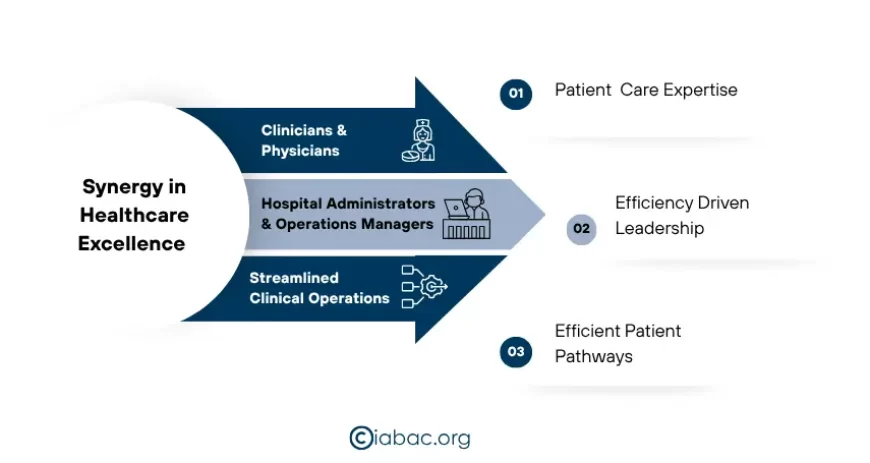
Administrators need to govern AI tools, evaluate vendor performance claims, and lead digital transformation initiatives. Generic tech certifications don't serve this group because they don't address procurement, operational governance, or health system strategy. IABAC's AI healthcare certification is a direct match for this audience, given its coverage of operational governance, AI evaluation, and domain-specific decision-making. Cedars-Sinai and Harvard's innovation module are solid additions for administrators who want institutional recognition alongside operational depth.
For informatics and healthcare data professionals
This group needs a credential that bridges clinical domain knowledge with technical analytics capability. Pure tech certifications without healthcare context leave a gap, because they don't address EHR data specifics, clinical workflow integration, or healthcare-specific AI governance. IABAC's AI healthcare certification combines AI knowledge with domain specialization in a single program, making it a practical option for informatics professionals who want both depth covered efficiently. Pairing it with Stanford's specialization or a technical data analytics certification addresses both the domain and technical requirements this role demands.
How to move from comparing options to actually enrolling
Auditing your prerequisites and time availability
Most AI healthcare certification programs have minimal hard prerequisites, though you'll progress faster with some background in analytics or clinical operations. Before enrolling, confirm the weekly time commitment, most programs run two to five hours per week. Then determine whether a self-paced or cohort-based format fits your schedule, keeping in mind that assessment and proctoring requirements differ significantly between programs. Cohort-based programs like Harvard and Johns Hopkins have fixed start dates and built-in accountability. Self-paced programs offer flexibility but require personal discipline. Based on IABAC's published program information, its assessment-based format allows candidates to study on their own schedule and sit a proctored exam when ready, though confirming current logistics directly at IABAC before enrolling is advisable.
Taking the first concrete step
Choose based on role alignment, not name recognition. Hospital administrators and domain-aligned professionals should explore IABAC's Artificial Intelligence Certification Programs directly and review the structured assessment process before comparing it to other options. Clinicians who need CME credit should prioritize Stanford. Those building a case for internal credentialing at an academic medical center should evaluate Harvard or Johns Hopkins. The most important move is picking the program that fits your role and committing to enrollment, not continuing to research until the timing feels perfect. Review your shortlist, confirm the format works for your schedule, and register this week.
The bottom line on healthcare AI credentials in 2026
An AI healthcare certification is a professional differentiator in 2026, and the right one depends on your role, not on which brand name looks best on a resume. Based on how employers and credentialing committees are evaluating candidates, domain-aligned credentials tend to outperform generic tech badges for healthcare hiring. Assessment-based credentials carry more weight than completion certificates because they require demonstrated competency, not just attendance. A globally portable credential backed by a recognized framework offers longer-term career value than one tied to a single institution's internal recognition.
IABAC's AI healthcare certification is a strong starting point for professionals who want structured, globally referenced competency validation that speaks directly to the operational and governance realities of working inside a health system. University programs from Harvard, Johns Hopkins, and Stanford round out the landscape for specific use cases, particularly where CME credit, academic prestige, or clinical depth drives the decision.
Identify the program that matches your role, confirm the format fits your schedule, and take the step toward enrollment. Review IABAC's healthcare certification options, compare them against the university programs outlined here, and choose the credential that positions you for the decisions you're already being asked to make. For tips on presenting these credentials on your CV, see IABAC's AI-Ready Resume for Success in Artificial Intelligence, IABAC.