



















































Experts Say Data Science Academy Courses Are Shaping Future Careers?
Experts say Data Science Academy courses build practical skills, support certifications, and prepare learners for career growth in 2026.


A few years ago, many people thought data science was only for programmers sitting in dark rooms writing code all day. Today, the story looks completely different. Hospitals use data to predict diseases. Retail stores study customer buying habits. Sports teams use analytics to improve performance. Even food delivery apps quietly depend on data every second. Every click, payment, search, and online order creates information. That information becomes useful only when someone understands how to analyze it. That is exactly where Data Science steps in.
Experts across industries now believe that Data Science Academy programs are becoming one of the strongest career paths for people who want stable jobs, better salaries, and global opportunities. The reason is simple. Companies do not just want workers anymore. They want people who can understand numbers, patterns, customer behavior, and business decisions. This change has made Data Science Courses one of the most searched learning programs worldwide. And honestly, many people first enter Data Science because someone told them, “The salaries are good.” Then they open Python for the first time and suddenly start questioning every life decision they ever made. A few weeks later, they build their first project and proudly show it to everyone like it is a newly launched satellite.
That journey is becoming common across the world.
What Makes Data Science So Important Today
Data is growing at an unbelievable speed. Studies estimate that global data creation may cross 180 zettabytes by 2025.
Global Data Growth and Its Impact on Data Science Academy Learning
|
Year |
Global Data Created |
|
2015 |
15 ZB |
|
2020 |
64 ZB |
|
2025 |
181 ZB |
|
2030 |
300+ ZB (Expected) |
Every industry now depends on this information:
- Healthcare predicts patient risks
- Banks detect fraud
- Airlines optimize ticket pricing
- Online stores recommend products
- Governments improve city planning
- Manufacturers reduce machine failures
Without Data Science, most of this information becomes digital noise. This is why Certifications for Data Science are becoming valuable across industries.
Why Data Science Academy Programs Are Changing Careers
Traditional education often focuses heavily on theory. But employers want practical skills. They want people who can actually work with data, solve business problems, and explain results clearly.
That is where a Data Science Academy becomes important.
Good academies focus on:
- Real projects
- Industry tools
- Problem-solving
- Business understanding
- Practical assignments
- Portfolio development
Instead of memorizing definitions, learners work on real datasets.
A learner may analyze:
- Customer buying patterns
- Social media trends
- Healthcare records
- Financial transactions
- Climate data
This practical learning makes job transitions easier.
Many people from non-technical backgrounds now move into Data Science:
- Marketing professionals
- Finance employees
- Teachers
- Engineers
- Sales managers
- Graduates from different fields
Some begin with an introduction to data science course and slowly move toward advanced machine learning.
Learning Data Science at a Data Science Academy
Most blogs only talk about salaries and jobs. But the emotional side matters too.
Learning Data Science can feel exciting and frustrating at the same time.
- One day: “Wow, my model accuracy improved.”
- Next day: “Why is this code giving 17 errors?”
That emotional rollercoaster is normal.
Many learners spend hours fixing one missing bracket in Python. Some celebrate after successfully creating their first graph. Others feel proud when they complete their first data science project and finally understand how businesses use analytics. The learning process slowly changes confidence levels. People who once feared numbers begin creating dashboards, predictions, and reports. That confidence becomes life-changing.
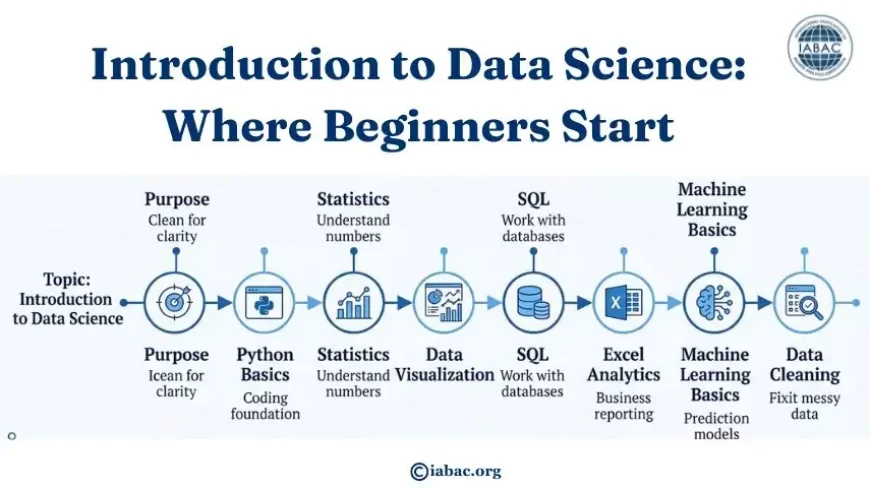
Introduction to Data Science: Where Beginners Start
Most people begin with an introduction to data science course.
This stage usually includes:
Beginners often worry that Data Science is impossible without advanced mathematics.
That is not true.
Yes, mathematics helps. But many successful professionals start with basic concepts and improve gradually.
The important thing is consistency.
The Data Science Academy Roadmap for Career Growth
A proper data science roadmap helps learners avoid confusion.
Without direction, many people jump randomly between tutorials and feel lost.
A structured roadmap usually looks like this:
Step 1: Learn the Basics
- Python
- Statistics
- Excel
- SQL
Step 2: Work with Data
- Data cleaning
- Visualization
- Exploratory analysis
Step 3: Learn Machine Learning
- Regression
- Classification
- Clustering
Step 4: Build Projects
- Real datasets
- Business problems
- Dashboards
Step 5: Earn a Data Science Certification
- Professional certification helps validate skills.
Step 6: Build Portfolio
Showcase:
- GitHub projects
- Reports
- Case studies
- Dashboards
Step 7: Apply for Jobs
Target roles like:
- Data Analyst
- Business Analyst
- Junior Data Scientist
- AI Associate
- Analytics Consultant
Why Employers Value Data Science Certification
Many employers receive thousands of applications. Certifications help candidates stand out.
A recognized Data Science Certification shows:
- Commitment
- Technical understanding
- Practical exposure
- Structured learning
Employers often prefer candidates who completed professional training programs because they already understand industry workflows.
Professional certifications also help working professionals move into better roles.
Many learners use certification programs to:
- Switch careers
- Increase salary
- Gain promotions
- Move into analytics teams
The global analytics market is expected to continue growing strongly over the next decade.
IABAC and Professional Data Science Learning
Many learners worldwide now look for structured certification programs that combine practical learning with industry relevance. The IABAC certification platform offers globally recognized certifications designed for analytics and Data Science professionals. Programs available through the IABAC certifications page help learners understand practical business applications instead of only theoretical concepts.
You can explore certifications naturally through the IABAC certification page:
https://iabac.org/certifications
These programs support learners across different career stages:
- Beginners
- Working professionals
- Managers
- Technical teams
- Career changers
The focus on practical skills makes professional learning more useful in real work environments.
Data Science Courses Are Becoming More Practical
Earlier, many online courses focused mostly on theory.
Now, modern Data Science Courses focus heavily on:
- Real-world case studies
- Cloud platforms
- AI tools
- Automation
- Business intelligence
- Live projects
This practical approach helps learners understand how companies actually use data.
Retail Example
A retail company may use Data Science to:
- Predict customer purchases
- Reduce inventory waste
- Improve pricing
Healthcare Example
Hospitals may use analytics to:
- Predict disease risks
- Improve patient care
- Reduce emergency delays
Banking Example
Banks use Data Science for:
- Fraud detection
- Credit scoring
- Risk analysis
Simple Example of Data Science in Daily Life
Many people use Data Science every day without realizing it.
Example: Movie Recommendations
When streaming platforms suggest movies, they analyze:
- Watch history
- Ratings
Viewing time
Search behavior
A recommendation model studies patterns and predicts what users may like.
That prediction process is part of Data Science. Even online shopping recommendations work similarly. Sometimes the recommendations become surprisingly accurate. Sometimes they become completely confusing. A person buys one office chair and suddenly receives 47 chair advertisements for the next three months. Data systems are still learning too.
Data Science Syllabus: What Learners Usually Study
A professional data science syllabus often includes:
Core Technical Topics
- Python Programming
- SQL
- Statistics
- Probability
- Machine Learning
- Deep Learning Basics
- Data Visualization
- Business Analytics
Tools Commonly Used
- Python
- Power BI
- Tableau
- Jupyter Notebook
- Excel
- SQL Databases
Advanced Topics
- NLP
- AI Fundamentals
- Predictive Analytics
- Big Data Concepts
Sample Data Science Learning Timeline
|
Month |
Learning Focus |
|
Month 1 |
Python and statistics |
|
Month 2 |
SQL and visualization |
|
Month 3 |
Machine learning basics |
|
Month 4 |
Real projects |
|
Month 5 |
Advanced analytics |
|
Month 6 |
Portfolio and certification |
This timeline changes based on learning speed and background.
Some people learn faster.
Some spend two hours debugging one line of code and stare silently at the screen like detectives solving a crime scene.
Both experiences are normal.
Why Data Science Projects Matter
A strong data science project often matters more than theoretical knowledge.
Projects help learners:
- Apply concepts
- Build confidence
- Solve business problems
- Create portfolios
Popular beginner projects include:
- Sales prediction
- Customer segmentation
- Movie recommendation systems
- Fraud detection
- Weather prediction
Projects show employers practical ability.
Even simple projects can make a strong impact when explained clearly.
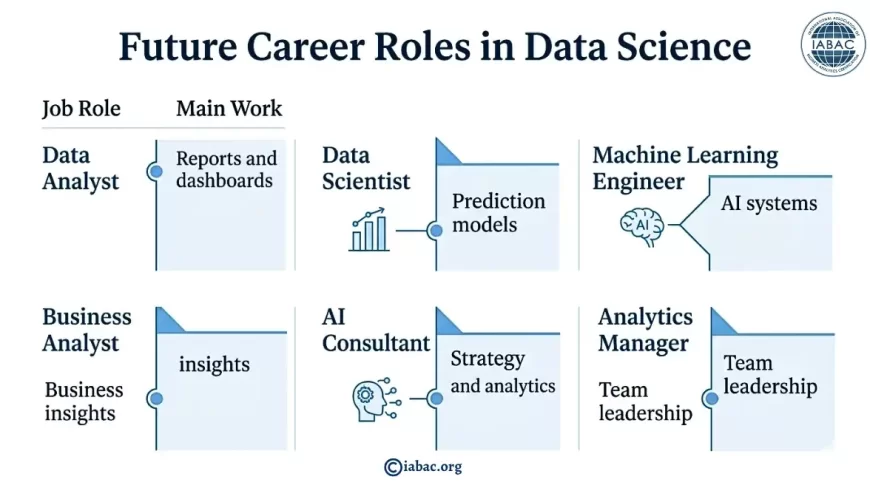
Future Career Roles in Data Science
The future job market continues shifting toward analytics and AI-driven work.
Popular roles include:
Many global companies now treat Data Science as a business necessity instead of an optional department.
Global Demand for Data Science Skills
Reports continue showing strong demand for analytics professionals worldwide.
Growth of Analytics Jobs
|
Year |
Demand Growth |
|---|---|
|
2022 |
18% |
|
2024 |
28% |
|
2026 |
36% |
|
2030 |
50%+ Expected |
This demand comes from:
- Digital business growth
- AI adoption
- Automation
- Online customer behavior
- Cloud computing
Countries across Asia, Europe, North America, and the Middle East continue increasing investments in AI and analytics.
Common Mistakes Beginners Make in Data Science
Many beginners struggle because they:
- Learn too many tools at once
- Skip practical projects
- Ignore statistics
- Fear coding mistakes
- Compare themselves constantly
One important truth: Even experienced professionals search online for coding solutions regularly.
Nobody memorizes everything.
The goal is problem-solving, not perfect memory.
Soft Skills Also Matter in Data Science
Technical skills are important, but communication matters too.
A great Data Scientist must explain findings clearly.
Imagine building a powerful prediction model but explaining it in such a confusing way that nobody understands it.
That happens more often than people think.
Important soft skills include:
- Communication
- Business understanding
- Teamwork
- Presentation skills
- Problem-solving
The Real Reason a Data Science Academy Can Shape Your Future Career
The biggest reason is not only salary.
It is adaptability.
Data Science skills can work across industries:
- Healthcare
- Finance
- Sports
- Retail
- Manufacturing
- Education
- Entertainment
- Government
This flexibility creates long-term career opportunities.
As businesses continue using AI and analytics, professionals with strong analytical thinking will remain valuable.
Final Thoughts on Data Science Academy Learning
The future workplace is changing quickly. Businesses no longer depend only on experience or instincts. They increasingly depend on insights, patterns, and smart decision-making supported by data. That is why Data Science Academy programs continue growing worldwide.
For many learners, the journey begins with curiosity:
“What is Data Science?”
Then slowly:
- One course becomes a project
- One project becomes confidence
- One certification becomes a career opportunity
Professional learning paths, practical projects, and recognized certifications are helping people move into careers that once felt unreachable. Whether someone starts with an introduction to data science course or moves toward advanced machine learning, the opportunities continue expanding globally. The important step is starting. Because the future of work is no longer only about working harder. It is also about understanding data better.