


















































AI Readiness Assessment: Is Your Business Actually Prepared for AI?
A practical guide to AI readiness assessments: what they cover, why most AI projects stall without one, and how to check your data, people, and governance before you invest.

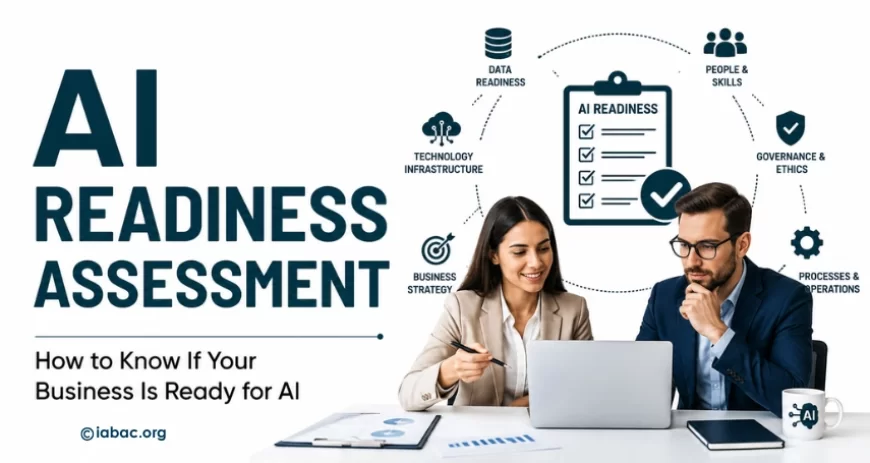
Most companies don't fail at AI because the technology doesn't work. They fail because they start building before anyone checks whether the organization can actually support what they're building. A team buys a tool, connects it to a dataset nobody has cleaned in three years, and wonders six months later why the results don't match the pitch deck.
An AI readiness assessment exists to catch that problem early. Before you commit budget to an AI initiative, it forces an honest look at your data, systems, people, and governance, and identifies where the actual gaps are.
This guide covers what a readiness assessment includes, the pillars it's built on, and how to turn it into a roadmap that doesn't fall apart the first time someone asks, "where did this number come from?"
What Is an AI Readiness Assessment?
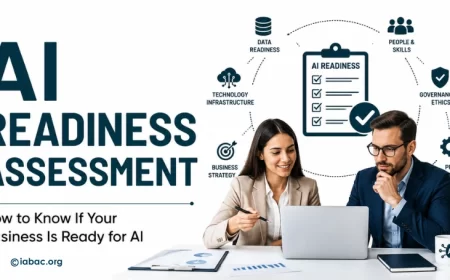
An AI readiness assessment is a structured review of how prepared an organization is to adopt and scale AI. It goes beyond the technology stack. A proper assessment covers:
• Business objectives
• Data maturity
• Technology infrastructure
• Workforce capability
• Leadership buy-in
• Governance and compliance
• Security
• Existing operational workflows
Treat it as a diagnostic, not a formality. The goal isn't a report that sits in a shared drive. It's a clear picture of where an AI project would break if you launched it today, so you can fix that before launch instead of after.
If your team is still building foundational AI literacy, it's worth pairing this exercise with a structured path like the AI Foundation certification — it gives non-technical stakeholders a shared vocabulary before the assessment even starts.
Why Bother With a Readiness Check?
Buying an AI tool doesn't guarantee results. AI performs in proportion to the data, structure, and people around it. Skip the readiness check and you tend to land on one of these outcomes:
• A pilot that never leaves the sandbox
• A model that quietly reinforces bad assumptions because nobody validated the training data
• A tool employees route around because it wasn't built into their actual workflow
• A compliance problem nobody notices until a regulator asks about it
A readiness assessment reverses that order. Instead of discovering what's broken after go-live, you find out beforehand, with a prioritized list of what to fix first.
Signs You Need One
A few situations point directly to needing this exercise:
Pilots that never scale. Something works in a demo, then stalls the moment it needs to touch production data or a live workflow.
Data scattered everywhere. Customer records live in one system, financials in another, support tickets in a third, and none of them agree with each other.
A workforce that's skeptical. Without training or a clear reason to trust the tool, employees quietly work around it.
Leadership wants numbers, not enthusiasm. Executives are done funding experiments and want a case for ROI before the next budget cycle.
Regulatory exposure. In a regulated sector, deploying AI without documented governance is a liability question as much as a technology one.
If more than one of these sounds familiar, that's a reason to check first, not build faster — the same logic behind most decisions to bring in outside AI consulting expertise before committing to a build.
The 7 Pillars of an AI Readiness Assessment
1. Business Strategy
AI has to answer to a business goal, not the other way around. This pillar looks at growth priorities, operational pain points, and what "success" actually means for the initiative in question. Projects that start with "we should use AI for something" rarely survive contact with a budget review.
2. Data Readiness
Nothing else on this list matters if the data underneath it is bad. This pillar checks availability, quality, completeness, accessibility, and how well the data is governed. A model trained on incomplete or biased data produces confident, wrong answers, which is worse than no answer at all.
3. Technology Infrastructure
Can your current systems actually support what you're proposing? This covers cloud readiness, APIs, data warehouses, compute capacity, and how well new AI tools would connect to what you already run. Weak infrastructure is usually the reason a promising pilot never reaches production, a gap covered in more depth in how AI integration consulting closes infrastructure gaps.
4. People and Skills
Technology doesn't implement itself. This pillar looks at AI literacy across leadership and staff, data literacy, and how ready the organization is for the change management a new tool brings. Structured learning paths, including IABAC's AI certification programs, are often one of the highest-return investments in a rollout, sometimes more valuable than the tool itself in year one.
5. Governance and Responsible AI
This is where ethics, bias management, transparency, and regulatory compliance live. Frameworks like GDPR, the EU AI Act, and India's DPDP Act are already shaping how organizations are expected to document and monitor AI systems, a shift worth understanding in more detail if it isn't your team's area of expertise. Weak governance doesn't just create legal risk; it erodes the trust of the people the system is meant to serve.
6. Processes and Operations
AI works best when it's built into an existing workflow, not bolted on beside it. This pillar maps manual processes, automation candidates, and where decision-making actually bottlenecks, so the initiative targets a real point of friction instead of a hypothetical one.
7. Leadership and Culture
Executive sponsorship is usually the difference between a pilot that scales and one that quietly dies after the first budget cycle. This pillar measures how committed leadership actually is, not just how enthusiastic they sound in a kickoff meeting.
AI Readiness Checklist
Before greenlighting an AI initiative, answer these honestly:
• Do we have a clearly defined business objective for this?
• Is our data accurate, complete, and accessible?
• Do we have trained people, or a plan to train them?
• Have we identified use cases with measurable value?
• Is leadership actually committed, or just curious?
• Do we have governance and compliance policies in place?
• Does our infrastructure support the workload?
• Have we defined KPIs to judge success?
If you answered "no" or "not sure" to more than two of these, run the assessment before you run the project.
Where These Projects Usually Go Wrong
Bad data. Incomplete or inconsistent records limit what any model can do, regardless of how sophisticated it is.
Skill gaps. Teams need training in AI concepts and governance, not just tool operation.
Vague objectives. Projects without a measurable goal struggle to prove they were worth funding.
Legacy systems. Older infrastructure makes integration harder and slower than it needs to be.
Governance gaps. Without documented policy, organizations carry security, compliance, and ethical risk they may not even be tracking.
Catching these early, through the assessment, is cheaper than catching them after deployment.
What You Get From Running the Assessment
Organizations that assess readiness before building tend to see:
• Faster implementation, because the blockers are already known
• Better resource allocation
• Lower project risk
• Stronger ROI
• Higher adoption from employees who trust the system
• Governance that holds up under scrutiny
• Clear alignment between leadership and delivery teams
Where AI Consulting Fits In
An outside perspective helps mainly because it's objective — an internal team assessing its own readiness tends to underrate its blind spots. AI consulting services typically help with:
• Identifying which use cases are actually worth pursuing
• Evaluating technical readiness honestly
• Building the adoption roadmap
• Designing governance frameworks
• Sequencing implementation phases
• Measuring progress against a maturity model
The value isn't the consultant doing the work for you. It's having someone flag the gap you'd otherwise only discover mid-project. For a closer look at how that roadmap gets built in practice, see how AI implementation consulting moves teams from strategy to deployment.
Why Readiness Is a Competitive Advantage Now
Organizations that check readiness before deploying consistently outperform the ones that don't, not because they move slower, but because they don't waste a budget cycle relearning lessons the assessment would have surfaced upfront. As AI adoption becomes standard rather than experimental, being ready isn't a nice-to-have. It's what separates a working AI program from an expensive pilot that never left the sandbox.
Frequently Asked Questions
What is an AI readiness assessment?
A structured evaluation of how prepared an organization is to adopt AI, covering strategy, data, infrastructure, people, and governance.
Why does AI readiness matter?
It reduces implementation risk, clarifies which use cases are worth pursuing, and gives you a roadmap instead of a guess.
How long does an assessment take?
It depends on organization size. Smaller businesses can often complete one in a few weeks; enterprise-wide assessments take longer.
Who should run the assessment?
A mix of business leaders, IT, data teams, and, ideally, an outside AI consultant who isn't grading their own homework.
What happens after the assessment?
The findings become a prioritized roadmap: what to fix first, which use cases to pursue, and what governance needs to be in place before launch.
AI doesn't fail because the models are weak. It fails because organizations skip the unglamorous work of checking whether they're actually set up to use it. An AI readiness assessment is that check — a way to find the gaps while they're still cheap to fix, instead of after the budget is spent.
|
For technical teams Building the skills your team needs before the rollout starts? Start with the Certified Artificial Intelligence Expert (CAIE) certification. |
|
For leadership teams Need an outside view of where your organization actually stands? Explore IABAC's AI consulting services or the Certified AI Business Leader (CAIBL) program. |