



















































Can I Get a Data Analytics Job Without a Degree?
Your degree doesn't define your data analytics career. Find out what actually gets you hired: skills, portfolio, and the right certification.

Short answer? Yes.
You don't need a degree to get a data analytics job. Plenty of working analysts today never studied data science in college. Some came from marketing. Some from retail. Some just got curious about numbers one day and ran with it.
But let's be real, "you don't need a degree" doesn't mean "you can wing it." There's still real work involved. You need the right technical skills, a portfolio that shows what you can do, and a certification that gives employers a reason to trust you.
This blog walks you through exactly how to get there without spending four years in a classroom.
The Honest Truth About Degree Requirements
A few years ago, almost every data analyst job posting included "bachelor's degree required." And for a long time, that line scared a lot of people away.
Here's the thing, though: those requirements are changing. Fast.
Companies are sitting on mountains of data, and they don't have enough analysts to make sense of it. They can't afford to be picky. So instead of waiting for the "perfect candidate" with a degree, many hiring managers are now asking a simpler question: can this person actually do the job?
Two big signals confirm this shift:
-
IBM found that 68% of employers now consider certifications and short-term training to be important factors when hiring for analytics roles
-
The World Economic Forum's Future of Jobs Report 2025 put it plainly: the days of relying solely on degrees to prove capability are fading, with employers worldwide increasingly prioritizing practical expertise over formal qualifications.
The credential that matters most isn't hanging on your wall from university, it's what you can pull up on your laptop during an interview.
What Hiring Managers Actually Care About?
If you're job hunting without a degree, it helps to understand exactly what's going through a recruiter's head when they look at your application.
They're not mourning the absence of your degree. They're looking for three things.
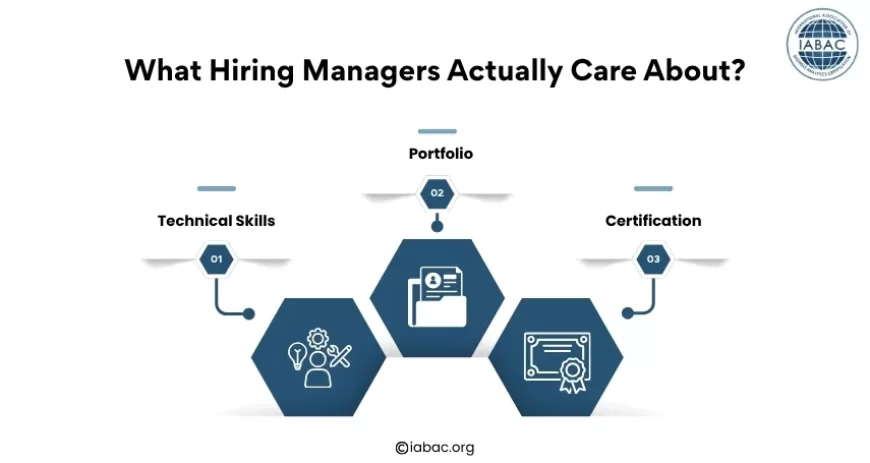
1. Can You Work With Data? (Technical Skills)
The core tools employers test for in 2026:
-
SQL: Still the most in-demand skill on job postings. You need to handle queries, joins, window functions, and messy datasets comfortably.
-
Python: The go-to language for data analysis. Focus on Pandas and NumPy to start.
-
Power BI / Tableau: Visualization tools expected at every level.
-
Excel: Widely used, especially in finance and business roles.
-
Basic Statistics: Averages, distributions, correlations, enough to interpret what the data is saying.
You don't need to master all of these at once. Start with SQL and Excel, get comfortable, then build from there. Create a video explaining the essential data analyst skills, portfolio requirements, certifications, job search strategies, and career roadmap for aspiring analysts without a degree.
2. Can You Show Your Work? (Portfolio)
This is where most people without a degree fall short, not because they lack skills, but because they haven't built anything to show.
Your portfolio is your degree replacement. A hiring manager looking at two applications, one with a degree and no projects, one without a degree but three solid projects on GitHub, will most often shortlist the second person.
Strong portfolio project ideas:
-
Customer churn analysis using Python and a public dataset.
-
Sales performance dashboard built in Power BI or Tableau.
-
Sentiment analysis of app store or product reviews.
-
Public health data study using government open datasets.
-
E-commerce trend analysis with actionable findings.
Build 3 to 5 of these. Put them on GitHub or a personal website. Make them easy to find and click through.
3. Do You Have a Certification?
When you don't have a degree, a certification does two things:
-
Proves you've gone through structured learning and been assessed on it
-
Gives the recruiter something credible to point to when justifying hiring you
What to look for in a certification:
-
Recognized by employers globally
-
Covers practical skills, not just theory
-
Includes hands-on projects
-
Comes from an established, credible body
IABAC's Certified Data Analyst certification ticks all of those boxes. It's aligned with the European Commission's Edison Framework, recognized globally, and covers exactly what employers test for: data processing, statistical analysis, visualization, and predictive modeling.
Which Industries Are Most Open to Hiring Without a Degree?
Not all industries treat the degree question the same way. These sectors care far more about what you can do than where you studied:
|
Industry |
Why They Hire Without a Degree |
|
Healthcare |
Huge volumes of patient and operational data; entry roles focus on ability, not background |
|
Retail & E-commerce |
Track everything: customer behavior, inventory, returns; constant need for dashboard builders |
|
Financial Services |
Risk reporting, fraud detection, and customer analytics offer many junior roles accessible without a grad degree |
|
Technology |
Often care most about what's in your GitHub, not what's on your transcript |
|
Marketing |
Need analysts who connect campaign data to business outcomes. skills speak loudest here |
Start your job search in these sectors. They're where the doors are most open.
Soft Skills Matter More Than You Think
Here's something the "learn SQL in 30 days" crowd often skips over.
Technical ability gets your foot in the door. Communication keeps you in the room.
Employers in 2026 are increasingly frustrated by analysts who can build great dashboards but can't explain what the numbers mean to a non-technical team.
How to build communication skills as an analyst:
-
Write about your portfolio projects and explain your findings in plain language.
-
Present your work to friends or colleagues who aren't in data.
-
Record yourself walking through a chart or dashboard.
-
Practice turning a data insight into a one-sentence business recommendation.
The ability to translate data into a clear, simple story is genuinely rare. And it's valued.
A Realistic Path to Your First Data Analytics Job
Here's a step-by-step breakdown of how most people without a degree have successfully broken in:
Step 1: Start with what you already know. If you've worked in marketing, finance, operations, or any role involving reporting or spreadsheets, that's relevant experience. Don't dismiss it, frame it.
Step 2: Pick one learning path and stick to it. The trap most beginners fall into is jumping between platforms without finishing anything. Follow this order:
-
Start with SQL, finish one full course
-
Then, Python (Pandas focus) build one project
-
Then, Power BI or Tableau build a dashboard
-
6 to 12 months of consistent effort gets most people job-ready
Step 3: Build your portfolio as you learn. Don't wait until you feel "ready." Start with your first dataset, make something, and keep adding. Each project should have:
-
A clear question or problem
-
A clean dataset
-
An analysis
-
A visual output or key finding
Step 4: Consider the internal transfer route. Already working somewhere? This is one of the most underrated entry paths. If you're in operations, admin, finance, or marketing, ask about data-related projects internally. Companies love promoting people who already understand the business. It gets you real experience faster than any bootcamp.
Step 5: Get certified. Once you have foundational skills, a certification like IABAC Certified Data Analyst gives you the credibility to walk into applications with confidence.
Step 6: Apply to entry-level titles specifically, Target roles like:
-
Junior Data Analyst
-
Reporting Analyst
-
Business Intelligence Analyst
-
Data Operations Analyst
-
Marketing Data Analyst
These are designed for early-career professionals and are less likely to hard-filter on degree.
Step 7: Network without being weird about it
-
Comment genuinely on LinkedIn posts in the data space
-
Share your projects publicly
-
Join Kaggle competitions
-
Ask questions in Reddit and Discord data communities
People in this field are more generous with their time than you'd expect.
How to Write Your Resume When You Don't Have a Degree
Your resume needs to do extra work when there's no degree to anchor it. Here's how to structure it:
Lead with a strong objective statement. Tell the recruiter immediately what you bring and what role you're targeting. Don't leave them guessing.
Put skills and certifications near the top. When a recruiter is scanning in 10 seconds, these are what stop them, not your work history from five years ago.
Add a dedicated projects section. For each project, include:
-
The problem you solved
-
The tools you used
-
The result or insight you found
-
A link to GitHub or your portfolio
Beat the ATS system. Match your resume keywords directly to the job description. If the posting says "Power BI" and your resume says "data visualization tool", that's a miss. Tools like Jobscan show you which keywords you're missing before you submit.
Keep your skills list honest and short. Don't list every tool you've ever opened. List only what you can comfortably talk through in an interview. A tight, honest skills section beats a padded one every time.
Rejection Is Part of It. Here's How to Handle It
No one talks about this enough, but it's worth saying clearly: you will get rejections. Probably more than a few, especially early on.
That's not a sign the path isn't working. It's just how job searching works for everyone, with a degree or without a degree.
When a rejection comes in, don't just move on. Ask for feedback if you can. Each rejection, when you treat it like data, tells you something useful about where to improve:
-
Was it the resume? Tighten the keywords and lead with skills
-
Was it the portfolio? Add more context to your project findings
-
Was it the interview? Practice explaining your work out loud more
The people who break into this field without a degree aren't the ones who never got rejected. They're the ones who got rejected, figured out why, fixed it, and kept going.
Frequently asked questions
Do companies still reject applicants without a degree?
Some do large enterprises, and government roles can be strict. But the majority of mid-size companies and startups care far more about skills, portfolio, and certifications than your educational background.
How long will it take to get a job this way?
Most people following a focused path, consistent learning, building projects, and getting certified are job-ready within 6 to 12 months. Some faster, some a little longer. It comes down to how many hours a week you put in.
Is a data analytics certification actually worth the money?
Yes, if you choose a globally recognized one and pair it with real project work. A certification alone won't get you hired, but a certification backed by a solid portfolio is a genuinely strong application.
What's a realistic starting salary in India without a degree?
Entry-level: ₹3.5 LPA – ₹6 LPA
With 2–3 years of experience: ₹8 LPA – ₹14 LPA and above
Global markets: $55,000 – $70,000 USD at entry level
Which industries hire data analysts without a degree?
Healthcare, retail, e-commerce, financial services, technology, and marketing are among the most open of all high data-volume sectors that prioritize demonstrated skills over formal qualifications.
The degree question holds a lot of people back from even trying. And that's the real problem, not the degree itself, but the hesitation it creates.
The data analytics field is full of people who started without a traditional background. What they had in common wasn't where they studied. It was that they built something, learned consistently, and got in front of the right opportunities.
If you're thinking about making the move, the best time to start is now. Build your first project this weekend. Take that first SQL course. Look into what the IABAC certification actually covers and whether it fits where you want to go.
You've got more going for you than you think.