
























































Global Accreditation for Training Institutes: Apply
Your institute deserves global recognition. See how accreditation brings more students, partnerships, and growth. Discover the simple next steps.


Your institute teaches data science and analytics courses. Your students learn, pass exams, and find jobs. But there's a question that keeps popping up: Are we recognized globally?
This is where global accreditation enters the picture. It's not just another certificate on the wall. It's the difference between being a good training provider and being the training provider that professionals trust.
Why Your Institute Needs Global Accreditation Right Now?
Think about why students choose your institute over others. They want to know three things:
-
Will this qualification be recognized where I apply for jobs?
-
Is this course designed by industry experts, not just someone's guess?
-
Will this training actually prepare me to work?
Global accreditation answers all three questions with a resounding yes.
Without accreditation, you're competing on price and location. With accreditation, you're competing on quality and recognition. Your students get a credential that employers actually respect. Your institute gets a seat at the international table.
The Real Problem Most Training Institutes Face
Many institutes struggle with a silent barrier: a credibility gap. You may have excellent trainers, updated curriculum, and great results. But when a student from Singapore or Germany checks if your institute is recognized, what they find online might not reflect your actual quality.
Global accreditation fixes this. It's a third-party verification that says, "Yes, this institute meets international standards."
This matters because the job market for data science professionals is global. Your graduates are competing with candidates trained in the UK, US, Germany, and Australia. They need credentials that carry weight everywhere.
What Global Accreditation Actually Does for Your Institute?
Student Enrollment Increases
When your institute can say "We are an internationally accredited training provider," students sit up and listen. Parents, employers, and individuals all want to invest in quality. Accreditation is proof of quality.
Institutes report seeing 30-40% more inquiries after gaining global accreditation, simply because they become visible in global directories and ranking systems.
Employer Partnerships Open Up
Once you're accredited, companies that run corporate training programs start approaching you. Banks, tech firms, healthcare organizations, they need certified training partners. An accredited institute becomes their go-to choice for employee upskilling.
This creates a secondary revenue stream that many institutes overlook: bulk certifications for corporate clients.
Your Curriculum Gets Better
Here's something that surprises many institute directors: the accreditation process forces you to look at your curriculum with fresh eyes.
You have to align your courses with international standards. You have to document how you teach, how you assess, and how you measure success. This isn't bureaucracy—it's a structured way to improve what you already do.
Your trainers benefit too. Accreditation requires trainers to meet specific qualifications and undergo continuous professional development. This means your team stays current with industry trends.
Competitive Advantage That Sticks
In most cities, there are 10-15 institutes teaching data science. Most of them are decent. A few are exceptional. But only some are accredited.
That accreditation becomes your differentiator. It's something competitors can't easily copy because it requires meeting rigorous standards. It's a moat around your business.
Understanding Global Accreditation Standards
Global accreditation isn't one-size-fits-all. Different bodies focus on different things. However, most respected accreditation frameworks look at:
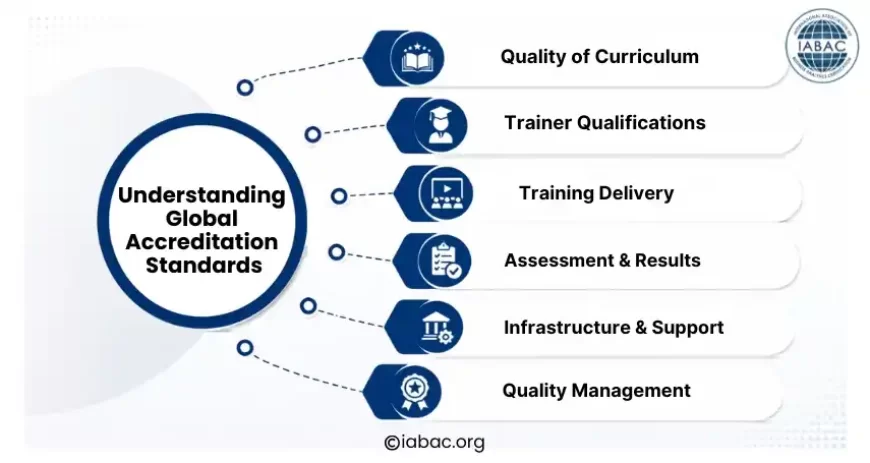
Quality of Curriculum - Is the course content relevant to industry needs? Does it align with current professional practices? Are industry experts involved in designing the course?
Trainer Qualifications - Do your instructors have real-world experience? Are they updated on the latest tools and techniques? Do they participate in professional development?
Training Delivery - How do you teach? Do you use interactive methods? Do you provide hands-on projects? How do you support struggling students?
Assessment & Results - How do you evaluate student performance? What's your pass rate? Can graduates actually do the job they were trained for?
Infrastructure & Support - Do you have proper facilities? Do students get adequate learning materials? Is there support after the course ends?
Quality Management - How do you track and improve what you do? What feedback systems are in place? How do you respond to student concerns?
These aren't arbitrary checkboxes. They reflect what actually makes training effective.
How IABAC Global Accreditation Works for Training Institutes
IABAC (International Association for Business Analytics Certification) operates one of the most recognized global accreditation frameworks for data science and analytics training.
Here's what makes IABAC different:
Industry-Aligned Curriculum - IABAC courses aren't built in isolation. They're based on the EDISON framework, a European Commission initiative that defines what professionals actually need to know. This means your curriculum stays relevant because it's built on real industry needs, not textbook theory.
International Recognition - IABAC credentials are recognized globally. Your graduates compete in international job markets with qualifications that employers worldwide understand and respect. They're not just certified by your institute; they're certified to international standards.
Your Trainers Get Accredited Too - IABAC doesn't just accredit your institute. It accredits your trainers. This means each person teaching at your institute has been vetted to meet international standards. This quality assurance flows through every class.
Continuous Quality Assurance - Accreditation isn't a one-time event. IABAC maintains quality through regular reviews and updates. Your institute stays accountable to international standards continuously, not just at the beginning.
Exam Integrity - IABAC maintains the exam infrastructure globally. Your students take exams that are delivered securely, graded consistently, and verified internationally. This removes any doubt about credential authenticity.
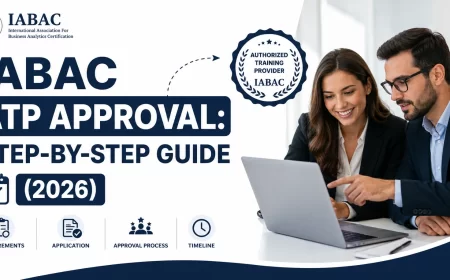
The Application Process Is Simpler Than You Think
Many institute directors avoid applying for accreditation because they think the process is complex and time-consuming. IABAC's approach is actually designed to be straightforward.
Here's what actually happens:
Step 1: Eligibility Check
You fill out an application form on the IABAC website. You'll be asked about your institute's registration, how long you've been operating, and your existing quality management practices.
The eligibility criteria are:
-
Your institute is legally registered (you need proof of incorporation)
-
You've been operating for at least one year
-
You have some form of quality management system in place (doesn't have to be perfect—IABAC helps you build this)
This phase is straightforward. Most institutes pass without issues.
Step 2: Application Review (5-7 days)
Your application goes to IABAC's review team. They examine your curriculum, trainer qualifications, training methods, and infrastructure. They're looking for genuine quality, not theatrical compliance.
You might get clarification requests. These are normal. They're just IABAC making sure they understand how you operate.
Step 3: Decision & Clarification
Based on the review, IABAC either approves your application, asks for specific improvements, or (rarely) requests additional information. Most institutes go through this step smoothly.
Step 4: Partnership Agreement
Once approved, you sign a partnership agreement with IABAC. This outlines your responsibilities, the benefits you receive, and how the partnership works.
Step 5: You're On Board
Congratulations. You're now an IABAC Authorized Training Provider (ATP). Your institute is recognized as meeting international standards.
The entire process typically takes 10-15 days from application to approval. This is faster than most institutes expect.
Real Benefits You'll Experience
Increased Student Trust: Prospective students will see your IABAC accreditation and immediately know your institute meets international quality standards. This converts browsers to enrolled students.
Higher Graduate Employment: Your students graduate with credentials that employers recognize globally. This means better job placement rates and higher graduate satisfaction.
Pricing Power: Accredited courses command higher fees. Students and employers both understand they're paying for quality. You can increase course fees by 15-25% after accreditation without losing students.
Corporate Client Growth: Companies actively seek out IABAC-accredited institutes for employee training programs. This opens a new revenue stream that many institutes haven't tapped into.
Trainer Development: Your trainers go through accreditation, which means continuous professional development. They stay current with industry standards. Your teaching quality improves across the board.
Global Recognition: Your institute becomes listed in IABAC's global directory. Students from other countries can find you. You can now attract international students or start online programs that reach worldwide audiences.
Competitive Moat: Only a small percentage of training institutes are globally accredited. You become part of an exclusive group. This is a sustainable competitive advantage.
What Institutes Like Yours Have Achieved?
Across India, Malaysia, the UK, Germany, and the US, institutes have taken the IABAC ATP path and seen significant growth:
-
Institutes report a 35-45% increase in student inquiries within 6 months of accreditation
-
Corporate training partnerships have tripled for many accredited institutes
-
Graduate employment rates improved because employers recognize and value IABAC credentials
-
Trainer quality improved through the accreditation process, creating a positive loop
These aren't unicorn stories. These are what happens when a solid institute gets global recognition for the quality work it was already doing.
The Cost Factor (Is It Worth It?)
Let's address the practical concern: "What does this cost?"
IABAC's partnership model is designed to be accessible. There's an application fee (which covers their review process) and an annual partnership fee that depends on your institute size and scope.
Many institutes earn back this investment within 3-6 months through increased enrollment and premium pricing.
Think of it this way: If accreditation brings you 10 extra students per batch, and each student pays even 5,000 more rupees/dollars for an accredited program, the ROI is immediate.
Who Should Apply Right Now?
You should apply for global accreditation if:
-
You're teaching data science, analytics, or AI courses and want to expand your market reach
-
Your trainers are qualified, but your institute isn't yet recognized globally
-
You want to compete with larger institutes on credibility, not just price
-
You're interested in corporate training partnerships
-
You want your graduates to have credentials that open doors internationally
You probably don't need accreditation if:
-
You're running a very small operation with just 1-2 courses
-
Your target market is purely local and has no global aspirations
-
You're not willing to meet quality standards
But if you're reading this, you probably fall into the first category.
The Next Step Is Simple
IABAC makes the application process straightforward because they want quality institutes to join their network.
Here's what to do:
-
Gather Your Documents - You'll need proof of registration, information about your trainers, your course curriculum, and details about your quality practices
-
Visit the IABAC ATP Application Page - Go to IABAC's website and fill out the ATP application form. It takes 20-30 minutes
-
Submit and Wait - IABAC reviews applications and gets back to you within days, not months
-
Clarify Any Questions - If they ask for clarification, provide it. Most requests are straightforward
-
Sign the Agreement - Once approved, you sign the partnership agreement
-
Launch Your Accredited Programs - You're now authorized to market your courses as IABAC-accredited
The entire process is designed to be efficient because IABAC's goal is bringing quality institutes into their global network.
Why Now Is The Right Time?
The training industry is consolidating. Students are becoming more discerning about where they invest in education. Employers are looking for training partners they can trust.
Institutes without global recognition are becoming commodities, competing purely on price. Accredited institutes are becoming partners that employers and students trust.
The institutes that move now—while accreditation still provides significant competitive advantage—will establish strong positions in the market. Those that wait will find themselves trying to catch up later.
Your institute has probably already invested in quality training, qualified trainers, and relevant curriculum. Global accreditation is the stamp that tells the world what you already know: you're worth the investment.
Take Action Today
Your institute deserves to be recognized globally. Your trainers deserve to be part of an international quality standard. Your students deserve credentials that open doors worldwide.
IABAC's Authorized Training Provider program is built specifically for institutes like yours—ones that are serious about quality and ready to compete globally.
Or if you have questions first, Enquire About the Program and someone from IABAC will walk you through the details.
The institutes that become globally accredited this year will have a 2-3 year head start on their competition. After that, accreditation becomes the baseline, not the differentiator.
Don't let your institute be left behind.