
















































How Do You Choose the Best accredited online courses?
Learn how to choose the best accredited online courses in 2026 by comparing accreditation, curriculum, certification value, flexibility, and learner support.


The best accredited online courses in 2026 come from a training provider that has been formally checked and approved by an independent accrediting body, not just self-described as certified. Look for programs run by an Authorized Training Provider or Accredited Corporate Partner under a recognized body such as IABAC, where the accrediting organization sets the syllabus and exam standards separately from the group teaching the course. Beginners should confirm the course maps to a real, published skill framework. Professionals and executives should check whether the credential is recognized by an Accredited Academic Institution or accepted in their industry. If a provider can't clearly show who accredited them and what that accreditation actually checked, treat that as a warning sign.
Key Takeaways
- Accreditation means an independent body has reviewed and approved a course, a trainer, or an institution against a defined standard. It is not the same as a provider simply calling itself "certified."
- Recognized accrediting bodies, such as IABAC, separate three roles: setting the standard, delivering the training, and grading the assessment. This separation is what gives a credential real weight.
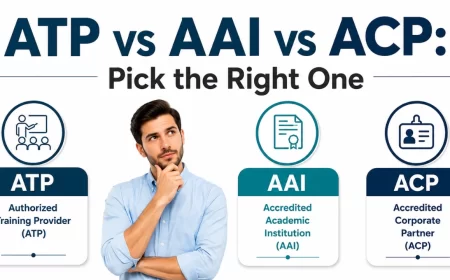
- An Authorized Training Provider (ATP) has been formally approved to deliver a specific curriculum aligned with the accrediting body's standards, and is different from a provider that simply uses similar-sounding language without approval.
- Accredited Corporate Partner and Accredited Academic Institution arrangements let companies and schools offer recognized credentials to employees and students under an established accreditation framework.
- A Trainer Accreditation Program checks that the actual instructor teaching a course meets a defined competency bar, not just that the course content looks good on paper.
- Common mistakes when choosing accredited online courses include confusing "accredited" with "popular," skipping verification of the accrediting body itself, and picking a course based on price or marketing alone.
- Executives, business owners, developers, and career changers each have different things to check for, even though the underlying accreditation principles stay the same.
Introduction
Online learning has grown so fast that almost every course now claims to be "accredited," "certified," or "industry-recognized." Most of the time, these words are used loosely, and that's a problem for anyone trying to make a real decision about where to spend their time and money. A course that is genuinely accredited went through an independent review process. A course that simply says "accredited" in its marketing copy may not have.
This matters more in 2026 than it did a few years ago. Employers are dealing with a flood of applicants who list online course completions on their resumes, many of which carry no independent verification at all. At the same time, more established organizations, including bodies like IABAC, have built out formal accreditation structures: Authorized Training Providers, Accredited Corporate Partners, Accredited Academic Institutions, and Trainer Accreditation Programs, specifically to give learners and employers a way to tell the difference between a credential backed by a real standard and one that isn't.
This guide walks through what accreditation actually means, how the different accreditation models work, what to look for at each stage of your career, and how to avoid the most common mistakes people make when picking accredited online courses. Along the way, we'll use IABAC's accreditation structure as a working example, since it illustrates many of the practices worth checking for in any accrediting body you're considering.
1. What Accreditation Actually Means
Accredited is one of the most overused words in online education, so it's worth being precise about what it means and what it doesn't.
Accreditation is the process by which an independent body reviews and formally approves:
- A course or curriculum, confirming it meets a defined set of learning outcomes
- A training provider, confirming they are qualified to deliver that curriculum
- An individual trainer, confirming they meet a competency standard for teaching it
- An institution, confirming its programs and assessment processes meet an established bar
The key word is independent. If the organization awarding the "accreditation" is the same organization selling you the course, that's not really accreditation in the formal sense. It's closer to self-certification, and self-certification carries far less weight with employers who actually check.
Accreditation vs. Certification vs. Recognition
These three words get mixed up constantly:
- Accreditation applies to an organization, program, or trainer. It means a formal, external review confirmed a standard was met.
- Certification applies to an individual learner. It means that person passed an assessment tied to a defined skill set.
- Recognition is a broader, less formal term meaning an employer or industry generally trusts the credential, which may or may not be backed by real accreditation.
A course can be certified without being accredited (if the certifying body and the training provider are the same entity), and a credential can be "recognized" in casual conversation without any accreditation behind it at all. Understanding this difference is the first real filter for evaluating any accredited online course.
2. How Accreditation Actually Works
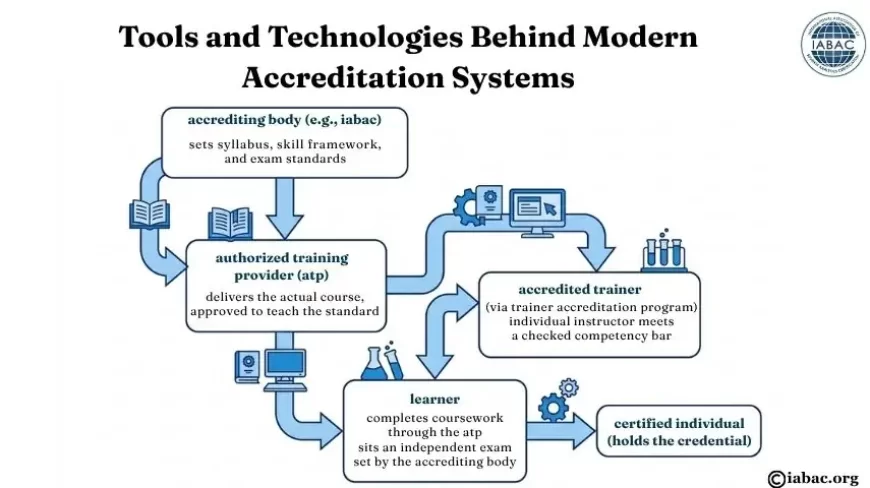
Most legitimate accreditation systems, including IABAC's, are built around four connected roles. Understanding how these roles relate to each other tells you exactly what to check before enrolling in any program.
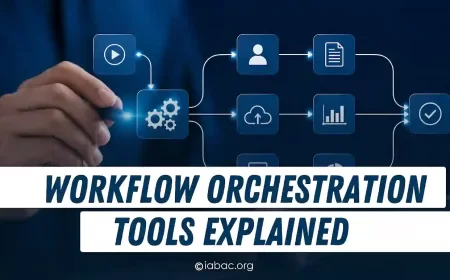
Text-based workflow of a typical accreditation structure:
This structure explains why some accredited programs feel more rigorous than others. A course delivered by an Authorized Training Provider, taught by an instructor who went through a real Trainer Accreditation Program, and assessed independently by the accrediting body has three separate layers of quality control. A course where one company writes the material, teaches it, and grades it has none of those layers.
The Role of an Authorized Training Provider (ATP)
An Authorized Training Provider is a school, company, or independent trainer that has been formally approved by an accrediting body to deliver its curriculum. This approval usually involves:
- Reviewing the provider's instructional materials against the accrediting body's syllabus
- Checking the qualifications of the instructors delivering the course
- Ongoing monitoring to confirm the provider keeps meeting the standard, not just at the point of initial approval
When you see "Authorized Training Provider" attached to a course, it's worth checking whether that authorization can actually be verified through the accrediting body directly, rather than only taking the training provider's word for it.
Accredited Academic Institutions and Accredited Corporate Partners
Two other common accreditation relationships worth understanding:
- Accredited Academic Institution — a university, college, or academic body that has been approved to offer a recognized credential as part of its own degree or diploma programs, combining academic study with an externally validated professional standard.
- Accredited Corporate Partner — a company that has been approved to deliver training internally to its own employees under a recognized accreditation framework, often used by large organizations that want to upskill teams at scale while keeping the credential portable if an employee later moves elsewhere.
Both arrangements matter because they extend accreditation beyond individual training providers into institutions and workplaces, which is increasingly how professional education is delivered in 2026.
Trainer Accreditation Programs
A course can have a strong syllabus and still fall flat if the person teaching it isn't qualified to do so. A Trainer Accreditation Program addresses this directly by requiring instructors to pass their own competency check before they're approved to teach under the accrediting body's name. This is one of the most overlooked quality signals when comparing accredited online courses: two courses can use the exact same official syllabus and still differ enormously in quality, depending on whether the instructor actually went through trainer-level accreditation.
3. Types of Accredited Online Courses
Accredited online courses generally fall into a few recognizable categories, each suited to a different kind of learner.
By Learner Type
- Beginner / foundational courses — accredited introductory programs covering core concepts in a subject area, designed for people with no prior background.
- Professional certification courses — mid-to-advanced accredited programs aimed at working professionals looking to formalize existing skills or pivot into a new specialty.
- Executive and leadership courses — shorter, accredited programs focused on strategy, governance, and decision-making rather than hands-on technical skill.
- Developer and technical courses — accredited programs with heavy hands-on components, often assessed through applied projects rather than multiple-choice exams alone.
- Marketing and business-function courses — accredited programs built around a specific business discipline (analytics, digital strategy, and so on), often chosen by marketers and business owners who need a recognized credential without a full career change.
By Delivery Model
- Self-paced accredited courses, delivered entirely online with independent assessment at the end.
- Live, instructor-led accredited courses, delivered by an Accredited Trainer through an Authorized Training Provider, often in cohort format.
- Blended academic programs, delivered through an Accredited Academic Institution combining traditional coursework with an externally recognized credential.
- Corporate accredited training, delivered internally through an Accredited Corporate Partner arrangement, often as part of a broader workforce development program.
By Accreditation Depth
|
Type |
What's Actually |
Typical |
|
Self-described "certified" course |
Nothing external; |
Low |
|
Course aligned to a published framework, |
Content structure only |
Moderate |
|
Course delivered by an Authorized Training Provider, |
Content, delivery, |
High |
|
Course taught by a Trainer-Accreditation-certified instructor, |
Content, delivery, |
Highest |
4. Benefits of Choosing Truly Accredited Courses
For Beginners
An accredited beginner course guarantees the material has been checked against a real standard, rather than reflecting one instructor's personal opinion of what matters. This reduces the risk of learning the wrong things early, which is especially costly when you don't yet have the background to notice gaps yourself.
For Working Professionals
Accreditation gives a credential portability. A professional certification tied to a recognized accrediting body, such as one earned through an IABAC Authorized Training Provider, carries meaning across employers and, often, across countries, because the standard behind it doesn't change depending on who's reading your resume.
For Executives and Business Owners
Executives evaluating training investments for their teams need to know that money spent on accredited training will produce a credential that actually holds up. Accredited Corporate Partner arrangements let a business roll out training at scale while keeping the resulting credentials individually portable and recognized outside the company.
For Developers
Developers benefit from accredited technical courses because independent assessment tends to test applied competency (can you actually build and evaluate a working solution) rather than just content recall, which better reflects what the job actually requires.
For Marketers and Business Owners
A recognized accredited credential in analytics, digital strategy, or a similar business discipline gives marketers and small business owners a way to formalize skills they may have built informally on the job, which matters when pitching to clients, employers, or investors who want some independent confirmation of competence.
General Benefits
- Verifiable quality — a real accrediting body can be checked directly, rather than relying on marketing claims.
- Consistency — the syllabus and standard stay the same across different training providers, so learners can compare programs on equal footing.
- Reduced hiring risk — employers can trust an accredited credential as a meaningful proxy for skill, cutting down the guesswork in hiring decisions.
- Long-term credential value — accreditation frameworks tend to update their standards periodically, which helps keep the underlying credential relevant over time.
5. Challenges and Risks in the Accreditation Space
- Accreditation-washing. Some providers use the word "accredited" loosely, sometimes referring to an internal review process with no external body involved at all. Always ask, accredited by whom, specifically.
- Confusing partnership with accreditation. A provider that has a "partnership" or "collaboration" with a well-known name isn't necessarily accredited by that name. Check whether the relationship is a formal accreditation, not just a marketing arrangement.
- Inconsistent Authorized Training Provider quality. Even within a legitimate accreditation framework, individual ATPs can vary in delivery quality. Accreditation of the standard doesn't guarantee every individual class session will be excellent, which is why the Trainer Accreditation Program layer matters.
- Overreliance on accreditation alone. An accredited credential is a strong signal, but it doesn't replace the need for a real portfolio, especially in technical fields where employers want to see applied work.
- Cost inflation tied to brand name. Some accredited programs charge a premium mainly for brand recognition rather than for meaningfully better content or assessment. Compare depth and rigor, not just the name attached.
- Regional recognition gaps. A credential accredited by a body strong in one region or industry may carry less immediate recognition elsewhere. Check how the specific accrediting body is regarded in your target market before assuming universal recognition.
6. Illustrative Examples From Real-World Patterns
The following are composite, illustrative scenarios reflecting common situations, not individual verified case reports.
Example 1: The Small Business Owner Vetting a Vendor A small business owner hiring an outside analytics consultant asked to see the consultant's credentials. The consultant listed a certification from an online course. On checking, the business owner found the certifying company was also the sole training provider with no external accrediting body involved. The owner then asked for a credential backed by an independent accrediting body instead, in this case one issued through an Authorized Training Provider under a recognized framework like IABAC's, and used that as part of the final hiring decision. The lesson here is straightforward: verifying who accredits a credential, not just trusting the word "certified," changed the outcome of a real business decision.
Example 2: The Corporation Rolling Out Internal Training A mid-sized company wanted to train fifty employees in data analytics skills without sending them all to expensive external programs individually. By becoming an Accredited Corporate Partner under a recognized accrediting body, the company delivered training internally, using its own trainers who went through a formal Trainer Accreditation Program, while keeping the resulting credential recognized outside the company. This let the business scale training cost-effectively while giving employees a credential with value beyond that one employer.
Example 3: The University Adding a Professional Track An academic institution wanted to offer students a credential with direct industry relevance alongside their degree. By becoming an Accredited Academic Institution partnered with a recognized professional accrediting body, the university added a professional certification track to its existing coursework, giving graduates both an academic qualification and an industry-recognized credential without needing to build an entirely new curriculum from scratch.
These patterns show accreditation working at three different levels: individual learner, corporate workforce, and academic institution, each solving a slightly different version of the same underlying problem: how do you prove a skill or a credential actually means something.
7. Tools and Technologies Behind Modern Accreditation Systems
Accrediting bodies increasingly rely on structured systems to manage and verify credentials at scale. Look for these signals of a well-run accreditation system:
- Public verification databases — a way to check directly with the accrediting body whether a specific training provider, trainer, or individual credential is genuinely accredited or certified, rather than relying solely on a certificate image.
- Digital credentialing and badges — verifiable digital certificates that link back to the issuing body, making it harder to falsify or exaggerate a credential.
- Standardized syllabus documentation — a publicly available skill framework or syllabus that any Authorized Training Provider must align to, which lets learners compare providers on a like-for-like basis.
- Independent exam delivery systems — proctored or otherwise verified exam platforms separate from the training provider's own systems, reducing the chance of grade inflation.
- Renewal and continuing education tracking — systems that track whether a credential holder has kept their certification current, since many accredited credentials expire or require renewal.
When evaluating any accredited online course, it's reasonable to ask the training provider directly whether these systems exist, and to try verifying a credential independently before enrolling.
8. Implementation Roadmap: How to Choose an Accredited Online Course
Step 1 — Identify the accrediting body, not just the course provider. Find out specifically who accredits the course, the trainer, or the institution. If you can't get a clear, specific answer, treat that as a warning sign.
Step 2 — Verify the accreditation independently. Check directly with the accrediting body, such as IABAC, rather than relying only on the training provider's own marketing materials.
Step 3 — Confirm the provider's Authorized Training Provider status. Ask whether the organization delivering the course is a formally Authorized Training Provider, and whether that status can be confirmed through the accrediting body directly.
Step 4 — Check the instructor's own accreditation. Where relevant, ask whether the specific instructor has gone through a Trainer Accreditation Program, since course quality often depends heavily on the individual teaching it.
Step 5 — Match the accreditation level to your goal. A beginner exploring a new subject doesn't need the same depth of scrutiny as an executive approving a company-wide Accredited Corporate Partner rollout. Match your due diligence to the size of the decision.
Step 6 — Review the syllabus for current relevance. Confirm the accredited curriculum has been updated to reflect 2026-era tools and practices in your subject area, not just a standard that hasn't changed in years.
Step 7 — Check assessment rigor. Favor programs with independent, project-based, or proctored exams over those relying purely on video-completion tracking.
Step 8 — Plan for renewal, if applicable. Many accredited credentials require periodic renewal or continuing education. Factor this into your long-term cost and time planning, not just the upfront course fee.
9. Common Failure Points When Choosing Accredited Courses
- Taking the word accredited at face value. Without checking who accredited the course, the word alone means very little.
- Confusing partnership language with formal accreditation. "In collaboration with" is not the same as "accredited by."
- Ignoring the training provider's actual approval status. Not every provider using accreditation-adjacent language has genuinely earned Authorized Training Provider status.
- Overlooking instructor-level accreditation. A strong syllabus taught by an unaccredited or under-qualified instructor can still produce a weak learning experience.
- Assuming regional or industry-universal recognition. A credential well-known in one country or sector may need more explaining in another.
- Skipping renewal requirements. Letting an accredited credential lapse can undercut its value at exactly the moment it matters most, like during a job search.
- Choosing based on price or brand alone. Neither a very cheap nor a very expensive accredited course is automatically the right choice. Depth, rigor, and independent verification matter more.
10. Future Trends in Accredited Online Learning
- Verification is becoming more automated. More accrediting bodies are building public, searchable systems so anyone can confirm a credential, a training provider, or a trainer's status directly online.
- Corporate accreditation partnerships are growing. More companies are becoming Accredited Corporate Partners to train large teams internally while keeping credentials individually portable.
- Academic and professional accreditation are blending. More Accredited Academic Institutions are weaving industry-recognized professional credentials directly into degree and diploma programs.
- Trainer-level accreditation is getting more attention. As learners get better at spotting accreditation-washing at the course level, scrutiny is shifting toward whether the actual instructor is properly accredited too.
- Global recognition frameworks are expanding. Accrediting bodies are increasingly working to make credentials recognized across more countries and industries, reducing the regional recognition gaps that have historically been a weak point.
- Stackable accredited micro-credentials are rising. Instead of one large program, learners are increasingly combining smaller accredited modules into a larger recognized qualification over time.
11. Career Opportunities Tied to Accredited Credentials
Holding a genuinely accredited credential, verified through a recognized body, typically supports career moves such as:
- Career changers using an accredited beginner-to-professional pathway to enter a new field with a credible, checkable qualification
- Consultants and freelancers using accreditation as a trust signal when pitching to new clients without a long personal track record
- Corporate employees advancing internally after completing training delivered through an employer's Accredited Corporate Partner program
- Academic graduates entering the job market with both a degree and an industry-recognized credential from an Accredited Academic Institution partnership
- Trainers and educators building a teaching career by completing a Trainer Accreditation Program and becoming qualified to deliver accredited courses themselves
- Executives and managers using shorter accredited leadership or strategy credentials to support promotion cases or board-level credibility
12. Weighing Cost Against Value
Price alone is a weak filter for accredited online courses. A better approach compares cost against three things: the strength of the accrediting body behind the course, the rigor of the assessment, and how well the credential is recognized in your specific industry or region.
Questions worth asking before paying for any accredited course:
- Is the accrediting body clearly named, and can its role be verified independently?
- Does the price include the independent exam, or is that billed separately?
- Is the training provider's Authorized Training Provider status something you can confirm directly with the accrediting body?
- Does the course require renewal, and what does that cost over time?
- Is there a way to verify the instructor's own accreditation status before you commit?
A course priced high mainly on brand recognition, without a clearly independent accrediting structure behind it, is not automatically a better investment than a lower-cost course backed by a genuinely rigorous, independently verified accreditation, such as one built around IABAC's model of separating the accrediting body, the Authorized Training Provider, and the accredited trainer.
13. A Practical Learning Path for Choosing and Completing an Accredited Course
- Clarify your goal — new field, formal recognition of existing skill, corporate rollout, or academic pathway.
- Identify candidate accrediting bodies relevant to your subject area and industry.
- Verify the accrediting body's own standing — how long established, how widely recognized, whether it publishes a clear syllabus and verification system.
- Shortlist Authorized Training Providers under that accrediting body, and confirm their status directly.
- Check instructor-level accreditation, where the delivery model involves live instruction.
- Enroll and complete the coursework, keeping a portfolio of any practical work alongside the formal credential.
- Sit the independent exam or assessment, rather than relying on course completion alone.
- Plan for renewal and continuing education, if the credential requires it, to keep the qualification current over time.
Conclusion and Next Steps
Choosing the best accredited online courses in 2026 comes down to one core habit: checking who actually did the accrediting, rather than trusting the word on its own. A genuinely accredited course separates three roles, setting the standard, delivering the training, and grading the result, across an accrediting body, an Authorized Training Provider, and where relevant, an accredited trainer. Whether you're a beginner exploring a new subject, a professional formalizing existing skills, an executive approving a corporate rollout, or a business owner vetting a vendor's credentials, that same core check applies.
As a next step:
- Identify the specific accrediting body behind any course you're considering, and verify its standing independently.
- Confirm the training provider's Authorized Training Provider status directly with that body, rather than relying on marketing claims alone.
- Check whether the individual instructor has completed a Trainer Accreditation Program, where live instruction is involved.
- Match the depth of your due diligence to the size of the decision, more scrutiny for a corporate rollout or career-defining certification, proportionally less for casual exploration.
- Favor accrediting structures, such as IABAC's, that clearly separate standard-setting, training delivery, and independent assessment.
- A little verification up front saves considerable time, money, and disappointment later, and it's the single most reliable way to make sure an "accredited" course actually delivers what that word is supposed to promise.
Sources Referenced
This article draws on general, widely understood principles of accreditation, professional training standards, and credentialing practices as understood in early 2026. Specific figures, regional recognition details, and current accreditation lists change over time, so readers should verify current information directly through:
- IABAC's official accreditation, Authorized Training Provider, and Trainer Accreditation Program documentation
- National and regional accreditation or qualifications authorities relevant to your industry
- Industry-standard professional bodies covering training, certification, and workforce credentialing
- Direct verification requests to the specific accrediting body named by any training provider you are considering
Note: This article intentionally avoids citing specific numerical statistics or third-party reports that could not be independently verified at the time of writing. Readers seeking current recognition data, accreditation lists, or market figures should consult up-to-date primary sources before relying on them for decision-making.