


























































IABAC ATP vs AAI vs ACP: Which Partnership Track Fits Your Institute?
Compare IABAC's three partnership tracks — ATP, AAI, and ACP — by eligibility, audience, and process to find the right fit for your organization.

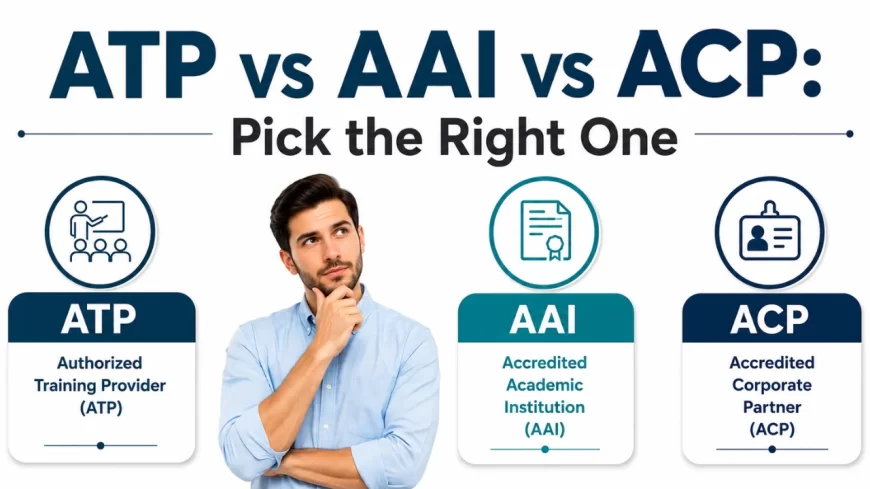
If you've landed on IABAC's Partners page, you've probably noticed the same problem most institutes run into: three acronyms, three application forms, and no clear signpost telling you which one is actually meant for an organization like yours. ATP, AAI, and ACP sound similar because they share the same accreditation backbone, but they're built for three very different kinds of organizations. Applying to the wrong one wastes the 10 to 15 days the review process takes — and in some cases, gets your application redirected entirely.
This guide breaks down what each track actually is, who it's built for, and how to decide in under five minutes which one you should be filling out.
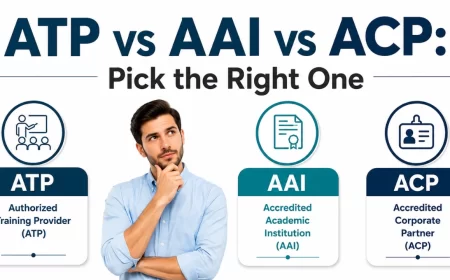
The Three IABAC Partnership Tracks at a Glance
Before going section by section, here's the full comparison side by side. If you only read one part of this article, this table should be enough to point you in the right direction.
|
|
ATP |
AAI |
ACP |
|
Full name |
Authorized Training Provider |
Accredited Academic Institution |
Accredited Corporate Partner |
|
Built for |
Independent training institutes, coaching centers, bootcamps |
Universities, colleges, higher-education bodies |
Corporates upskilling their own employees |
|
Audience served |
Public learners / enrolled students |
Enrolled degree/diploma students |
Internal employees only |
|
Minimum eligibility |
Registered entity, 1+ year active, QMS in place |
500+ students, 2+ years active |
Registered entity, 1+ year active, QMS in place |
|
Curriculum |
Institute develops and submits for IABAC approval |
Institute develops and submits for IABAC approval |
IABAC supplies course content and materials |
|
Review timeline |
5–7 working days |
5–7 working days |
5–7 working days |
|
Total process |
10–15 days, 6-step onboarding |
6-step onboarding, similar timeline |
10–15 days, 6-step onboarding |
|
Managed via |
G-CREDO |
G-CREDO |
G-CREDO |
Key Takeaway
• Run a public training business or bootcamp? You want ATP.
• Represent a university or degree-granting institution with 500+ students? You want AAI.
• Training your own employees, not the public? You want ACP.
What Is an Authorized Training Provider (ATP)?
The Authorized Training Provider (ATP) track is IABAC's most common partnership category, built for organizations whose core business is delivering training to the public — independent institutes, coaching centers, corporate training companies, and bootcamps. It's designed in line with the EDISON framework, a curriculum standard originally developed through a European Commission-backed data science education project.
As an ATP, your institute develops its own curriculum but must submit it for IABAC approval before it can be taught under the IABAC name. Once approved, you're authorized to register candidates for IABAC certification exams, and your trainers go through IABAC's accreditation process so they're recognized as qualified to deliver certification-aligned instruction.
Best fit if you are: an independent training institute, a bootcamp, a coaching center, or a corporate training company selling courses directly to learners rather than teaching your own staff.
You can see the full list of current ATPs — including institutes across India, the UAE, Germany, and Southeast Asia — on IABAC's Find an ATP directory.
What Is an Accredited Academic Institution (AAI)?
The Accredited Academic Institution (AAI) track exists specifically for universities, colleges, and higher-education bodies that want to embed IABAC-aligned certifications into their existing academic programs — not run a standalone training business.
The eligibility bar is noticeably higher than ATP: an institution needs more than 500 students and at least two years of active operation to qualify. That's because AAI isn't about a small institute launching a new course — it's about an established academic body integrating a recognized credential into degree or diploma programs at scale, so graduating students leave with both an academic qualification and an industry-recognized certification.
Onboarding also includes a training phase for the institution's own trainers and administrators, since AAI partners typically need to run certification assessments internally as part of a semester or program structure, rather than as a one-off course.
Best fit if you are: a university, college, or higher-education institution with an existing, sizeable student base looking to add a globally recognized credential to your curriculum.
What Is an Accredited Corporate Partner (ACP)?
The Accredited Corporate Partner (ACP) track is built for a completely different use case: companies that want to upskill their own employees in data science, AI, or business analytics — not sell training to the public.
The defining difference here isn't the eligibility paperwork, which mirrors ATP's requirements almost exactly (registered entity, one year of activity, a documented QMS). It's the audience and the materials model. An ACP delivers training in-house, to its own workforce, and IABAC supplies the course content and materials directly once the partnership is confirmed — rather than requiring the organization to build and submit its own curriculum. It's a license to run a structured, credential-backed upskilling program internally, using IABAC's existing knowledge frameworks and trainer network.
Best fit if you are: a corporate L&D or HR team looking to certify internal employees, not an organization planning to enroll or train members of the public.
ATP vs AAI vs ACP: The Differences That Actually Matter
Strip away the shared six-step process and identical-sounding eligibility language, and three real distinctions decide which track is right for you:
- Who you're training. ATP and AAI both serve external learners — the public for ATP, enrolled students for AAI. ACP serves only your own employees.
- Who owns the curriculum. ATP and AAI institutes build and submit their own courseware for approval. ACP partners use IABAC-supplied materials instead of developing their own.
- Scale of the eligibility bar. ATP and ACP share a comparatively low bar (one year active, QMS in place). AAI's 500-student, two-year threshold reflects that it's designed for established academic institutions, not new entrants.
One thing worth flagging directly: IABAC's own published eligibility criteria for ATP and ACP are nearly word-for-word identical. If you're deciding between the two, don't rely on the eligibility checklist to differentiate them — rely on your audience. If you're enrolling and certifying members of the public, you want ATP. If you're certifying your own staff, you want ACP, even though the paperwork bar looks the same.
How to Decide Which Track Is Right for You
Three questions settle it in most cases:
1. Are you training the public, your own students, or your own employees? Public → ATP. Enrolled students → AAI. Employees only → ACP.
2. Are you degree- or diploma-granting with 500+ enrolled students? If yes, AAI is likely the right — and only — track available to you.
3. Do you want to build your own curriculum, or use one IABAC provides? Building your own → ATP or AAI. Using IABAC's ready-made content → ACP.
If you land on more than one answer — for example, a training company that also wants to run an internal certification program for its own staff — note that IABAC's accreditation terms treat each designation separately, so it's worth applying for the track that matches your primary use case first rather than trying to cover both at once.
The Application Process (Same Across All Three)
Whichever track fits, the mechanics of applying are identical. IABAC runs a six-step process, managed operationally through its accreditation partner G-CREDO (Global Credentialing Office), which handles institutional licensing, exam booking, and certification management once you're onboarded.
- Check Eligibility — submit the online application form for your track (eligibility review typically takes 2–3 working days).
- Initiation — your form is routed internally for processing.
- Review — IABAC evaluates the application; this stage takes 5–7 working days.
- Decision — you receive the outcome, along with any clarification requests.
- Agreement — the partnership terms are formalized.
- Onboarding — you're active, with trainer accreditation and (for AAI) administrator training completed as part of setup.
End to end, most applicants should expect 10 to 15 days from initial application to onboarding, regardless of which track they apply for.
Ready to apply? Start with the ATP application form or the AAI/university application form. [VERIFY URL: a dedicated ACP application form link should be confirmed on IABAC's Accredited Corporate Partner page before publishing.]
FAQs
What is the difference between ATP and AAI in IABAC?
ATP is for organizations — typically independent training institutes and bootcamps — that deliver certification courses to the public. AAI is specifically for universities and higher-education institutions with at least 500 students that want to embed IABAC certifications into existing academic programs.
Can a university apply as an ATP instead of AAI?
Technically the ATP eligibility criteria don't exclude universities, but AAI is purpose-built for degree-granting institutions at scale, including onboarding steps like trainer and administrator training that align with academic program delivery. A university with 500+ students is better positioned under AAI.
Does becoming an ACP require prior training experience?
No. ACP is built for corporates upskilling their own employees, and IABAC supplies the course materials directly once the partnership is confirmed, so the organization doesn't need to have an existing training curriculum in place.
Can one organization hold more than one IABAC accreditation type?
IABAC treats ATP, AAI, and ACP as separate designations, each with its own terms and conditions. Organizations with more than one genuine use case should apply for the track matching their primary need first, and can enquire directly with IABAC about holding a second designation.
Who manages IABAC partner applications — G-CREDO or IABAC directly?
Applications go through IABAC, but since January 2023, day-to-day institutional transactions — licensing, exam booking, and certification management — are handled by G-CREDO (Global Credentialing Office), IABAC's official accreditation partner.
Which Track Should You Apply For?
If you're still unsure after running through the three questions above, that's normal — some organizations genuinely sit at the edge of two categories. The safest next step is a direct conversation rather than guessing on the application form.
Not sure which track fits your organization? Enquire Now and IABAC's partnerships team will help you confirm the right designation before you apply.
Already know your track? Head straight to Authorized Training Provider (ATP), Accredited Academic Institution (AAI), or Accredited Corporate Partner (ACP) to start your application.
For a broader look at how certification partnerships work across the industry, see What Is a Certification Partner Program. Partner organizations should also review IABAC's Accreditation Terms and Conditions before applying, since obligations continue for the full period the designation is held.