






















































What Are Healthcare Analytics Tools and Technologies?
Your hospital generates mountains of data daily. Analytics tools are how care teams finally make sense of it, before problems show up at the door.

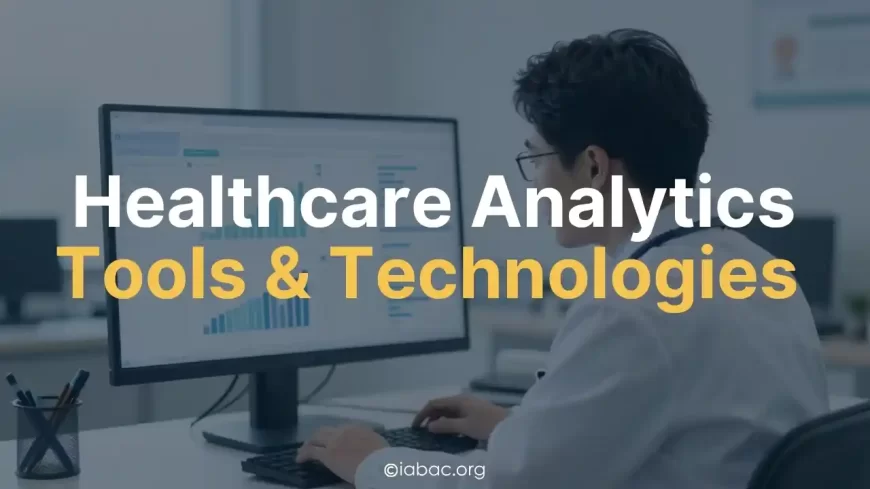
If you've ever wondered how a hospital knows which patients are at high risk before anything goes wrong or how a clinic manages to reduce wait times without hiring more staff, the answer almost always comes back to data. Specifically, healthcare analytics tools and technologies.
These tools are quietly changing how care is delivered, how costs are managed, and how decisions get made across the entire health system. But unless you work deep inside the industry, it can be hard to know exactly what these tools are, how they work, and why they matter.
So let's walk through exactly what these tools are, what the different types do, and how hospitals and clinics are actually using them today.
What Are Healthcare Analytics Tools?
Healthcare analytics tools are software platforms that collect large amounts of health-related data, look for patterns in it, and turn those patterns into useful information that doctors, administrators, and decision-makers can act on.
Think of it this way: hospitals and clinics generate an enormous amount of data every single day, including patient records, lab results, billing information, appointment logs, medication histories, and more. Without the right tools, all of that data just sits there. With the right tools, it becomes a goldmine of insight.
Healthcare analytics tools help organizations answer questions like:
-
Which patients are most likely to be readmitted within 30 days?
-
Where are we losing money in our billing process?
-
Which treatments are producing the best outcomes for which patients?
-
Are our staff levels aligned with patient demand throughout the day?
The tools don't just answer these questions; they help healthcare teams take action on the answers.
Why Do Healthcare Organizations Need These Tools?
Here's a number worth knowing: According to Spok and the World Health Forum, the healthcare industry generates roughly 50 petabytes of data every year, yet 97% of it goes unused. That's an enormous amount of potentially valuable information sitting untapped.
At the same time, healthcare organizations are under increasing pressure to improve outcomes while controlling costs. They face challenges such as:
-
Rising operational costs
-
Increased patient expectations
-
Stricter regulatory requirements
-
A growing shift toward value-based care, where providers are reimbursed based on patient outcomes rather than the volume of services delivered
This is where healthcare analytics tools become critical. They help organizations transform vast amounts of raw data into actionable insights, enabling better clinical decisions, improved operational efficiency, and more informed strategic planning without necessarily increasing staff or infrastructure costs.
4 Types of Healthcare Analytics
Not all analytics are the same. In healthcare, there are four main types, each serving a different purpose:
Answer: "What happened?"
It looks at historical data to understand past performance. Think monthly readmission reports, patient satisfaction scores over time, or how many surgeries were performed in a given quarter. It's the foundation of most healthcare reporting.
Example use: A hospital reviews last year's emergency department data to understand which days and hours see peak patient volumes.
2. Diagnostic Analytics
Answer: "Why did it happen?"
It goes a step deeper than descriptive analytics by digging into the cause of a particular outcome. If patient satisfaction scores dropped last quarter, diagnostic analytics helps find out why.
Example use: Analyzing post-operative complication rates to identify root causes, whether they're linked to specific surgeons, procedures, or recovery protocols.
Answer: "What is likely to happen next?"
It uses historical patterns and statistical models to forecast future outcomes. This is where healthcare analytics starts to feel genuinely powerful, catching problems before they happen.
Example use: Flagging patients who are at high risk for developing a chronic condition so care teams can intervene early.
4. Prescriptive Analytics
Answer: "What should we do about it?"
It doesn't just predict; it recommends a course of action. This is the most advanced type of analytics, and it's increasingly powered by machine learning.
Example use: Recommending individualized treatment plans based on a patient's unique health data, risk profile, and what has worked for similar patients in the past.
Key Healthcare Analytics Technologies
Beyond the types of analytics, there are several underlying technologies that power these tools. Understanding them helps you make sense of how these platforms actually work under the hood.
Electronic Health Records (EHR) Integration
EHRs are the primary data source for most healthcare analytics. Platforms that integrate directly with EHR systems like Epic or Oracle Health can pull structured patient data automatically, reducing manual data entry and improving accuracy.
Business Intelligence (BI) and Data Visualization
Tools like Tableau and Microsoft Power BI are widely used in healthcare to turn raw data into easy-to-read dashboards and charts. These platforms allow non-technical staff to explore data without needing to write code or run complex queries.
Key features to look for:
-
Drag-and-drop dashboard building
-
Real-time data updates
-
Custom alerts and thresholds
-
Role-based access so that different teams see relevant data
Cloud-Based Data Platforms
Modern healthcare analytics increasingly runs in the cloud. A cloud-based platform acts as a central hub for all of an organization's data, clinical, financial, and operational, making it accessible across departments and locations.
Cloud platforms also make it easier to scale. As a hospital system grows, its data platform can grow with it without costly hardware upgrades.
Artificial Intelligence and Machine Learning
AI is becoming a core part of healthcare analytics, not as a buzzword, but as a practical tool. Specifically:
-
Predictive risk modeling: Identifying which patients are at risk for things like sepsis, readmission, or chronic disease progression.
-
Automated documentation: Reducing administrative burden on clinicians.
-
Imaging analysis: Flagging abnormalities in X-rays or scans faster than manual review.
That said, it's worth being realistic about where most organizations actually stand. According to a 2025 HFMA report, 88% of health systems are using AI internally, but only 18% have a mature governance structure and a fully formed AI strategy. Adoption has outrun the planning, and that gap is causing real problems on the ground.
Interoperability Standards (HL7 and FHIR)
One of the biggest technical challenges in healthcare analytics is getting data from different systems to work together. FHIR (Fast Healthcare Interoperability Resources) is the modern standard for how health data is shared between platforms. Organizations that use FHIR-compatible analytics tools can build a much more complete picture of patient data across multiple systems.
Population Health Management Tools
These tools focus on groups of patients rather than individuals. They help healthcare organizations identify trends across entire patient populations, for example, which zip codes have the highest rates of unmanaged diabetes and then design targeted interventions.
Real-World Examples of Healthcare Analytics in Action
It helps to see how these tools play out in practice. Here are a few concrete examples:
Reducing hospital readmissions: Corewell Health used predictive analytics to prevent 200 readmissions, saving $5 million in the process. By identifying high-risk patients before discharge, their care teams were able to put follow-up protocols in place that genuinely made a difference.
Cutting sepsis deaths: Johns Hopkins reduced sepsis-related deaths by 18% by using analytics to detect early warning signs in patient vital signs and lab data hours before traditional methods would have caught them.
Revenue cycle improvements: Speciality pharmacies have used denial rate analytics to identify patterns in insurance claim rejections, recovering up to $3.2 million annually by fixing the root causes rather than just appealing individual denials.
These aren't outliers. Across the industry, hospitals and health systems that invest in strong analytics infrastructure are seeing measurable improvements in both patient outcomes and operational efficiency.
Popular Healthcare Analytics Tools in 2026
The market has a wide range of options, from enterprise platforms built for large health systems to lighter-weight tools designed for smaller practices or specific use cases. Here's a look at some of the most widely used:
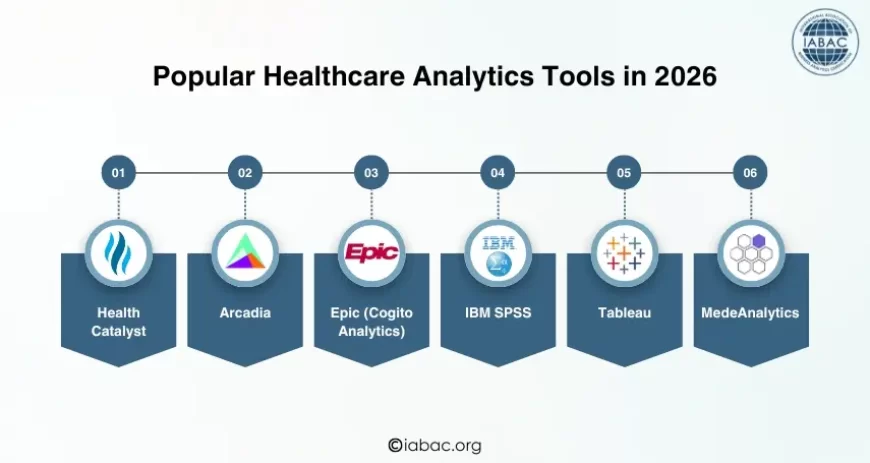
Health Catalyst: A long-standing player in healthcare analytics, Health Catalyst's Data Operating System (DOS) brings together clinical, financial, and operational data in one place. It's particularly strong for large health systems that need to tackle complex use cases like readmission risk, sepsis identification, and surgical outcomes benchmarking.
Arcadia: Purpose-built for healthcare analytics, Arcadia connects over 2,600 claims and EHR sources and processes data for more than 170 million patient lives. It's especially well-suited for organizations focused on value-based care contracting and population health management.
Epic (Cogito Analytics): For health systems already using Epic as their EHR, Epic's built-in analytics layer, including a self-service exploration tool called SlicerDicer, provides solid clinical analytics without requiring a separate platform. The limitation is that it's largely confined to Epic-source data.
IBM SPSS: IBM's long-running analytics platform offers predictive, prescriptive, and descriptive analytics capabilities. It's user-friendly enough for teams without deep data science expertise, and it's particularly useful for research-heavy healthcare environments.
Tableau: A popular choice for organizations that want strong data visualization without the complexity of a full clinical analytics platform. Tableau offers drag-and-drop dashboards and is a good option for teams focused on operational or marketing analytics within a healthcare context.
MedeAnalytics: A solid choice for organizations whose primary focus is revenue cycle analytics, tracking billing performance, denial rates, and financial benchmarks.
How to Choose the Right Healthcare Analytics Tool
There's no single platform that works perfectly for every organization. Choosing the right tool depends on a few key factors:
-
Your existing EHR system: If your organization is heavily invested in Epic, for example, it may make more sense to extend Epic's analytics capabilities than to build a separate data warehouse.
-
Your primary use case: Revenue cycle analytics, population health, clinical decision support, and operational efficiency all have different tooling requirements.
-
Your technical capacity: Some platforms require data engineering expertise to set up and maintain. Others are designed to be more plug-and-play.
-
Compliance requirements: Any platform handling patient data must comply with HIPAA. This becomes especially important when AI features send data to external cloud services, something worth examining closely before selecting a vendor.
-
Budget and scalability: Enterprise platforms like Health Catalyst or Arcadia offer deep capabilities but come with corresponding price tags. For smaller organizations, tools like Tableau may offer a better starting point.
Key Challenges Healthcare Organizations Face
Even with great tools available, implementing healthcare analytics isn't without friction. The most common challenges include:
-
Data fragmentation: Patient data lives in different systems- EHRs, claims databases, lab systems, wearables and getting them all to talk to each other is genuinely hard.
-
Data quality: Analytics is only as good as the data behind it. Inconsistent coding practices, missing fields, and outdated records all compromise the reliability of insights.
-
HIPAA compliance: Every analytics decision has to be made with data privacy in mind. This adds complexity to everything from vendor selection to how dashboards are shared internally.
-
Staff adoption: Even the best analytics tool fails if clinicians and administrators don't trust or use it. Change management and training matter as much as the technology itself.
-
AI readiness: As AI features become more common in analytics platforms, organizations face a new set of questions around data governance, model validation, and who is accountable for AI-generated recommendations.
What's Next for Healthcare Analytics?
The field is moving fast, and a few trends are worth keeping an eye on:
-
Federated learning: A way for multiple healthcare organizations to train shared AI models without ever sharing raw patient data, a major step forward for privacy-preserving collaboration.
-
Real-world evidence (RWE): Payers and providers are increasingly using analytics to evaluate how treatments perform in the real world (not just in clinical trials), which is shaping how contracts and reimbursements are structured.
-
Embedded analytics: Rather than building analytics as a separate layer, more healthcare platforms are embedding it directly into the clinical and operational workflows where decisions actually get made.
-
Private AI deployments: As data privacy concerns grow, organizations are moving toward AI analytics environments that run entirely within their own infrastructure, keeping sensitive data in-house rather than routing it through external cloud services.
Healthcare analytics tools and technologies aren't just software upgrades; they represent a fundamental shift in how healthcare organizations operate. The move from reactive to proactive care, from guesswork to evidence-based decisions, from siloed data to connected insight- all of it depends on getting the analytics foundation right.
The good news is that the tools have matured significantly. There are now options for organizations of every size and budget, and the evidence for their impact on patient outcomes, cost reduction, and operational efficiency is hard to argue with.
If you're evaluating these tools for your organization, start by being clear about the problem you're trying to solve. The technology is the easy part. Knowing what you're measuring, why it matters, and how you'll act on it is where the real work begins.
If you want to build the skills to work with these tools professionally, the IABAC Healthcare Analytics Certification is a strong starting point for anyone looking to move into this space.
Frequently Asked Questions
What is the difference between healthcare analytics and health informatics?
Health informatics is the broader field of using information technology in healthcare. Healthcare analytics is a specific subset focused on extracting insights from data to support decision-making.
Are healthcare analytics tools HIPAA-compliant?
They need to be. Any analytics platform that handles protected health information (PHI) must meet HIPAA requirements. Always verify compliance certifications before selecting a vendor.
Can small clinics use healthcare analytics tools?
Yes. While enterprise platforms are built for large health systems, tools like Tableau or embedded EHR analytics can work effectively for smaller practices with more limited data needs and budgets.
What data sources do healthcare analytics tools use?
The most common sources are electronic health records, insurance claims data, lab results, patient-reported outcomes, IoT and wearable device data, and administrative or billing records.
How long does it take to implement a healthcare analytics platform?
It varies significantly depending on the complexity of your data environment and the platform you choose. Simple implementations might take a few months; large enterprise deployments can take a year or more.