

































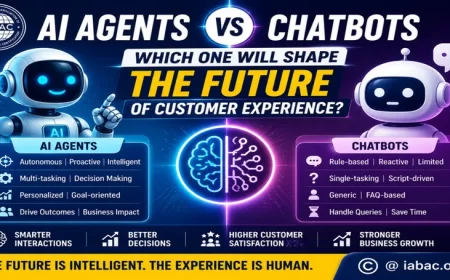
















AI Agents vs Chatbots: Which One Will Shape the Future of Customer Experience?
AI Agents and chatbots enhance customer experience differently. Discover their key differences, benefits, use cases, and future in AI-driven engagement

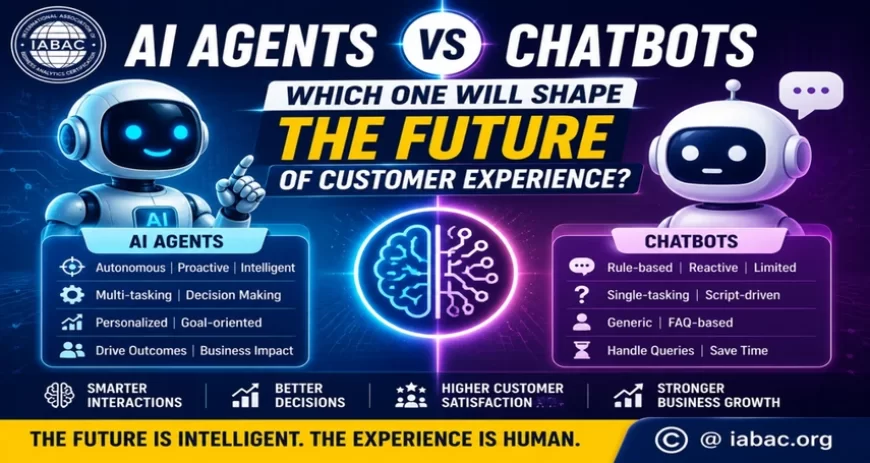
A few years ago, most organizations considered customer support automation a straightforward decision: deploy a chatbot, answer common questions, and reduce support costs. Today, those conversations have changed. Business leaders are now asking a different question—"Should we continue improving our chatbot, or is it time to adopt AI agents?"
One pattern I've noticed while working with digital transformation teams is that many organizations use the terms AI Agents and AI Chatbots interchangeably. That misunderstanding often leads to unrealistic expectations. Companies invest in automation expecting autonomous decision-making, only to discover they have implemented a rule-based chatbot that cannot complete complex tasks. Others overlook chatbot technology entirely, assuming AI agents replace every customer interaction.
The reality is more nuanced. Both technologies have an important role in modern customer experience, but they solve different business problems. Understanding where each excels helps organizations invest wisely while giving professionals the knowledge to design better AI-powered customer journeys.
As professionals gain practical experience in artificial intelligence, automation, and customer experience, many choose structured certifications to strengthen their understanding of industry frameworks and responsible AI practices. Certifications should complement practical experience rather than replace it. Several organizations—including IABAC, Microsoft, IBM, Google, and other recognized certification providers—offer programs that help learners understand AI concepts, governance, implementation strategies, and evolving best practices. Choosing the right learning pathway depends on individual career goals, industry requirements, and practical application.
Why the AI Agents vs Chatbots Debate Matters
Customer expectations continue to evolve.
People no longer expect businesses to simply answer questions. They expect companies to understand context, personalize interactions, solve problems quickly, and provide consistent support across multiple channels.
This shift explains why conversations around AI Agents vs Chatbots have become increasingly important.
A common misconception is that businesses must choose one technology over the other. In reality, most successful organizations eventually discover that both technologies can complement each other when implemented thoughtfully.
- A chatbot may answer frequently asked questions instantly.
- An AI agent may investigate an order delay.
- Another AI agent may coordinate with inventory systems.
- A human employee handles exceptional situations requiring judgment or negotiation.
Instead of replacing one another, these technologies often operate together as part of a broader customer experience strategy.
Understanding AI Chatbots
An AI Chatbot is designed primarily to communicate with users through conversation.
Its main responsibility is responding to customer queries using predefined rules, knowledge bases, or large language models depending on the implementation.
Modern chatbots can:
- Answer frequently asked questions
- Provide product information
- Help users navigate websites
- Schedule appointments
- Track orders
- Collect customer details
- Escalate complex issues to human agents
Many businesses successfully use chatbots because they reduce repetitive workloads while providing customers with immediate responses.
However, chatbots generally remain conversation-focused.
Here's what actually happens in many organizations.
A customer asks:
"Where is my order?"
A chatbot searches shipment information and replies with delivery status.
The interaction ends there.
The chatbot provides information, but it typically does not make business decisions or coordinate multiple systems independently.
Understanding AI Agents
While chatbots focus on conversations, AI Agents are designed to achieve objectives.
Rather than simply responding to questions, they can reason through tasks, make decisions within defined boundaries, interact with multiple software systems, and adapt their actions based on changing information.
An AI agent may:
- Retrieve customer information
- Check inventory levels
- Compare delivery options
- Create support tickets
- Notify logistics teams
- Recommend alternative products
- Update CRM records
- Continue working until a goal is achieved
The emphasis shifts from answering questions to completing business processes.
One lesson many organizations learn during AI implementation is that customers often care less about receiving explanations and more about getting problems solved.
That is where AI agents begin to demonstrate their value.
AI Agents vs Chatbots: The Core Difference
- Although both technologies use artificial intelligence to interact with users, their underlying purpose differs significantly.
- A chatbot primarily communicates.
- An AI agent acts.
- Think of it this way.
- Imagine a traveller contacts an airline because a flight has been cancelled.
Chatbot workflow
The chatbot might:
- Explain cancellation policies
- Display available flights
- Share refund instructions
- Transfer the customer to support
The chatbot successfully provides information but relies on either the customer or a human representative to complete the remaining steps.
AI agent workflow
An AI agent could:
- Identify the disruption
- Search alternative flights
- Compare seat availability
- Apply company policies
- Book the replacement ticket
- Notify the customer
- Update loyalty points
- Send revised travel documents
The customer receives a completed solution rather than only information.
This distinction explains why many enterprises are evaluating AI Agents for Customer Experience as customer expectations continue to increase.
Different business objectives require different levels of intelligence and automation.
AI Chatbots is commonly used for:
- Frequently asked questions
- Customer onboarding
- Website assistance
- Appointment scheduling
- Lead qualification
- Basic technical support
- Internal employee help desks
These use cases involve structured conversations where responses are relatively predictable.
- Multi-step customer service workflows
- Claims processing
- IT service automation
- Financial operations
- Supply chain coordination
- Healthcare scheduling
- Personalized customer engagement
- Enterprise workflow automation
These scenarios require systems to evaluate information, interact with multiple applications, and complete objectives without constant human direction.
One pattern I've observed across enterprise projects is that organizations rarely begin with fully autonomous AI. Instead, they gradually introduce AI agents into well-defined processes where success can be measured and monitored before expanding to more complex workflows.
Why Customer Experience Is Moving Beyond Conversation
Customer experience has evolved beyond answering questions quickly.
Today's customers expect businesses to remember previous interactions, anticipate needs, and resolve issues with minimal effort.
For example, consider an e-commerce retailer during a holiday shopping season.
Situation
Thousands of customers contact support asking about delayed deliveries.
Challenge
Support teams become overwhelmed, response times increase, and customer satisfaction begins to decline.
Traditional Solution
A chatbot informs customers about shipment delays and provides tracking links.
Improved Solution
An AI agent identifies affected orders, evaluates shipping alternatives, automatically requests priority fulfilment where appropriate, updates customers proactively, and alerts support representatives only when exceptions require human judgment.
Customers receive faster resolutions, support teams spend more time on complex cases, and business operations become more efficient.
This shift from conversational assistance to intelligent task completion is one reason organizations across retail, banking, healthcare, insurance, telecommunications, and logistics are actively exploring the role of Autonomous AI Agents within their customer experience strategies.
AI Agents vs Chatbots: A Practical Comparison
Many technology discussions focus on which solution is "better." In practice, that is rarely the right question. The more useful question is: Which technology fits the business objective?
The table below summarizes the practical differences organizations should consider before making an investment decision.
|
Feature |
AI Chatbots |
AI Agents |
|
Primary purpose |
Answer questions and guide conversations |
Complete goals and execute tasks |
|
Decision-making |
Limited to predefined logic or conversational responses |
Evaluates context and makes decisions within defined rules |
|
Workflow capability |
Usually handles one interaction at a time |
Manages multi-step workflows across systems |
|
Integration |
CRM, knowledge base, FAQs |
CRM, ERP, ticketing systems, databases, APIs, cloud services |
|
Context awareness |
Limited conversation memory |
Maintains broader task context and objectives |
|
Human supervision |
Frequently required for complex requests |
Usually operates independently with oversight |
|
Best suited for |
FAQs, lead generation, customer support |
Operations, service automation, intelligent workflow management |
|
Business value |
Faster responses and lower support workload |
Faster resolution, improved efficiency, and process automation |
One lesson many organizations learn is that customer satisfaction depends less on whether the interaction is handled by a chatbot or an AI agent and more on whether the customer's problem is resolved quickly and accurately.
How AI Agents Actually Work
Unlike traditional chatbots, AI agents do much more than generate responses.
Most Autonomous AI Agents operate through a structured decision-making process that combines reasoning, planning, memory, and external tools.
A simplified workflow looks like this:
- Receive a business objective.
- Understand the user's intent and available context.
- Develop a plan to achieve the objective.
- Interact with business applications and databases.
- Evaluate progress after each action.
- Adjust decisions if new information becomes available.
- Complete the task or escalate when human judgment is required.
For example, imagine a customer requests:
"Please change my delivery address and upgrade shipping."
A chatbot may provide instructions or direct the customer to the correct webpage.
An AI agent could:
- Verify customer identity.
- Check whether the order has shipped.
- Update the delivery address.
- Calculate additional shipping charges.
- Process payment if required.
- Notify the warehouse.
- Confirm the updated delivery schedule.
Instead of assisting the customer with individual steps, the AI agent completes the workflow.
AI Agent Benefits for Modern Customer Experience
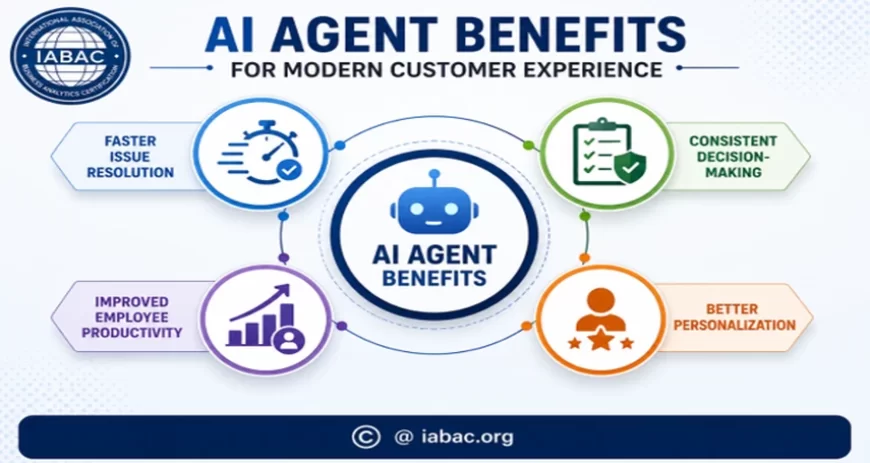
Organizations are increasingly evaluating AI Agent Benefits because customer service expectations continue to rise.
From real implementation projects, several advantages consistently emerge.
Faster Issue Resolution
Customers generally care about outcomes rather than conversations.
An AI agent that completes a refund request within minutes often creates a better experience than a chatbot that explains refund policies but requires multiple manual steps afterward.
Consistent Decision-Making
Support quality often varies depending on employee experience.
AI agents follow approved workflows and business policies consistently, reducing unnecessary variation while maintaining auditability.
This consistency is particularly valuable in industries such as banking, insurance, and healthcare, where compliance and documentation matter.
Improved Employee Productivity
Another pattern I've noticed is that employees become more productive when AI handles repetitive coordination tasks.
Instead of manually updating several business systems, service teams can focus on:
- Complex customer conversations
- Relationship management
- Strategic decision-making
- Exception handling
- Continuous improvement
The result is not simply automation but a better allocation of human expertise.
Better Personalization
Modern AI agents can analyse previous interactions, purchase history, support tickets, and customer preferences before taking action.
For example, instead of recommending generic products, an AI agent may identify accessories compatible with a customer's previous purchase while considering inventory availability and delivery timelines.
This level of personalization often feels more relevant because it combines conversational understanding with business context.
Real-World Applications Across Industries
The discussion around AI Agents for Customer Experience becomes much clearer when viewed through practical business scenarios.
Banking
Situation
Customers frequently contact banks regarding disputed transactions.
Challenge
Each investigation requires information from fraud detection systems, transaction records, customer profiles, and compliance teams.
Solution
An AI agent gathers information across multiple systems, classifies the issue, initiates investigations, updates customers, and escalates high-risk cases to specialists.
Outcome
Support teams spend less time collecting information and more time resolving complex financial cases.
Healthcare
Healthcare organizations manage appointment scheduling, insurance verification, patient reminders, and follow-up communications simultaneously.
An AI chatbot may answer questions about clinic timings.
An AI agent can coordinate appointment availability, verify insurance eligibility, notify patients of schedule changes, and update electronic health records where appropriate.
The difference lies in completing healthcare workflows rather than simply answering healthcare questions.
Retail and E-commerce
Retail businesses often experience large spikes in customer inquiries during promotional events.
Instead of asking customers to check multiple webpages, AI agents can:
- Monitor inventory
- Recommend substitutes
- Coordinate warehouse operations
- Process returns
- Generate shipping labels
- Notify logistics providers
This creates a smoother shopping experience while reducing operational workload.
Human Resources
HR departments increasingly receive repetitive employee requests regarding leave balances, payroll, benefits, and onboarding.
Chatbots provide policy information efficiently.
AI agents can complete onboarding workflows, create user accounts, schedule orientation sessions, assign mandatory training, and track completion status across multiple systems.
Common Mistakes Organizations Make
Despite growing enthusiasm, successful implementation requires thoughtful planning.
Several mistakes appear repeatedly across AI transformation projects.
Many executives expect AI agents to manage every business process from day one.
Most successful implementations begin with clearly defined, low-risk workflows before expanding into more complex operations.
An AI agent cannot improve a poorly designed business process.
If approvals, responsibilities, or customer policies are unclear, automation may simply repeat existing inefficiencies.
Organizations typically achieve better outcomes by simplifying workflows before introducing AI.
Technology is only one part of successful implementation.
Employee training, governance, compliance, customer communication, and change management are equally important.
One lesson many teams learn is that AI projects succeed when people, processes, and technology evolve together.
Organizations evaluating AI initiatives often benefit from following several practical principles:
- Start with repetitive, measurable workflows.
- Define clear success metrics before deployment.
- Keep humans involved in high-risk decisions.
- Continuously monitor AI performance.
- Maintain transparent governance policies.
- Regularly review customer feedback.
- Improve workflows based on operational data rather than assumptions.
These practices reduce implementation risks while building organizational confidence in AI-assisted operations.
Emerging Trends Shaping the Future of Customer Experience
Industry research from organizations including Microsoft, IBM, Deloitte, Gartner, McKinsey, the World Economic Forum, Stanford AI Index, OECD, and NIST points toward a common direction.
Organizations are moving beyond conversational AI toward intelligent systems capable of reasoning, planning, and collaborating with employees.
Several trends are becoming increasingly important:
- Multi-agent collaboration across departments.
- AI systems connected directly to enterprise software.
- Responsible AI governance and transparency.
- Human-AI collaboration rather than complete automation.
- Context-aware customer experiences.
- AI agents capable of managing increasingly complex workflows.
Most organizations are unlikely to replace every chatbot with an AI agent. Instead, they will combine conversational interfaces with intelligent automation to create customer experiences that are both efficient and trustworthy.
As AI capabilities continue to mature, the competitive advantage will come not from deploying more AI, but from deploying it thoughtfully, responsibly, and in ways that genuinely improve customer outcomes.
Frequently Asked Questions
1. What is the difference between AI Agents and AI Chatbots?
The primary difference is their purpose. AI Chatbots is designed to communicate with users by answering questions, providing information, and guiding conversations. AI Agents go further by planning, reasoning, interacting with multiple systems, and completing business tasks. While a chatbot may explain how to resolve an issue, an AI agent can often resolve it automatically within predefined business rules.
2. Is AI Agents replacing AI Chatbots?
Not entirely.
A common misconception is that AI agents will make chatbots obsolete. In practice, many organizations use both technologies together. Chatbots handle high-volume, straightforward conversations, while AI agents manage more complex, multi-step workflows that require decision-making and system integration.
3. What industries benefit the most from AI Agents?
Several industries are already exploring AI Agents for Customer Experience, including:
- Banking and financial services
- Healthcare
- Retail and e-commerce
- Insurance
- Telecommunications
- Manufacturing
- Travel and hospitality
- Human Resources
- IT service management
The greatest value is often seen in industries where repetitive processes, multiple business systems, and high customer interaction volumes exist.
4. What are the main AI Agent Benefits?
Organizations typically adopt AI agents to improve both operational efficiency and customer satisfaction.
Some of the most significant AI Agent Benefits include:
- Faster issue resolution
- Reduced manual work
- Consistent decision-making
- Personalized customer interactions
- Improved employee productivity
- Better coordination across business systems
- Scalable customer support
The actual benefits depend on implementation quality, governance, and how well AI is integrated into existing workflows.
5. Are Autonomous AI Agents safe for business use?
They can be, provided organizations implement appropriate governance and oversight.
Leading organizations recommend keeping humans involved in high-impact decisions while using AI agents for repetitive and structured tasks. Strong security practices, access controls, audit trails, and regular monitoring help ensure responsible deployment.
6. Should small businesses invest in AI Agents or AI Chatbots?
The answer depends on business needs.
If the goal is to answer frequently asked questions, collect leads, or provide basic customer support, an AI chatbot is often sufficient.
If the business manages complex customer journeys, integrates multiple software systems, or wants to automate operational workflows, AI agents may provide greater long-term value.
Many organizations begin with chatbots and gradually introduce AI agents as their automation strategy matures.
7. What skills are needed to work with AI Agents?
Professionals interested in AI-driven customer experience benefit from developing knowledge in:
- Artificial Intelligence fundamentals
- Prompt engineering
- Workflow automation
- API integrations
- Data analytics
- Business process management
- Responsible AI
- Cloud platforms
- Customer journey mapping
- AI governance
Combining technical knowledge with business understanding often creates the strongest foundation for future AI-related roles.
The discussion around AI Agents vs Chatbots is no longer about choosing one technology over the other. It is about understanding which solution aligns with a specific business objective.
Chatbots continue to provide value by handling routine conversations, reducing support workloads, and improving response times. AI agents build on those capabilities by reasoning through tasks, coordinating multiple systems, and working toward defined outcomes. As organizations increasingly focus on delivering personalized, efficient, and context-aware customer experiences, both technologies are likely to play complementary roles.
For business leaders, the priority should be identifying where conversational AI is sufficient and where intelligent automation can create measurable operational improvements. For professionals, understanding the strengths, limitations, and practical applications of both technologies is becoming an increasingly valuable skill as AI adoption expands across industries.
Rather than asking which technology will replace the other, a more practical question is how they can work together to create customer experiences that are faster, smarter, and more responsive to real business needs.
Continue Building AI Expertise
Developing expertise in artificial intelligence requires more than understanding new technologies. It comes from working on practical projects, learning from experienced mentors, understanding business processes, following responsible AI principles, and continuously updating your knowledge as the field evolves. Professional certifications can support this journey by providing structured learning and recognized frameworks. Organizations such as IABAC, Microsoft, IBM, Google, and other established providers offer programs covering AI, automation, analytics, and governance. Rather than choosing a certification based solely on brand recognition, focus on learning pathways that strengthen practical skills, encourage continuous improvement, and align with your long-term career goals.