



















































What Is Chatbot in AI?
Learn what AI chatbots are, how they work, and their uses in customer support, e-commerce, healthcare, and everyday applications.


Introduction
Think about the last time you ordered food online, asked your bank a quick question, or used Siri to set a reminder. Chances are, you weren’t talking to a person — you were talking to a chatbot.
Chatbots have quickly moved from being “nice-to-have” add-ons to becoming everyday tools we rely on. And when artificial intelligence (AI) powers these bots, they become much smarter, more helpful, and better at holding real conversations.
What Exactly Is a Chatbot?
At its core, a chatbot is just a program designed to chat with people. Early chatbots were very basic — they worked on pre-written scripts. If you typed a certain keyword, they gave you a fixed answer.
But with AI, chatbots have moved beyond scripts. AI-powered chatbots use natural language processing (NLP) and machine learning (ML) to actually understand what people mean, not just what they type. That’s why they can handle more open-ended questions and respond in ways that feel more natural.
Think of it like this:
-
Rule-based chatbot: like a vending machine — you press the right button, it gives you a set output.
-
AI chatbot: more like a coffee shop barista — it listens, understands what you want, and adjusts if you change your order.
How Do AI Chatbots Work?
AI chatbots may seem complex, but the process is straightforward:
-
You type or say something.
-
The chatbot uses NLP to break down your message and figure out your intent.
-
With the help of machine learning, it looks for context (previous chats, patterns, or data).
-
It then creates the most suitable response — either pulling from a knowledge base or generating new text.
-
The more it interacts, the smarter it becomes.
This constant learning loop is what makes AI chatbots different from static, rule-based ones.
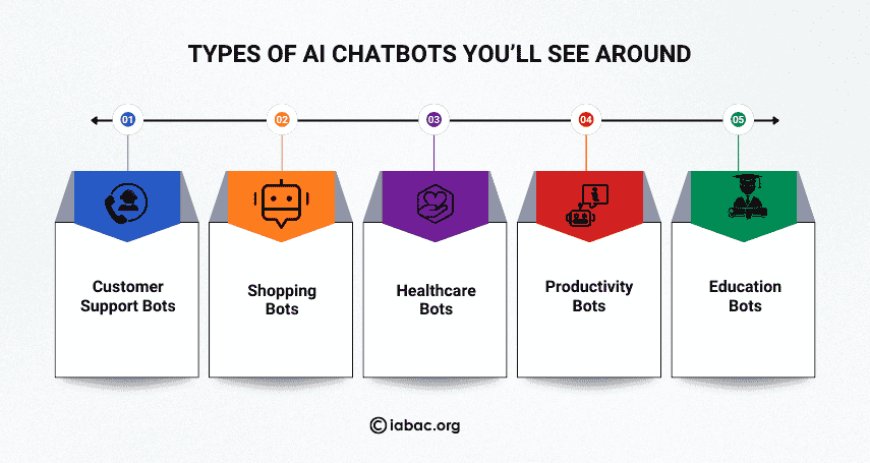
Types of AI Chatbots You’ll See Around
Customer Support Bots
These are the ones you meet on websites. They handle FAQs, track orders, or pass you to a human agent if needed.
Shopping Bots
Think of assistants on e-commerce platforms — they recommend products, help with payments, and suggest alternatives if something’s out of stock.
Healthcare Bots
From scheduling doctor visits to reminding patients to take medicine, these bots reduce waiting times and free up medical staff.
Productivity Bots
Siri, Alexa, and Google Assistant all fall into this category. They manage calendars, play music, or even control smart home devices.
Education Bots
Some chatbots guide students through study material or explain tricky topics interactively.
What Makes AI Chatbots Stand Out?
AI chatbots aren’t just question-and-answer tools. They bring features that make them practical for real use:
-
Natural conversation – They understand human language, not just keywords.
-
Memory and context – They “remember” previous chats, so replies make sense in ongoing conversations.
-
Multiple languages – Some can switch between languages on the go.
-
Cross-platform use – They work on websites, apps, social media, and messaging platforms.
-
Personalized answers – They adapt to user preferences, making conversations feel less robotic.
Why Businesses Use AI Chatbots
For companies, AI chatbots are more than just a tech upgrade. They bring real value:
-
Always available – They don’t need breaks, so customers can get answers anytime.
-
Quick replies – No waiting in queues. A chatbot answers instantly.
-
Lower costs – Automating routine questions means fewer human agents are needed.
-
Easier scaling – They can handle hundreds of chats at the same time.
-
Useful insights – Chat logs help businesses understand what customers ask most often.
Where AI Chatbots Struggle
As advanced as they are, chatbots aren’t perfect. Some limitations include:
-
No emotions – They can’t show empathy the way humans can.
-
Complex queries – Technical or sensitive issues still need human support.
-
Privacy concerns – Chatbots handle personal data, so security is a big responsibility.
-
Over-automation – If businesses rely only on bots, customers may feel frustrated when their problems don’t get solved.
Examples You Already Know
AI chatbots are everywhere. Some of the most common include:
-
Voice assistants like Siri, Alexa, and Google Assistant.
-
Banking bots that check balances, alert you about fraud, or answer quick questions.
-
E-commerce bots on Amazon or Shopify stores that recommend products.
-
Healthcare bots that give symptom checks or help book appointments.
These examples show how flexible AI chatbots can be across industries.
What’s Next for AI Chatbots?
The future points to smarter, more personalized bots. Some trends to watch include:
-
More personalization – Bots will use past conversations to customize every reply.
-
Voice-first interactions – Talking to bots will become as common as texting them.
-
Multimodal experiences – Combining text, voice, and visuals in one smooth interaction.
-
Integration with new tech – Expect bots to connect with smart devices, AR/VR platforms, and even IoT systems.
-
Ethical and transparent design – Companies will need to build bots that respect privacy and reduce bias.
Chatbots have come a long way — from simple scripts to AI-driven tools that can hold conversations. Today, they’re not only answering FAQs but also guiding customers, scheduling appointments, and even managing smart homes.
For businesses, AI chatbots are a way to improve customer experience while keeping costs in check. For users, they offer convenience and speed. Of course, challenges like empathy and privacy remain, but as AI improves, chatbots are likely to become more natural, more reliable, and more personal.
The next time you ask Alexa to play your favorite song or chat with an online support bot, you’ll know the technology behind it isn’t just simple automation — it’s AI at work.