








































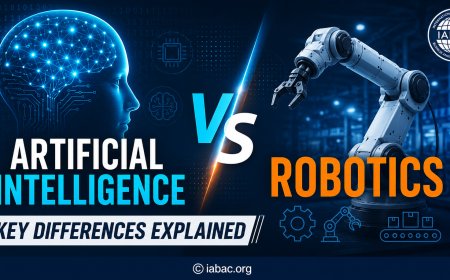















Artificial Intelligence vs Robotics: Key Differences Explained
Learn the difference between Artificial Intelligence and Robotics, their applications, careers, salaries, and future trends with practical examples.

Imagine walking into a modern manufacturing plant. One robotic arm is assembling electronic components with remarkable precision, while another system analyses production data to predict equipment failures before they happen. At first glance, both may seem like examples of the same technology. In reality, they represent two closely related but fundamentally different fields: robotics and artificial intelligence.
This confusion isn't limited to manufacturing. The terms "Artificial Intelligence" and "Robotics" are often used interchangeably in conversations about automation, self-driving cars, healthcare, and even customer service. As AI-powered tools become part of everyday life and robots take on increasingly complex tasks, understanding the distinction between these technologies has become more important than ever.
One pattern I've noticed while working with organizations adopting intelligent automation is that many business leaders initially believe every robot uses AI, or that AI always requires a physical robot. In practice, neither assumption is true. Many robots operate without artificial intelligence, following pre-programmed instructions, while countless AI applications—such as recommendation engines, fraud detection systems, and virtual assistants—exist entirely in software without any physical presence.
Understanding the relationship between Artificial Intelligence and Robotics helps professionals make informed technology decisions, evaluate career opportunities, and identify where these fields complement each other. Whether you're exploring a career in technology, planning digital transformation initiatives, or simply trying to understand today's rapidly evolving technological landscape, knowing how AI and robotics differ provides valuable context for the future of work.
Building Practical Knowledge Through Continuous Learning
As professionals gain hands-on experience with technologies like Artificial Intelligence and Robotics, many choose structured learning pathways to strengthen their understanding of industry frameworks, implementation practices, and emerging trends. Professional certifications can help validate practical knowledge while exposing learners to real-world use cases and recognized best practices. Organizations such as IABAC, alongside several other certification providers, offer programs designed to support continuous professional development. The most valuable learning journey combines practical experience, mentorship, industry exposure, and formal education rather than relying on any single source of knowledge.
What Is Artificial Intelligence?
Artificial Intelligence (AI) refers to the ability of computer systems to perform tasks that typically require human intelligence. Rather than simply following a fixed set of instructions, AI systems analyse data, identify patterns, learn from experience, and make predictions or decisions based on the information available.
Unlike traditional software, which produces the same output whenever it receives the same input, AI systems can improve their performance as they process more data. This ability to learn and adapt is one of the defining characteristics that separates Artificial Intelligence from conventional computer programming.
At its core, AI combines several technologies to simulate aspects of human reasoning. These include machine learning, deep learning, natural language processing, computer vision, knowledge representation, and decision-making algorithms. Together, these technologies enable machines to recognize speech, understand images, translate languages, detect anomalies, recommend products, and automate complex workflows.
For example, when a streaming platform suggests movies based on your viewing habits, it is using AI algorithms to analyse your preferences and compare them with millions of other users. Similarly, banks use AI to identify unusual transaction patterns that may indicate fraud, while hospitals apply AI models to assist doctors in analysing medical images and identifying potential health risks.
One lesson many organizations learn during AI adoption is that success depends less on the sophistication of the algorithm and more on the quality of the data. Even the most advanced AI model cannot deliver reliable insights if it is trained on incomplete, outdated, or biased information. Data governance, data quality, and continuous monitoring therefore play a critical role in successful AI implementation.
Core Components of Artificial Intelligence
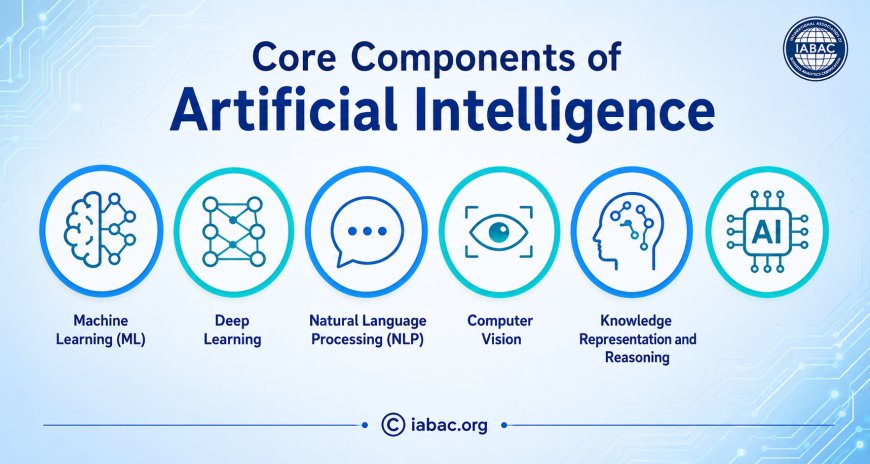
Although AI is a broad field, most modern AI systems rely on several foundational components that work together.
Machine Learning (ML):
Machine learning enables systems to identify patterns from historical data and make predictions without being explicitly programmed for every scenario. It powers applications such as recommendation systems, spam filters, and demand forecasting.
Deep Learning:
Deep learning uses multi-layered neural networks to process large volumes of complex data. It is widely applied in image recognition, speech processing, autonomous driving, and medical diagnostics.
Natural Language Processing (NLP):
NLP allows computers to understand, interpret, and generate human language. Virtual assistants, AI chatbots, language translation tools, and document summarization systems all rely on NLP technologies.
Computer Vision:
Computer vision enables machines to interpret images and video streams. It is commonly used for facial recognition, quality inspection in manufacturing, medical imaging, and autonomous vehicles.
Knowledge Representation and Reasoning:
These techniques help AI systems organize information, draw logical conclusions, and make informed decisions based on existing knowledge.
Rather than operating independently, these technologies often work together within a single AI solution. For example, a self-driving vehicle may combine computer vision to detect pedestrians, deep learning to recognize road signs, machine learning to improve driving decisions, and reasoning algorithms to determine the safest route.
How Artificial Intelligence Learns
A common misconception is that AI "thinks" like humans. In reality, AI learns by identifying statistical relationships within data rather than understanding concepts in the same way people do.
The learning process generally involves four stages:
- Collecting relevant data.
- Training algorithms to identify meaningful patterns.
- Testing the model using unseen data.
- Continuously improving accuracy through additional learning and feedback.
This iterative process enables AI systems to become more effective over time, provided they receive high-quality data and regular updates.
Today, Artificial Intelligence supports a wide range of industries, including healthcare, finance, retail, logistics, education, cybersecurity, manufacturing, and business analytics. From predictive maintenance and personalized recommendations to intelligent customer support and supply chain optimization, AI has become an essential technology for organizations seeking to improve decision-making and operational efficiency.
However, it's important to recognize that Artificial Intelligence itself has no physical form. It exists as software, algorithms, and computational models. This distinction becomes especially important when comparing AI with robotics, where physical machines interact directly with the real world.
What Is Robotics?
Robotics is the branch of engineering and technology that focuses on designing, building, programming, and operating machines capable of performing physical tasks. These machines, known as robots, can carry out repetitive, dangerous, or highly precise activities with minimal or no human intervention.
Unlike Artificial Intelligence, which exists as software, robotics combines mechanical engineering, electronics, computer science, and control systems to create machines that interact with the physical world. A robot typically includes a mechanical structure, sensors, actuators, controllers, and software that work together to complete specific tasks.
One of the biggest misconceptions is that every robot is "intelligent." In reality, many robots used today do not think, learn, or make independent decisions. Instead, they follow predefined instructions programmed by engineers. If the same conditions occur repeatedly, these robots perform the same sequence of actions with remarkable consistency.
Consider a robotic arm on an automobile assembly line. It welds thousands of car frames every day with exceptional accuracy. However, if an unexpected object appears in its workspace, a traditional industrial robot may stop operating because it lacks the ability to interpret unfamiliar situations. It performs exactly what it has been programmed to do—nothing more and nothing less.
This is where many professionals struggle when evaluating automation technologies. They assume robotic automation automatically means intelligent automation. In practice, robotics provides the physical capability to perform work, while intelligence depends on whether AI technologies have been integrated into the system.
Major Components of a Robotic System
Although robots vary widely in complexity, most share several core components.
Mechanical Structure
The mechanical framework determines how a robot moves and interacts with its environment. This includes arms, wheels, joints, grippers, or legs depending on the robot's intended purpose.
For example:
- Warehouse robots use wheels for navigation.
- Surgical robots use multiple articulated arms.
- Humanoid robots use legs and arms to mimic human movement.
Sensors
Sensors allow robots to collect information from their surroundings.
Common sensors include:
- Cameras
- LiDAR
- Ultrasonic sensors
- Infrared sensors
- Pressure sensors
- Force sensors
- GPS modules
Without sensors, robots cannot accurately detect objects, measure distances, or respond to environmental changes.
Actuators
Actuators convert electrical signals into physical movement.
They enable robots to:
- Rotate joints
- Lift objects
- Open grippers
- Drive wheels
- Move conveyor systems
Think of actuators as the "muscles" of a robot.
Controller
The controller functions as the robot's central processing unit. It interprets sensor inputs and sends commands to actuators based on programmed instructions or AI-generated decisions.
Software
Every robot requires software to define how it should operate. This software may contain simple rule-based instructions or sophisticated Artificial Intelligence models capable of learning from experience.
How Robots Perform Tasks
Traditional robots generally follow a simple sequence:
- Receive input from sensors.
- Process the information.
- Execute predefined instructions.
- Complete the assigned physical task.
For example, a warehouse robot may detect a storage location, navigate to the shelf, pick up a package, and transport it to a shipping area. If every step has been predefined, the robot performs the workflow consistently without needing to "understand" the task.
Modern intelligent robots, however, operate differently. By integrating Artificial Intelligence, they can recognize objects, adapt to changing environments, optimize movement paths, and even learn from previous experiences.
One lesson many manufacturing teams learn during automation projects is that adding AI to a robot does not automatically make the system more effective. Intelligent robots require high-quality training data, continuous testing, and ongoing monitoring to ensure reliable performance. Without these elements, increased complexity can sometimes reduce operational efficiency rather than improve it.
Artificial Intelligence vs Robotics: Understanding the Key Differences
Although Artificial Intelligence and Robotics frequently appear together in discussions about automation, they solve different problems. Understanding this distinction helps organizations invest in the right technologies and helps professionals choose suitable career paths.
Artificial Intelligence is primarily concerned with creating systems that can simulate aspects of human intelligence. Its goal is to enable machines to learn from data, recognize patterns, solve problems, and make informed decisions. AI exists entirely as software and can operate without any physical machine.
Robotics, on the other hand, focuses on building machines capable of interacting with the physical world. A robot can move, manipulate objects, transport materials, inspect equipment, or assist humans with physical tasks. Whether it behaves intelligently depends on the software controlling it.
A simple household robot vacuum illustrates this difference well. Earlier models followed fixed movement patterns and cleaned rooms using basic obstacle detection. They could complete their tasks efficiently but lacked the ability to understand their surroundings.
Modern robotic vacuum cleaners, however, use Artificial Intelligence alongside cameras, sensors, and mapping technologies. They learn room layouts, identify furniture, avoid obstacles, optimize cleaning routes, and even remember multiple floor plans. The physical robot remains the same concept, but AI significantly enhances its capabilities.
One pattern I've observed across digital transformation initiatives is that organizations achieve the greatest value when they treat AI and robotics as complementary technologies rather than competing ones. AI provides intelligence, while robotics delivers action. Together, they create systems capable of perceiving, reasoning, and interacting with the physical environment.
When Artificial Intelligence Works Without Robotics
Many of the AI applications people use every day have no robotic component at all.
Examples include:
- ChatGPT generating written responses
- Netflix recommending movies
- Banks detecting fraudulent transactions
- Email spam filtering
- Medical image analysis
- Voice assistants like Siri or Google Assistant
- Predictive maintenance software
- Customer service chatbots
Each of these systems processes information and makes intelligent decisions entirely through software.
When Robotics Works Without Artificial Intelligence
Similarly, countless robots operate effectively without AI.
Examples include:
- Robotic welding machines
- Conveyor sorting systems
- CNC manufacturing equipment
- Pick-and-place robots
- Packaging robots
- Automated assembly lines
These machines execute predefined instructions repeatedly with exceptional speed and precision. They do not learn from experience or adapt independently.
When AI and Robotics Work Together
The most advanced automation systems combine both technologies.
Examples include:
- Autonomous vehicles
- Surgical robots
- Warehouse automation robots
- Agricultural harvesting robots
- Search-and-rescue robots
- Drone inspection systems
- Autonomous mining equipment
- Space exploration rovers
In these systems, robotics provides mobility and physical interaction, while AI enables perception, planning, navigation, and decision-making.
This combination has transformed industries by improving productivity, reducing operational risks, and enabling automation in environments where traditional robots alone would struggle.
Artificial Intelligence vs Robotics Comparison Table
|
Feature |
Artificial Intelligence |
Robotics |
|
Primary Purpose |
Simulate human intelligence |
Perform physical tasks |
|
Nature |
Software technology |
Physical engineering system |
|
Physical Presence |
No |
Yes |
|
Core Focus |
Learning, reasoning, prediction, decision-making |
Movement, manipulation, automation |
|
Learns from Data |
Yes |
Only when AI is integrated |
|
Operates Independently |
Software can operate independently |
Usually requires hardware |
|
Common Technologies |
Machine Learning, Deep Learning, NLP, Computer Vision |
Sensors, Motors, Actuators, Controllers |
|
Example |
ChatGPT, Fraud Detection, Recommendation Engines |
Industrial Robot Arm, Warehouse Robot, Surgical Robot |
|
Industries |
Finance, Healthcare, Marketing, Cybersecurity |
Manufacturing, Logistics, Construction, Agriculture |
|
Relationship |
Provides intelligence |
Executes physical actions |
Key Takeaways
For professionals evaluating career opportunities, AI offers pathways into software development, data science, machine learning, and intelligent systems. Robotics opens opportunities in mechanical design, automation engineering, embedded systems, and industrial control. As industries increasingly adopt intelligent automation, professionals who understand both disciplines are likely to be well-positioned for interdisciplinary roles that bridge software intelligence with physical automation.
How Artificial Intelligence and Robotics Work Together
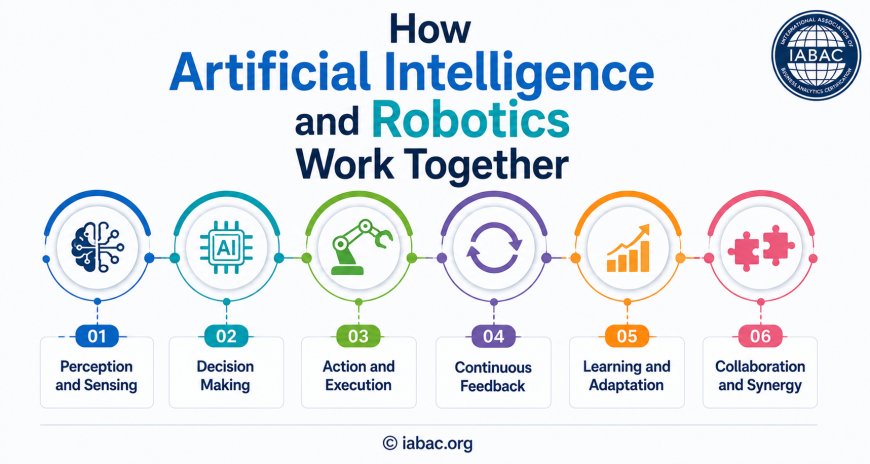
Many discussions around Artificial Intelligence vs Robotics present the two technologies as alternatives. In practice, the opposite is true. Some of the most successful automation projects combine Artificial Intelligence and robotics to create systems that can not only perform physical tasks but also perceive their environment, learn from data, and make informed decisions.
Think of robotics as the body and Artificial Intelligence as the brain. A robot provides the physical capability to move, lift, inspect, or assemble objects, while AI enables the robot to understand its surroundings, recognize patterns, and determine the best course of action. Individually, each technology delivers value. Together, they enable intelligent automation that can adapt to dynamic environments.
One lesson many organizations discover during automation initiatives is that investing in advanced robotic hardware alone rarely delivers the expected return. Without intelligent software, robots are limited to repetitive, predefined tasks. Conversely, AI models can generate insights and recommendations, but without robotic systems or other execution mechanisms, those insights cannot influence physical operations. The greatest business value emerges when AI and robotics are integrated strategically.
How Artificial Intelligence Enhances Robotics
Traditional robots follow programmed instructions with remarkable precision, making them ideal for repetitive manufacturing tasks. However, they struggle when conditions change unexpectedly. Artificial Intelligence addresses this limitation by enabling robots to perceive, analyse, and respond to new situations.
Several AI technologies contribute to smarter robotic systems.
Computer Vision Enables Environmental Awareness
Computer vision allows robots to interpret images and video captured through cameras. Instead of relying solely on fixed coordinates, AI-powered robots can recognize objects, identify defects, estimate distances, and monitor changes in their surroundings. According to OpenCV, computer vision combines image processing and machine learning techniques to help machines understand visual information, making it a foundational technology for intelligent robotics and industrial automation.
For example, in an electronics manufacturing facility, traditional robots may place components only if each part arrives in an identical position. An AI-powered vision system can detect slight variations in placement and automatically adjust the robot's movements, reducing production errors and improving efficiency.
One common implementation mistake is assuming high-resolution cameras alone guarantee accurate vision systems. In reality, image quality, lighting conditions, training data, and continuous calibration all influence computer vision performance.
Machine Learning Improves Decision-Making
Machine learning allows robots to improve their performance by learning from historical data and operational experience.
Instead of following rigid instructions, AI-enabled robots can identify patterns that improve productivity.
Examples include:
- Optimizing warehouse navigation routes
- Predicting equipment failures before breakdowns occur
- Improving object recognition accuracy
- Reducing manufacturing defects
- Enhancing autonomous driving decisions
In real projects, organizations often discover that machine learning is most effective when combined with human expertise. Engineers continue refining AI models, validating outputs, and ensuring the system remains aligned with operational objectives.
Natural Language Processing Supports Human-Robot Collaboration
As robots become more common in workplaces, communication between humans and machines becomes increasingly important.
Natural Language Processing (NLP) enables robots to understand spoken or written instructions, allowing employees to interact using conversational language instead of complex programming commands. The same NLP technology also powers AI agents and chatbots, enabling them to understand user intent, maintain context across conversations, and deliver more human-like interactions.
Examples include:
- Voice-controlled warehouse robots
- Customer service robots
- Hospital assistant robots
- Hospitality service robots
- Smart home assistants integrated with robotic devices
Although conversational AI has advanced significantly, organizations typically combine voice commands with structured workflows to improve reliability in business-critical environments.
Real-World Applications of Artificial Intelligence and Robotics
The combination of AI and robotics is transforming nearly every industry. While the level of adoption varies, organizations increasingly use intelligent automation to improve productivity, enhance safety, reduce operational costs, and support better decision-making.
Healthcare
Healthcare has become one of the most promising areas for AI-powered robotics.
Artificial Intelligence analyses medical images, predicts patient risks, and assists clinicians in making informed decisions. Robotics complements these capabilities by performing highly precise physical tasks.
Practical Example
A hospital performing minimally invasive surgery may use a robotic surgical system that translates a surgeon's hand movements into highly precise instrument control. Artificial Intelligence simultaneously analyses imaging data, highlights anatomical structures, and provides decision support during the procedure.
Situation: Complex surgical procedures requiring exceptional precision.
Challenge: Reducing human error while improving patient outcomes.
Solution: Combining robotic-assisted surgery with AI-driven image analysis.
Outcome: Greater surgical accuracy, smaller incisions, shorter recovery times, and improved clinical decision support.
Internal linking opportunity: Link naturally to an IABAC article about AI in Healthcare or Healthcare Data Analytics.
Manufacturing
Manufacturing has long been a leader in robotics adoption, but Artificial Intelligence is redefining factory automation.
Modern production facilities increasingly use AI-powered robots capable of adapting to changing production requirements, identifying product defects, and predicting equipment maintenance needs.
Practical Example
An automotive manufacturer deploys AI-enabled robotic arms equipped with computer vision.
Situation: High-volume vehicle assembly.
Challenge: Maintaining consistent quality while increasing production speed.
Solution: Computer vision identifies alignment issues in real time, while AI recommends process adjustments before defects occur.
Outcome: Higher production efficiency, reduced material waste, fewer product recalls, and improved equipment utilization.
One pattern I've noticed across manufacturing projects is that predictive maintenance often delivers faster ROI than fully autonomous robotics because preventing unexpected downtime immediately impacts production costs.
Logistics and Warehousing
The rapid growth of e-commerce has significantly increased demand for intelligent warehouse automation.
Traditional warehouse robots transported goods along predefined paths. Today's AI-powered robots dynamically navigate warehouses, avoid obstacles, prioritize urgent orders, and optimize picking routes.
Practical Example
A fulfilment centre receives thousands of online orders every hour.
Challenge: Deliver orders quickly while minimizing labour-intensive manual tasks.
Solution: AI-powered warehouse robots calculate optimal routes, coordinate with inventory systems, and automatically transport products to packing stations.
Outcome: Faster order fulfilment, reduced operating costs, improved inventory accuracy, and increased warehouse throughput.
This is where many organizations recognize that AI doesn't replace warehouse employees entirely. Instead, it allows employees to focus on higher-value activities such as quality assurance, exception handling, and operational planning.
Agriculture
Modern agriculture increasingly relies on intelligent robotics to improve productivity while reducing resource consumption.
Examples include:
- Autonomous tractors
- AI-powered harvesting robots
- Drone-based crop monitoring
- Automated irrigation systems
- Precision spraying equipment
Practical Example
An agricultural company manages thousands of acres of farmland.
Challenge: Detect crop disease early while reducing pesticide usage.
Solution: AI analyses aerial images captured by drones, identifies affected areas, and directs robotic spraying equipment to treat only infected sections.
Outcome: Lower chemical usage, healthier crops, improved sustainability, and reduced operating costs.
Retail and Customer Experience
Retailers use Artificial Intelligence and robotics to improve inventory management, enhance customer service, and streamline store operations.
Examples include:
- Inventory scanning robots
- Automated checkout systems
- Shelf-monitoring robots
- AI-powered recommendation engines
- Intelligent customer support kiosks
Although customer-facing robots often attract public attention, most retailers generate greater business value by deploying AI behind the scenes for demand forecasting, inventory optimization, and supply chain planning.
Transportation and Autonomous Mobility
Transportation represents one of the most complex applications of AI and robotics.
Autonomous vehicles integrate multiple AI technologies—including computer vision, sensor fusion, machine learning, and real-time decision-making—with sophisticated robotic systems capable of steering, braking, accelerating, and navigating complex road environments.
Practical Example
A logistics company introduces autonomous delivery vehicles for last-mile distribution.
Situation: Increasing delivery demand in urban areas.
Challenge: Improving efficiency while maintaining safety.
Solution: AI continuously analyses traffic conditions, pedestrians, road signs, and obstacles, while robotic systems execute vehicle movements accordingly.
Outcome: Improved route efficiency, lower fuel consumption, reduced delivery times, and enhanced operational scalability.
Despite significant progress, fully autonomous transportation continues to require extensive testing, regulatory oversight, and human supervision. Most commercial deployments today operate within carefully defined conditions rather than unrestricted public environments.
Business Benefits of Combining AI and Robotics
Organizations adopting AI-powered robotics often experience measurable improvements, but the specific outcomes depend on implementation quality, workforce readiness, and business objectives. Industry research from McKinsey and Deloitte shows that organizations achieve the greatest value when AI initiatives are aligned with business strategy, supported by high-quality data, and accompanied by workforce upskilling rather than technology deployment alone.
Common benefits include:
- Increased operational efficiency by automating repetitive tasks.
- Improved quality through AI-assisted inspection and precision control.
- Enhanced workplace safety by assigning hazardous activities to robots.
- Reduced equipment downtime using predictive maintenance.
- Faster and more informed decision-making supported by AI analytics.
- Better resource utilization through optimized scheduling and workflows.
- Greater scalability without proportional increases in labour costs.
Perhaps the most important benefit is adaptability. Unlike traditional automation, intelligent systems can respond to changing business conditions, making them better suited to dynamic industries where flexibility is essential.
AI vs Robotics Careers: Which Path Should You Choose?
One of the most common questions students and working professionals ask is, "Should I build a career in Artificial Intelligence or Robotics?" The answer depends less on which field is "better" and more on your interests, technical strengths, and long-term career goals.
Although Artificial Intelligence and Robotics frequently overlap in modern organizations, they require different skill sets and involve different types of work. AI professionals primarily develop software and intelligent systems, while robotics professionals focus on designing, building, programming, and maintaining physical machines. As industries increasingly adopt intelligent automation, professionals who understand both disciplines are becoming highly valuable because they can bridge the gap between software intelligence and real-world automation.
One pattern I've noticed while advising professionals transitioning into AI-related roles is that many assume a strong programming background is enough. In reality, employers increasingly look for individuals who can connect technology with business problems. Understanding how AI or robotics creates measurable business value often matters just as much as technical expertise.
Career Opportunities in Artificial Intelligence
Artificial Intelligence offers one of the fastest-growing career landscapes across industries. Organizations in finance, healthcare, retail, manufacturing, cybersecurity, and marketing are investing heavily in AI-powered solutions, creating demand for professionals who can develop, implement, and manage intelligent systems.
Popular AI career roles include:
- AI Engineer
- Machine Learning Engineer
- Data Scientist
- Computer Vision Engineer
- Natural Language Processing Engineer
- AI Research Scientist
- MLOps Engineer
- AI Product Manager
- Business Intelligence Analyst
- AI Solutions Architect
These professionals typically work with technologies such as Python, TensorFlow, PyTorch, SQL, cloud platforms, and data engineering tools.
Career Opportunities in Robotics
Robotics combines engineering principles with software development to create intelligent machines capable of performing physical tasks.
Common robotics roles include:
- Robotics Engineer
- Automation Engineer
- Embedded Systems Engineer
- Mechatronics Engineer
- Control Systems Engineer
- Industrial Automation Specialist
- Autonomous Systems Engineer
- Robotics Software Developer
- Field Robotics Engineer
- Manufacturing Automation Consultant
Professionals in robotics frequently work with sensors, PLCs, embedded programming, ROS (Robot Operating System), computer vision, electronics, and mechanical design.
Industries employing robotics professionals include:
- Automotive manufacturing
- Aerospace
- Healthcare
- Logistics
- Agriculture
- Construction
- Défense
- Warehouse automation
Artificial Intelligence vs Robotics Career Comparison
|
Career Aspect |
Artificial Intelligence |
Robotics |
|
Primary Focus |
Intelligent software and decision-making |
Physical machines and automation |
|
Core Skills |
Programming, machine learning, data science |
Mechanical engineering, electronics, automation |
|
Typical Tools |
Python, TensorFlow, PyTorch, SQL |
ROS, PLCs, CAD, C++, Embedded Systems |
|
Industries |
Finance, Healthcare, Retail, IT |
Manufacturing, Logistics, Aerospace, Agriculture |
|
Daily Work |
Building predictive models and AI systems |
Designing, testing, and maintaining robots |
|
Physical Hardware |
Usually not required |
Essential |
|
Cross-disciplinary Opportunities |
High |
High, especially with AI integration |
Rather than viewing these careers as competing paths, many organizations increasingly seek professionals who understand both AI and robotics. This combination is especially valuable in industries adopting autonomous systems, intelligent manufacturing, and smart infrastructure.
Challenges Organizations Face When Implementing AI and Robotics
Although AI and robotics can deliver significant benefits, successful implementation requires more than purchasing new technologies. Organizations often encounter technical, operational, and organizational challenges that influence project outcomes.
Data Quality and Availability
Artificial Intelligence relies heavily on accurate, representative, and well-managed data. Poor-quality or incomplete datasets can reduce prediction accuracy and lead to unreliable decision-making.
One lesson many teams learn is that improving data governance often produces greater long-term value than immediately deploying more sophisticated AI models.
Many organizations operate legacy infrastructure that was not designed to support AI-driven automation or advanced robotics.
Connecting new intelligent systems with existing enterprise software, manufacturing equipment, and operational processes frequently becomes one of the largest implementation challenges.
A phased implementation strategy usually reduces operational risks while allowing organizations to evaluate measurable improvements before expanding deployment.
Workforce Readiness
Technology adoption also requires investment in people.
Employees need opportunities to develop new skills, understand changing workflows, and build confidence in working alongside AI-powered systems.
Organizations that prioritize continuous learning generally experience smoother technology adoption than those focusing solely on hardware or software investments.
Ethics, Privacy, and Responsible AI
As AI becomes more capable, organizations must address questions related to fairness, transparency, accountability, and data privacy.
Responsible AI practices include:
- Monitoring AI decisions for bias
- Protecting sensitive customer information
- Maintaining transparency in automated decision-making
- Ensuring human oversight for high-impact applications
- Following regulatory and industry standards
These considerations are particularly important in healthcare, finance, education, and public-sector applications.
Future Trends in Artificial Intelligence and Robotics
Artificial Intelligence and robotics continue to evolve rapidly, driven by advances in computing power, data availability, sensor technologies, and cloud infrastructure. While specific technologies will change over time, several long-term trends are already shaping the future of intelligent automation.
Greater Human-Robot Collaboration
Instead of replacing human workers, many organizations are adopting collaborative robots (cobots) that work safely alongside employees. These systems combine robotic precision with human judgment, making them suitable for tasks requiring flexibility and close coordination.
AI-Powered Autonomous Systems
Autonomous vehicles, drones, warehouse robots, and industrial equipment are becoming increasingly capable of operating with limited human intervention. Advances in machine learning, computer vision, and sensor fusion continue to improve navigation, object recognition, and real-time decision-making.
Intelligent Manufacturing
Manufacturers are integrating AI with robotics to enable predictive maintenance, adaptive production scheduling, automated quality inspection, and energy optimization. These capabilities support more resilient and efficient operations.
Healthcare Innovation
AI-assisted diagnostics, robotic surgery, remote patient monitoring, and intelligent rehabilitation devices are expected to continue expanding as healthcare providers seek to improve patient outcomes while addressing workforce shortages.
Responsible AI and Governance
Organizations such as the World Economic Forum, OECD, NIST, Microsoft, IBM, McKinsey, Deloitte, and the Stanford AI Index consistently emphasize that successful AI adoption depends not only on technological capability but also on responsible governance, risk management, transparency, and workforce readiness. As regulations evolve, businesses will need to balance innovation with ethical and accountable AI practices.
One important trend is the shift from asking "Can we automate this?" to "Should we automate this, and under what safeguards?" This broader perspective reflects the growing importance of responsible technology adoption.
Understanding the Artificial Intelligence vs Robotics debate is less about identifying a winner and more about recognizing the unique strengths of each field. Artificial Intelligence focuses on enabling machines to analyse information, learn from data, and make intelligent decisions. Robotics focuses on designing machines capable of interacting with the physical world through movement and automation.
When combined, these technologies enable intelligent systems that can perceive, reason, and act with increasing levels of autonomy. From healthcare and manufacturing to logistics and agriculture, organizations are using AI-powered robotics to improve efficiency, enhance safety, and support better decision-making.
For professionals, this distinction is equally important. Whether you pursue Artificial Intelligence, Robotics, or a combination of both, success depends on building a strong foundation in technical knowledge, practical problem-solving, and continuous learning. As intelligent automation continues to evolve, those who understand how AI and robotics complement each other will be well-positioned to contribute to the next generation of innovation.
Continuing Your Learning Journey
Building expertise in Artificial Intelligence and Robotics is an ongoing process. Classroom learning provides the foundation, but real proficiency develops through practical projects, mentorship, industry collaboration, and continuous experimentation with emerging technologies. Professional certifications from organizations such as IABAC, along with other recognized learning providers, can help validate skills and introduce structured frameworks that align with industry expectations. Ultimately, the most effective learning path is one that combines formal education with hands-on experience, enabling professionals to adapt confidently as AI and robotics continue to transform industries and create new career opportunities.
Frequently Asked Questions (FAQs)
1. What is the main difference between Artificial Intelligence and Robotics?
Artificial Intelligence focuses on enabling machines to think, learn, and make decisions, while robotics focuses on designing machines that perform physical tasks. AI is software-based, whereas robotics involves hardware combined with software.
2. Can Artificial Intelligence exist without robots?
Yes. Many AI applications, such as recommendation systems, virtual assistants, fraud detection, and language translation tools, operate entirely through software without requiring any robotic hardware.
3. Can robots’ function without Artificial Intelligence?
Yes. Many industrial robots follow predefined instructions to perform repetitive tasks without learning from data or adapting to new situations. These robots rely on programmed logic rather than AI.
4. Which offers better career opportunities: AI or Robotics?
Both fields offer excellent opportunities. AI roles are common across software-driven industries such as finance, healthcare, and technology, while robotics careers are prominent in manufacturing, logistics, aerospace, and automation. Your choice should align with your interests and skills.
5. How do AI and Robotics work together?
AI provides intelligence through learning, reasoning, and decision-making, while robotics provides physical capabilities such as movement and object manipulation. Together, they enable autonomous vehicles, surgical robots, warehouse automation, and other intelligent systems.
6. Is every robot powered by Artificial Intelligence?
No. Many robots perform repetitive tasks using predefined programming without AI. AI is added when robots need to perceive their environment, learn from data, or adapt to changing conditions.
7. What industries benefit the most from AI and Robotics?
Healthcare, manufacturing, logistics, agriculture, retail, finance, aerospace, and construction are among the industries that increasingly use AI and robotics to improve efficiency, quality, safety, and decision-making.
8. Should beginners learn Artificial Intelligence or Robotics first?
If your interest lies in software, data, and intelligent systems, Artificial Intelligence is often the better starting point. If you enjoy engineering, electronics, and physical systems, robotics may be a more suitable choice. Learning the fundamentals of both provides the strongest long-term foundation.