

























































AI Implementation Consulting: From Strategy to Deployment
AI implementation consulting helps businesses plan, build, and deploy AI solutions, improving efficiency, reducing risks, and driving clear measurable results.


Most businesses today are interested in using AI. But putting AI into practice is where most businesses run into difficulties.
The challenge isn’t understanding what AI can do. It’s figuring out where to start, what problem to solve, and how to make it work within your existing systems.
Many companies invest in AI tools but struggle to see real results.
This is where AI implementation consulting becomes important. It helps businesses take a structured approach, avoid common mistakes, and build solutions that actually work in day-to-day operations.
What is AI implementation consulting?
AI implementation consulting is about helping businesses plan, build, and deploy AI solutions that fit their needs.
It includes defining the right use cases, preparing data, developing models, and integrating those models into existing workflows.
In simple terms, it’s the process of turning AI ideas into working systems that support business goals.
Why Businesses Need AI Implementation Consulting
AI projects often fail not because of the technology, but because of poor planning and execution.
Some of the common issues businesses face:
-
No clear idea of where AI should be used
-
Lack of internal expertise
-
Poor data quality
-
Difficulty integrating AI into existing systems
-
Delays in seeing results
Without a structured approach, AI becomes expensive and difficult to manage.
Working with experienced teams through enterprise AI consulting helps businesses move faster, reduce risks, and focus on solutions that deliver measurable value.
The Growing Adoption of AI in Business
AI adoption is increasing across industries, but successful implementation is still a challenge for many organizations.
Even though around 75–78% of companies are already using AI in some form, many still struggle to implement it effectively.
At the same time:
-
Over 90% of businesses are exploring or investing in AI
-
AI adoption has grown significantly in recent years
-
Around half of AI initiatives improve efficiency, but only a smaller portion achieve full ROI
This clearly shows that while interest in AI is high, execution is where most businesses face difficulties.
Companies that take a structured approach, often with the help of AI implementation consulting, are more likely to see real results.
How Businesses Are Seeing Results with AI Consulting
Companies that approach AI with the right strategy are seeing measurable outcomes.
For example:
-
A retail company used AI to improve product recommendations, leading to increased sales
-
A financial firm implemented AI-based fraud detection, reducing risk and improving security
-
A manufacturing company applied predictive maintenance to reduce equipment downtime
In most cases, these results are achieved with the help of structured implementation and expert guidance through AI implementation consulting.
Key Services in AI Implementation Consulting
AI implementation is not just about building models. It involves several steps that need to work together.
Here’s what consulting typically includes:
-
Defining AI strategy and use cases
-
Preparing and organizing data
-
Building machine learning models
-
Deploying solutions into business systems
-
Monitoring performance and improving results
Many businesses start with AI strategy consulting to make sure they are solving the right problems before moving into development.
AI Implementation Process (Step-by-Step)
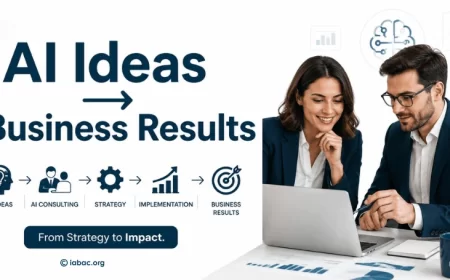
A structured AI implementation consulting process helps businesses move from planning to execution without confusion.
|
Step |
Description |
|
Discovery |
Understand business needs and identify opportunities |
|
Strategy |
Define use cases and create a roadmap |
|
Data Preparation |
Clean and organize data |
|
Model Development |
Build and test AI models |
|
Deployment |
Integrate AI into existing systems |
|
Optimization |
Monitor performance and improve results |
Each step builds on the previous one, making the entire process more manageable and predictable.
Real Business Use Cases of AI Implementation
AI is already being used across industries to solve practical problems.
-
Healthcare – Identifying risks and supporting diagnosis
-
Finance – Detecting fraud and managing risk
-
Retail – Understanding customer behavior and improving recommendations
-
Manufacturing – Predicting equipment failures and reducing downtime
These are not experimental use cases. They are already being applied in real business environments.
Case Study:- How Companies Are Using AI in Real Business Scenarios
It’s easy to talk about AI in theory, but what matters is how it actually works in real businesses.
Take Amazon as an example.
When you browse or shop on Amazon, you often see product recommendations that feel surprisingly relevant. That’s not random; it’s powered by AI.
Amazon analyzes what you search, what you buy, and even what you click on. Based on this, it suggests products that you’re more likely to purchase.
This approach has a real business impact:
-
Customers find what they need faster
-
The shopping experience feels more personalized
-
Sales increase without additional manual effort
Another example is Siemens in the manufacturing space.
Instead of waiting for machines to break down, Siemens uses AI to monitor equipment performance in real time. This helps them detect issues early and fix them before they become serious problems.
The result:
-
Less downtime
-
Lower maintenance costs
-
More efficient operations
These examples show a simple truth: AI works best when it is applied to specific business problems.
And in most cases, companies achieve these results not by experimenting randomly but by following a structured approach, often with the support of AI implementation consulting.
AI Implementation Consulting vs In-House AI Development
Businesses often ask whether they should build AI internally or work with consultants.
Here’s a simple comparison:
|
Factor |
Consulting |
In-House Development |
|
Expertise |
Access to experienced professionals |
Requires hiring and training |
|
Cost |
Flexible |
High fixed cost |
|
Speed |
Faster implementation |
Slower setup |
|
Risk |
Lower |
Higher |
For most companies, consulting helps them get started quickly without building a full in-house team.
When Should a Business Consider AI Implementation Consulting?
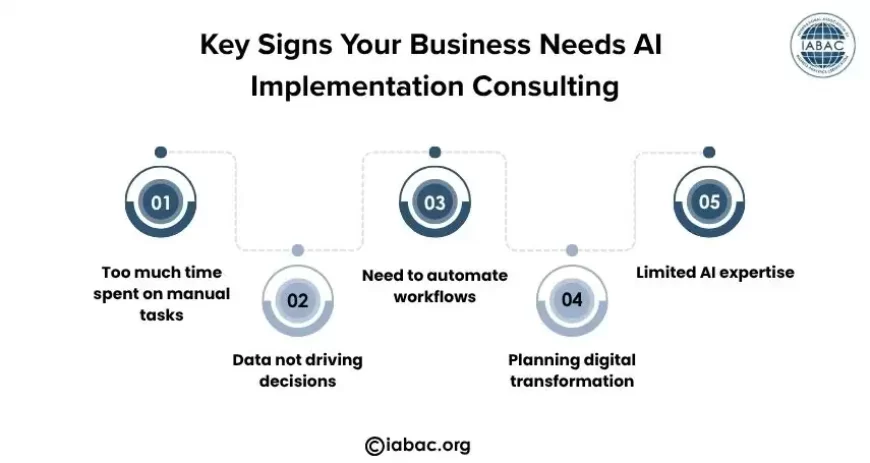
Not every business needs AI immediately. But there are clear signs when consulting can help.
You should consider it if:
-
Your team spends too much time on manual work
-
You have data but are not using it effectively
-
You want to automate repetitive processes
-
You are planning digital transformation
-
Your team lacks AI expertise
In these situations, a structured approach can make a big difference.
Common Challenges in AI Implementation
Even with the right tools, implementation can be difficult.
Some common challenges include:
-
Incomplete or poor-quality data
-
Lack of clear business goals
-
Integration issues with existing systems
-
Difficulty scaling solutions
-
Skill gaps within the team
Many projects fail because these issues are not addressed early.
How IABAC Supports AI Implementation
Businesses looking to implement AI often need guidance at different stages—from planning to deployment.
Through AI consulting services, organizations can get support in defining use cases, building solutions, and integrating AI into their operations.
This helps reduce trial-and-error and ensures that efforts are aligned with business goals.
Frequently Asked Questions
What is AI consulting?
AI consulting helps businesses identify where AI can be used and supports the development and deployment of solutions.
What skills are required for AI consulting?
It requires a mix of technical knowledge (data science, machine learning) and business understanding (problem-solving, strategy).
What is AI implementation?
AI implementation is the process of building and integrating AI systems into business workflows.
Why do companies need AI consulting?
Companies use AI consulting to reduce risks, speed up implementation, and get better results from their AI investments.
AI can improve how businesses operate but only if it is implemented properly.
AI implementation consulting helps bring structure to this process. It ensures that businesses are not just experimenting with AI but actually using it to solve real problems.
For companies that want to move forward with AI, the focus should not just be on tools but on how those tools are applied in practice.