





















































How Business Intelligence and Analytics Drive Growth
See how business intelligence and analytics improve decisions, boost efficiency, and support growth through data-driven strategies across business functions.

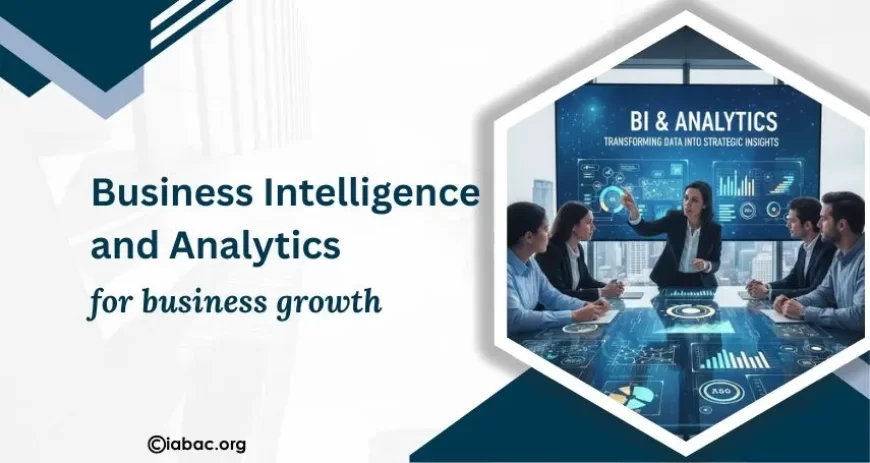
Organizations often face challenges in decision-making when data is scattered across different systems, reports lack consistency, and insights are not clearly defined. This makes it difficult for teams to evaluate performance, identify areas for improvement, and act on real opportunities for growth.
Business intelligence (BI) and analytics bring structure and clarity to this complex problem by transforming raw data into actionable insights that support better decision-making. While BI focuses on descriptive, historical analysis, understanding what happened through dashboards and reports, business analytics goes further by identifying why it happened and predicting future outcomes. With a clearer view of trends and performance, organizations can improve efficiency, align strategies, and drive consistent business growth.
The Role of Business Intelligence and Analytics in Modern Organizations
To understand how this drives growth, it’s important to look at how organizations use data effectively. Business intelligence and analytics help companies move beyond assumptions and make decisions based on real, measurable insights.
BI and analytics bring together data from across the organization and turn it into a clear, unified view of performance. This allows teams to understand what is working, where improvements are needed, and how different functions contribute to overall growth.
As businesses expand, managing operations without data becomes increasingly complex. This is why companies of all sizes are adopting business intelligence and analytics to improve clarity, strengthen decision-making, and build a strong foundation for consistent growth.
Turning Data into Actionable Insights
Organizations generate large amounts of data, but growth depends on how effectively that data is used. BI and analytics help transform raw data into insights that can drive meaningful action.
We can look at examples such as customer purchasing patterns, website engagement, or operational performance. Business intelligence tools organize this data into easy-to-understand formats, while analytics helps identify trends and relationships within the data.
These insights allow organizations to:
-
Adjust pricing strategies based on demand
-
Improve marketing campaigns using performance data
-
Optimize supply chain operations
-
Identify areas of improvement within processes
By using data in this way, businesses reduce uncertainty and make decisions that are more aligned with actual performance.
Enhancing Decision-Making Across Departments
For growth to happen consistently, every department within an organization needs to make informed decisions. Business intelligence and analytics ensure that all teams work with accurate and up-to-date information. Professionals build these capabilities through structured certification programs that focus on real-world data skills.
We can see this impact across departments:
-
Marketing teams evaluate campaign effectiveness and customer engagement
-
Sales teams track conversion rates and forecast revenue
-
Operations teams monitor workflows and improve efficiency
Some of the key improvements include:
-
Access to real-time insights
-
Reduced reliance on manual reporting
-
Better collaboration between teams
-
Faster response to changing conditions
When all departments use the same data, organizations can align their efforts and move toward shared growth goals more effectively.
Improving Customer Understanding and Experience
Understanding customers is one of the most important factors in driving growth. BI and analytics provide insights into customer behavior, preferences, and interactions.
We can analyze how customers engage with products, what influences their decisions, and where improvements are needed. This allows businesses to create more personalized and relevant experiences.
For example, organizations can
-
Segment customers based on behavior and demographics
-
Offer personalized recommendations
-
Identify reasons behind customer churn
-
Improve service quality and response times
When customers feel understood and valued, they are more likely to stay engaged, which supports long-term growth.
Driving Operational Efficiency and Cost Optimization
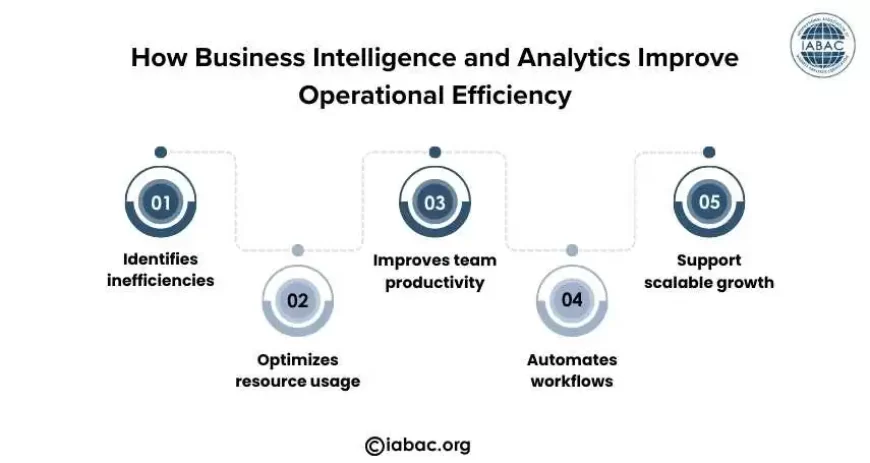
Growth is not only about increasing revenue but also about improving efficiency. Business intelligence and analytics help identify inefficiencies and areas where resources can be better utilized.
We can use data to monitor operations, identify bottlenecks, and reduce unnecessary costs. This leads to more streamlined processes and better use of resources.
Some of the outcomes include:
-
Lower operational costs: Reduces unnecessary expenses by identifying inefficiencies and optimizing resource usage.
-
Improved productivity: Enables teams to work more efficiently by streamlining processes and reducing manual effort.
-
Faster execution of tasks: Speeds up workflows through automation and better data-driven decision-making.
-
Better scalability as the business grows: Supports expansion by ensuring systems and processes can handle increasing workloads effectively.
By continuously analyzing performance, organizations can maintain efficiency even as they expand.
Supporting Strategic Planning and Forecasting
Planning for the future becomes more effective when it is based on data. Business intelligence and analytics provide the insights needed to make informed strategic decisions.
We can use historical data to understand past performance and apply analytics to predict future trends. This helps businesses prepare for demand changes, market shifts, and potential risks.
Strategic planning benefits include:
More accurate forecasting
Improves future planning by using data trends to predict demand and performance.
Early identification of risks
Helps detect potential issues in advance, allowing timely actions to minimize impact.
Better allocation of resources
Ensures time, budget, and manpower are used effectively based on data insights.
Ability to act on opportunities quickly
Enables faster decision-making to capture emerging opportunities ahead of competitors.
With these insights, organizations can plan growth more confidently and reduce uncertainty.
Enabling Data-Driven Marketing Strategies
Marketing plays a major role in business growth, and data-driven strategies help improve its effectiveness. Business intelligence and analytics allow marketers to measure performance and optimize campaigns.
We can track which channels perform best, understand audience behavior, and refine messaging based on real data. This leads to more targeted and effective campaigns.
Key advantages include
-
Improved audience targeting
-
Higher campaign performance
-
Better return on investment
-
Increased customer engagement
These improvements directly contribute to revenue growth and stronger brand positioning.
Strengthening Competitive Advantage
In competitive markets, having access to the right insights can make a significant difference. Business intelligence and analytics help organizations stay ahead by providing a deeper understanding of the market.
We can analyze competitor performance, track industry trends, and identify gaps that can be turned into opportunities. This allows businesses to adapt quickly and make informed strategic moves.
Competitive advantage is strengthened through:
-
Faster and more informed decision-making
-
Better understanding of market conditions
-
Ability to respond quickly to changes
-
Identification of new growth opportunities
Organizations that use data effectively are better positioned to succeed in competitive environments.
Facilitating Innovation and Business Expansion
Innovation often comes from understanding what customers need and where opportunities exist. Business intelligence and analytics provide the insights required to support innovation and expansion.
We can identify patterns that indicate demand for new products or services. Data also helps evaluate the success of new initiatives and guide improvements.
Examples include:
-
Launching products based on customer demand insights helps businesses align new offerings with actual market needs. It reduces guesswork and increases the chances of product success.
-
Expanding into new markets using data analysis allows organizations to evaluate opportunities with clarity and confidence. It helps identify the right regions, audiences, and strategies for growth.
-
Enhancing existing offerings based on feedback ensures products and services continue to meet customer expectations. It supports continuous improvement and strengthens customer satisfaction over time.
By using data to guide innovation, businesses can reduce risks and improve the chances of success.
Overcoming Challenges in Implementation
While business intelligence and analytics offer significant benefits, implementing them can come with challenges. These may include data quality issues, lack of expertise, or resistance to adopting new systems.
We can address these challenges by focusing on:
-
Establishing strong data management practices
-
Providing training and skill development
-
Choosing tools that are scalable and user-friendly
-
Encouraging teams to adopt data-driven approaches
Overcoming these challenges ensures that organizations can fully benefit from their data initiatives.
Building a Data-Driven Culture
For business intelligence and analytics to drive growth effectively, organizations need to build a culture that values data. This means encouraging employees to use data in their daily decision-making.
We can support this by:
-
Training teams to understand and interpret data ensures employees can confidently read reports, identify trends, and make informed decisions. It builds the ability to connect data insights with real business outcomes.
-
Making data accessible across departments allows teams to work with the same information without delays or silos. This improves coordination and ensures decisions are based on consistent and reliable data.
-
Promoting collaboration and transparency encourages teams to share insights, align on goals, and work more effectively together. It also builds trust in data-driven decisions across the organization.
-
Aligning goals with measurable outcomes helps organizations track progress and evaluate performance clearly. It ensures that every initiative is connected to tangible results that support business growth.
A data-driven culture ensures that insights are consistently used, leading to more informed decisions and sustainable growth.
The Future of Business Intelligence and Analytics in Growth
As technology continues to evolve, the capabilities of business intelligence and analytics are also expanding. Advancements in artificial intelligence and automation are making data analysis faster and more accurate.
We can expect:
-
More advanced predictive analytics
-
Increased automation in data processing
-
Better integration across systems
-
Improved visualization tools
These developments will make it easier for organizations to use data effectively and support continuous growth.
When we look at how businesses grow, it becomes clear that data plays a central role in guiding decisions, improving efficiency, and identifying opportunities. Business intelligence and analytics provide the structure and insights needed to support this growth. By using data effectively across all functions, organizations can make better decisions, improve performance, and build a strong foundation for long-term success.