
















































How Business Analytics is Transforming Healthcare in 2026
Business analytics in healthcare is reshaping patient care, cost management, and hospital operations. See how data is driving smarter, faster medical decisions.

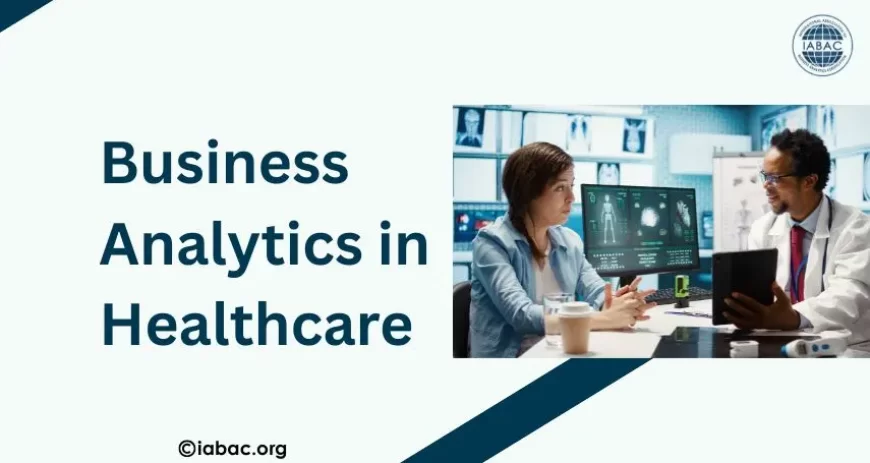
Healthcare in 2026 is running on data. From predicting patient deterioration before it happens to cutting hospital wait times and reducing costs, business analytics in healthcare has moved from a back-office function to a frontline necessity.
Hospitals, clinics, insurance companies, and public health agencies are all making faster, smarter decisions because of it. The way patients are diagnosed, treated, and followed up with has fundamentally changed. This is not about replacing doctors or nurses. It is about giving them better information at the right moment so every decision they make is sharper, safer, and more effective.
Let's see how business analytics is transforming healthcare.
Predictive Analytics Is Saving Lives Before Problems Happen
One of the most powerful uses of business analytics in healthcare is prediction. Instead of waiting for a patient to get sick, hospitals are now using predictive models to identify who is at risk before the crisis hits.
Here is how it works in practice:
- Early warning systems analyze a patient's vitals, lab results, and history in real time to alert nurses if someone is likely to deteriorate in the next few hours.
- Readmission prediction tools flag patients who are likely to be readmitted within 30 days after discharge, so care teams can follow up proactively.
- Chronic disease management programs use analytics to identify diabetic or hypertensive patients who are drifting off track, triggering outreach before complications develop.
Operational Efficiency: Hospitals Running Like Well-Oiled Machines
Let us be honest. Hospitals have historically been known for long waiting times, overcrowded emergency rooms, and poor scheduling. Business analytics directly fixes these problems.
Staffing and Scheduling
Analytics tools now look at historical patient admission data, seasonal illness trends, and local events to predict how busy a hospital will be on any given day.
This helps administrators schedule the right number of nurses, doctors, and support staff, reducing both overworking staff and leaving departments understaffed.
Bed Management
Real-time dashboards show which beds are occupied, which are being cleaned, and which will be free soon.
This sounds simple, but in a 500-bed hospital, managing this manually leads to chaos. Analytics makes it smooth and fast.
Supply Chain Optimisation
Hospitals spend billions on medical supplies every year. Analytics tools now track usage patterns and predict when supplies will run low, cutting down on waste and avoiding shortages of critical items like surgical gloves, medications, or IV fluids.
The result? Hospitals that use advanced analytics report significant cost savings, shorter patient wait times, and better resource utilization overall.
Personalised Patient Care Through Data
One of the most exciting developments in 2026 is how business analytics is making healthcare more personal, not less.
Some people worry that data-driven healthcare feels cold or robotic, but the reality is quite the opposite.
When your doctor has access to your full health profile, including past diagnoses, medications, lifestyle factors, genetic markers, and even patterns from wearable devices, they can make far more accurate and personalized treatment decisions.
What personalized analytics looks like:
- A cardiologist uses your risk profile to decide whether you need a preventive stent procedure or whether lifestyle changes are sufficient.
- An oncologist runs your tumor's genetic data through an analytics platform to find the most effective chemotherapy combination for your specific cancer type.
- A general physician tracks your blood pressure readings from your smartwatch and adjusts your prescription before your next visit.
This is precision medicine powered by analytics, and it is making treatments more effective while reducing unnecessary procedures and side effects.
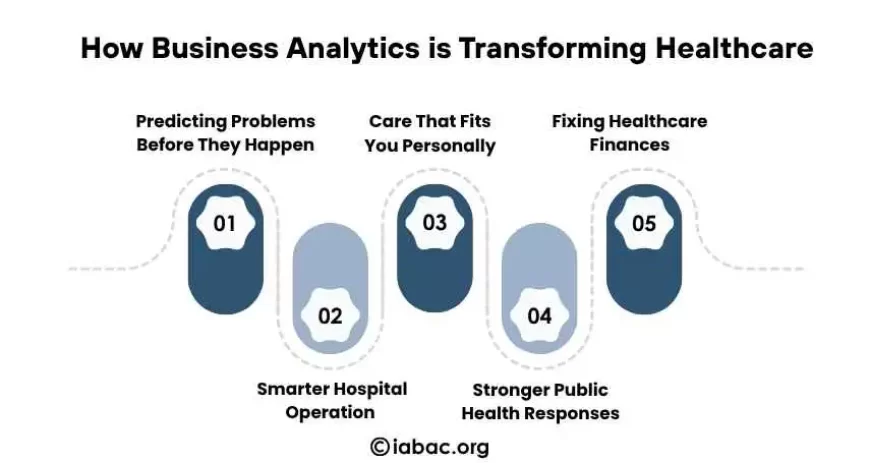
Financial Analytics: Fixing the Broken Economics of Healthcare
Healthcare costs are a massive problem in many countries. Business analytics is helping both providers and payers bring more financial discipline to the system.
For Hospitals:
- Analytics tools identify procedures with high complication rates that drive up costs unnecessarily.
- Revenue cycle management platforms use data to speed up billing, reduce claim denials, and improve cash flow.
- Cost benchmarking helps hospitals compare their spending on procedures against industry standards, identifying areas where they are overspending.
For Insurance Companies:
- Fraud detection algorithms analyze millions of claims to flag suspicious billing patterns that human reviewers would miss.
- Risk stratification models help insurers price policies more accurately and design wellness programs that actually reduce claims.
For Patients:
- Price transparency tools powered by analytics let patients compare costs across providers before choosing where to get a procedure done.
In 2026, financial analytics in healthcare is not just about cutting costs. It is about making the economics of healthcare fairer, more transparent, and more sustainable for everyone involved.
Public Health and Epidemic Management
If the events of recent years taught us anything, it is that public health infrastructure needs to be smarter and faster. Business analytics has become a central tool for governments and health agencies managing population-level health challenges.
Disease Surveillance
Analytics platforms now monitor data from hospitals, pharmacies, search engines, and even social media to detect unusual spikes in illness reports.
This kind of early warning system can identify an emerging outbreak days or even weeks before traditional reporting systems would catch it.
Vaccination Programmes
Analytics helps public health departments identify communities with low vaccination rates, understand the barriers they face, and target outreach efforts more effectively. Instead of blanket campaigns, resources go where they are actually needed.
Resource Allocation During Crises
During health emergencies, analytics tools model where hospital capacity will be overwhelmed, helping governments pre-position ventilators, medicines, and personnel in the right places at the right times.
The COVID-19 pandemic exposed enormous gaps in public health data systems. In 2026, many governments have invested heavily in analytics infrastructure precisely because they saw how costly those gaps were.
Electronic Health Records and Data Integration
For business analytics to work in healthcare, data has to be available, clean, and connected. Electronic Health Records (EHRs) are the foundation of this.
In 2026, interoperability between EHR systems has improved significantly.
A patient who visits a specialist at a different hospital can have their full records accessed instantly, without faxes or phone calls.
This connected data environment is what makes analytics possible at scale.
Key developments in this space:
- Cloud-based EHR platforms allow real-time data sharing across healthcare networks.
- Standardized data formats like HL7 FHIR (Fast Healthcare Interoperability Resources) have made it easier for different systems to talk to each other.
- Patient data portals give individuals access to their own health data, empowering them to participate in their own care decisions.
- AI-powered data cleaning tools help hospitals deal with messy, incomplete, or inconsistent records, a problem that used to make analytics unreliable.
Without good data, analytics is just noise. The improvements in health data infrastructure in recent years have made the analytics that sit on top of it far more powerful and trustworthy.
Mental Health and Analytics: An Emerging Frontier
Mental health has historically been underserved when it comes to data and analytics. That is beginning to change in a meaningful way.
Analytics tools are now being used to:
- Identify at-risk individuals by analyzing behavioral patterns, treatment histories, and social determinants of health.
- Measure therapy effectiveness by tracking outcomes across large patient populations to understand which interventions work best for which conditions.
- Reduce wait times for mental health services by modeling demand and optimizing appointment scheduling.
- Support teletherapy platforms with data-driven matching between patients and therapists based on compatibility and clinical need.
Mental health is one of the most underfunded and underanalyzed areas of healthcare. The growing application of business analytics here is a genuine step forward.
Challenges That Still Need to Be Addressed
It would be unfair to paint a picture where everything is working perfectly. Business analytics in healthcare comes with real challenges that organisations are still wrestling with.
Data Privacy and Security
Health data is among the most sensitive personal information there is. As more data is collected and shared, the risk of breaches grows. In 2026, healthcare organisations face strict regulatory requirements around data protection, and meeting those standards while still enabling analytics is a constant balancing act.
Data Silos
Despite progress, many healthcare systems still operate with fragmented data across departments, specialties, and institutions. Getting all relevant data into one connected system remains a significant technical and political challenge.
Workforce Skills Gap
Hospitals and clinics need people who understand both healthcare and data analytics. This combination of skills is still relatively rare, and training the healthcare workforce to be data-literate is an ongoing challenge.
Algorithmic Bias
If the data used to train analytics models reflects historical inequalities in healthcare, the models can perpetuate or even amplify those inequalities. For example, a risk model trained mostly on data from one population group may perform poorly for another. This is a serious ethical issue that the industry is actively working to address.
Trust and Adoption
Some clinicians remain skeptical of analytics tools, particularly when recommendations conflict with their clinical judgment. Building trust between healthcare professionals and data systems requires transparency, good user interface design, and a track record of reliable performance.
What to Expect in the Next Few Years
Business analytics in healthcare is not a finished product. It is a rapidly evolving discipline, and the pace of change is only going to accelerate.
Here is what is coming:
- Generative AI integrated into clinical workflows, helping doctors draft notes, summarize patient histories, and generate treatment options based on the latest research.
- Real-time analytics at the point of care, where doctors get live data-driven recommendations as they examine a patient rather than reviewing reports later.
- Greater patient involvement in their own data, with analytics tools built for patients, not just clinicians, helps individuals make better decisions about their own health.
- Cross-sector data integration, where health data is combined with information from housing, diet, employment, and environment to give a truly holistic picture of what drives health outcomes.
Business analytics in healthcare in 2026 is not a trend. It is infrastructure. It is the difference between a hospital that reacts to problems and one that prevents them. It is what allows a doctor to treat you as an individual rather than a generic patient. It is how healthcare systems are learning to do more with limited resources and how public health agencies are catching outbreaks before they spread.
If you work in healthcare, understanding analytics is quickly becoming a core professional skill rather than a specialist one. The right place to start is by building a strong foundation with a recognized credential. The Business Analytics Specialist in Healthcare certification is one such program worth looking at if you are serious about advancing in this field.