




























































Health data analyst career path and job opportunities?
Health data analyst careers include roles in hospitals, pharma, and public health, using analytics, reporting, and data tools to improve care and outcomes.

Hospitals save lives. Doctors treat patients. Nurses provide care. But behind the scenes, there is another important helper working quietly with numbers and reports. That helper is the health data analyst.
Healthcare produces a huge amount of information every single day. Patient records, lab test results, hospital admissions, treatment outcomes, insurance claims, and even data from smartwatches all create large sets of data. Someone needs to study that data and turn it into useful information. This is exactly what a health data analyst does.
A health data analyst studies healthcare information and helps hospitals, research groups, and health organizations understand what is really happening inside their systems. Their work helps improve patient care, reduce hospital costs, and support better medical decisions.
For people interested in Data Analytics and healthcare, this career offers purpose, stability, and strong job opportunities across the world.
Why Data Has Become Important in Healthcare
Healthcare used to depend mostly on medical knowledge and experience. Doctors relied on books, patient symptoms, and years of practice. Today, technology plays a big role in healthcare decisions. Hospitals now store patient records digitally. Medical devices collect information about heart rate, blood pressure, and other health measurements. Health apps track sleep patterns, daily activity, and nutrition habits. All of this information produces a huge amount of healthcare data.
Industry studies estimate that the healthcare sector produces more than 2,000 exabytes of data every year. That number is so large that it is almost impossible to imagine. If healthcare data were printed on paper, it could probably fill enough libraries to keep people busy reading for the next thousand years. Without analysis, this information would simply sit in databases doing nothing useful. A health data analyst studies this data carefully and helps healthcare professionals understand what it means.
Health Data Analyst Demand Growing in Modern Healthcare
Hospitals and healthcare organizations around the world are looking for skilled professionals who understand data. This is why the health data analyst role is becoming more important each year. Healthcare systems want to improve services while controlling costs. Data analysis helps them achieve both goals. When hospitals understand patterns in patient data, they can improve treatment methods, manage staff better, and reduce unnecessary expenses.
For example, hospitals often analyze admission records to understand when patient numbers increase. During flu season, patient visits usually rise. With the help of data analysis, hospitals can prepare extra staff and resources ahead of time. Healthcare organizations also study treatment outcomes. They want to know which medical procedures lead to faster recovery and which ones require improvement.
Because of these needs, the demand for professionals skilled in healthcare analytics continues to increase in many countries.
Health Data Analyst: How Data Is Changing Healthcare
Healthcare data analysis has changed the way hospitals and medical organizations operate. Instead of relying only on experience, decision-makers can now use data-backed insights.
A health data analyst helps healthcare systems in several important ways.
- Better Patient Care: By studying treatment results and patient histories, analysts help doctors identify which treatments work best. This information helps improve medical practices and patient recovery rates.
- Faster Hospital Operations: Hospitals handle many daily tasks such as patient admissions, lab testing, surgeries, and discharge planning. Data analysis helps hospitals organize these processes more efficiently.
- Reduced Healthcare Costs: Medical services can be expensive. Data analysis helps hospitals identify areas where resources are wasted or processes can be improved.
- Disease Monitoring: Public health agencies analyze healthcare data to monitor disease outbreaks. This helps governments respond quickly during health emergencies.
Healthcare data analysis helps hospitals work smarter while providing better care.
What a Health Data Analyst Actually Does
A health data analyst spends a lot of time working with numbers, databases, and reports. Their daily tasks may look very different from what people usually imagine when they think about healthcare jobs.
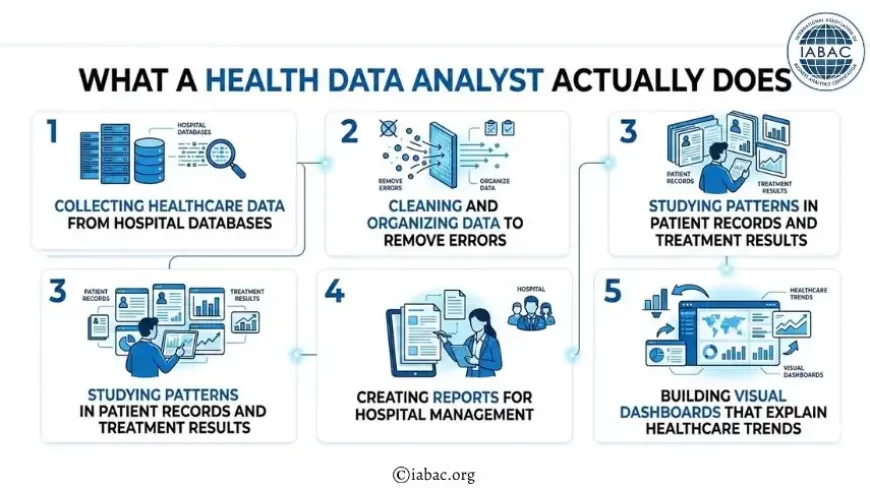
Instead of wearing a lab coat or holding a stethoscope, they usually sit in front of a computer studying data.
Some common responsibilities include:
- Collecting healthcare data from hospital databases
- Cleaning and organizing data to remove errors
- Studying patterns in patient records and treatment results
- Creating reports for hospital management
- Building visual dashboards that explain healthcare trends
Sometimes their work can feel a bit like solving a mystery. Imagine a hospital noticing that patient waiting times suddenly increased. Doctors and nurses may be too busy to study the numbers. A health data analyst examines admission records, staff schedules, and treatment times to find the cause.
In many cases, the solution appears in the data.
Health Data Analyst Key Skills for Healthcare Analytics
Working as a health data analyst requires several important skills. These skills combine technical knowledge with an understanding of healthcare systems.
- Data Analysis Skills: Professionals in this role must feel comfortable working with large datasets. They organize, study, and interpret healthcare information.
- Statistics: Statistics helps analysts understand patterns and relationships inside data. For example, analysts may study how certain treatments affect recovery time.
- Programming Knowledge: Languages such as Python, R, and SQL are widely used in Data Analytics. These tools help analysts process large datasets efficiently.
- Data Visualization: Numbers alone can be difficult to understand. Analysts create charts and dashboards so doctors and hospital managers can quickly understand important insights.
- Healthcare Understanding: Knowing how hospitals operate helps analysts interpret healthcare data correctly.
Many professionals strengthen their abilities through Data Analytics Certifications, which provide structured training in analytical methods and tools.
Education and Learning Path
People come into healthcare analytics from different educational backgrounds. Some study statistics, computer science, or healthcare management. Others develop data analysis skills through professional training programs.
A typical learning path may include:
- Learning the basics of statistics and data analysis
- Understanding database systems
- Learning data visualization tools
- Practicing programming languages used in analytics
- Studying healthcare systems and medical terminology
Professional certifications play an important role in career development. Many employers prefer candidates who hold recognized Data Analytics Certifications.
Organizations such as the International Association of Business Analytics Certifications (IABAC) offer certification programs designed to help professionals build practical knowledge in Data Analytics and healthcare analytics.
Tools Used by Health Data Analysts
A health data analyst uses different tools to collect, process, and visualize healthcare information.
Some common tools include:
- SQL for database management
- Python for data analysis
- R for statistical modeling
- Excel for quick data exploration
- Power BI and Tableau for dashboards
These tools allow analysts to process thousands or even millions of records quickly.
Without these tools, analyzing healthcare data would take months or even years.
Career Path for Health Data Analysts
The career journey of a health data analyst usually develops in stages.
Entry-Level Roles
Professionals often begin as:
- Data analyst
- Healthcare reporting analyst
- Data assistant
These roles focus on preparing reports and supporting senior analysts.
Mid-Level Roles
With experience, professionals move into positions such as:
- Health data analyst
- Clinical data analyst
- Healthcare business analyst
At this stage, analysts take responsibility for complex projects and larger datasets.
Senior Roles
Experienced professionals may progress to:
- Senior healthcare analyst
- Healthcare analytics manager
- Director of analytics
These roles involve planning analytics strategies and guiding data teams.
Job Opportunities Around the World
Healthcare organizations exist in every country, which means career opportunities for health data analysts are available worldwide.
Common employers include:
- Hospitals and healthcare systems
- Pharmaceutical companies
- Health insurance companies
- Government health departments
- Medical research centers
- Health technology companies
The digital health industry continues to expand rapidly. Many reports suggest that the global digital health market could exceed 500 billion dollars in the coming years.
As healthcare systems rely more on data insights, the demand for skilled professionals in healthcare analytics continues to grow.
Salary and Career Growth
The salary of a health data analyst depends on experience, location, and organization size. However, the role generally offers strong earning potential.
Typical global salary ranges include:
- Entry-level analysts: $55,000 to $75,000 per year
- Mid-level analysts: $75,000 to $100,000 per year
- Senior analysts and managers: $100,000 to $130,000 or more
Beyond salary, this career offers long-term stability because healthcare organizations will always require data insights.
Why Many People Choose This Career
Working as a health data analyst combines technology, problem-solving, and healthcare impact. Professionals in this role help hospitals improve services and patient outcomes.
They may not interact with patients directly, but their work supports doctors, nurses, and hospital teams.
In a way, health data analysts act like detectives who study clues hidden inside data. Instead of solving crime mysteries, they solve healthcare puzzles.
One day they might study patient recovery rates. The next day they might analyze hospital staffing levels. Occasionally they might even help explain why patients seem to prefer the cafeteria coffee over the expensive espresso machine in the lobby. Data can reveal surprising truths.
Building a Career in Healthcare Analytics
People interested in healthcare analytics can begin by learning Data Analytics skills and gaining practical experience with data tools. Professional training programs and recognized Data Analytics Certifications help individuals develop the skills needed for this career path.
Organizations such as IABAC provide certification programs that help professionals build strong foundations in data analysis and healthcare analytics. These certifications focus on practical skills that employers value, helping professionals prepare for roles in healthcare data analysis.
Healthcare systems depend on accurate information to improve patient care and manage resources effectively. A health data analyst helps transform large amounts of healthcare data into useful insights. As hospitals and healthcare organizations continue using digital systems, the importance of Data Analytics in healthcare will only increase. Professionals with strong analytical skills will find many opportunities in this field. For those who enjoy working with data and want to contribute to improving healthcare systems, becoming a health data analyst offers a meaningful and rewarding career path.