

























































What Is the Role of a Data Analyst
Understand the role of a data analyst including data collection cleaning visualization reporting and turning raw data into actionable business insights.

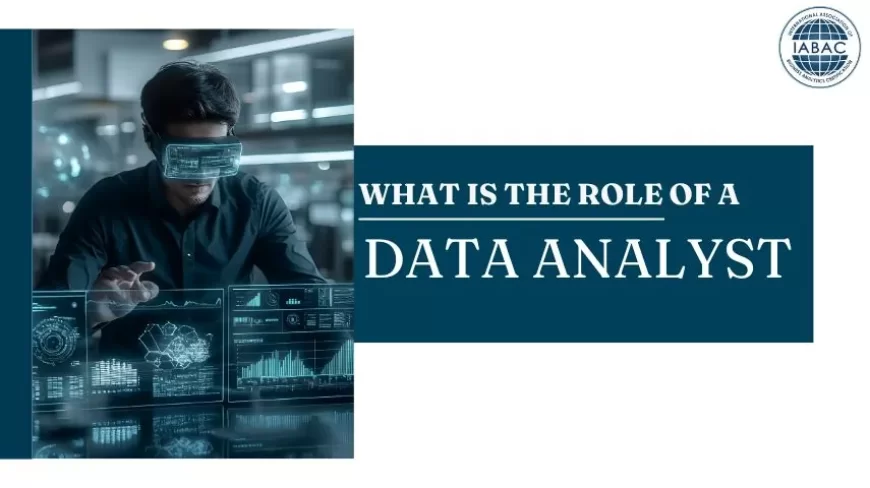
Companies depend on information to make smart decisions. Every click, purchase, customer interaction, and business operation creates data. But raw data alone is not useful. It must be cleaned, studied, and explained in a way that supports decision-making. This is where a Data Analyst plays a key role.
If you are considering a career in analytics, understanding the role of a data analyst will help you decide whether this path matches your interests and long-term goals. This blog explains the responsibilities, required skills, tools, career growth, and global job value of becoming a data analyst.
Understanding the Role of a Data Analyst
A data analyst collects, processes, and studies data to help organizations make informed decisions. The main objective is to turn complex data into clear insights that businesses can use.
The role of a data analyst usually includes:
- Collecting data from different sources
- Cleaning and organizing data
- Performing data analysis
- Creating dashboards and reports
- Explaining insights to non-technical teams
- Supporting business strategies with data-driven recommendations
Data analysts work in many industries such as finance, healthcare, retail, education, marketing, and technology. Because every sector generates data, the demand for skilled analysts continues to grow worldwide.
Why Data Analysts Are Important for Businesses
Companies rely on accurate data to reduce risks and improve performance. A skilled data analyst helps organizations:
- Identify trends and patterns
- Improve operational efficiency
- Understand customer behavior
- Increase revenue
- Reduce costs
- Make evidence-based decisions
Without proper analysis, companies may rely on assumptions. With professional data analytics, decisions are supported by facts.
Core Responsibilities in a Data Analyst Job
To fully understand the data analyst job role, let us break down the main responsibilities.
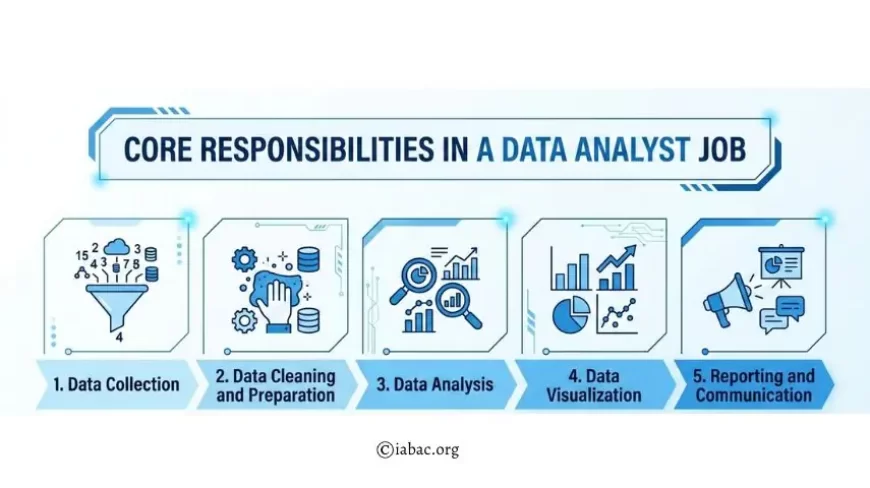
1. Data Collection
Data can come from:
- Company databases
- CRM systems
- Surveys
- Websites
- Social media
- Sales records
The data analyst ensures that information is accurate and relevant.
2. Data Cleaning and Preparation
Raw data often contains errors, missing values, or duplicate entries. Cleaning data is one of the most important parts of data analysis. It ensures reliable results.
3. Data Analysis
Using statistical methods and analytical tools, data analysts identify patterns and trends. They may calculate averages, growth rates, correlations, and performance metrics.
4. Data Visualization
Clear communication is essential. Analysts use tools like dashboards, charts, and graphs to present insights in a simple way. Good data visualization helps managers understand complex information quickly.
5. Reporting and Communication
The analyst explains findings to business teams. Strong communication skills are just as important as technical skills in this profession.
Skills Required for a Data Analyst Career
To succeed in this field, students must develop both technical and soft skills.
Technical Skills
- Microsoft Excel
- SQL (Structured Query Language)
- Python or R
- Data visualization tools such as Power BI or Tableau
- Basic statistics
- Understanding of databases
Analytical Skills
- Logical thinking
- Problem-solving ability
- Attention to detail
- Pattern recognition
Soft Skills
- Communication
- Presentation skills
- Team collaboration
- Time management
A strong data analyst certification program usually covers these essential skills and provides hands-on practice.
Educational Path and Certifications
Many students enter this field through degrees in:
- Computer Science
- Mathematics
- Statistics
- Business Analytics
- Economics
However, a formal degree is not the only path. Professional certifications provide structured learning and industry recognition.
Programs offered through recognized institutions, including certifications available at iabac.org, help students gain practical exposure to real-world data projects. These certifications focus on job-ready skills, industry standards, and practical assignments that prepare learners for global opportunities.
Tools Used by Data Analysts
Modern data analytics relies on powerful tools. Some commonly used tools include:
- Excel for basic analysis
- SQL for database management
- Python for data processing and automation
- Power BI and Tableau for visualization
- Google Analytics for web performance analysis
Learning these tools increases your chances of securing a competitive data analyst job.
Data Analyst vs Data Scientist
Many students confuse these two roles. While both work with data, their responsibilities differ.
|
Feature |
Data Analyst |
Data Scientist |
|
Focus |
Analyzing past data |
Predictive modeling |
|
Coding Level |
Moderate |
Advanced |
|
Statistics |
Basic to Intermediate |
Advanced |
|
Output |
Reports & dashboards |
Predictive models |
The role of a data analyst focuses more on explaining what happened and why, while data scientists focus on predicting what might happen in the future.
Career Opportunities for Data Analysts Worldwide
Data analytics is a global profession. Organaizations across North America, Europe, Asia, the Middle East, and Africa hire data analysts.
Common job titles include:
- Junior Data Analyst
- Business Data Analyst
- Financial Analyst
- Marketing Analyst
- Operations Analyst
- Reporting Analyst
With experience, professionals can move into roles such as:
- Senior Data Analyst
- Analytics Manager
- Business Intelligence Manager
- Data Analytics Consultant
The career path offers steady growth and long-term stability.
Salary Expectations for Data Analysts
Salaries vary depending on country, industry, and experience. However, globally:
- Entry-level analysts earn competitive starting salaries
- Mid-level professionals see significant salary growth
- Senior analysts and managers receive higher compensation packages
Industries like finance, technology, healthcare, and e-commerce often offer strong salary packages due to high data usage.
Why Students Should Consider a Career in Data Analytics
There are several reasons why data analytics is a valuable career choice:
- High global demand
- Opportunities across industries
- Competitive salaries
- Remote work possibilities
- Clear career growth path
The demand for professionals with data analytics skills continues to increase because businesses rely heavily on data for strategy and planning.
How to Start Your Journey as a Data Analyst
If you are interested in becoming a data analyst, follow these steps:
- Learn basic Excel and statistics
- Study SQL and database concepts
- Practice Python for data analysis
- Work on small projects using real datasets
- Build a portfolio of case studies
- Earn a recognized certification
A structured certification program, such as those available through iabac.org, can help you gain practical exposure and prepare for interviews.
Job Relevance and Future Outlook
The future of data analytics looks promising. As businesses collect more digital information, the need for skilled professionals will continue to rise.
Emerging trends in analytics include:
- Artificial Intelligence integration
- Predictive analytics
- Real-time dashboards
- Automated reporting
- Big data processing
A strong foundation in the role of a data analyst ensures long-term career stability even as technology advances.
The role of a data analyst is essential in modern organizations. These professionals transform raw data into meaningful insights that guide business decisions. With the right technical skills, practical experience, and certification, students can build a successful and rewarding career in data analytics. For those who want structured learning and global recognition, professional certification programs available through platforms like iabac.org provide industry-focused training and job-oriented skills. If you enjoy working with numbers, solving problems, and helping businesses make smarter decisions, a career as a data analyst could be the right choice for you.