



























































What Are Data Analytics Skills?
Data analytics skills help turn raw data into insights. Learn essential technical and soft skills needed for beginners and professionals.

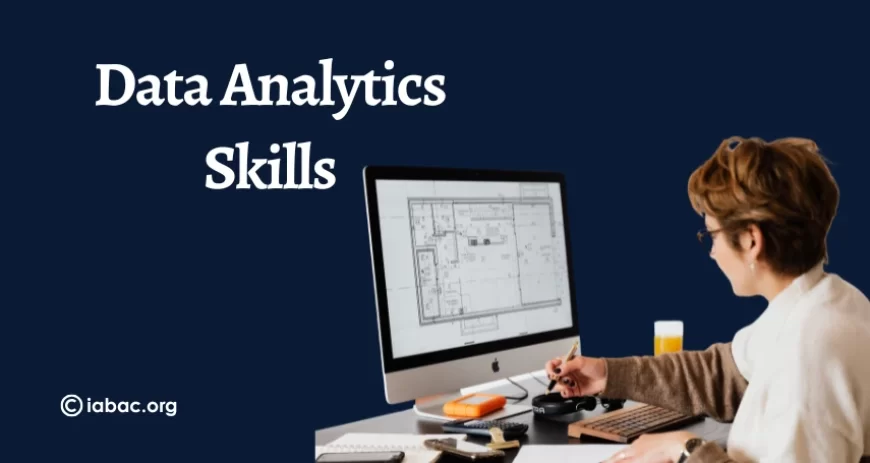
Every day, organizations generate enormous amounts of data, from customer interactions and marketing campaigns to operational processes and supply chains. But data by itself is just numbers on a screen. Its real value emerges only when someone knows how to question it, interpret it, and turn it into insights that guide smarter decisions. That’s where data analytics skills truly make a difference.
Today, these skills are no longer limited to data teams or technical experts. Students exploring future-ready careers, professionals planning a career shift, and managers responsible for strategic decisions all need a working understanding of data analytics.
What Are Data Analytics Skills?
Data analytics skills refer to the combination of technical abilities, analytical thinking, and business understanding required to collect, clean, analyze, interpret, and communicate data effectively.
These skills enable professionals to:
-
Identify patterns and trends in data
-
Answer business questions using evidence
-
Support decision-making with insights
-
Predict outcomes and optimize processes
In simple terms, data analytics skills help transform raw data into actionable knowledge that organizations can use to improve performance and reduce uncertainty.
Why Are Data Analytics Skills Important Today?
The demand for data analytics skills has grown rapidly across industries due to several factors:
Explosion of Data
Businesses generate massive amounts of data from digital platforms, transactions, sensors, and customer interactions. Skilled analysts are needed to make sense of this data.
Data-Driven Decision Making
Organizations increasingly rely on evidence rather than intuition. Data analytics skills support accurate, timely, and objective decisions.
Competitive Advantage
Companies that analyze data effectively can improve customer experience, reduce costs, and respond faster to market changes.
Career Growth
Professionals with strong data analytics skills often enjoy better job opportunities, higher salaries, and long-term career stability.
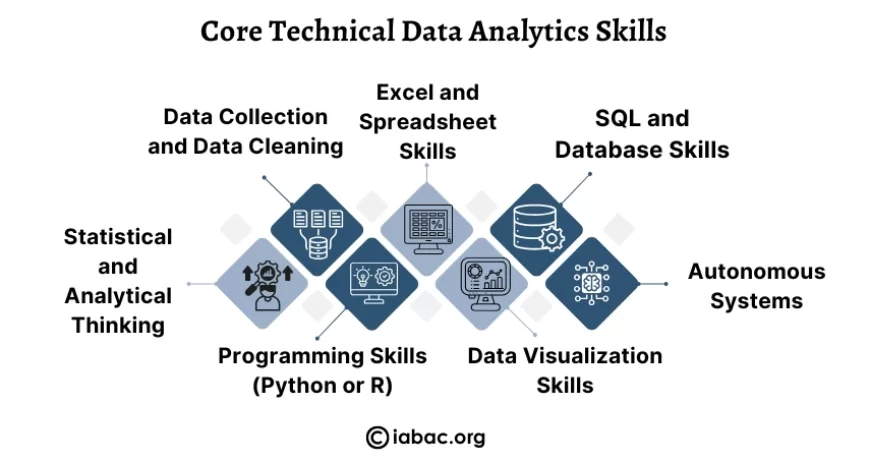
Core Technical Data Analytics Skills
Technical skills form the foundation of data analytics. These skills allow professionals to work directly with data and tools used in real-world environments.
Data Collection and Data Cleaning
Before analysis begins, data must be gathered from reliable sources and cleaned to ensure accuracy.
Key capabilities include:
-
Handling missing or inconsistent data
-
Removing duplicates and errors
-
Structuring data for analysis
Clean data is critical because inaccurate data leads to misleading insights.
Excel and Spreadsheet Skills
Excel remains one of the most widely used tools in data analytics, especially for beginners and business users.
Important Excel skills include:
-
Formulas and functions
-
Pivot tables
-
Data filtering and sorting
-
Basic automation
Excel helps analysts quickly explore datasets and present findings clearly.
SQL and Database Skills
Structured data is often stored in databases. SQL (Structured Query Language) allows analysts to retrieve and manipulate this data efficiently.
SQL skills help with:
-
Writing queries to extract data
-
Joining multiple tables
-
Filtering large datasets
-
Performing aggregations
SQL is essential for working with real-world business data.
Statistical and Analytical Thinking
Statistics is the backbone of data analytics. Analysts must understand how to interpret numerical information correctly.
Key concepts include:
-
Descriptive statistics (mean, median, variance)
-
Trends and distributions
-
Correlation and relationships
-
Basic probability
Statistical thinking helps avoid incorrect assumptions and supports sound conclusions.
Programming Skills (Python or R)
Programming languages make data analysis scalable and repeatable.
Python is widely used for:
-
Data manipulation
-
Exploratory analysis
-
Automation
-
Integration with machine learning
R is popular in statistical analysis and research-focused environments.
Programming enhances efficiency and enables deeper analysis.
Data Visualization Skills
Insights are valuable only when they can be understood by decision-makers.
Visualization skills involve:
-
Creating charts and dashboards
-
Choosing the right visual format
-
Highlighting key insights
-
Telling a clear data story
Tools such as Power BI, Tableau, and Python libraries help communicate complex information simply.
Essential Soft Skills for Data Analytics
Technical skills alone are not enough. Strong soft skills distinguish effective data analysts from average ones.
Problem-Solving and Critical Thinking
Analysts must frame the right questions, interpret results logically, and think beyond numbers.
Communication and Storytelling
Explaining insights in simple, non-technical language is crucial when working with stakeholders.
Business Understanding
Understanding business goals ensures that analysis aligns with organizational needs.
Curiosity and Continuous Learning
Data analytics evolves constantly. Successful professionals stay curious and adapt to new tools and methods.
Data Analytics Skills for Different Career Levels
Data Analytics Skills for Beginners
Beginners should focus on:
-
Fundamentals of data and analytics
-
Excel and basic statistics
-
Introductory SQL
-
Simple data visualization
A strong foundation makes advanced learning easier.
Data Analytics Skills for Working Professionals
Professionals should emphasize:
-
Applying analytics to real business problems
-
Advanced SQL and visualization
-
Domain-specific analysis
-
Insight-driven decision support
Practical application is key at this stage.
Data Analytics Skills for Managers and Leaders
Managers benefit from:
-
Interpreting dashboards and reports
-
Asking the right analytical questions
-
Using insights for strategy and planning
-
Encouraging a data-driven culture
They don’t need to code but must understand insights clearly.
How to Build Data Analytics Skills Step by Step
Building data analytics skills is a structured process:
-
Learn data fundamentals and statistics
-
Master Excel and basic visualization
-
Understand databases and SQL
-
Learn Python or R for analysis
-
Practice with real-world datasets
-
Work on projects and case studies
-
Validate skills through certifications
Consistency and hands-on practice matter more than speed.
Common Mistakes While Learning Data Analytics Skills
Many learners struggle due to avoidable mistakes:
-
Focusing only on tools without understanding concepts
-
Skipping data cleaning and fundamentals
-
Avoiding real-world projects
-
Ignoring communication and business context
Avoiding these mistakes accelerates learning and career growth.
Future of Data Analytics Skills
The future of data analytics is shaped by automation, artificial intelligence, and increased data literacy.
Key trends include:
-
Integration of analytics with AI tools
-
Demand for analytics across non-technical roles
-
Focus on ethical data usage and governance
-
Emphasis on decision intelligence rather than reporting
Professionals who combine technical skills with business insight will remain in high demand.
Data analytics skills empower individuals and organizations to make informed, confident decisions in a data-rich world. From technical abilities like SQL and visualization to soft skills like communication and problem-solving, these skills work together to create real value.
Whether you are starting from scratch or enhancing existing expertise, investing in data analytics skills is a future-proof decision. With structured learning, consistent practice, and real-world application, anyone can build job-ready data analytics capabilities.