



























































Data Analyst Roles and Job Description
Understand data analyst roles and job descriptions, including key responsibilities, required skills, tools used, and career opportunities across industries.

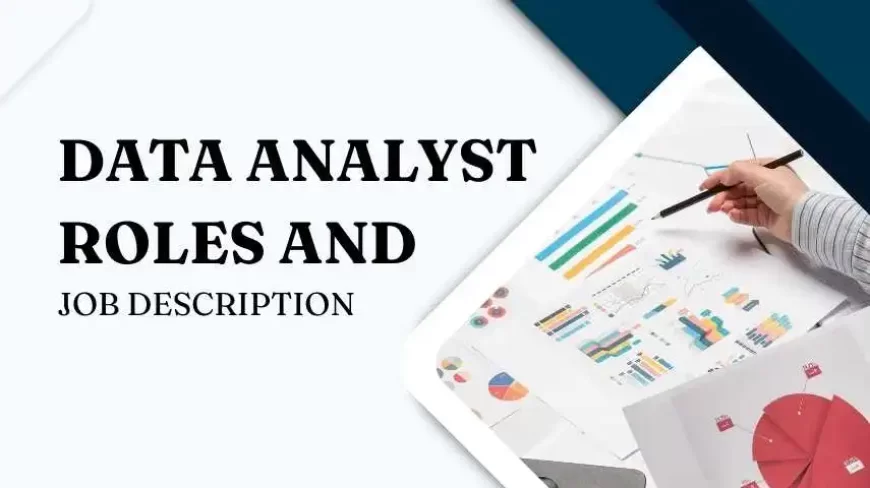
Data is everywhere today. Every business collects information — customer details, sales numbers, website visits, app usage, and much more. But raw data alone has no value. It becomes useful only when someone studies it carefully and finds meaning in it. That person is called a data analyst.
If you are a student thinking about building a career in analytics, this guide will help you clearly understand data analyst roles, responsibilities, required skills, career growth, and how earning IABAC Global Certifications like the Certified Data Analyst can strengthen your career.
Let’s begin from the basics and move step by step.
What Is a Data Analyst?
A data analyst is someone who studies data and helps companies make better decisions. They collect information, clean it, organize it, analyze it, and present it in a simple format such as charts or dashboards.
A data analyst turns numbers into useful business insights.
Companies depend on analysts to:
- Improve sales
- Reduce costs
- Understand customer behavior
- Plan future strategies
- Reduce risks
Because of this, data analyst roles are in high demand across industries.
Why Are Data Analyst Roles Important?
Every organization makes decisions daily. These decisions may involve:
- Pricing products
- Planning marketing campaigns
- Managing inventory
- Hiring employees
- Expanding to new markets
Without data analysis, these decisions are based on guesswork. With proper analysis, decisions become clear, logical, and measurable.
That is why skilled data analysts are highly valued.
Main Data Analyst Roles and Responsibilities
To build a successful career in data analyst roles, students must clearly understand what a data analyst actually does inside an organization. Whether the company operates in Asia, Europe, the Middle East, Africa, or the United States, the core responsibilities remain largely the same. Businesses across the world depend on analysts to turn data into meaningful insights.
Let us now explain each responsibility in a more detailed and structured way.
1. Collecting Data
The first responsibility of a data analyst is gathering relevant data. This step is very important because the quality of analysis depends on the quality of data collected.
Data may come from different sources such as:
- Company databases
- Sales and billing systems
- Customer relationship management (CRM) tools
- Online websites and mobile applications
- Customer feedback forms and surveys
- Financial and accounting records
- Marketing platforms
- Supply chain systems
In global organizations, data may also come from multiple countries and regions. For example, a company operating in the US, India, Germany, and Singapore may collect regional sales data separately. The analyst must combine this information carefully.
During this stage, the analyst ensures:
- The data is relevant to the business question
- The data source is reliable
- The information is complete
- The format is consistent
Proper data collection ensures that future analysis produces accurate results.
2. Cleaning and Preparing the Data
Raw data is rarely ready for analysis. It often contains errors, missing values, duplicate records, or inconsistent formats. This is why data cleaning is one of the most critical responsibilities in data analyst roles.
Common data issues include:
- Missing numbers or blank fields
- Incorrect entries (for example, negative sales values)
- Duplicate customer records
- Different date formats (MM/DD/YYYY vs DD/MM/YYYY)
- Inconsistent currency formats (USD, EUR, INR, etc.)
A data analyst performs the following tasks:
- Removes duplicate entries
- Corrects data entry mistakes
- Fills or handles missing values
- Standardizes formats
- Converts currencies when working with global datasets
- Structures data into organized tables
Clean data builds trust in the final insights. Without proper cleaning, analysis may lead to incorrect conclusions, which can affect business decisions.
3. Analyzing the Data
After preparing the dataset, the next step is detailed analysis. This is where analytical thinking and statistical knowledge become important.
Data analysts use various techniques such as:
- Descriptive statistics
- Trend analysis
- Correlation analysis
- Growth rate calculations
- Comparative performance analysis
For example, calculating the Mean (Average):
Mean=N∑X
Where:
-
= Total of all values
-
= Number of values
This helps understand overall performance.
Another example is Growth Rate:
Growth Rate=Previous ValueCurrent Value−Previous Value×100This helps measure business improvement across months or years.
Analysts also study:
- Seasonal trends
- Regional performance differences
- Customer behavior patterns
- Revenue distribution
- Product performance comparisons
In multinational companies, analysis may involve comparing data across global markets such as the US, Europe, and Asia to understand regional differences.
This stage transforms numbers into insights.
4. Creating Reports and Visualizations
Data analysis is not complete without proper presentation. Business leaders and managers may not have time to review spreadsheets filled with numbers. Therefore, analysts create clear and simple visual representations.
Common reporting formats include:
- Bar charts
- Line graphs
- Pie charts
- KPI dashboards
- Monthly performance reports
- Executive summary presentations
Tools commonly used worldwide include:
- Microsoft Excel
- SQL
- Python
- Power BI
- Tableau
These tools help convert complex data into easy-to-understand visuals.
For example, a global company may track:
- Revenue by region (US, UK, Middle East, Asia-Pacific)
- Quarterly growth trends
- Customer acquisition rates
- Operational efficiency
Visual dashboards allow decision-makers to quickly identify strengths and problem areas.
5. Explaining Findings to Teams
One of the most important parts of data analyst roles is communication. Technical skills alone are not enough. An analyst must clearly explain insights to different stakeholders.
They must communicate:
- What the data shows
- Why a particular trend is happening
- What risks are identified
- What recommendations should be considered
For example:
Instead of saying, “Revenue variance is 8.4% quarter over quarter,”
An analyst might explain,
“Revenue increased by 8.4% compared to last quarter, mainly due to higher sales in the US and European markets.”
This ability to simplify technical insights builds trust and improves decision-making.
In global organizations, communication may involve cross-border teams. Clear reporting ensures that teams in different countries understand the same insights.

Different Types of Data Analyst Roles
Not all data analysts do the same job. Some specialize in certain areas.
- Business Data Analyst: Focuses on improving company performance.
- Financial Data Analyst: Works with budgets, investments, and financial forecasts.
- Marketing Data Analyst: Studies campaign results and customer behavior.
- Healthcare Data Analyst: Works with patient and medical data.
- Operations Data Analyst: Improves supply chain and internal processes.
Each role requires strong analytical thinking.
Important Skills for Data Analyst Roles
To succeed in analytics, students need both technical and personal skills.
Technical Skills
- SQL for querying databases
- Excel for calculations
- Python or R for analysis
- Data visualization tools
- Basic statistics
- Understanding of data structures
Understanding Data as a Matrix
In analytics, data is often stored like this:
X=x11x21x31x12x22x32x13x23x33
Each row represents one record.
Each column represents one variable.
This structure helps analysts apply mathematical methods efficiently.
Soft Skills
- Logical thinking
- Problem-solving ability
- Attention to detail
- Clear communication
- Business understanding
Technical skills help you analyze data. Soft skills help you explain it.
Continue reading to understand career growth.
Career Growth in Data Analytics
|
Career Level |
Job Roles |
Description |
|
Entry Level |
Junior Data Analyst |
Supports data collection, basic analysis, and report preparation. |
|
Reporting Analyst |
Creates dashboards and generates regular business reports. |
|
|
Mid-Level |
Data Analyst |
Performs detailed data analysis and provides actionable insights. |
|
Business Analyst |
Bridges business needs with data-driven solutions. |
|
|
Senior Level |
Senior Data Analyst |
Leads analytics projects and mentors junior analysts. |
|
Analytics Manager |
Manages analytics teams and oversees data strategy implementation. |
|
|
Advanced Level |
Data Scientist |
Builds predictive models and applies machine learning techniques. |
|
Analytics Consultant |
Provides expert analytics guidance to organizations. |
Why Certifications Matter
Skills are important. But employers also look for proof of skills. That is where Data Analytics Certifications become useful.
Certifications show that:
- You understand analytics concepts
- You have practical knowledge
- You meet industry standards
- You are serious about your career
Students who earn certifications often gain better job opportunities.
Why Choose IABAC Global Certifications?
IABAC Global Certifications are designed to prepare students for real-world analytics work.
Benefits include:
- Industry-focused syllabus
- Practical case studies
- Clear evaluation process
- International recognition
The goal is to make students job-ready.
Certified Data Analyst Program
The Certified Data Analyst program helps students build strong foundations in:
- Data cleaning
- SQL
- Statistical analysis
- Data visualization
- Business reporting
This certification supports candidates applying for various data analyst roles.
Comparison: With and Without Certification
|
Without Certification |
With Certification |
|
Self-study only |
Structured learning |
|
No formal proof |
Recognized credential |
|
Limited guidance |
Clear learning path |
|
Lower confidence |
Strong professional profile |
This difference can impact career growth.
Real Example of Data Analysis
Consider a retail company that wants to increase sales.
The analyst would:
- Collect sales data
- Clean the data
- Identify best-selling products
- Study monthly trends
- Create visual reports
- Suggest improvements
This is how data analysis helps businesses grow.
OLTP and OLAP Systems
Data analysts usually work with analytical systems.
|
System |
Purpose |
|
OLTP |
Handles daily transactions |
|
OLAP |
Handles reporting and analysis |
Analysts mainly use OLAP systems to run detailed queries and reports.
Future of Data Analyst Roles
Data continues to grow every day. Businesses rely more on analytics now than ever before.
Future trends include:
- Real-time reporting
- Predictive analysis
- AI-assisted tools
- Strong focus on data security
This means opportunities in analytics will continue to increase.
How Students Can Start
A simple roadmap:
- Learn basic statistics
- Practice Excel
- Learn SQL
- Study Python for analysis
- Work on projects
- Earn the Certified Data Analyst certification
- Apply for internships
Consistent practice is key.
Data is one of the most valuable assets in today’s business world. Companies need professionals who can study information and provide clear insights. Understanding data analyst roles helps students plan their career path wisely. Building strong technical skills, gaining hands-on practice, and earning respected Data Analytics Certifications such as those offered through IABAC Global Certifications can make a big difference. The journey into analytics begins with learning the basics and applying them regularly.
Your future in data analysis can start today — one skill at a time.