


























































Data Analyst Roles 2026: Skills, Jobs & Career Guide
Learn data analyst roles, essential skills, job types, career paths, and practical guidance to build a strong and successful career in data analytics.

In 2026, data analyst roles will be essential to how companies think and make decisions. The first step in creating every chart, dashboard, or report is for someone to make sense of unorganized data by asking the proper questions. Data analysts can help with it.
I'll go through what these roles actually look like currently, including what skills are important, the types of jobs available, how careers develop, and what it truly takes to succeed. If you're interested in working with data or considering your next professional move, this guide helps to provide clarity.
What Is a Data Analyst?
A data analyst is a professional who gathers, cleans, interprets, and presents data to help organizations solve business problems and make informed decisions. They work across industries, from healthcare and finance to e‑commerce and logistics, providing insights that shape everything from marketing campaigns to product roadmaps.
At its core, data analysis follows a few standard steps:
-
Identify the question the business needs answered.
-
Collect relevant data from databases or external sources.
-
Clean and prepare the data so it can be used reliably.
-
Analyze the data to find patterns or answers.
-
Communicate insights through visuals, dashboards, or reports.
In short, a data analyst turns numbers into narratives that non‑technical stakeholders can act on.
Why Data Analyst Roles Are Growing in 2026?
Data analyst roles have evolved significantly in recent years. Companies are no longer satisfied with basic reporting. They want analysts who can not only extract data but also interpret it in the context of real business objectives.
Several factors are driving this growth in 2026:
1. Increasing Reliance on Data‑Driven Decision Making
Businesses use data in everything from customer segmentation and pricing to supply chain optimisation. Analysts are key to turning raw information into value.
2. Skills‑Based Hiring Trends
Employers are moving beyond formal degrees toward skills‑based hiring, valuing what you can do with data over where you studied.
3. Faster Tools and Automation
Modern analytics tools and automation free up analyst time from repetitive tasks, letting them focus on interpretation and strategic thinking.
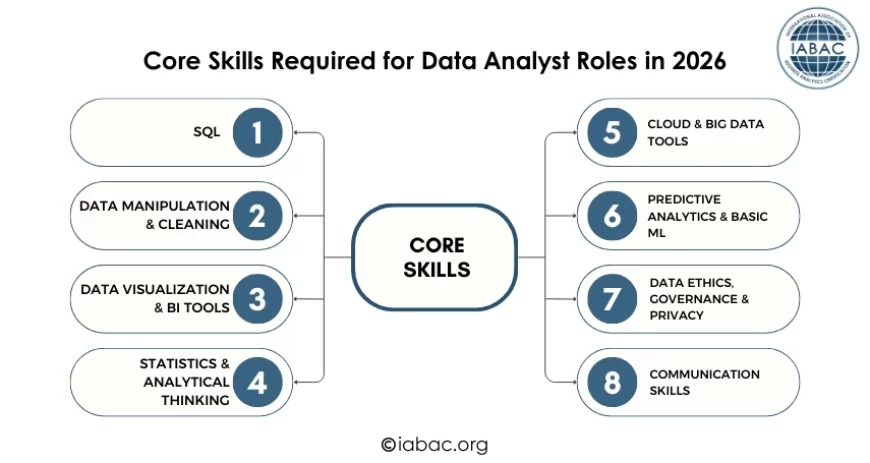
Core Skills Required for Data Analyst Roles in 2026
To compete for data analyst jobs in 2026, you’ll need a mix of technical skills, an analytical mindset, and business awareness. Companies want people who not only crunch numbers but also tell a story with them.
1. SQL: The Foundation of Data Work
Structured Query Language (SQL) remains the most critical skill for data analysts. It lets you
extract, filter, and transform data stored in databases, a task most analysts perform daily.
Why it matters:
-
Used by nearly all companies with structured data.
-
Frequently included in interview tests.
-
Supports reporting, visualization, and trend analysis.
If you’re new to SQL, aim to master joins, aggregations, filtering, and basic performance tuning early.
2. Data Manipulation and Cleaning
Raw data is messy by nature. Analysts spend a large portion of their time cleaning and preparing data before it’s ready for analysis.
This includes:
-
Removing duplicates and errors
-
Normalising formats
-
Handling missing data
-
Structuring data for analysis
Tools like Excel, Python (especially pandas), and SQL are essential for these tasks.
3. Data Visualization & BI Tools
Insights are valuable only when people understand them. That’s where visualization tools come in.
Popular tools include:
-
Tableau
-
Power BI
-
Looker
-
Excel dashboards
These tools allow analysts to build charts, interactive dashboards, and reports that make complex data easy to digest.
Visualizations should answer questions clearly, e.g., sales trends over time, and help stakeholders act quickly
4. Statistics & Analytical Thinking
Technical skills alone aren’t enough. You must be able to think critically about the why behind the numbers.
Key capabilities include:
-
Understanding correlation vs causation
-
Identifying meaningful variables
-
Choosing the right statistical tests
-
Interpreting trends and patterns
This ability to reason with data separates top analysts from average ones.
5. Cloud & Big Data Tools
With organizations moving to cloud ecosystems, analysts increasingly interact with cloud data platforms:
-
AWS Redshift: cloud data warehouse
-
Google BigQuery: fast, scalable analytics
-
Snowflake: data warehousing and sharing
-
Azure Synapse: integrated analytics solution
Why it matters: Understanding cloud platforms helps analysts scale their work and handle larger datasets efficiently.
6. Predictive Analytics & Basic ML
While data scientists build complex machine learning models, analysts often use basic predictive techniques:
-
Forecasting sales trends
-
Predicting customer churn
-
Building simple regression models in Excel or Python
Understanding the difference between analytics and data science prevents role confusion while adding value to business insights.
7. Data Ethics, Governance & Privacy
2026 employers prioritize responsible data handling:
-
Follow privacy regulations (GDPR, CCPA).
-
Maintain ethical standards in analysis.
-
Document data sources and maintain governance.
Strong knowledge of ethics increases trust and avoids compliance risks.
8. Communication Skills
Perhaps the most underrated skill for data analysts is communication. You need to explain insights simply so that people outside analytics teams can act on them.
This includes:
-
Writing clear reports
-
Presenting results with confidence
-
Tailoring visuals and narratives to the audience
Great communication turns data from numbers into business value.
Types of Data Analyst Jobs in 2026
In 2026, the data analyst covers a variety of roles, each with specific focus areas:
1. Junior Data Analyst
A typical entry point. Responsibilities include:
-
Basic querying and reporting
-
Data cleaning
-
Supporting more senior analysts
This role is ideal for recent graduates or those switching careers.
2. Business Intelligence (BI) Analyst
BI analysts focus on dashboards, KPIs, and performance tracking. They often work closely with leadership to build BI frameworks that guide decision‑making.
Skills: SQL, Power BI, Tableau, business acumen
3. Marketing/Data Insights Analyst
These analysts work on customer behaviour, campaign effectiveness, and market segmentation. They combine analytical power with an understanding of marketing metrics.
Tools: Google Analytics, Excel, SQL, visualization tools
4. Operations/Process Analyst
Focuses more on internal optimization, process efficiency, and operational KPIs.
Skills: SQL, Excel, process mapping, reporting
Career Progression: From Analyst to Leader
A data analyst career path typically follows this progression:
Entry Level → Mid Level → Senior
-
Entry Level: Hands‑on analysis, basic reporting.
-
Mid Level: More autonomy, deeper business understanding.
-
Senior Analyst: Strategic analysis, mentoring, cross‑functional influence.
At senior levels, analysts may oversee teams, design measurement frameworks, or help define organizational strategy.
Some professionals also shift into roles like:
-
Analytics manager
-
Product analytics lead
Role Differentiation: Analyst vs Related Roles
Confusion is common among similar roles:
|
Role |
Focus |
|
Data Analyst |
Reporting, dashboards, descriptive analytics |
|
BI Analyst |
Business intelligence, KPIs, data visualization |
|
Data Scientist |
Predictive modeling, algorithms, machine learning |
|
Data Engineer |
Data pipelines, ETL, infrastructure |
Portfolio & Project Strategy
A strong portfolio is key for hiring managers. Include:
-
Real-world projects with clear problem statements
-
Data cleaning and visualization steps
-
Business recommendations
-
GitHub or dashboard links
Example project: Analyze an e-commerce dataset and create a dashboard showing revenue trends and customer segmentation.
Interview Prep & Assessments
Data analyst interviews often include:
-
SQL queries and joins
-
Excel-based problem solving
-
Case studies with dataset interpretation
-
Communication of insights
Prepare sample projects and practice presenting insights clearly.
How Demand Varies by Industry
Data analysts are needed in nearly every sector, but some industries pay particularly well or offer faster growth:
Technology
Focuses on product analytics, user behaviour, and performance metrics.
Finance & Banking
Heavy reliance on trends, forecasts, and risk modeling.
Healthcare
Data analysts help with patient outcomes, resource allocation, and policy analysis.
Retail & E‑commerce
Tracks customer journeys, stock levels, and sales data.
Consulting
Requires broad analytics expertise for varied client needs.
Real Market Insight: Salary and Hiring Trends
In many markets, skills are becoming more valuable than formal degrees. Tech companies especially look for people who can deliver value from day one.
While salaries vary widely by region and experience, skilled data analysts with a strong portfolio or demonstrable project experience can command competitive compensation, even in competitive job markets.
How to Prepare for Data Analyst Roles in 2026
Here’s a practical roadmap to build your career:
1. Learn the Core Stack
-
Excel
-
One programming tool (Python/R)
-
One visualization tool (Power BI/Tableau)
Start with practical projects, e.g., analyze a public dataset and build a dashboard.
2. Build a Portfolio
Create 4-6 real projects you can show to employers. Focus on:
-
Clear problem statements
-
Data cleaning steps
-
Visual insights
-
Business recommendations
Hiring managers often look for projects more than degrees.
3. Focus on Problem‑Solving
-
Practice real questions like:
“What product category is losing revenue and why?”
“What customer segment should we prioritize?”
These kinds of business problems show your analytical mindset.
4. Network and Apply Early
Engage in local meetups, LinkedIn networking, and online communities.
Feedback from current analysts can sharpen your skills and give you referral opportunities.
Challenges and How to Overcome Them
Breaking into analytics isn’t always smooth:
-
Some job descriptions list advanced skills beyond entry-level.
-
Many candidates struggle to articulate insights.
-
Portfolio presentations make a big difference.
Tips:
-
Focus first on practical analytics tasks.
-
Don’t get overwhelmed by advanced tools initially.
-
Show business impact in every project.
Data analyst roles in 2026 provide the opportunity to transform data into meaningful insights that have a significant business impact. Technical proficiency, critical thinking, ethical awareness, and effective communication are all necessary for success in this industry. You can succeed and progress in your job by developing the necessary skills, understanding different roles, creating a strong portfolio, and planning forward. Obtaining a data analyst certification may increase your opportunities and further confirm your skills. Following these methods ensures that your work is trusted, your career is on track, and you will have a big effect in 2026.