

















































Healthcare Analytics for Smarter Public Health Planning
Healthcare Analytics strengthens public health and pandemic alertness with early findings, timely notices, and dependable data-based decision support systems.

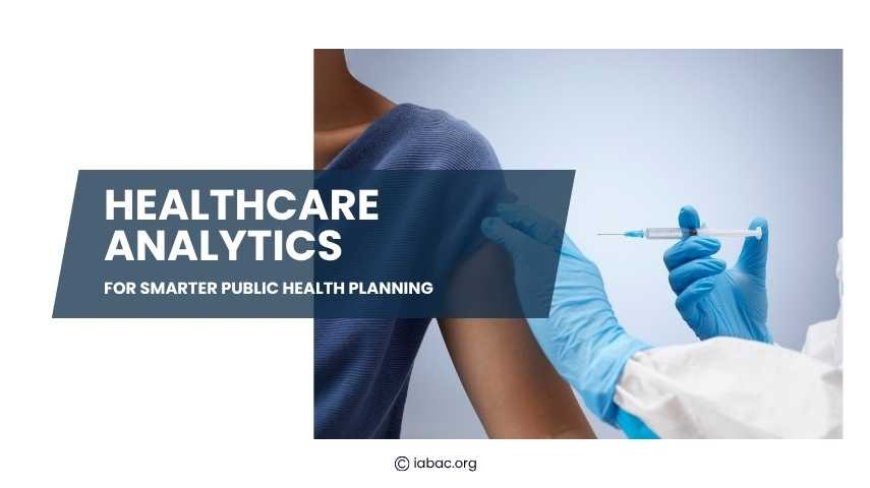
Public health systems around the world have always depended on data, but recent global challenges have shown how essential organised analysis has become. Healthcare Analytics now stands at the centre of disease monitoring, outbreak prediction, and quick response planning. Governments, research institutions, and healthcare providers use analytical models to detect emerging hazards quickly and reduce their effects on communities. As global populations grow and new health risks develop, the dependence on accurate data-based strategies continues to rise.
This change has also created a strong demand for skilled professionals who can handle complex data sets, understand health patterns, and support fast decision-making. Organisations such as IABAC, known for international certifications in Data Science, Analytics, and AI, recognise this demand and help learners build the skills needed to help to crucial public health programs.
Why Public Health Systems Depend on Healthcare Analytics
Massive health events highlight how crucial data analysis is. During any outbreak, public health teams must understand infection rates, identify high-risk areas, and estimate how fast a disease may spread. Healthcare Analytics supports these tasks by analysing real-time data from hospitals, labs, mobile health apps, and community health reports.
How healthcare data creates real-world impact
- It helps public health officials figure out the speed and severity of an outbreak.
- It guides hospitals in preparing beds, equipment, and staff before cases increase.
- It identifies weaker groups that need early assistance or targeted support.
- It helps governments make evidence-based decisions regarding travel, gatherings, and resource distribution.
These experiences show why health departments require experts who can analyse data correctly and present findings in a simplified manner. Without accurate assessment, responses may be delayed or useless.
Understanding Healthcare Analytics and Its Basic Components
To understand the role of Healthcare Analytics in public health, it’s important to know the major analytical components that make it effective.
1. Descriptive Analytics
This helps track what has already happened.
Examples include:
- Number of confirmed cases in a region
- Hospital admissions trends
- Recovery and fatality rates
Descriptive insights give health teams a clear picture of the current situation.
2. Predictive Analytics
Predictive models estimate how a disease is likely to progress. These models use machine learning and statistical tools to predict patterns such as:
- Expected rise in case numbers
- Communities at higher risk
- Probability of new waves or variants
Predictive analysis became a major decision-making tool for governments and healthcare leaders during global emergencies.
3. Prescriptive Analytics
Here, mathematical models recommend the best response strategies.
This may include:
- Resource distribution plans
- Improvement of testing centres
- Risk-based vaccination strategies
Healthcare systems that apply prescriptive analysis are more prepared for sudden changes.
4. Real-Time Analytics
Modern technology allows continuous monitoring of health data. Tools from platforms like Google Cloud and Microsoft Azure support real-time data handling and predictive models. These tools enable authorities to act quickly during critical moments.
Healthcare Analytics is not limited to pandemics. It also supports mental health initiatives, long-term disease management, and emergency response planning. However, its influence on public health and pandemic preparation remains its most essential contribution.
How Healthcare Analytics Strengthens Public Health Systems
Public health actions affect millions of people. Leaders need accurate information, not beliefs. Healthcare Analytics supports this with evidence-based knowledge that drive strong policy decisions.
Below are the major areas where analytics plays an official role:
1. Early Detection and Surveillance
Public health monitoring depends on information from different sources—hospital reports, pharmacy sales, lab tests, social behaviour measures, and environmental observations.
Analytics helps:
- Detect unusual spikes in symptoms or diseases
- Identify early signs of outbreaks
- Compare data across regions for faster alerts
- Reduce delays between detection and response
This early warning capability is one of the strongest defences against widespread outbreaks.
2. Resource Allocation
Hospitals faced major pressure during health crises due to shortages of beds, oxygen supplies, and healthcare staff. Analytics models help match demand with available resources.
This results in:
- Better hospital preparation plans
- Improved supply chain management
- Fair distribution of medical resources
- Reduced stress on critical care units
When leaders have reliable forecasts, they can plan ahead rather than react too late.
3. Population Risk Assessment
Analytics helps healthcare systems identify groups that may face higher risks due to age, lifestyle, geography, or medical history.
This supports:
- Targeted awareness programmes
- Priority vaccination strategies
- Community-specific interventions
- Prevention campaigns targeted to risk groups
Such strategies reduce the pressure on healthcare systems and protect weak populations.
4. Public Communication and Awareness
Clear communication during health emergencies is vital. Using Healthcare Analytics, authorities can:
- Understand public behaviour
- Track incorrect information trends
- Address concerns using accurate data
- Provide clear community-level reports
Data-based communication increases public trust and encourages responsible behaviour.
Ensuring Accuracy, Ethics, and Reliability
For analytics to be trusted in healthcare, systems must prioritise accuracy, privacy, and transparency.
1. Data Quality and Integrity
Dependable findings depend on clean, validated, and complete records. Health data often comes from multiple sources—labs, electronic health records, gadgets, surveys—and must be organised before analysis.
2. Data Privacy and Security
Public health systems must protect sensitive information. Platforms like Microsoft and Google provide secure platforms with strong data protection structures, supporting healthcare teams with safe analytical environments.
3. Ethical Use of Data
Public health analytics should avoid bias and ensure fairness. Ethical practice includes:
- Clear policies for the use of data
- Data that is inclusive
- Avoiding discrimination in prediction models
- Ensuring accessibility of knowledge for decision-makers
Building trust is essential because decisions influence millions of lives.
Practical Applications of Healthcare Analytics in Pandemic Response

1. Predicting Outbreaks Before They Spread
Analytics models identify infection zones and predict future trends. This helps authorities take action earlier, reducing the risk of uncontrolled spread.
2. Supporting Vaccination and Immunisation Campaigns
Analytics helps determine:
- Which regions need more vaccine supply
- The most effective distribution routes
- Groups that require early protection
3. Improving Hospital Safety
Hospitals benefit from predictive modelling that estimates patient load. With this, they can:
- Organise staffing
- Reserve emergency beds
- Manage medical equipment
- Prepare ICUs for peak seasons
4. Strengthening Global Health Monitoring
Cross-country data sharing allows organisations to monitor diseases that may travel across borders. Analytics supports international groups in tracking alterations patterns and coordinating response efforts.
Why Healthcare Analytics Professionals Are Needed
The increased dependency on data has created new career pathways in public health, epidemiology, hospital management system, and health-tech sectors. Professionals skilled in analytical tools, statistical reasoning, and domain understanding are needed more than ever.
Many learners prepare for such roles through structured programmes focusing on Healthcare Analytics, Data Science, or AI-driven health modelling. As a global certification body, IABAC provides internationally recognised certifications that help learners gain trust and confidence. Through its network of Authorised Training Providers (ATP), IABAC also enables learners to access guided training and skill-building options. These certifications and training avenues help candidates show analytical skills and their ability to contribute to public health strategies.
How Learners Benefit from Building Skills in Healthcare Analytics
A strong understanding of Healthcare Analytics helps professionals:
- Interpret large health datasets accurately
- Contribute to disease avoidance efforts
- Support hospitals with accurate forecasts
- Strengthen public health planning
- Build foundations for positive careers in healthcare technology
These skills also open opportunities in research organisations, hospitals, health-tech startups, global consulting teams, and public health departments.
Healthcare Analytics has become one of the most influential sectors of public health. It supports early detection, improves epidemic response, guides resource planning, and builds safer communities. As global challenges continue to evolve, the need for skilled professionals who can handle large datasets and provide meaningful insights will continue to rise. Learners who invest in Healthcare Analytics today position themselves at the junction of healthcare, data, and technology—a space that will always need informed, analytical thinkers.
If you’re aiming to build expertise with Healthcare Analytics and strengthen your professional profile, start your journey with IABAC today.