


















































Certification with Data Analytics Courses
Get certified in Data Analytics Courses and enhance your skills in data handling, visualization, and AI. Advance your career with expert-led training.


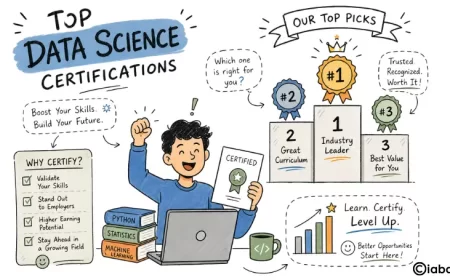
When I started in the world of data analytics, I quickly realized how important it was to back up my skills with solid Data Analytics Courses and Data Analytics Certifications. It wasn’t just about learning the tools but also about proving my abilities in a competitive field. From my experience, taking structured Data Analytics Courses gave me the knowledge and hands-on practice that really changed my career. The Data Analytics Certifications I earned along the way opened new doors and boosted my confidence. What really stood out was how these certifications showed my commitment to learning and improving in this field, and it has truly made a big difference for me.
Who is eligible for data analysis?
If you're interested in working with data, becoming a data analyst could be a great career path. Here's a simple guide to help you get started:
Educational Requirements:
-
Bachelor's Degree: While a degree in fields like Computer Science, Statistics, Mathematics, Economics, or Engineering is helpful, it’s not the only way into data analysis. People from different backgrounds can switch to data analysis by learning the right skills.
-
Certifications: Earning certifications like Certified Analytics Professional (CAP) or Data Analyst Professional Certificate (offered by IABAC) can be valuable, especially if you don’t have a degree in a data-related subject.
Key Skills:
- Analytical Skills: The ability to look at data, understand patterns, and solve problems.
- Technical Skills: Being good with tools like Excel, SQL, Python, R, and Tableau.
- Statistical Knowledge: A basic understanding of statistics and how to analyze data.
- Communication Skills: The ability to clearly explain your findings to others.
Experience:
- For entry-level roles, you don’t need a lot of work experience, but having hands-on practice can help. Internships or personal projects related to data analysis are great. You can also practice using real data sets on platforms like Kaggle.
Who Can Transition:
- People with backgrounds in business, finance, engineering, or science can switch to data analysis by learning the necessary skills. It’s all about building up your technical and analytical abilities.
If you're keen on data analysis, taking Data Analytics Courses and earning Data Analytics Certifications can give you a competitive edge and help you get started in the field.
How to Choose the Right Data Analytics Certification Program?
When selecting a data analytics certification, it’s important to choose a course that aligns with your career goals and learning preferences. Here are some key things to consider:

1. Course Content and Depth: Check the curriculum to make sure the course covers the skills you need. Look for a program that offers a balance of theory and practical application.
2. Reputation and Accreditation: Make sure the certification provider is reputable and offers an accredited program. This will add value to your certification and make it more recognized by employers.
3. Learning Flexibility: Some courses allow you to learn at your own pace, while others follow a fixed schedule. Think about your availability and learning style when choosing a program. Online courses often provide more flexibility for working professionals.
4. Hands-On Practice: Look for programs that include real-world projects or case studies. Practical experience helps you apply what you’ve learned and gives you something to show future employers.
5. Cost and Duration: Certification programs vary in price, so choose one that fits your budget. Also, consider how long the course will take. Shorter courses may be more intensive but can be completed faster, while longer programs provide more detailed learning.
What to Expect from Data Analytics Certification Courses?
Data analytics certification programs can vary in what they cover, how long they last, and how detailed they are. However, most of these courses focus on helping students learn the skills needed to work with data effectively. Here are some of the main topics covered in many data analytics courses:
1. Introduction to Data Analytics: Most courses begin with an overview of the key concepts in data analytics, such as the different types of analysis (descriptive, diagnostic, predictive, and prescriptive). You'll also learn about the different types of data and how to handle them.
2. Statistical Analysis: Understanding statistics is a major part of data analytics. You'll study concepts like probability, regression analysis, hypothesis testing, and data distributions. A strong grasp of statistics is essential for analyzing data and drawing useful conclusions.
3. Data Visualization: Data visualization is crucial in analytics because it helps present complex data in a clear and understandable way. In certification courses, you'll learn how to use tools like Tableau, Power BI, or even Excel to create charts, graphs, and dashboards that make data easier for decision-makers to understand.
4. Data Cleaning and Preparation: Before you can analyze data, it needs to be cleaned and organized. In data analytics courses, you'll learn how to process data, deal with missing information, remove outliers, and ensure the data is ready for analysis. Proper data preparation is essential for good results.
5. Programming for Data Analytics: Many certification programs teach programming languages like R and Python, which are widely used in data analytics. These languages help analysts work with large datasets, perform statistical analysis, and automate tasks. Knowing how to use these languages is a big advantage in the job market.
6. Machine Learning Basics: Some advanced data analytics courses introduce basic machine learning concepts. You may learn about supervised and unsupervised learning, classification models, and clustering techniques. Even a basic understanding of machine learning can be helpful for more advanced roles in data analytics.
Which course is best for data analytics?
The Certified Analytics Professional (CAP) is a respected certification that demonstrates expertise in analytics and solving business problems. It covers business problem framing, analytics methods, and solution implementation. The Data Analyst Professional Certificate offers comprehensive training in data analysis, including tools like data visualization, analysis, and basic statistics. Both certifications, offered by IABAC, enhance skills and open new career opportunities in data analytics.
Popular Data Analytics Tools to Learn
- Microsoft Excel – A key tool for basic data analysis and visualization, Excel is essential for anyone starting in data analytics.
- SQL – Structured Query Language (SQL) is essential for working with databases and querying data.
- Python & R – Widely used for statistical analysis and machine learning tasks.
- Tableau & Power BI – Powerful tools for creating data visualizations and reports.
- SAS & SPSS – These are specialized tools used in statistical analysis and advanced analytics.
Where data plays such a big role, getting certified in data analytics is a smart investment in your future. It not only boosts your skills but also opens up many job opportunities and offers the potential for career growth and higher pay. Whether you’re just starting out or looking to advance, a certification in data analytics will give you the tools and knowledge needed to succeed in this growing field. So, if you’re interested in data and want to make a difference in the world of analytics, a data analytics certification is a great way to get started. Check out different options and choose the one that best fits your career goals and interests.