





















































Easy Steps to Work as an HR Analyst in UK
Learn the simple steps to start your career as an HR Analyst in the UK, including skills needed, qualifications, and job opportunities.


Let’s be honest: Human Resources used to be about hiring, paperwork, and maybe a bit of birthday cake cutting. But things have changed. Now, HR teams are using data to make smart decisions, and that’s where the HR Analyst comes in. In the UK, this role is growing fast, and if you like numbers, people, and problem-solving, it might just be your perfect job.
This friendly guide will walk you through everything you need to become an HR Analyst in the UK. We’ll talk about the skills you need, the best data analytics certifications, the career path, what top HR Analysts are doing in 2025, and what your future could look like.
What’s an HR Analyst Anyway?
An HR Analyst is someone who looks at all kinds of people-related data—like who’s joining, who’s leaving, how much people are getting paid—and turns that into simple reports that help businesses make better choices.
What They Do Every Day:
- Collect and sort HR data
- Spot patterns in employee behavior
- Build dashboards and charts
- Help with hiring plans and diversity goals
- Support salary reviews and performance evaluations
In short, they make sense of all the numbers so HR teams can focus on the people.
Why Work as an HR Analyst in the UK?
Here’s why the UK is a great place to become an HR Analyst:
- Lots of jobs for data-savvy HR professionals
- Great salaries that grow with experience
- Companies are serious about using data for HR
- Loads of training and data analytics certification options (like from IABAC)
What Can You Earn as an HR Analyst in 2025?
|
Experience Level |
Average Salary (Per Year) |
|
Entry-Level |
£30,000 - £45,000 |
|
Mid-Level |
£45,000 - £60,000 |
|
Senior-Level |
£60,000 - £85,000 |
|
Lead Specialist |
£85,000 and above |
Note: Salaries go even higher in places like London or in global companies.
How to Become an HR Analyst in the UK (Step-by-Step)
Step 1: Get the Right Degree
Most HR Analysts study:
- Human Resources
- Business
- Psychology
- Statistics
- Computer Science
Step 2: Build Your Data Analytics Skills
You’ll want to be good at:
- Excel – spreadsheets are your new best friend
- SQL – helps you talk to databases
- Power BI or Tableau – to make pretty charts and dashboards
- Python or R – a bit of code can go a long way
- HR systems like SAP or Workday – the tools most companies use
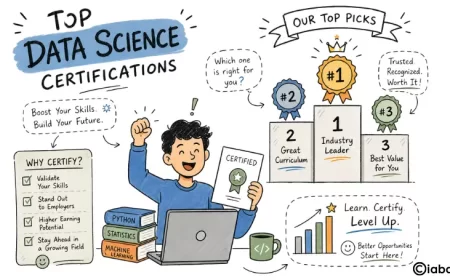
Step 3: Get a Data Analytics Certification
Certifications show you know your stuff. They’re great for your CV and your confidence. Look for programs from trusted organizations like IABAC.
Some Good Ones:
|
Certification |
What You Learn |
Duration |
|
Certified HR Data Analyst |
HR analytics skills |
2-4 months |
|
Business Data Analyst Pro |
Business + technical analytics |
3-6 months |
|
Certified Data Analyst |
Data tools, SQL, visualization |
3-5 months |
Step 4: Do Real Projects
Hands-on experience really matters. Try projects like:
- Predicting which employees might leave
- Analyzing gender pay gaps
- Creating hiring plans using past data
- Breaking down employee survey results
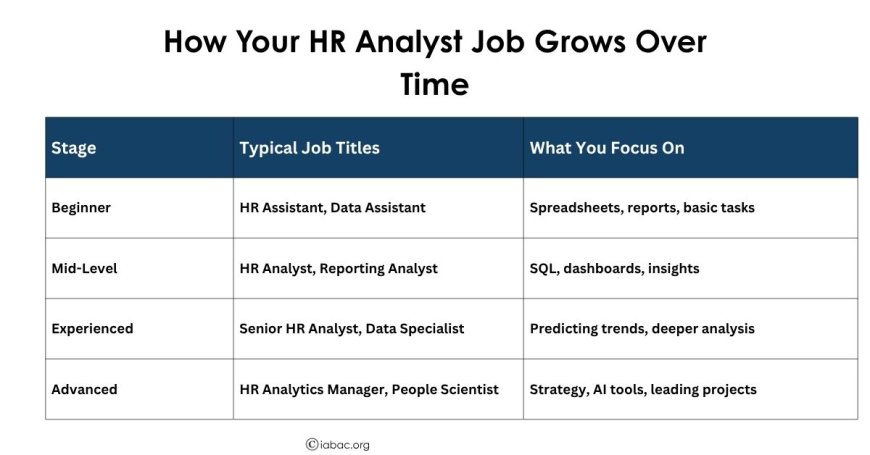
How Your HR Analyst Job Grows Over Time
What HR Analysts Are Working On in 2025
The job is way cooler than it used to be. These days, HR Analysts are doing things like:
- Helping with AI-powered hiring
- Tracking employee turnover in real time
- Making sure data is used fairly and ethically
- Measuring how well remote work is going
- Supporting diversity and inclusion goals
They help make companies better places to work.
HR Analysts to Watch in 2025
The most respected HR Analysts today:
- Know both HR and data science (a double win!)
- Share tips in HR tech communities
- Care about how data is used fairly
- Speak at HR events and workshops
They’re helping companies make smart, fair decisions using real data.
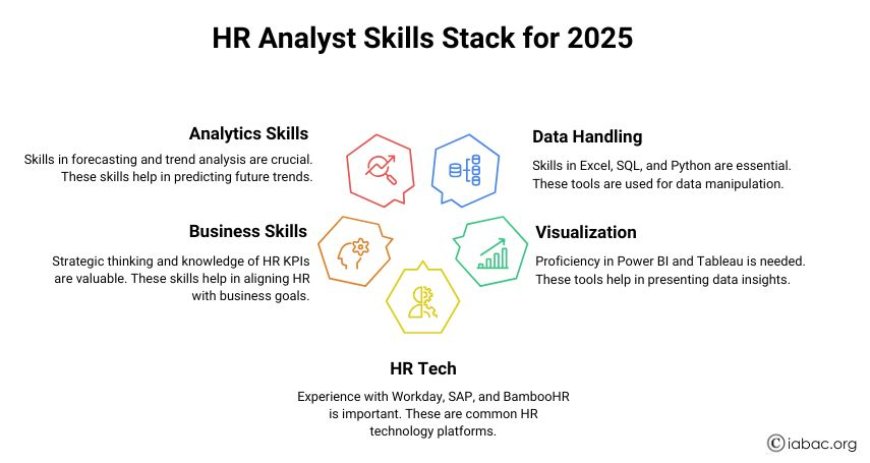
HR Analyst Skills Stack for 2025
So, What’s an HR Analyst in the UK Like?
An HR Analyst in the UK is someone who’s part of both the HR and data teams. You’ll work on helping companies answer questions like:
- How can we keep our best employees?
- Are we paying people fairly?
- What training do our teams need?
You’ll also create reports and dashboards that help the whole HR team look good.
Where You Might Work:
- Company HR departments
- HR consulting agencies
- Government HR offices
- Charities and non-profits
- Tech companies (yes, HR matters there too!)
Being an HR Analyst in the UK is a great job if you enjoy both people and numbers. You’ll help businesses make smart choices and support teams with helpful, honest data. The best part? You don’t need to be a coding genius. With solid data analytics skills, some real practice, and a respected data analytics certification from places like IABAC, you’ll be ready to go. If you're thinking about your next career move, or want to switch to something more exciting and meaningful, why not give HR Analytics a shot?