

















































Ethics of Artificial Intelligence: What We’re Losing
Overview of how AI affects privacy, fairness, truth, skills, jobs, and accountability, outlining ethical concerns and steps to guide responsible use.

1. What We’re Losing Without Realizing It
There’s a quiet shift happening around us.
AI is now in our phones, our homes, our jobs, and our decisions. It simplifies everything from what we watch, to what we buy, to who gets interviewed for a job.
And because it works so smoothly, we barely notice what’s slipping away in the background.
But here’s the truth:
Every time AI makes something easier for us, something else becomes more fragile our privacy, our fairness, our control, even our understanding of truth.
Artificial intelligence isn’t just reshaping technology.
It’s changing us.
This information is not about fear; it’s about awareness.
It’s about what we’re losing, often invisibly, while AI keeps getting smarter.
2. The Promise of AI and the Price We’re Starting to Pay
There’s no refuse the wonders of AI.
It diagnoses diseases earlier, predicts traffic patterns, improves learning, assists the disabled, and automates tedious work.
AI is not the villain.
But somewhere between innovation and excitement, we forgot to ask a simple question:
“What is this costing us?”
Because for every breakthrough, there is an invisible price:
-
Trust
-
Truth
-
Privacy
-
Control
-
Human judgment
-
Human dignity
These are not small losses.
These are the foundations of society.
And yet… most people don’t even know they’re slipping away.
3. Loss #1: Our Privacy When AI Knows Us Better Than We Do
We used to think privacy meant “no one is watching.”
Today, AI is not just watching —
it's predicting.
It studies millions of tiny signals you don’t even notice.
It studies:
✔ What we click:
Every tap reveals a micro-interest a preference, curiosity, or emotional reaction.
AI uses this to build a personality profile more accurate than what your friends know about you.
✔ How long we pause:
Even a two-second hesitation tells the system what caught your eye.
AI learns what holds your attention, what confuses you, what excites you, and what triggers emotional engagement.
✔ What makes us angry:
Rage, frustration, and disagreement produce some of the strongest signals.
AI learns to feed you more content that provokes reactions not because it cares,
but because emotion keeps you hooked.
✔ What distracts us:
Every time you jump between apps or lose focus, AI sees patterns in your digital behavior.
It learns your attention span, your impulses, and what breaks your concentration.
✔ What we might buy:
From scrolling patterns to wishlist behavior, AI predicts your purchasing decisions
before you consciously decide influencing what you see, when you see it, and how often.
✔ What we fear:
Search history, late-night browsing, repeated queries, hesitation on sensitive topics —
these clues help AI map your vulnerabilities and emotional triggers.
With every swipe, click, pause, and scroll, AI becomes frighteningly accurate.
It knows:
✔ Your habits:
What time you wake up, when you shop, when you scroll,
when you feel bored, stressed, or lonely.
✔ Your weaknesses:
The content that hooks you, the offers you can't resist,
and the emotional moments when you’re most influenceable.
✔ Your preferences:
Everything you like from music to politics even things you’ve never said out loud.
✔ Your relationships:
Who you talk to, how often, what tone you use,
and the emotional weight of each interaction.
✔ Your future behavior:
AI doesn’t just understand your past —
it forecasts your next move, next purchase, next emotion, next belief.
4. Loss #2: Fairness When Algorithms Decide Who Gets Opportunities
AI is increasingly making decisions that used to be made by humans:
-
Who gets a loan
-
Who gets hired
-
Who qualifies for insurance
-
Who gets flagged by law enforcement
-
Who gets approved for healthcare treatment
But AI learns from data —
and data carries our biases.
There have already been real cases where AI systems:
❌ Rejected women for technical jobs
❌ Denied loans to minorities
❌ Misdiagnosed darker-skinned patients
❌ Flagged innocent people due to biased facial recognition
Bias is not always intentional.
But its impact is always real.
When algorithms decide who gets a chance, fairness becomes mathematical and dangerously flawed.
5. Loss #3: Truth The Rise of Deepfakes, Misinformation & Manipulation
We’re entering an era where:
“Seeing is no longer believing.”
Deepfakes can create speeches that presidents never gave.
Fake videos can ruin reputations in hours.
AI-generated news can spread faster than real journalism.
This is more than misinformation —
it’s a collapse of trust.
If people can’t trust videos, voices, or even evidence…
How do we trust society?
How do we trust democracy?
How do we trust each other?
We are not just losing truth.
We are losing the ability to agree on what truth even is.
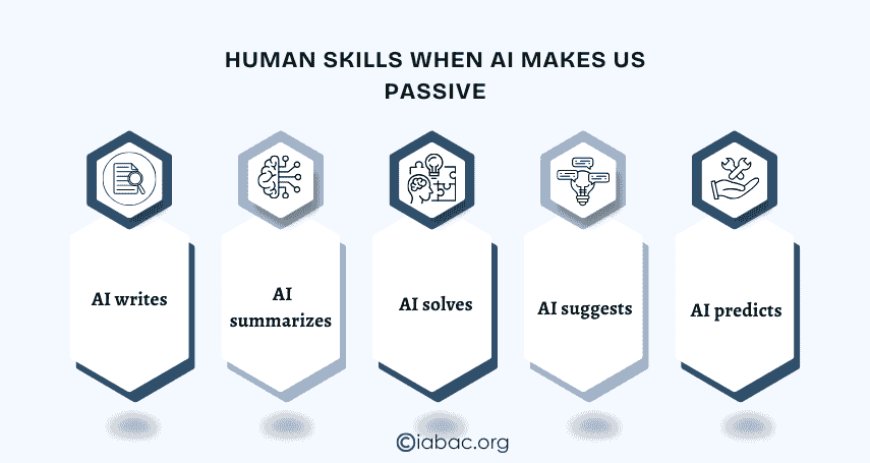
6. Loss #4: Human Skills When AI Makes Us Passive
AI writes.
AI summarizes.
AI solves.
AI suggests.
AI predicts.
While this is helpful, it comes with a subtle cost:
We stop thinking deeply.
Students use AI for assignments, professionals for writing, creators for ideas, and businesses for decisions. The danger isn’t that AI thinks it’s that we stop thinking. When machines do everything for us, our creativity and problem-solving fade, and convenience slowly turns into dependence.
7. Loss #5: Accountability When No One Knows Who’s Responsible
If a human doctor makes a wrong diagnosis, we know who answers for it.
If an AI system misdiagnoses thousands?
Who is responsible?
-
The engineer?
-
The company?
-
The data?
-
The algorithm?
-
No one?
AI blurs responsibility in a dangerous way.
Systems make decisions so complex that even their creators can’t explain them the infamous black-box problem.
When no one is accountable, everyone is vulnerable.
This is one of the biggest ethical failures of modern AI.
8. Loss #6: Jobs & Dignity The Emotional Cost of Automation
People fear losing jobs.
But the deeper loss is something else:
Losing purpose.
Work gives humans:
-
identity
-
dignity
-
routine
-
connection
-
contribution
AI threatens a world where:
-
routine jobs disappear
-
“human value” becomes unclear
-
people feel replaceable
-
emotional well-being declines
Ethics is not just about safety.
It’s about humanity.
9. The Hidden Loss: Environment The Cost of Training AI
Most people don’t know this:
Training a single large AI model can consume as much electricity as hundreds of homes in a year.
The carbon footprint is massive.
Data centers heat the planet faster than aviation.
AI growth means energy demand will only explode.
We celebrate “smart” AI —
but forget the environmental cost of keeping it alive.
This is one of the biggest ethical blindspots of our generation.
10. Real-World Ethical Disasters That Already Happened
Here are some true incidents that show AI ethics is not theoretical:
-
An AI hiring tool rejected women applicants because historical data favored men.
-
A medical AI system failed darker-skinned patients due to non-representative data.
-
A deepfake video led to misinformation spreading to millions in hours.
-
A self-driving car killed a pedestrian because the system couldn’t recognize jaywalking patterns.
-
AI auto-moderation wrongly banned thousands of innocent accounts.
These were not “AI of the future.”
These are the AI of today.
Real-World AI Failures That Changed Lives
1. Wrongful Facial Recognition & Image-Recognition Bias
AI facial-recognition systems may look advanced, but they fail most often on the people who need fairness the most. There have been real cases where the technology misidentified innocent individuals, especially people with darker skin tones and women, leading to embarrassing situations, wrongful suspicion, and even arrests.
Imagine being pulled into a police station or questioned in public because a machine insisted you “look like” someone else. These are not small errors; they are moments where technology damages dignity, trust, and safety. This is where AI ethics becomes painfully real.
2. Deepfakes, Fraud & Manipulation Real Incidents That Already Happened
-
Deepfakes today look real enough to fool anyone, even trained professionals.
-
In 2024, an employee at Arup transferred US$ 25 million after a perfect deepfake video call mimicked his senior executives.
-
The faces, voices, and expressions were all fake, created entirely by AI.
-
Another woman in the US lost over US$430,000 after falling victim to an AI-generated “romance” deepfake.
-
Imagine trusting someone for months, only to discover they never existed only the scam did.
-
Deepfakes are now being used for:
-
identity theft
-
financial scams
-
emotional manipulation
-
political misinformation
-
reputation damage
-
These incidents prove that AI misuse causes real emotional harm, financial loss, and a dangerous breakdown of trust in what we see and hear.
11. Why Current Ethical Guidelines Are Not Enough
Almost every country and organization now claims to have “ethical AI principles.”
But here’s the real issue:
Principles don’t stop bad outcomes.
Implementation does.
And implementation is failing because:
-
Companies prioritize speed over safety
-
Governments can’t regulate fast enough
-
Ethics boards have no real power
-
Cultural diversity is ignored
-
Global South perspectives are missing
-
AI models are black-box and unexplainable
-
Public awareness is almost zero
Ethics cannot be a PDF.
Ethics must be a system.
12. What We Can Still Save How To Build Ethical AI Before It’s Too Late
We’re losing a lot —
but we haven’t lost everything.
We can still build AI that protects humanity, if we:
✔ Use Explainable AI (XAI)
AI systems should clearly show why they made a decision, so people can understand the reasoning and question it when something feels wrong.
✔ Audit for Fairness and Bias
Every major AI model must be checked for unfair patterns before it is used, ensuring it does not silently discriminate against any group.
✔ Ensure Human Oversight
AI should support human judgment, not replace it, especially in sensitive areas like healthcare, hiring, law, and finance where mistakes can be serious.
✔ Protect Data Privacy
Users must know what information is being collected, how it is used, and why it is needed, so they can stay in control of their personal data.
✔ Regulate Globally and Locally
AI rules must protect:
-
individuals
-
societies
-
economies
-
democracies
✔ Teach AI Ethics in Schools & Colleges
Strong rules are needed at both national and international levels to protect individuals, economies, and democracies from harmful or careless AI use.
✔ Encourage Transparency From Tech Companies
Black-box AI is unacceptable for high-impact decisions.
We can’t turn back time —
but we can still choose the right future.
Are We Losing Humanity While Building Intelligence?
AI is not the enemy.
Uncontrolled AI is.
If we move too fast, we lose what matters:
truth, trust, fairness, dignity, privacy, and humanity.
But if we move wisely, preserving ethics along the way, AI becomes something powerful and beautiful
a tool that enhances humanity, not replaces it.
The future is not written yet.
But it will be shaped by what we choose to protect today.
FAQs
1. Why are the ethics of artificial intelligence important?
Because AI affects decisions about privacy, fairness, jobs, truth, and rights without ethics, these systems can cause real harm.
2. What are the main ethical issues in AI?
Bias, privacy, accountability, transparency, misinformation, environmental impact, and loss of human control.
3. Can AI be dangerous without ethical guidelines?
Yes unethical AI can discriminate, manipulate, misinform, and cause irreversible societal damage.
4. What is the biggest ethical risk of AI?
The loss of human oversight and accountability when machines make decisions no one understands.