





















































Interview Questions for Data Analyst: Every Number Has a Story to Tell
Prepare for your data analyst interview with key questions that highlight your skills. Understand how to explain the story behind the numbers confidently.


You’re sitting in a data analyst interview, heart beating fast, hands slightly shaky, and the interviewer asks,
Can you explain the data analysis process in your own words?
For a second, your brain whispers, I can analyze data, but not my anxiety!
Welcome to the world of data analyst interviews — where logic, emotion, and a few nervous smiles meet.
Being a great data analyst isn’t just about knowing Excel formulas or writing SQL queries. It’s about understanding data deeply, finding meaning in it, and sharing insights that make people see things differently. Sometimes, your analysis makes a manager celebrate, or it makes a company rethink its strategy — and both are victories.
So let’s walk through what makes a data analyst interview memorable, what you can expect, and how to prepare in a way that makes you stand out — not just for your skills, but for your personality and story.
Who Is a Data Analyst?
A data analyst is more than someone who works with numbers. They are part detective, part teacher, and part problem-solver.
They gather data, clean it, study it, and help companies make smarter choices.
Think of it like this:
- Detective – They look for clues hidden in data to find out what’s really happening.
- Teacher – They explain data insights clearly so everyone understands.
- Problem Solver – They fix messy data and make it meaningful.
a data analyst helps organizations see the full picture. They turn numbers into stories that guide action and build confidence in decisions.
Why Becoming a Certified Data Analyst Matters
Learning data analytics takes time, patience, and practice.
We’ve all been there — waiting endlessly for a Jupyter Notebook to load or wondering why Excel suddenly stopped responding.
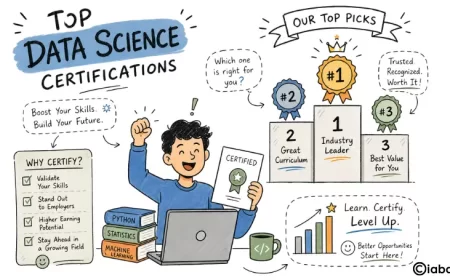
That’s why a Data Analyst Certification, like the one offered by IABAC (International Association of Business Analytics Certifications), is so valuable.
It gives structure to your learning and shows employers that you’ve gone through proper training to understand real-world analytics. IABAC’s Certified Data Analyst program teaches not just tools like Python, SQL, and Power BI, but also how to think critically, communicate insights clearly, and apply data skills to solve real business challenges.
So, if an interviewer asks:
Why did you pursue a Data Analyst Certification?
You can say:
Because I wanted to move from guessing to making decisions based on real evidence — and IABAC helped me learn how to do that confidently.
Common Interview Questions for a Data Analyst
Let’s look at some of the most common questions you’ll face — and what goes on inside your head when they’re asked.
Question 1: Explain the data analysis process.
Thoughts: “How do I summarize months of work in two minutes?”
Answer Tip: Explain the six main steps: define the problem, collect data, clean it, analyze, visualize, and interpret.
If you can, give an example like “I analyzed customer churn data to understand why people were leaving.”
Question 2: How do you handle missing or messy data?
Thoughts: “By crying quietly… and then using pandas.”
Answer Tip: Talk about how you identify missing data, decide when to remove or fill it, and how you make sure your analysis stays accurate.
Question 3: Which tool do you prefer — Tableau or Power BI?
Thoughts: “Whichever one crashes less.”
Answer Tip: Explain that tool choice depends on the project.
Say something like: “If a company uses Microsoft tools, Power BI is ideal. For broader visualization needs, Tableau works better.”
Question 4: What’s the difference between descriptive, diagnostic, and predictive analytics?
Answer Tip:
- Descriptive – What happened
- Diagnostic – Why it happened
- Predictive – What is likely to happen next
Question 5: Tell us about a time when your analysis changed a business decision.
Answer Tip: Share a small story.
Example:
“I found that 20% of customer drop-offs came from slow delivery. After improving the process, customer satisfaction increased by 30%. That’s when I realized data can bring real human impact.”
Data Analytics for Managers: Why It’s Important
If you’re leading a team, learning Data Analytics for Managers helps you make better, data-driven decisions.
Instead of saying, “I think sales are down,” you can say, “The Q3 data shows a 10% drop in repeat customers.”
Managers who understand data encourage teams to make informed choices. They build trust, communicate better, and create a culture where ideas are supported by facts. That’s what makes the IABAC Data Analytics for Managers program so useful — it helps leaders combine strategy with data understanding.
What Makes a Great Data Analyst?
A great data analyst isn’t the one who knows every coding trick.
It’s the one who can explain data in a way that makes people care.
The best data analysts share these qualities:
- Curiosity: They keep asking “why?” until they find the real reason.
- Clarity: They explain complex things simply.
- Honesty: They present data truthfully, even if it’s not what people want to hear.
- Empathy: They see the human side of every number.
They combine logic with storytelling.
The Future of Data Analysts in 2026
The demand for data analysts is growing across industries.
By 2026, companies will need professionals who can not only analyze data but also understand how to work with new tools and technologies like AI-assisted analytics.
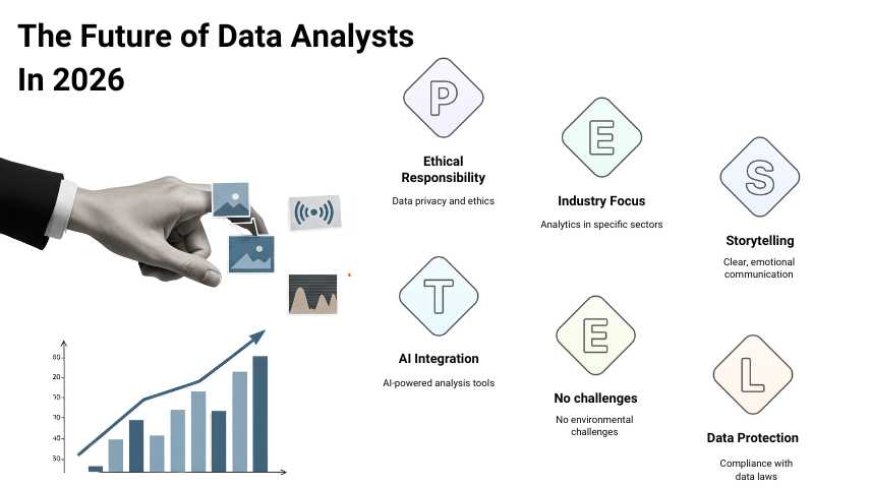
Here’s what defines the top data analysts of the near future:
- Tech-Smart: They know tools like SQL, Python, and visualization platforms.
- AI-Ready: They use AI tools to support their analysis and save time.
- Industry-Focused: They understand how analytics works in finance, healthcare, marketing, or manufacturing.
- Storytellers: They turn charts into clear, emotional stories that drive action.
- Ethical Thinkers: They protect data privacy and use data responsibly.
The Data Analysis Process
Every data analyst follows a process that feels like a small adventure:
- Define the problem: What are we trying to understand?
- Collect data: Where can we find the information?
- Clean data: Fix missing or incorrect data.
- Analyze: Use tools to find insights and trends.
- Visualize: Create charts or dashboards that explain findings clearly.
- Interpret: Share insights and make suggestions.
Behind every number, there’s a story — and a data analyst brings that story to life.
Career Paths: Finance and Healthcare Analytics
Finance Analytics Professional
Finance analysts read the numbers that show how a business is performing.
They help predict market changes, reduce risks, and make better investment decisions.
With new tools and AI models, they can now make predictions faster and more accurately than ever.
Healthcare Analytics
In healthcare, data helps save lives.
Analytics professionals study patient information, hospital efficiency, and treatment results to improve care.
By 2026, data analysts will play a big role in predicting health trends and improving patient experiences.
Intelligence in Data Interviews
Many candidates focus only on technical answers during interviews.
But emotional intelligence — the ability to connect, communicate, and share your story — often makes the real difference.
Instead of saying:
I used machine learning to predict churn.
Try saying:
Our first model failed, but I reviewed the data, learned from mistakes, and eventually helped reduce churn by 18%. It taught me that data doesn’t fail — assumptions do.
This shows persistence, learning, and heart — qualities every employer values.
Why Every Professional Should Learn Data Skills
Soon, every role — from marketing to management — will require some level of data understanding.
That’s why programs like Certified Data Analyst and Data Analytics for Managers by IABAC are so helpful.
They help professionals read data with confidence, ask better questions, and make smarter choices.
Become the Analyst Who Makes Data Speak: Start with the Right Certification
Data doesn’t speak — people do.
And that’s the true power of a data analyst: to give data a human voice.
Behind every number is a story — a customer, a challenge, a success.
The job of a data analyst is to understand that story and share it clearly.
So, when someone in your next interview asks,
Tell me about a difficult data project,
Smile and say,
Once upon a dataset…
Because in the end, great analysts are great storytellers — they mix logic, creativity, and emotion to make data meaningful.
This article celebrates the journey of becoming a data analyst — from nervous interviews to proud achievements. Organizations like IABAC make that journey easier with structured learning, global recognition, and certifications such as Certified Data Analyst, Finance Analytics Professional, and Data Analytics for Managers.