




















































Artificial Intelligence Expert's View on the Future of AI
Learn about the future of AI, including automation, ethical challenges, and its potential to revolutionize industries, daily life, and global innovations.

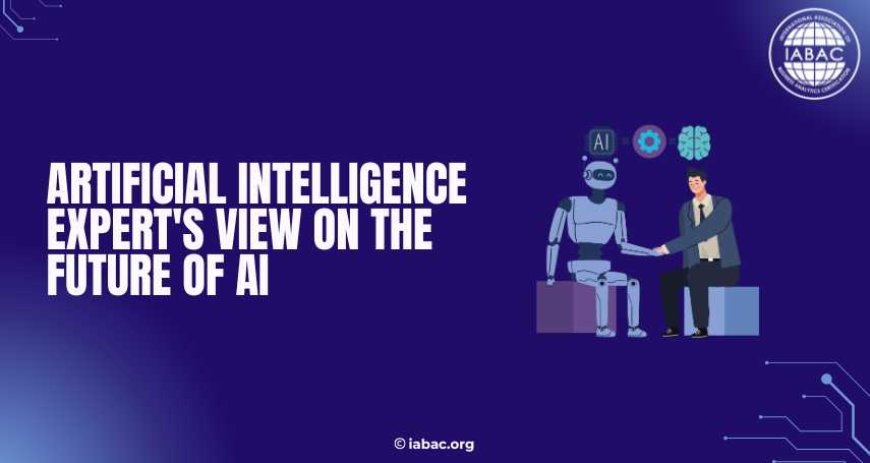
Artificial intelligence has already entered our everyday lives and is no longer a sci-fi idea. AI technology is quickly changing sectors, opening up new opportunities, and influencing the future through anything from voice assistants to self-driving automobiles. As an AI expert, I've had the honour of witnessing firsthand how AI has developed and the amazing possibilities it presents. I'll discuss my thoughts on AI's future, what to expect in the upcoming years, and the ethical implications of this revolutionary technology.
The Current State of AI
Understanding where we are now is important before going into what AI's future holds. AI has advanced significantly over the past few decades, especially in the fields of deep learning and machine learning. Without human assistance, these technologies enable machines to learn from enormous volumes of data and draw conclusions.
Many facets of our lives now incorporate AI. AI is playing a vital role in improving the accuracy and efficiency of operations, whether it is in the form of product recommendations on e-commerce websites, financial transaction fraud detection, or medical diagnosis assistance. But even with these developments, artificial intelligence will still be a long way from reaching human-level intelligence across the board.
The Future of AI: What to Expect
The potential of artificial intelligence is almost limitless as we look to the future. Although it is difficult to forecast the future of any technology, there are a few distinct patterns and advancements that we can anticipate over the course of the next ten years.
1. AI Will Become More Integrated Into Everyday Life
AI will become progressively more integrated into our everyday lives in the future. Imagine AI-powered gadgets in your smart home that can predict your requirements and change the lighting, temperature, or even place your grocery order. Artificial intelligence will make personal assistants smarter by learning from your preferences and habits to provide more effective and individualised help.
Additionally, as AI advances in healthcare, physicians will be able to provide more individualised treatment plans and make better diagnoses. AI technologies will track patients' health in real time and anticipate problems before they become serious.
2. More Human-Like Interaction with AI
AI will be able to interact with people more intuitively and naturally as Natural language processing (NLP) technology advances. Voice assistants will be able to understand context, emotions, and subtle conversational nuances in addition to our commands.
Chatbots driven by AI are currently being utilised in customer support, but more complex interactions could be possible in the future. Longer, more meaningful discussions will be possible with these AI systems, giving consumers experiences that are more like those of a human.
3. AI-Powered Automation Will Revolutionize Industries
The potential of artificial intelligence to automate entire industries is among its most exciting prospects. Automation will increase productivity and decrease human error in jobs that were previously laborious or time-consuming.
Robots with artificial intelligence will perform intricate tasks quickly and accurately in sectors like manufacturing. Autonomous vehicles will improve the safety and efficiency of commutes. AI will be used in finance to manage investments, spot market trends, and automate repetitive processes like accounting and auditing.
Even if automation could improve productivity, there will be drawbacks, especially in terms of job displacement. Remaining relevant in an AI-driven society will require workers to adapt by learning new skills.
4. AI Will Drive Personalized Learning and Education
AI will improve accessibility and personalisation of learning in the field of education. AI-powered systems will assess students areas of strength and weakness and provide individualised learning materials that accommodate different learning preferences.
AI-powered tutoring programs that offer real-time feedback and recommend resources to help students who are having trouble in a particular subject, for instance, can be beneficial. By providing affordable, scalable learning solutions, AI can also aid in closing educational disparities, especially in developing nations.
5. Ethical AI and Regulation Will Be a Key Focus
The increasing prevalence of AI technology presents significant ethical and regulatory issues. How can we guarantee the impartiality and fairness of AI systems? How can we stop AI from being misused for nefarious ends like disinformation campaigns or surveillance?
Governments and regulatory agencies will eventually have to impose stringent rules for the creation and application of AI. The development of open, understandable AI systems that the general public can trust will be given top priority.
Research on AI ethics will also be crucial. To guarantee that AI helps everyone equally and does not unintentionally perpetuate societal inequities, developers will endeavour to create algorithms that are moral, open, and unbiased.
Key Areas of Focus for Future AI Development
Even though artificial intelligence has a bright future, a few critical areas will be essential to its continuing advancement.
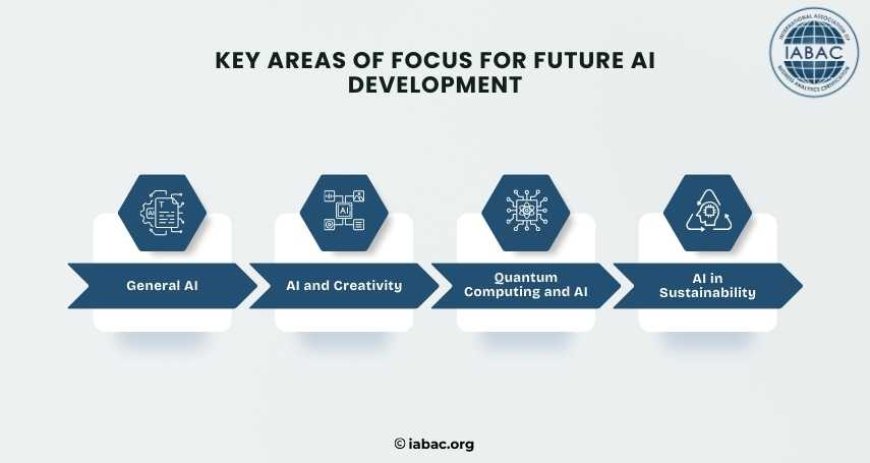
1. General AI: Moving Beyond Narrow AI
The majority of AI systems in use today are "narrow" AI, which means they are made to carry out particular functions, such as making product recommendations, translating languages, or identifying illnesses. The ability of a machine to carry out any intellectual work that a human can, known as real artificial general intelligence (AGI), is still a long way off.
Even though it's unknown when we will reach this milestone, research on AGI is still ongoing and will play an important part in the development of AI in the future. If successful, AGI would represent a significant advancement in our knowledge of intelligence and transform every industry, from healthcare to creativity.
2. AI and Creativity: A New Era of Innovation
AI's application in creative industries is expanding quickly. AI is already being used to create literature, art, and music. AI will eventually prove to be a very useful tool for musicians, writers, and artists, assisting them in generating drafts, generating concepts, and exploring new creative possibilities.
AI may also help scientists by finding patterns in data that humans might overlook, which could result in advances in industries like space exploration, energy, and medicine.
3. Quantum Computing and AI
The possible collaboration between machine learning and quantum computing is among the most intriguing advancements in artificial intelligence. The capacity of quantum computers to process enormous volumes of data at extraordinarily fast rates has the potential to greatly improve the capabilities of AI systems.
AI may be able to employ quantum computing to solve issues that are currently unsolvable by traditional computers, like enhancing weather forecasting models, simulating molecular interactions for drug discovery, and optimising complicated systems.
4. AI in Sustainability and Climate Change
AI innovation will also be fuelled by the worldwide emphasis on sustainability. Some of the most important issues facing the globe today, such as resource management, energy use, and climate change, can be addressed with AI. AI can forecast extreme weather events, optimise energy infrastructures, and find waste reduction strategies by analysing environmental data.
AI is an important tool in the fight against climate change since it can help in the creation of new materials, clean energy sources, and sustainable farming methods.
AI has a bright but uncertain future. The possibilities are endless, ranging from self-governing systems to creativity powered by AI. As we keep expanding the capabilities of AI, it's critical to concentrate on developing moral, just, and open AI systems that are advantageous to all.
AI will play an important part in transforming industries, enhancing people's lives, and resolving global issues in the years to come. To fully utilise AI for the benefit of society, it will be essential to accept these changes while keeping in mind the consequences.