























































What Are the Benefits of Artificial Intelligence
Artificial intelligence offers powerful benefits, including automation, smarter decisions, cost savings, and innovation across businesses, healthcare, and daily life.

Artificial Intelligence (AI) offers numerous benefits, including improved efficiency, smarter decision-making, enhanced customer experiences, and transformative innovations across industries. From business operations to healthcare, education, and everyday life, AI helps automate tasks, analyze vast amounts of data, reduce errors, and create faster, more intelligent solutions.
As AI technologies continue to evolve, their impact is becoming increasingly visible in how we work, communicate, and solve problems. Understanding the benefits of artificial intelligence helps individuals and organizations adapt to a more data-driven and technology-powered world.
What Are the Main Benefits of Artificial Intelligence?
Artificial intelligence provides several powerful advantages:
-
Improves efficiency and automation
-
Enables data-driven decision-making
-
Reduces human errors
-
Enhances customer experiences
-
Strengthens security and fraud detection
-
Drives innovation and scalability
These benefits explain why AI adoption is rapidly growing across sectors.
Understanding Artificial Intelligence
Artificial intelligence refers to the ability of machines and software systems to perform tasks that typically require human intelligence. These tasks include problem-solving, pattern recognition, language understanding, learning from data, and decision-making.
Unlike traditional programs that follow fixed instructions, AI systems can analyze data, identify patterns, and improve their performance over time. This adaptive capability makes AI highly valuable for complex and dynamic environments.
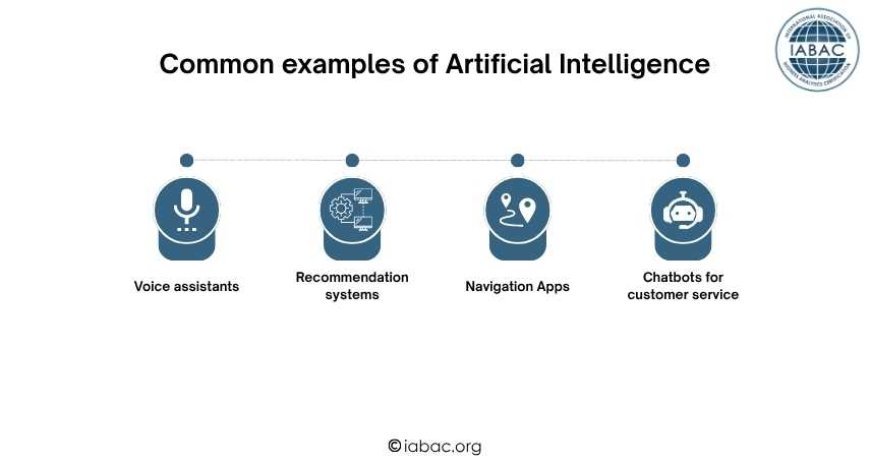
Common Examples of Artificial Intelligence
AI is already integrated into many familiar technologies:
-
Voice assistants – Google Assistant, Alexa, Siri
-
Recommendation systems – Netflix, YouTube, Amazon
-
Navigation apps – Google Maps traffic prediction
-
Customer service chatbots – 24/7 automated support
These applications demonstrate AI’s practical, everyday relevance.
Key Benefits of Artificial Intelligence
1. Increased Efficiency and Productivity
One of the most significant benefits of artificial intelligence is automation. AI systems can execute repetitive and time-consuming tasks faster and more accurately than humans.
In workplaces, AI can automate data processing, scheduling, reporting, and customer interactions. In manufacturing, AI-powered robots perform precise assembly operations with consistency.
This leads to:
-
Faster task completion
-
Reduced operational delays
-
Improved workforce productivity
2. Smarter Decision-Making and Risk Detection
AI excels at analyzing large volumes of data in real time. By identifying hidden patterns and correlations, AI supports better and more informed decisions.
For example:
-
Banks use AI to detect unusual transaction behavior
-
Businesses use AI to forecast trends
-
Healthcare providers use AI for predictive diagnostics
AI reduces decision errors and enhances strategic planning.
3. Enhanced Customer Experience
AI enables personalization at scale. Platforms like Netflix and Amazon use AI algorithms to recommend content and products based on user behavior.
AI-powered chatbots and virtual assistants:
-
Provide instant responses
-
Offer round-the-clock support
-
Improve service efficiency
This improves customer satisfaction while reducing service costs.
4. Better Healthcare Outcomes
Artificial intelligence is revolutionizing healthcare by assisting with diagnostics, medical imaging analysis, and treatment planning.
AI can:
-
Detect diseases earlier
-
Analyze MRI and X-ray scans
-
Monitor patient data continuously
AI also accelerates drug discovery by processing complex biological data.
5. Safer and Smarter Transportation
AI plays a critical role in transportation safety and efficiency. Autonomous vehicles use AI to interpret sensor data and navigate environments.
Beyond self-driving cars, AI supports:
-
Traffic flow optimization
-
Predictive maintenance
-
Flight safety improvements
This reduces congestion and enhances travel safety.
6. Improved Security and Fraud Prevention
AI is a major asset in cybersecurity and fraud detection. AI systems monitor digital activity to identify threats and anomalies.
Common applications include:
-
Intrusion detection systems
-
Phishing and scam prevention
AI helps organizations respond to threats faster and more effectively.
7. Cost Savings for Businesses
AI reduces operational costs by improving efficiency, minimizing errors, and enabling predictive maintenance.
For example:
-
Predicting equipment failures
-
Optimizing supply chains
-
Reducing waste
Businesses benefit from improved resource allocation and reduced downtime.
8. Encourages Innovation
AI accelerates innovation across industries. It supports creative fields, scientific research, and technological development.
AI applications include:
-
Content generation
-
Scientific modeling
-
Product optimization
AI empowers organizations to experiment and innovate more rapidly.
9. Accessibility and Inclusivity
AI technologies help remove barriers for individuals with disabilities and language differences.
Examples include:
-
Voice recognition tools
-
Real-time translation systems
-
Image recognition assistance
AI contributes to a more inclusive digital environment.
10. Environmental Benefits
AI helps optimize resource usage and sustainability efforts.
AI supports:
-
Smart energy management
-
Agricultural optimization
-
Climate monitoring
This promotes efficiency and environmental protection.
Benefits of Artificial Intelligence for Students
Artificial intelligence is transforming education by enabling more personalized and engaging learning experiences.
1. Personalized Learning
AI systems adapt to individual learning speeds and preferences, offering customized exercises and materials.
2. Smart Tutoring Systems
AI-powered tutors provide instant feedback and assistance, supporting students beyond classroom hours.
3. Improved Access to Education
AI helps bridge geographical and language barriers through translation, speech recognition, and digital learning tools.
4. Better Time Management
AI-based planners and assistants help students organize schedules and academic tasks.
5. Enhanced Engagement
AI supports interactive learning through gamification and immersive technologies.
6. Career Guidance
AI tools analyze skills and interests to suggest suitable career paths.
Faqs
What is the biggest benefit of artificial intelligence?
AI’s primary advantage is automation combined with intelligent data analysis, enabling faster and more accurate processes.
How does AI help businesses?
AI improves efficiency, reduces costs, enhances decision-making, and strengthens customer experiences.
Does AI replace human jobs?
AI often reshapes job roles rather than eliminating them, creating new technology-focused opportunities.
How does AI impact daily life?
AI powers recommendations, navigation, smart assistants, and numerous digital services.
Artificial intelligence continues to reshape industries, improve productivity, and unlock new possibilities across business, healthcare, education, and everyday life. Its ability to automate processes, analyze data, and enhance decision-making makes AI a powerful driver of innovation and growth.
Understanding the benefits of artificial intelligence enables individuals and organizations to adapt and thrive in an increasingly technology-driven world.
For those interested in building expertise in this rapidly evolving field, pursuing an artificial intelligence certification can provide valuable skills and credibility.