
















































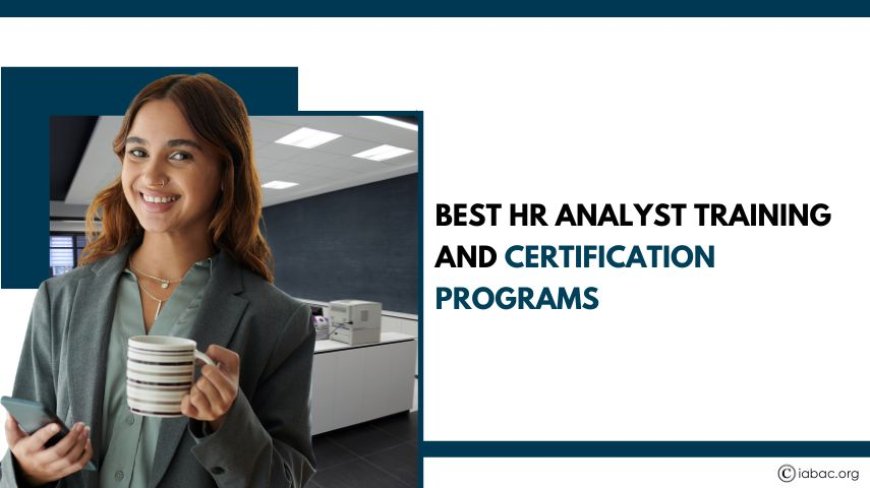
Best HR Analyst Training and Certification Programs
Find the best HR analyst training and certification programs. Gain skills in HR analytics, data-driven decision-making, and boost your HR career prospects.

HR is not just about recruitment, payroll, or compliance. Modern HR uses data to make smarter decisions about hiring, employee performance, and overall workforce management. This shift has created opportunities for professionals known as HR Analysts — people who combine HR knowledge with data skills to help organizations make better decisions.
If you want a strong HR career or want to move into an analytical role, taking HR Analyst training and certification programs is a smart choice.
Who is an HR Analyst?
An HR Analyst, also called a Human Resources Analyst or HR Data Analyst, is someone who collects, organizes, and examines HR-related data to provide useful insights. These insights help organizations improve key HR processes like:
|
HR Function |
What HR Analysts Check |
Why It Matters |
|
Recruitment |
Time to hire, offer acceptance rates |
Helps hire faster |
|
Workforce Planning |
Employee retention, skill gaps |
Makes staffing better |
|
Performance Management |
Productivity and goal tracking |
Improves employee performance |
|
Compensation Analytics |
Pay fairness, bonus return on investment |
Sets fair salaries and bonuses |
|
Employee Engagement |
Surveys and sentiment analysis |
Increases employee satisfaction |
The HR Analyst acts as a link between HR operations and business decisions. With the right Data Analytics Foundation, HR Analysts can play a key role in improving company results.
Why HR Analytics is a Good Career Choice
More and more companies are using Data Analytics for Managers to make decisions about hiring, retention, and performance. HR Analytics is growing because:
- Companies want to make decisions based on data instead of just experience.
- HR processes are becoming digital and automated.
- Companies need accurate employee planning.
- AI and software tools are helping HR teams work smarter.
Programs like Data Analyst Certification help HR professionals move into analytics roles while building confidence in handling real HR data.
Skills Needed to Become an HR Analyst
To be a successful HR Analyst, you need a mix of HR knowledge and data skills. Here’s a simple roadmap:
|
Skill Area |
Skills You Need |
|
HR Knowledge |
Recruitment metrics, payroll, performance KPIs |
|
Analytics Basics |
Understanding data, interpreting charts and reports |
|
Tools & Software |
Excel, Power BI, Tableau, SQL basics |
|
Business Insights |
HR reporting, KPI dashboards |
|
Managerial Reporting |
Executive-level insights for managers |
|
Certification Path |
Data Analyst Certification, Data Analytics Foundation |
These skills help you analyze HR data and present clear, useful insights to managers.
Why Take HR Analyst Certification Programs
- Better Career Growth – Certified HR Analysts are preferred for analytical HR roles.
- Higher Salaries – HR Analysts often earn more than traditional HR staff.
- Expanded Job Roles – You can work as an HR Data Analyst, Workforce Planning Specialist, or Talent Analytics Advisor.
- Global Recognition – Certification gives credibility and shows your skills to employers worldwide.
- Skills for Other Fields – Analytics knowledge can help you move into areas like Finance Analytics Professional or Healthcare Analytics Professional.
Who Should Join HR Analyst Training Programs?
These programs are suitable for:
- HR professionals who want to learn data skills
- Fresh graduates entering HR roles
- Data professionals looking to specialize in HR
- Managers wanting to use data for better decisions
- Anyone interested in combining HR knowledge with analytics
Career Opportunities After HR Analyst Certification
|
Job Role |
Growth Level |
What You Do |
|
HR Data Analyst |
High |
Work with HR data, reports, and dashboards |
|
Workforce Analytics Manager |
Medium |
Lead HR strategies using data |
|
HR Reporting Specialist |
Medium |
Track HR metrics and make dashboards |
|
HR Analytics Consultant |
High |
Advise companies on HR data and improvements |
|
People Operations Analyst |
Medium |
Combine HR and operations using analytics |
What You Learn in HR Analyst Training
Most HR Analyst Certification Programs cover:

Tools You’ll Use
- Excel – Advanced HR data analysis
- Power BI / Tableau – HR dashboards
- SQL – Querying HR data
- Python (optional) – Advanced analytics and automation
- HR Software Tools – Integrating with HRMS systems
Benefits of HR Certifications
|
Benefit |
How It Helps You |
|
Industry Recognition |
Shows employers you have verified skills |
|
Hands-On Experience |
Work with real HR data and create dashboards |
|
Better Decision-Making Skills |
Learn how to provide insights to managers |
|
Opportunities in Other Fields |
Move into finance, healthcare, or general analytics |
Future of HR Analytics
HR Analytics is here to stay. As automation and AI tools grow, HR teams will need professionals who can interpret employee data and guide decisions. Future HR roles will rely on insights from data, and HR Analysts will be a key part of company strategy.
Predicted HR Trends
|
Trend |
How It Helps |
|
Predictive Attrition Models |
Identify employees likely to leave |
|
AI in Hiring |
Use machine learning for better recruitment |
|
Sentiment Analysis |
Understand employee feedback |
|
Pay Analytics |
Ensure fair compensation |
|
Skills Tracking Dashboards |
Monitor employee skills in real-time |
Certification Path for HR Analysts
A good path to becoming an HR Analyst:
- Data Analytics Foundation Certification
- HR Analyst / HR Data Analyst Certification
- Data Analytics for Managers – Learn management-level reporting
- Optional Advanced Certifications – Finance Analytics Professional, Healthcare Analytics Professional
- Portfolio Development – Show dashboards, reports, and HR analytics projects
Your HR Analyst Career Journey
- Learn HR metrics and KPIs
- Build analytics skills
- Create dashboards and reports
- Earn HR Analyst Certification
- Apply skills in real HR roles
- Grow into leadership roles in HR analytics
Becoming an HR Analyst is a smart move for anyone in HR or data roles. Companies want professionals who can combine HR knowledge with data insights to improve workforce planning, performance, and engagement. With structured training and certifications, you can gain skills, build credibility, and open doors to exciting career opportunities in HR analytics and related fields.