
















































Career Opportunities After an HR Analytics Course
Explore top career opportunities after completing an HR Analytics course, including roles like HR Analyst, Data Scientist, and HR Strategy Consultant.

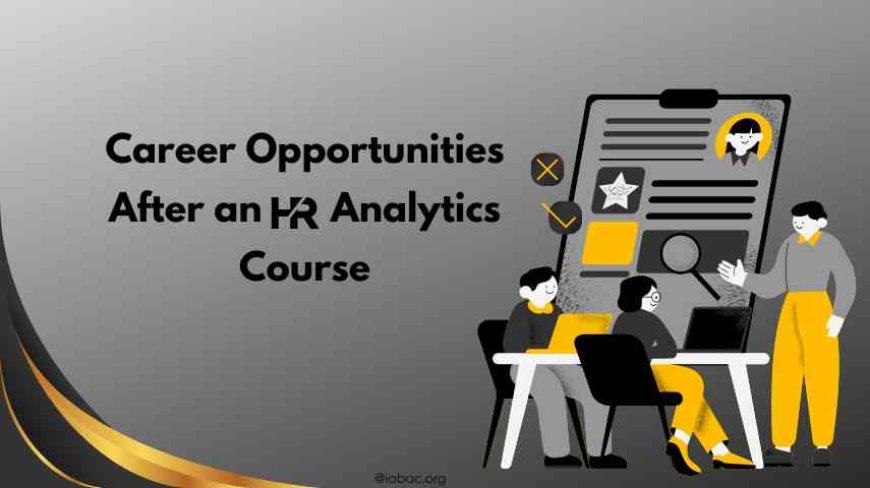
As companies rely more on data for decision-making, the need for HR professionals with analytics skills is growing fast. An HR Analytics Course teaches how to use workforce data to predict trends and improve HR processes. It goes beyond traditional HR by providing tools to make hiring more effective, boost employee engagement, and support strategic decisions.
Finishing an HR Analytics Course can lead to various job roles like HR Analyst, People Analytics Specialist, and HR Data Scientist. These positions are key to helping companies make better decisions about their workforce. If you aim to grow in HR, learning HR analytics is a strong move for future career growth.
How HR Analytics is Changing Workforce Management
HR analytics is changing how companies manage their workforce by using data to make better decisions. Here's how it's improving talent management:
- Improved Hiring: HR analytics helps companies track where candidates are coming from and hiring patterns, making recruitment more efficient. Many professionals are taking an HR Analytics Course to understand these trends better.
- Monitoring Employee Performance: HR analytics tools allow companies to check employee performance in real time, helping identify top performers and those needing more support. This boosts productivity. Data Analytics for Managers is helpful for managers to use these insights effectively.
- Retention Strategies Based on Data: By analyzing data, companies can find out why employees leave and create strategies to keep them. Courses like Certified Data Analyst or Certified Finance Analytics Professional teach these skills.
- Better Workforce Planning: Predictive analytics, supported by a Data Analyst Certification, helps companies forecast staffing needs and fill skill gaps. This planning is important in fields like finance (Certified Finance Analytics Professional) and healthcare (Certified Healthcare Analytics Professional).
Taking an HR Analytics Course or Data Analytics Foundation is crucial for anyone looking to use data analytics in workforce management and make smart decisions.
The Gap Between Data and HR Decision-Making: A Growing Problem
HR teams are gathering more data than ever, but many struggle to turn that data into useful decisions. This problem shows the need for HR professionals to learn new skills, which they can get through an HR Analytics Course. Here are some of the common challenges HR teams face when trying to close this gap:
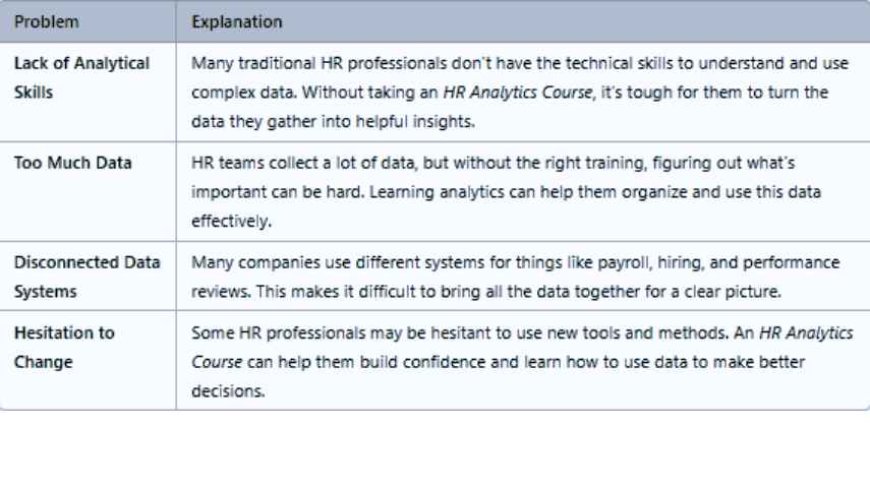
To fix these issues, HR professionals need to gain the skills and tools that will help them understand data and make better choices for their teams.
What Career Opportunities Can You Pursue After an HR Analytics Course?
Completing an HR Analytics Course can lead to various career opportunities in data-driven HR. With the skills you gain, you can work as an HR Analyst or People Analytics Specialist, where your role will involve analyzing employee data to improve hiring, retention, and performance strategies.
This course also prepares you for roles like a Certified Data Analyst or Certified Finance Analytics Professional, helping companies optimize salaries, benefits, and budgets through data insights.
For those in management, courses like Data Analytics for Managers help build the skills to make better decisions based on workforce data. If you’re interested in healthcare, you can aim for a position as a Certified Healthcare Analytics Professional, applying data to improve staff management in healthcare settings.
Whether you’re looking to build a solid base with the Data Analytics Foundation or pursue advanced certifications like the Certified Finance Analytics Professional, an HR Analytics Course equips you with the tools to thrive in these in-demand fields. These career paths focus on improving HR processes using data, making them essential for today’s organizations.
How Analytics Skills Can Open New HR Opportunities
Today, Human Resources (HR) roles have moved beyond traditional tasks. Now, HR professionals play a big part in business success by using data to make better decisions. With analytics skills, HR has become a growing field, offering more advanced roles in areas like talent management, workforce planning, and employee engagement. This blog will explain how HR professionals can take advantage of these opportunities by building analytics skills, earning certifications, and becoming valuable assets to their organizations.
The Role of HR Analytics
HR analytics uses data to improve workforce-related decisions. This helps HR teams make informed choices about hiring, employee retention, and performance. By using analytics, HR professionals can provide insights that help make the entire organization run more smoothly. As a result, new HR roles have emerged, focusing on talent data, predicting workforce needs, and improving employee experiences.
HR Jobs in High Demand for Analytics Skills
- HR Data Analyst: Gathers and analyzes workforce data to help make decisions. They use data to predict hiring needs, check employee engagement, and improve HR tasks.
- Workforce Planning Specialist: Uses data to predict future workforce needs, helping identify skill gaps and ensuring HR strategies fit the company’s long-term goals.
- Talent Analytics Manager: Applies advanced data analysis to improve hiring, retention, and employee performance, offering insights to business leaders.
- HR Business Partner with Data Skills: Works with department leaders to ensure data is used in overall business plans.
- Employee Experience Analyst: Studies employee feedback and engagement data to improve workplace culture and keep employees happy.
These roles offer good salaries and place HR professionals in key positions within their organizations, giving them more influence and career growth opportunities.
Why Analytics Certifications Are Important for HR
To stand out in the job market and get better HR positions, certifications in analytics and related areas are important. These certifications show you have the skills needed to stay competitive. Here are some key certifications for HR professionals:
- Machine Learning Certification: Machine learning is changing how HR teams predict workforce needs. This certification proves you can use AI models to improve hiring and retention.
- Artificial Intelligence Certification: AI is becoming more common in HR, automating tasks like resume reviews and performance tracking. This certification will help you use AI in HR tasks.
- Artificial Intelligence Foundation: A basic AI certification is perfect for HR professionals wanting to understand the basics of AI and how it can be used in HR.
- Certified Machine Learning Associate: This certification teaches the technical skills needed to use machine learning in HR analytics, improving talent management.
- Certified Artificial Intelligence Expert: This advanced certification helps HR professionals lead AI projects in workforce analytics, predicting trends and employee behavior.
IABAC: Your Path to HR Analytics Expertise
The International Association of Business Analytics Certification (IABAC) offers globally recognized certifications in analytics and machine learning. These certifications are designed to give HR professionals the skills they need to meet real business demands.
IABAC offers training through its Authorized Training Provider (ATP) program, which partners with global education providers to offer high-quality training in Data Science and Business Analytics. The program follows the European Commission's EDISON Framework, making sure the training meets international standards and prepares HR professionals for global success.
Becoming IABAC-certified will help you stand out in the job market, showing that your analytics skills are trusted worldwide.
Where to Find Certifications
For HR professionals wanting to improve their skills, IABAC offers a range of certifications in data analytics and AI. Whether you're new to analytics or looking to advance your skills, these certifications can help you qualify for higher-level HR roles. Visit IABAC's website to explore certifications in AI, machine learning, and HR analytics.
Why IABAC Certifications Are Worth It
- Recognized Worldwide: IABAC certifications are trusted by companies globally, giving you credibility.
- European Standards: Courses follow international standards, ensuring they’re high quality and relevant.
- Career Growth: Whether you're aiming for management roles or want to specialize in analytics, IABAC certifications will give you the tools to succeed in the future of HR.
Building analytics skills is essential for HR professionals today. Those who embrace data-driven methods will be ready for new roles that make them key players in their organizations. Earning certifications from trusted sources like IABAC will help secure your career and ensure you stay ahead in a competitive job market. Now is the time to grow your skills in analytics and take advantage of the many career opportunities in HR. Explore IABAC’s certifications in AI, machine learning, and data analytics to take the next step in your career and become a valued part of any business.