











































Does Data Analytics Certification Improve Job Stability in the U.S.
Evaluate if a U.S. data analytics certification boosts job stability by examining market demand, employer needs, and career progression trends.


Jobs are changing quickly these days. Many people want to know how to keep their jobs or make their careers more secure. In tech and data jobs, things move fast. Skills that worked last year might not be enough now. That’s why many people are getting data analytics certifications to keep up.
But can a certification help you keep your job?
What Job Stability Means Today
Before, having a stable job often meant staying at one company for many years. Now, it’s more about having the right skills so you can find work, even if you change jobs or careers.
In data analytics, there are many job openings, but more people are also trying to get those jobs. The U.S. Bureau of Labor Statistics says data jobs will grow faster than many other jobs in the coming years. But to stay in these roles, you need to keep learning new things.
What Is a Data Analytics Certification?
A data analytics certification is proof that you’ve learned skills like:
-
Collecting and cleaning data
-
Using software like Excel, SQL, or Python
-
Creating charts and dashboards
-
Making data-driven decisions
You can get certified through online courses, universities, or companies like Google and Microsoft. These programs usually include hands-on projects and tests to check your knowledge.
To employers, certifications show:
-
You’ve taken time to learn useful skills
-
You understand how to use data in real situations
-
You’re serious about your career
Not every certification is the same, but a strong one from a trusted source can make a big difference in your resume.
Can Certification Help During Uncertain Times?
The U.S. economy can be unpredictable. Layoffs and job cuts have affected many industries. Even tech companies have let people go. Having a certification won’t protect you from all of that—but it might help you recover faster.
Here’s how:
-
Learning new skills helps you move into different roles when needed
-
Recent certifications show employers you’ve been actively improving
-
Certifications can help you change industries or move into better-paying jobs
For example, someone working in marketing who learns data analytics could switch to a data-focused role in another company. Certification gives that move more credibility.
What Do Employers in the U.S. Think About Certifications?
U.S. companies are starting to care more about what you can do, rather than just where you went to school. Many now follow a “skills-first” hiring process. That means if you have the right skills, you might get hired—even without a degree.
According to LinkedIn’s Workplace Learning Report, most hiring managers say they care more about skills than formal education. That’s good news for people who take online courses and earn certifications.
Employers often use certifications to:
-
Sort through many job applications
-
Compare two candidates with similar experience
-
Check if someone is ready to start working right away
If you’re applying for data jobs like business analyst, data analyst, or BI developer, having a recognized certification can improve your chances of getting noticed.
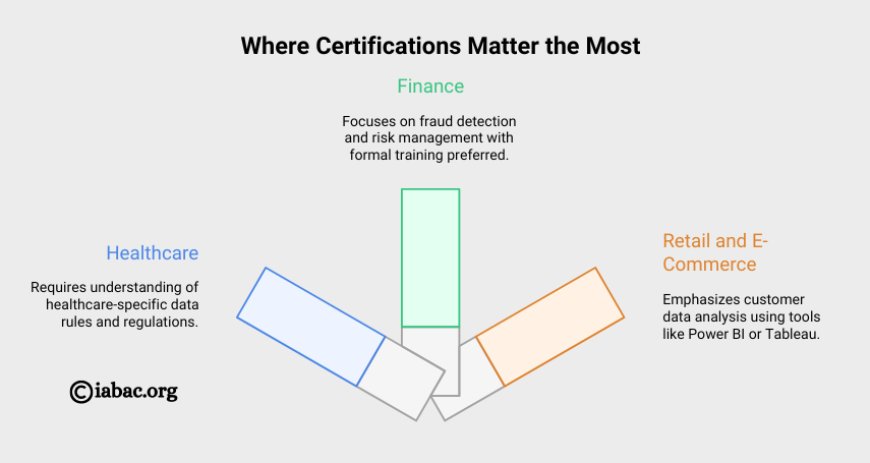
Where Certifications Matter the Most
Certifications are useful in many fields, but some industries rely on them more than others. Let’s look at where they can make a big difference in job stability.
1. Healthcare
In U.S. healthcare, data is everywhere—from patient records to hospital budgets. Certified data analysts help keep things running smoothly and legally. Employers often look for people who understand healthcare-specific data rules.
2. Finance
Banks and financial companies need certified professionals who can detect fraud, manage risks, and analyze customer behavior. They often prefer candidates who can show formal training through certification.
3. Retail and E-Commerce
These industries depend on customer data to make decisions. Analysts who understand tools like Power BI or Tableau are in high demand. Certification in these areas can lead to better job offers and more secure roles.
Long-Term Career Growth and Stability
Staying in a job for a long time depends on more than just doing your work well. It also depends on how much your skills match what the company needs.
Here’s how certifications help:
-
Stay updated with the latest tools and methods
-
Make it easier to move up in your company or into a new one
-
Show commitment to learning, which employers appreciate
Let’s say your current role is focused on Excel. By getting certified in SQL or Python, you can apply for more advanced roles. That kind of growth helps you stay valuable—especially during company changes or cutbacks.
What Certifications Can’t Do
It’s important to be realistic. Certification isn’t a magic fix. It won’t guarantee that you’ll never lose a job. It’s only one part of a bigger picture.
Here are a few things to keep in mind:
-
Quality matters. Not all certifications carry the same weight. Employers know the difference between well-known programs and low-effort courses.
-
Experience still counts. Real-world projects and results are important. Certification helps, but it doesn’t replace work history.
-
Soft skills aren’t included. Communication, teamwork, and problem-solving still matter—and they’re not something you can learn from a certificate alone.
That’s why you should see certification as a tool—not the whole toolbox.
Certification or College Degree?
Some people ask whether a certification is better than a college degree. The answer depends on your goals and situation.
Degrees are helpful for long-term academic or research careers. But for many business or tech roles, certifications are faster and more affordable. Some people use certifications to break into the field and then get a degree later. Others already have a degree and use certification to keep their skills fresh.
In the U.S., many employers now accept certification as a valid alternative to traditional education, especially for entry-level data jobs.
Is Certification a Good Strategy for Career Security?
Let’s go back to the original question: Does data analytics certification improve job stability in the U.S.?
The short answer: Yes, it can—but it depends on how you use it.
Certification can help you:
-
Show you’re learning and growing
-
Get interviews and job offers faster
-
Move between industries or job levels
-
Stay updated with the latest trends
But it’s not a guarantee. It works best when combined with:
-
Real work experience
-
Problem-solving and communication skills
-
A habit of continuous learning
If you’re in a field that’s growing or changing fast—like data analytics—getting certified is a smart step toward staying relevant and employable.
A Note on IABAC Certification
IABAC (International Association of Business Analytics Certifications) is one of the options for learning and getting certified in data analytics. It offers certifications in data and business analytics, with training available online and in the U.S.
Some people choose IABAC to build skills in tools like Python, Excel, and data visualization. It’s recognized in many countries, but like any certification, its value depends on your career goals and the job you’re aiming for.
You can explore U.S.-based IABAC courses here:
Final Thoughts
Jobs are always changing, so having current and flexible skills is a good way to stay safe in your career. A data analytics certification won’t guarantee a job forever, but it can help you stay in demand, move to new roles more easily, and find work faster if you lose a job.
If you’re planning for your future in the U.S., getting certified in data analytics is worth thinking about. It’s not just for finding a new job—it also helps you have more choices in your career.