
















































Confused About AI Certificates
Clear your doubts about AI certificates by understanding their types, benefits, and which one suits your career goals in the AI field.

Hey there, future AI learner!
You’re scrolling through your feed, and once again, someone’s showing off their AI certificate, sipping their coffee like building smart machines is part of their morning routine.
And you’re probably thinking:
“Do I need one of those AI Certificates too? Or is this just another internet trend, like fancy coffee in weird cups?”
Good question — and no, you’re not alone.
Whether you want to become a Certified Machine Learning Associate, you're curious about deep learning, or you just like how “AI ML” sounds in your profile, this blog will help you understand what AI certifications are, who they’re meant for, and how they can help you grow in your career.
No confusing terms. No tech talk. Just clear answers to help you decide if an AI certificate is right for you.
Wait, What Exactly Is an AI Certificate?
Let’s get this straight. An AI certificate is not a Hogwarts scroll for robots.
An Artificial Intelligence (AI) Certification is an official proof that you understand how AI works and can actually use it.
It shows that you’ve learned key skills like:
-
Machine Learning (teaching computers to learn from data)
-
Deep Learning (training models to recognize patterns, like faces or voices)
-
Data Analytics (finding useful insights from big piles of numbers)
An AI Certification proves you’re not just talking about AI — you can actually do it.
It’s a structured learning program that proves you’re not just randomly shouting “ChatGPT” and “TensorFlow” in meetings. It says:
“Hey, I actually know what artificial intelligence is. I’ve trained models, tuned parameters, and didn’t cry during backpropagation (much).”
These Artificial Intelligence Certifications cover things like:
- Machine learning (ML)
- Deep learning (DL)
- Neural networks (NN)
- Natural language processing (NLP)
- Generative AI
- And how to sound cool at tech meetups
Types of AI Certificates
Think of AI certification paths like a video game character selection. Each one comes with special powers and a learning curve.
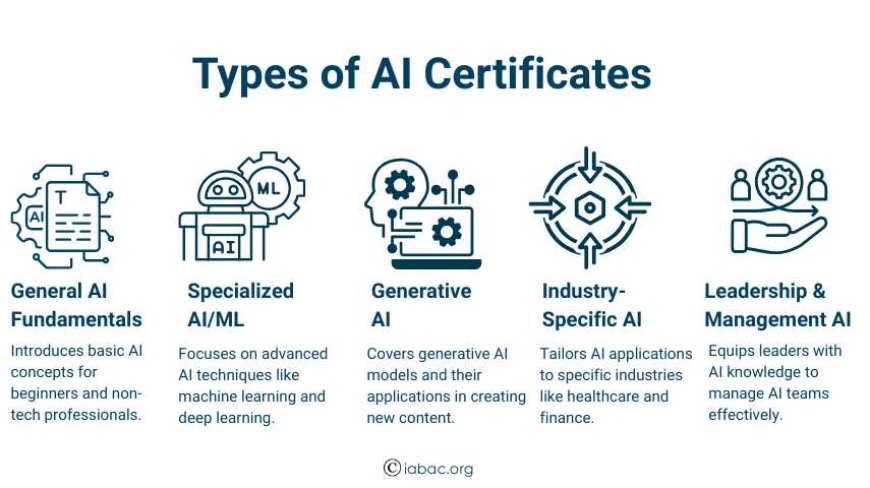
1. General AI Fundamentals (Newbie Mode)
Perfect for beginners or non-tech folks who think Python is still just a snake.
Good For:
- Business professionals
- Career switchers
- Curious cats
2. Specialized AI/ML Certificates (The Hacker Path)
These go deep. We’re talking machine learning, deep learning, AI in NLP, image recognition, etc.
Sample skills you’ll gain:
- How to train models without overfitting your sanity
- Hyperparameter tuning (sounds painful – it is)
- Data preprocessing without crying over missing values
3. Generative AI Certificates (The Cool Kid Route)
Want to build the next ChatGPT or deepfake your cat? Learn how generative AI works, including transformers, diffusion models, and ethical panic.
4. Industry-Specific Certifications (The Specialist)
Want to apply AI to healthcare, finance, cybersecurity, or agriculture?
These AI ML courses are tailored to specific sectors, so you can talk neural networks and crop yield predictions in the same breath.
5. Leadership & Management AI Certifications (The Boss Level)
For managers, PMs, or C-suite dreamers who need to understand AI, lead AI teams, and still have no idea how backpropagation works — and that’s okay.
Why Even Bother with an AI Certificate?
Okay, let’s be real for a sec. Do you need an Artificial Intelligence Certification to be successful?
No.
But do you need a license to drive a Ferrari through the job market at full speed?
Heck yes.
Here’s why getting certified in AI ML is like getting turbo boosters on your career:
|
Career Booster |
Why It Rocks |
|
Career Advancement |
You're 3x more likely to get noticed. Robots can’t brag – you can. |
|
Higher Salary |
Employers love acronyms: Certified Machine Learning Associate just sounds rich. |
|
Improved Job Performance |
Knowing what you're doing > Copying code from Stack Overflow. |
|
Industry Recognition |
Your LinkedIn headline goes from Student” to AI Expert in Progress. |
|
Bridging the Skills Gap |
Everyone’s screaming AI! – you’ll understand it. |
What’s the “AI Tinder Swipe Guide” All About?
Think of choosing the right AI Certification like creating a winning dating profile. It’s all about making the best first impression — but instead of matches, you’re attracting job offers.
Here’s how it works:
-
Your Certification = Your Profile Highlight
Just like a great photo or bio on Tinder, a good certification shows off your skills and boosts your credibility.
-
AI Helps You Pick Smarter
Tinder uses AI to boost visibility; you can use research to pick in-demand certifications that give you an edge.
-
Stand Out From the Crowd
A unique bio gets swipes. A niche, relevant certification gets attention from recruiters.
-
Build Trust
Verified profiles win in dating. Verified AI Certificates show employers you’re legit.
-
Boost Your Visibility
Tinder has “Boost” and “Super Likes.” You have certifications that speak directly to your target industry.
Pick the right certification like you’d pick your best profile photo — the one that gets attention, shows the real you, and opens the right doors.
AI ML Certification Matrix: What’s What
|
Level |
Focus |
Ideal For |
Example |
|
AI Fundamentals |
Core Concepts |
Beginners, Managers |
Explain neural nets to boss |
|
ML Associate |
Supervised/Unsupervised ML |
Tech Intermediates |
Predict pizza delivery time |
|
AI Expert |
Deep AI, GANs |
Advanced Learners |
GAN paints like Van Gogh |
|
Generative AI |
LLMs, ChatGPT, DALL·E |
Creative Devs |
AI writes poems, draws cats |
|
AI Leadership |
Strategy, Ethics |
PMs, Execs |
Lead AI team confidently |
AI Certification Course Fees in India
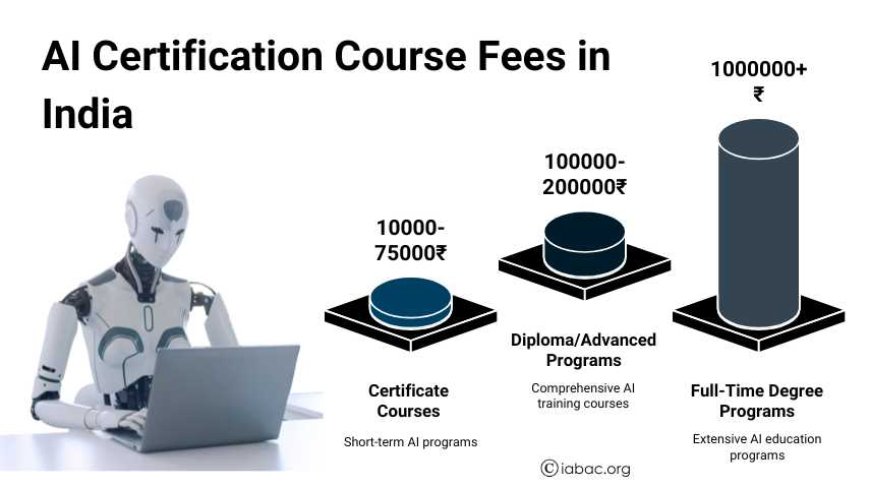
The cost of an AI certification course in India can vary a lot, depending on the type of program, how long it is, and where you study.
Average Fee Range:
- Certificate Courses: Typically between ₹10,000 to ₹75,000
- Diploma/Advanced Programs: Range from ₹1,00,000 to ₹2,00,000+
- Full-Time Degree Programs (Elsewhere): Can go up to ₹10,00,000+
Factors That Affect the Fee:
- Type of Program: Certificate courses (like Certified Machine Learning Associate) are more affordable
- Course Duration: Short-term courses cost less; long-term programs require higher investment
- Learning Mode: IABAC offers flexible online certification options, reducing travel and infrastructure costs
- Institution Recognition: IABAC certifications are respected by employers worldwide, adding long-term value
If you're looking for quality, hands-on, and industry-recognized AI Certificates without breaking the bank, IABAC offers a balanced, career-focused option.
How AI Certifications Help You Not Build Evil Robots
AI is everywhere. It’s picking your playlist, helping doctors diagnose diseases, and maybe even deciding whether your job application gets seen by a human.
Cool, right?
Also… kind of scary.
That’s why ethics in AI matters — and why smart developers today aren’t just learning how to code, but also how not to accidentally build the next Skynet.
So, where does one learn that?
Enter: AI Certifications — especially from awesome places like IABAC, which teach you how to be smart and kind to humanity.
Why Do We Even Need “Ethical” AI?
Great question.
Imagine this:
-
An AI program decides who gets hired — but oops, it only likes resumes with “John” in the name.
-
Another AI handles loan approvals — but doesn’t understand that women also buy houses.
-
And your facial recognition app? Yeah, it thinks your grandma is a chair.
See the problem?
Without ethical thinking, AI can be biased, unfair, or just plain wrong. And since these systems often make real-life decisions, developers need more than code skills — they need a conscience.
What AI Certifications (Like IABAC) Teach — Besides the Nerdy Stuff
Sure, you’ll learn about machine learning, data, and algorithms. But good certifications teach you how to build AI responsibly. Like this:
1. Everyone’s on the Same Page
Certifications give us a shared understanding of what "ethical AI" means — no more guessing or awkward Zoom debates. You'll learn about:
- Bias (and how to not bake it into your model like a birthday cake )
- Explainability (aka how to explain your model’s decisions without sounding like a mad scientist)
- Privacy by design (keeping data safe from nosy code)
- Accountability (you break it, you own it… even if it's AI)
2. It’s Not Just About Code — It’s About Thought
At IABAC, courses don’t just throw Python at your face and call it a day. They ask the real questions, like:
- “What happens if this system gets it wrong?”
- “Who might get left out?”
- “Is this AI helping people — or just helping someone make money?”
By the time you're done, you’ll be asking more thoughtful questions than a philosophy major at a coffee shop.
3. Real-Life Ethics, Not Boring Lectures
IABAC courses aren’t just textbooks and theory. You’ll dive into real case studies like:
- AI is messing up hiring decisions
- Predictive policing is going way off course
- Facial recognition tools failing on diverse faces
You'll learn what went wrong, and more importantly, how to do it better.
4. Staying Ethical Isn’t a One-Time Thing
Here’s the deal: Ethics isn’t like a badge you earn and forget. It’s something you keep up with — just like memes, software updates, and your favorite series.
That’s why IABAC encourages:
- Continual learning (you can’t pause progress, so why pause learning?)
- Community discussion (a.k.a. “Is this AI okay?” support group)
- Staying updated with laws and best practices (without needing a law degree)
Being Ethical Is Just Smart Business
Let’s be real — employers don’t just want coders who can loop and sort. They want AI professionals who think before they deploy, understand the risks, and care about the impact.
Certifications like IABAC don’t just make you smarter. They make you more trusted, respected, and ready for the real world of AI.
You’ll come out saying things like:
“My model is 92% accurate, fair across all groups, and doesn’t sell anyone’s grandma’s data.”
Now that’s impressive.