


















































Is a Data Science Certification Worth It in the USA Job Market
Explore if a data science certification is worth it in the U.S. job market. Understand career impact, job prospects, and hiring trends.

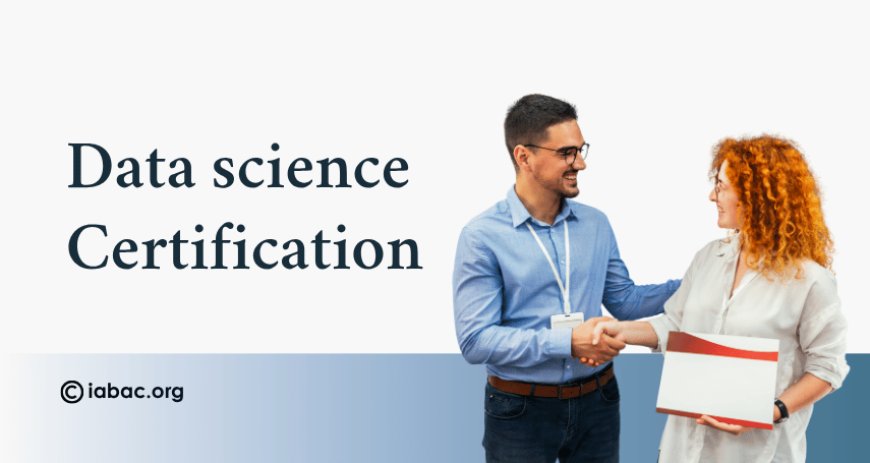
Data science is quickly becoming a popular career in the U.S. These days, almost every industry is using data to make smarter choices. Because of that, more companies are looking to hire people who know how to work with data.
So now, a common question people ask is: “Should I get a data science certification?” There are many options out there — online courses, bootcamps, and short programs that say they’ll teach you all the skills you need. But do these certifications actually help you get a job?
What Is Data Science?
Before we talk about certifications, it helps to understand what data science is.
Data science is the process of collecting, cleaning, analyzing, and making sense of data. Data scientists use tools like Python, SQL, and machine learning to find patterns and answer questions.
They work in all kinds of industries:
-
In healthcare, they help track disease trends.
-
In finance, they build models to detect fraud.
-
In marketing, they predict customer behavior.
-
In logistics, they forecast demand and optimize delivery routes.
Data science is a mix of coding, math, and business knowledge. It’s not just about numbers — it’s about solving real problems using data.
What Is a Data Science Certification?
A data science certification is a short training program that teaches the basics of working with data. These programs are usually offered by online learning platforms, bootcamps, or universities.
Most certifications cover topics like:
-
Python or R programming
-
SQL for working with databases
-
Data cleaning and preparation
-
Statistics and probability
-
Data visualization tools like Tableau or Power BI
Some programs include projects to practice your skills. Others offer career support like resume reviews and mock interviews. Most take anywhere from a few weeks to a few months to complete.
But here's the key point: a certification is not the same as a college degree. It's shorter, more focused, and often cheaper — but not always seen as equally valuable by employers.
What Do Employers in the USA Look For?
If you're applying for a data job, having a certification may help you stand out — but it won't guarantee you get the job.
Most hiring managers look for a few main things:
-
Can you solve real problems with data?
-
Do you have a portfolio of projects showing what you’ve built?
-
Can you explain your work clearly to others?
-
Do you have experience with the tools listed in the job description?
A certification might help get your resume noticed, especially if you're new to the field. But after that, your actual skills and project work matter more.
Many employers care less about where you learned and more about what you can do. That’s why building projects and learning to tell a story with data are just as important as any certificate.
The Reality of the Job Market in the USA
Data jobs are in demand — but the market is also competitive.
There are a lot of people trying to break into data science. Some have degrees in computer science or statistics. Others are self-taught or come from different careers like business, marketing, or engineering.
Because of this, job descriptions can be tough. They often ask for:
-
Experience with tools (Python, SQL, cloud platforms)
-
A strong understanding of statistics
-
The ability to work with large datasets
-
Good communication skills
-
Knowledge of the business or industry
A certification might help you meet some of these requirements. But it usually won’t check every box. That’s why it’s important to think about your whole skill set — not just the certificate.
Certification vs. Degree vs. Portfolio
Let’s compare the three common ways people prepare for a data science job.
1. Certification
-
Good for: Learning tools quickly, adding a credential, showing commitment
-
Limitations: May not go deep into theory, may not be enough on its own
2. College Degree
-
Good for: Deep understanding of math, theory, and research
-
Limitations: Expensive and time-consuming, may lack hands-on practice
3. Portfolio
-
Good for: Showing proof of your skills, standing out in interviews
-
Limitations: Takes time to build, must be explained clearly
In short, a strong portfolio backed by a relevant certification is often more useful than just a degree or a certificate alone.
Who Should Consider a Data Science Certification?
A data science certification isn’t for everyone. But it can be a smart move for the right person. Let’s look at who benefits most:
1. Career Switchers
If you’re moving from a different field — like marketing, finance, teaching, or journalism — a certification can help you learn the basics and show employers you’re serious about the transition.
2. Recent Graduates
If you have a college degree but not in data science, a certification can help you learn the practical skills needed for your first job.
3. Tech Professionals Upskilling
If you already work in IT, software, or analytics and want to learn data science tools, a focused certification can help you grow without going back to school.
But if you already have a job in data or a computer science degree, a certificate might not add much to your resume unless you’re learning something new and specific.

How to Choose the Right Certification
There are a lot of certifications out there. Don’t just pick the most popular one — pick the one that fits your needs.
Ask these questions:
-
Does it teach current tools like Python, SQL, and cloud platforms?
-
Will you build real projects during the course?
-
Are the instructors experienced in the field?
-
Do they offer support if you get stuck?
-
Is it self-paced or live (and which fits your schedule better)?
-
What kinds of jobs have past students gotten?
Remember: the goal isn’t to collect certificates. The goal is to learn the skills that will help you do the job.
Is a Certification Enough?
A certification is a good starting point — but not enough by itself.
To really prepare for a job in data science, you’ll also need to:
-
Build a few projects from scratch
-
Share your work on GitHub or a blog
-
Practice coding and SQL interviews
-
Learn how to explain your work clearly
-
Stay updated as tools and trends change
Think of the certification as one piece of the puzzle. The rest comes from practice, feedback, and real experience.
Spotlight: IABAC Data Science Certification
The IABAC (International Association of Business Analytics Certifications) offers well-recognized data science certifications, great for beginners and career changers.
Why Choose IABAC?
-
Recognized in over 40 countries
-
Focused on real-world, job-ready skills
-
Learn at your own pace or with instructors
-
Certifications for different roles, like a data analyst or an ML expert
-
Includes an exam to test your skills
An IABAC certification helps you show practical knowledge, not just theory. When combined with real projects, it can strengthen your profile in the job market.
Final Thoughts
So, is a data science certification worth it in the USA?
Yes — for many people, it can be a useful step. But it’s not a shortcut to a job. It works best when:
-
You’re new to the field and need structured learning
-
You’re adding new tools to your skill set
-
You use the certification to build real projects
It’s not magic. It won’t replace experience. And it won’t make up for a weak portfolio. But if you approach it with the right mindset, it can help you move forward.