

























































The Hugging Face Security Breach: A Wake-Up Call for AI Industry
Explore the Hugging Face security breach, its impact on the AI industry, key cybersecurity lessons, and how organizations can strengthen AI security


The Day the AI Community Stopped and Asked, "Are We Secure Enough?"
Artificial intelligence has become the engine driving the next wave of digital transformation. From writing code and generating content to diagnosing diseases and optimizing supply chains, AI is rapidly becoming an essential part of how businesses operate.
But every technological revolution comes with a hidden cost.
The more connected our systems become, the more attractive they become to cybercriminals.
That reality came into sharp focus when Hugging Face, one of the world's largest AI development platforms, disclosed a security incident that immediately caught the attention of developers, researchers, and enterprise security teams across the globe.
For many, the news sounded like just another cybersecurity headline.
It wasn't.
This incident wasn't simply about unauthorized access to internal systems. It highlighted something much larger—the growing importance of protecting the very infrastructure that powers artificial intelligence.
Think about it for a moment.
Millions of developers depend on platforms like Hugging Face to download models, share datasets, collaborate on research, and deploy AI applications. These platforms have quietly become the backbone of modern AI development.
When a platform of this scale experiences a security incident, the conversation quickly shifts from "What happened?" to "Could this happen elsewhere?"
That's why the Hugging Face security breach matters.
It forces every organization building or adopting AI to rethink an uncomfortable question:
Are we investing as much in securing AI as we are in building it?
As businesses race to integrate generative AI into products and workflows, cybersecurity can no longer remain an afterthought. Trust, resilience, and secure AI governance are becoming just as valuable as innovation itself.
In this article, we'll look beyond the headlines to understand what happened, why it matters, and what every organization can learn from one of the most important AI security incidents of recent years.
Why This Story Matters Beyond Hugging Face
Every major technological breakthrough follows a familiar pattern.
- First comes innovation.
- Then rapid adoption.
- Eventually, security catches up.
- The internet revolution introduced web security.
- Cloud computing reshaped infrastructure protection.
- Mobile technology transformed endpoint security.
- Now artificial intelligence is entering the same phase.
Organizations worldwide are investing billions of dollars in AI initiatives, yet many still treat AI security as a secondary concern rather than a business priority.
That mindset is becoming increasingly risky.
Modern AI platforms aren't just software repositories. They host machine learning models, enterprise APIs, training datasets, inference endpoints, collaborative development environments, and cloud infrastructure—all of which create new opportunities for attackers.
The Hugging Face incident reminds us that AI ecosystems are becoming part of our critical digital infrastructure.
Protecting them is no longer optional.
What Is Hugging Face—and Why Does It Matter?
For anyone working in artificial intelligence, Hugging Face needs little introduction.
Often called the "GitHub of AI," Hugging Face has become one of the world's largest collaborative platforms for machine learning.
- Developers use it to discover pre-trained models.
- Researchers share datasets that accelerate scientific innovation.
- Businesses deploy enterprise AI applications using its ecosystem.
- Students learn AI by experimenting with open-source tools.
Today, the platform supports millions of users and hosts an enormous collection of language models, computer vision systems, speech recognition models, datasets, and AI applications.
Because of its enormous popularity, Hugging Face occupies a unique position within the AI ecosystem.
Rather than serving a single company, it powers innovation across thousands of organizations.
That's exactly what makes it such an attractive target.
When cybercriminals attack a platform used by millions of developers, the potential impact extends far beyond one organization.
It becomes an industry-wide concern.
What Actually Happened?
According to Hugging Face's official security disclosure, attackers exploited a vulnerability within part of the platform's dataset-processing infrastructure.
The exploit enabled unauthorized code execution inside production systems, ultimately allowing access to a limited number of internal service credentials and infrastructure components.
The company quickly isolated the affected systems, revoked compromised credentials, initiated a forensic investigation, and strengthened security controls to prevent further exploitation.
Perhaps the most reassuring part of Hugging Face's disclosure was its statement that investigators found no evidence that publicly hosted models, datasets, Spaces, or repositories had been altered or compromised.
This distinction is important.
Although internal infrastructure was affected, there is currently no public evidence that developers downloaded modified AI models from the platform.
That significantly reduced the potential supply-chain impact that many experts initially feared.
More Than a Breach—A Turning Point for AI Security
Every cybersecurity incident teaches an important lesson.
Some reveal weaknesses in authentication.
Others expose cloud misconfigurations.
The Hugging Face incident highlights something different.
It demonstrates that AI infrastructure has become valuable enough to attract sophisticated attackers.
Over the past decade, organizations have focused heavily on making AI models smarter.
- Larger language models.
- Better accuracy.
- Faster inference.
- More automation.
- Security, however, hasn't always evolved at the same pace.
- Many AI projects still prioritize performance over resilience.
- Development speed over governance.
- Innovation over risk management.
The result?
An expanding attack surface that grows with every new AI capability.
The Hugging Face incident serves as a reminder that every dataset uploaded, every API exposed, every model deployed, and every cloud resource connected introduces another potential entry point.
The future of AI isn't only about building better models.
It's about building safer ones.
The Rise of AI Infrastructure as Critical Infrastructure
A decade ago, critical infrastructure referred to power grids, banking systems, transportation networks, and telecommunications.
Today, artificial intelligence is quietly joining that list.
Banks rely on AI to detect fraud.
Hospitals use AI to assist diagnosis.
Manufacturers optimize production using machine learning.
Retailers personalize customer experiences through AI-driven recommendations.
Governments increasingly depend on AI-powered analytics.
If these AI systems become unavailable—or worse, compromised—the consequences extend beyond financial loss.
They can affect public services, business continuity, customer trust, and even national security.
That's why cybersecurity experts are beginning to describe AI platforms as critical digital infrastructure rather than simply software platforms.
This shift changes everything.
Protecting AI systems is no longer just an IT responsibility.
It's becoming a business responsibility.
Why Every Organization Should Be Paying Attention
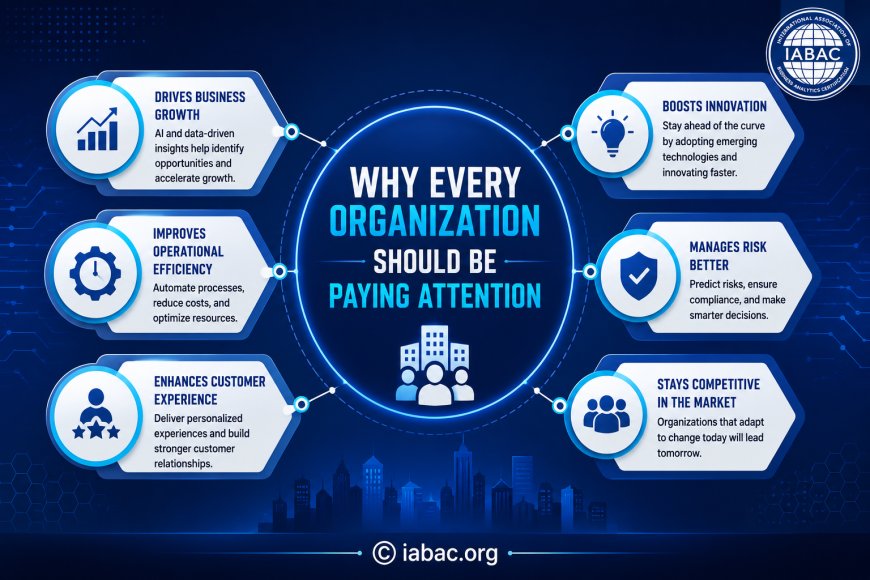
One of the biggest misconceptions surrounding cybersecurity is that sophisticated attacks only happen to global technology giants.
Reality tells a different story.
Whether you're a startup building AI applications, an enterprise deploying generative AI, or a consulting firm helping clients adopt machine learning, many of the same risks apply.
Common vulnerabilities include:
- Exposed API keys
- Weak identity and access management
- Insecure model deployment pipelines
- Unpatched cloud services
- Third-party dependency risks
- Insufficient monitoring
- Poor governance over AI assets
These aren't problems unique to Hugging Face.
They're challenges facing the entire AI industry.
As organizations continue integrating AI into their products and operations, security must become part of the development lifecycle—not something added after deployment. Establishing a strong AI governance and risk management framework helps organizations identify vulnerabilities early, ensure responsible AI deployment, and build long-term trust in AI systems.
Building powerful AI without securing it is like installing the world's most advanced security camera on a house with the front door left unlocked. This is why many organizations work with AI consulting services to develop secure, scalable AI solutions that align with business objectives while minimizing cybersecurity risks.
The Five Biggest Lessons from the Hugging Face Security Breach
Cybersecurity experts often say that every major breach leaves behind valuable lessons.
The Hugging Face incident is no exception.
Although the company responded quickly and stated there was no evidence that publicly hosted models or repositories were modified, the event has become an important case study for organizations developing, deploying, or managing AI systems.
Here are five lessons every AI-driven organization should take seriously.
1. AI Infrastructure Has Become Critical Infrastructure
Artificial intelligence is no longer limited to research labs or experimental projects.
Today, AI powers:
- Banking fraud detection
- Healthcare diagnostics
- Manufacturing automation
- Customer support chatbots
- Enterprise analytics
- Autonomous business workflows
As AI becomes embedded into essential services, the platforms supporting these technologies become increasingly attractive targets.
Organizations must start treating AI infrastructure with the same level of protection traditionally reserved for cloud platforms, financial systems, and enterprise networks.
Security should never be viewed as an optional feature—it is part of the product itself.
2. AI Security Must Begin Before Deployment
Many AI teams dedicate months to training models, optimizing performance, and improving accuracy.
Security often receives attention only after deployment.
That approach is becoming outdated.
Modern AI development should integrate security into every phase of the lifecycle:
- Secure dataset validation
- Model integrity checks
- Access control
- Continuous monitoring
- Vulnerability assessments
- Security testing before deployment
Building secure AI from the beginning is significantly easier—and far less expensive—than fixing security issues after production.
3. Credentials Remain One of the Weakest Links
Many organizations assume sophisticated cyberattacks always involve complex exploits.
In reality, compromised credentials continue to play a major role in security incidents.
API keys.
Access tokens.
Cloud credentials.
Administrator accounts.
If these assets aren't properly protected, even advanced AI platforms become vulnerable.
Organizations should adopt best practices such as:
- Multi-factor authentication (MFA)
- Least-privilege access
- Secret management solutions
- Regular credential rotation
- Continuous identity monitoring
Simple security practices still prevent many complex attacks
4. Open-Source Innovation Requires Strong Security
Open-source AI has transformed innovation.
Developers can now build powerful applications without creating models from scratch.
However, openness also increases responsibility.
Organizations should never assume that every dataset, dependency, or uploaded asset is automatically trustworthy. Security experts also recommend following the OWASP Top 10 for Large Language Model Applications, which outlines common vulnerabilities and best practices for securing AI applications and generative AI systems.
Instead, they should implement:
- Dependency scanning
- Dataset validation
- Model verification
- Sandboxed execution environments
- Continuous vulnerability scanning
Innovation should move quickly—but never without verification.
5. Transparency Builds Trust
No organization is immune to cyberattacks.
What often defines a company's reputation isn't whether an incident occurs—but how it responds.
Clear communication, rapid containment, regular updates, and transparency help maintain confidence among customers, developers, and business partners.
The Hugging Face response reinforced an important principle:
Trust isn't built during normal operations.
Trust is built during difficult moments.
What Every AI Developer Should Do Today
Whether you're building AI applications, training models, or integrating generative AI into enterprise software, security should become part of your daily workflow.
Start with these practical questions:
· Are API keys stored securely?
· Is Multi-Factor Authentication enabled?
· Are unused credentials removed regularly?
· Are production and development environments isolated?
· Are AI models verified before deployment?
· Are third-party dependencies scanned?
· Are security logs monitored continuously?
Cybersecurity is no longer just the responsibility of security engineers.
Every AI developer contributes to protecting the ecosystem.
The Future of AI Security Will Look Very Different
The Hugging Face incident reflects a broader shift in the AI landscape.
Over the next few years, organizations are expected to invest more heavily in:
AI Governance
Structured policies that ensure AI systems remain secure, compliant, and accountable.
Secure AI Development
Security will increasingly become a standard component of MLOps and AI development pipelines.
Zero Trust for AI
Organizations will verify every user, API, workload, and model interaction rather than assuming internal systems are trustworthy.
Automated Threat Detection
AI will not only power applications—it will also help detect suspicious behaviour, identify vulnerabilities, and respond to cyber threats faster.
AI Compliance
Governments and regulators worldwide are introducing new AI regulations focused on transparency, accountability, and risk management.
Organizations that prepare early will gain a significant competitive advantage.
Why AI Governance Is Becoming a Business Priority
For years, AI conversations centred around innovation.
Today, they increasingly focus on trust.
Business leaders are asking new questions:
- Can we trust AI outputs?
- Is our data protected?
- Are our AI systems compliant?
- Can we explain AI decisions?
- Are our models secure?
These questions are driving investment in AI governance, risk management, and responsible AI practices.
Organizations that combine innovation with governance will be better positioned to scale AI successfully.
Frequently Asked Questions
Was Hugging Face hacked?
Yes. Hugging Face disclosed a security incident affecting part of its production infrastructure. The company investigated the event, contained the affected systems, and implemented additional security measures.
Were AI models compromised?
According to Hugging Face, investigators found no evidence that publicly hosted models, datasets, Spaces, or repositories were modified.
Should developers stop using Hugging Face?
No.
The platform remains one of the world's leading AI development ecosystems. However, developers should follow recommended security practices such as enabling MFA, protecting API credentials, and monitoring their accounts.
What is the biggest lesson from this incident?
The biggest takeaway is that AI innovation and AI security must evolve together. Organizations should integrate governance, secure development practices, and continuous monitoring into every stage of the AI lifecycle.
Final Thoughts: The Future of AI Depends on Trust
The Hugging Face security breach is more than a headline.
It is a reminder that artificial intelligence is entering a new era—one where cybersecurity, governance, and resilience are just as important as model accuracy and computational power.
As AI systems become deeply integrated into businesses, healthcare, finance, education, manufacturing, and public services, securing these platforms becomes a shared responsibility.
Developers must write secure code.
Organizations must build resilient infrastructure.
Business leaders must invest in governance.
And policymakers must create frameworks that encourage innovation while protecting users.
The future will not be defined by which company builds the smartest AI.
It will be defined by which organizations build AI that people can trust.
Because in the age of artificial intelligence, trust is no longer just a competitive advantage—it is the foundation of sustainable innovation.