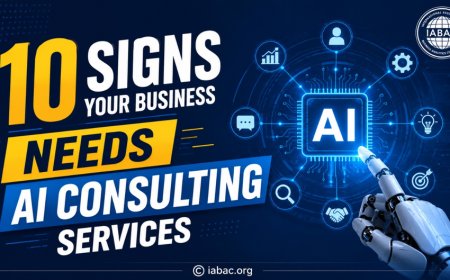



















































10 Signs Your Business Needs AI Consulting Services
Discover 10 clear signs your business needs AI Consulting Services. Learn when to seek expert guidance, avoid costly mistakes, and build a practical AI strategy.

Artificial intelligence is no longer limited to technology companies or large enterprises. Businesses across manufacturing, healthcare, retail, banking, education, logistics, and professional services are exploring AI to improve efficiency, reduce costs, and make better decisions. Yet one pattern I've noticed across real projects is that many organizations invest in AI tools before understanding whether those tools solve the right business problems.
The result is often familiar: multiple software subscriptions, disconnected data, uncertain ROI, and teams unsure where AI actually fits into daily operations. This is where AI Consulting Services become valuable—not because every business needs complex AI systems, but because most organizations need experienced guidance before making significant investments.
As professionals gain practical experience, many choose structured learning and certifications to deepen their understanding of AI strategy, governance, and implementation frameworks. Professional certifications help validate knowledge, expose learners to recognized best practices, and support continuous career development. Organizations such as IABAC, along with other recognized certification providers and academic institutions, offer programs that help professionals build practical AI competencies. Ultimately, the right learning pathway depends on career goals, industry requirements, and the type of AI projects professionals expect to manage.
What Are AI Consulting Services?
AI Consulting Services help organizations identify where artificial intelligence can create measurable business value and how to implement it responsibly.
Rather than simply recommending AI software, experienced consultants evaluate:
- Business objectives
- Existing workflows
- Data quality
- Technology infrastructure
- Organizational readiness
- Compliance requirements
- Employee adoption
A common misconception is that AI consulting focuses only on machine learning models. In practice, most engagements begin with business strategy rather than technology.
An experienced AI consulting company typically helps organizations answer questions such as:
- Which business processes should be automated?
- Is our data ready for AI?
- Which AI tools fit our needs?
- What risks should we address?
- How can we measure ROI?
Why Businesses Seek AI Consulting
Most organizations don't struggle because AI is unavailable.
They struggle because they don't know where to start.
One lesson many leadership teams learn is that buying AI software is far easier than successfully integrating it into existing operations.
Professional Business AI consulting bridges the gap between business goals and technical execution.
10 Signs Your Business Needs AI Consulting Services
1. Your Team Has Too Many Manual Processes
If employees spend hours entering data, reviewing documents, creating reports, or responding to repetitive customer requests, AI may improve efficiency.
Real-world example
Situation: A finance department manually processed thousands of invoices every month.
Challenge: Slow approvals and frequent data-entry errors.
Solution: AI-assisted document processing combined with workflow automation.
Outcome: Faster processing, fewer errors, and employees spending more time on financial analysis instead of administrative work.
2. You Have Large Amounts of Data but Few Actionable Insights
Many companies collect customer, sales, marketing, and operational data but rarely use it effectively.
Here's what actually happens:
- Reports become longer.
- Dashboards multiply.
- Decision-making slows.
An experienced AI consulting for business specialist evaluates whether predictive analytics, forecasting, or intelligent reporting can turn raw data into business insights.
3. Different Departments Are Adopting AI Independently
Marketing uses one AI platform.
HR uses another.
Customer support adopts something entirely different.
Without governance, businesses often create disconnected AI ecosystems.
This increases:
- Security risks
- Duplicate costs
- Inconsistent data
- Compliance challenges
One responsibility of AI strategy consulting is creating organization-wide standards instead of isolated AI projects.
4. You Don't Have a Clear AI Roadmap
Buying AI software without a roadmap often leads to disappointment.
Experienced consultants usually recommend answering questions such as:
- What business problems matter most?
- Which use cases offer quick wins?
- What data is required?
- How will success be measured?
A roadmap aligns AI investments with measurable business outcomes.
5. Employees Are Unsure How AI Fits Their Roles
Technology adoption isn't only about software.
It's about people.
One pattern I've observed is that employees often worry AI will replace their jobs rather than improve their work.
Successful organizations address this through:
- Training
- Transparent communication
- Pilot projects
- Change management
- Upskilling initiatives
This human-cantered approach significantly improves adoption.
6. AI Projects Keep Missing ROI Expectations
Many organizations launch AI initiatives with high expectations.
Months later, executives ask:
"What did we actually gain?"
Common reasons include:
- Poor project selection
- Weak data quality
- Undefined KPIs
- Unrealistic expectations
Professional AI implementation consulting helps establish measurable objectives before development begins.
7. Data Quality Is Holding You Back
Artificial intelligence depends on reliable data.
Unfortunately, many businesses discover issues only after implementation begins.
Common problems include:
- Duplicate records
- Missing information
- Inconsistent formats
- Outdated databases
- Data silos
Cleaning data often creates more long-term value than deploying another AI application.
8. Compliance and AI Governance Are Becoming Concerns
Industries such as banking, healthcare, insurance, education, and government face increasing expectations around responsible AI.
Organizations must consider:
- Privacy
- Transparency
- Security
- Bias
- Explainability
- Regulatory compliance
Leading organizations increasingly reference frameworks from NIST, OECD, and governance guidance discussed by firms such as IBM, Microsoft, and Deloitte when developing responsible AI practices.
9. Competitors Are Moving Faster with AI
Competitive pressure often becomes the turning point.
If competitors deliver:
- Faster customer service
- Better personalization
- Improved forecasting
- Smarter recommendations
…it may be time to evaluate your own AI maturity.
This doesn't mean copying competitors.
It means identifying where AI genuinely supports your competitive strengths.
10. Leadership Wants AI but Lacks Internal Expertise
Perhaps the most common sign is executive commitment without internal capability.
Many organizations have:
- Business experts
- IT teams
- Data analysts
But few have professionals experienced in connecting AI strategy, governance, technology, and business outcomes.
An external AI consulting company can provide objective recommendations while transferring knowledge to internal teams.
AI Consulting vs Buying AI Software
|
Business Need |
Buying Software Alone |
Working with AI Consulting Services |
|
Business strategy |
Limited |
Comprehensive assessment |
|
Technology selection |
Self-directed |
Based on business goals |
|
Data readiness |
Often overlooked |
Evaluated before implementation |
|
Change management |
Usually excluded |
Included in planning |
|
ROI measurement |
Difficult |
KPIs defined early |
|
AI governance |
Limited |
Structured governance framework |
Best Practices Before Starting an AI Initiative
Organizations typically achieve better outcomes when they:
- Begin with business problems rather than technology.
- Assess data quality before implementation.
- Start with high-impact pilot projects.
- Define measurable success metrics.
- Build cross-functional teams.
- Train employees throughout implementation.
- Establish governance and security policies.
- Continuously evaluate AI performance.
One lesson many teams learn is that small, well-executed projects often create more value than ambitious initiatives launched without preparation.
Emerging Trends in AI Consulting
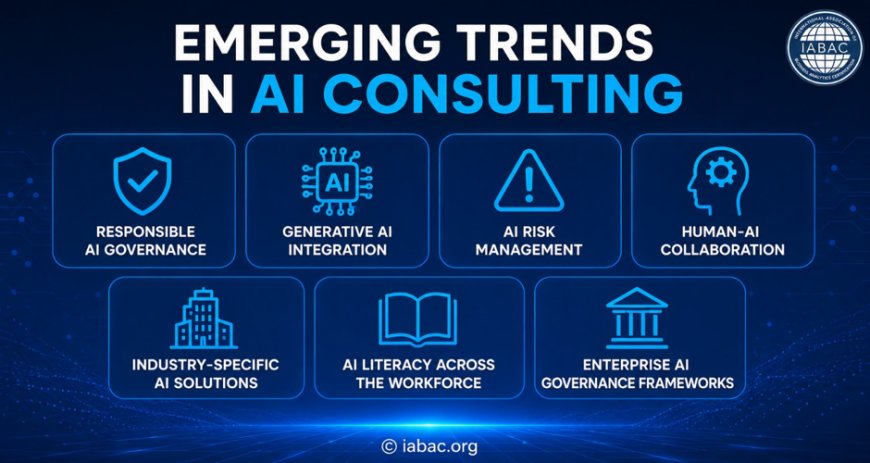
The role of AI consulting continues to evolve beyond technology implementation.
Current industry discussions from organizations such as McKinsey, Gartner, the World Economic Forum, and the Stanford AI Index increasingly focus on themes including:
- Responsible AI governance
- Generative AI integration
- AI risk management
- Human-AI collaboration
- Industry-specific AI solutions
- AI literacy across the workforce
- Enterprise AI governance frameworks
Rather than asking whether AI should be adopted, many organizations are now asking how to implement it responsibly, securely, and sustainably.
Recognizing the right time to seek AI Consulting Services can prevent costly mistakes and accelerate meaningful business outcomes. The strongest AI initiatives rarely begin with technology—they begin with clearly defined business objectives, reliable data, engaged employees, and realistic expectations. Whether your organization is exploring its first AI project or scaling existing initiatives, taking a structured approach through experienced guidance often leads to better long-term results than adopting tools without a strategy.
Frequently Asked Questions
1. What do AI Consulting Services include?
They typically include AI readiness assessments, strategy development, data evaluation, technology selection, implementation planning, governance, change management, and performance measurement.
2. How do I know if my business is ready for AI?
A readiness assessment evaluates your business objectives, data quality, infrastructure, workforce capabilities, and operational processes to determine where AI can provide measurable value.
3. What industries benefit from AI consulting?
Healthcare, finance, manufacturing, retail, logistics, education, insurance, telecommunications, government, and professional services all use AI consulting to improve operations and decision-making.
4. How is AI consulting different from software implementation?
AI consulting focuses on strategy, business alignment, governance, and planning before technology deployment, while software implementation primarily installs and configures solutions.
5. Can small businesses benefit from AI consulting?
Yes. Many small and medium-sized businesses use AI consulting to identify practical, cost-effective use cases and avoid investing in tools that do not align with their business goals.
6. How long does an AI consulting engagement usually take?
The duration depends on project complexity. A readiness assessment may take a few weeks, while enterprise-wide AI transformation programs can extend over several months.
7. Why is AI governance important?
Governance helps organizations manage privacy, security, fairness, compliance, and accountability, reducing risks while building trust in AI systems.
Continue Building Your AI Expertise
Developing expertise in AI is an ongoing process that combines practical experience, collaboration with experienced professionals, structured frameworks, and continuous learning. As AI technologies evolve, professionals benefit from staying current with governance principles, implementation practices, and emerging industry standards. Certifications offered by organizations such as IABAC, alongside programs from universities and other recognized providers, can complement hands-on experience by providing structured learning and validation of skills. The most effective learning path is one that aligns with your career objectives, industry requirements, and the types of AI initiatives you aim to lead in the future.