
















































Job Opportunities with HR Analytics Course
Get better job chances with an HR Analytics Course. Learn skills to analyze HR data and improve hiring, pay, and workforce planning. Boost your career now!

When I took my first HR Analytics Course, I had no idea how much it would change my career. Becoming a Certified HR Analytics Professional opened opportunities I never imagined. With more organizations using data to make decisions, there’s a huge demand for people who can understand and analyze workforce data to improve business outcomes. Adding Data Analytics Certifications to my skills gave me more confidence and made me a valuable part of my team. Everything I've learned from spotting employee trends to creating strategies to keep talent has been practical and useful. If you're considering a step into HR analytics, I can tell you it’s worth it!
What is HR Analytics?
HR Analytics, also called People Analytics, uses data analysis in HR processes. It focuses on collecting and studying employee data to make better decisions about hiring, keeping talent, managing performance, and helping a company grow. The goal is to connect employee strategies with business goals while creating a positive work environment.
The Four Types of HR Analytics
HR analytics is divided into four types, each serving a specific purpose in understanding and improving workforce management:
- Descriptive Analytics
This type looks at past and current trends. For example, it analyzes employee turnover, absenteeism, or training completion rates to identify patterns and understand what has happened. - Diagnostic Analytics
This type goes deeper into “why” certain trends occur. For instance, if turnover rates are high, diagnostic analytics helps find the root cause, such as dissatisfaction with roles or lack of growth opportunities. - Predictive Analytics
Predictive analytics uses historical data to forecast future trends. It can predict which employees are likely to leave or where skill shortages might occur, allowing organizations to plan ahead. - Prescriptive Analytics
This type suggests actions based on predictive insights. For example, if there’s a high risk of losing top employees, prescriptive analytics may recommend better salary packages or growth opportunities to retain them.
Why Take an HR Analytics Course?
Adding analytics to HR processes has completely changed how companies manage employees. An HR Analytics Course gives you a mix of HR expertise and data analytics skills, making you a valuable asset to any organization. These courses often teach you skills like:
- Collecting and managing HR data
- Using predictive analytics for workforce planning
- Measuring employee performance
- Building HR metrics and dashboards
Certifications, such as Certified HR Analytics Professional, show employers that you have specialized skills to analyze HR data. This gives you an edge over others in the job market.
Who Should Take This Course?
Whether you're pursuing a degree in human resources, business management, or data science, or you're simply interested in understanding how analytics can shape workforce strategies, this course is tailored for:
- Students aspiring to build a career in HR or workforce planning.
- Professionals looking to enhance their skills in HR analytics.
- Anyone with a curiosity about data and its impact on human behavior in the workplace.
Benefits of HR Analytics Certifications
Completing an HR Analytics Course and earning certifications like Certified HR Analytics Professional offers several advantages, including:
- Better Job Prospects: Certification proves your skills and commitment, making you stand out to employers.
- Higher Salaries: HR analytics experts often earn more due to their ability to deliver measurable results.
- Career Flexibility: HR analytics skills can be applied in many industries like technology, healthcare, retail, and finance.
- Strategic Impact: Certified professionals can take on key roles that directly influence business success.
Career Options After the Course
After completing an HR analytics course, students can pursue careers such as:
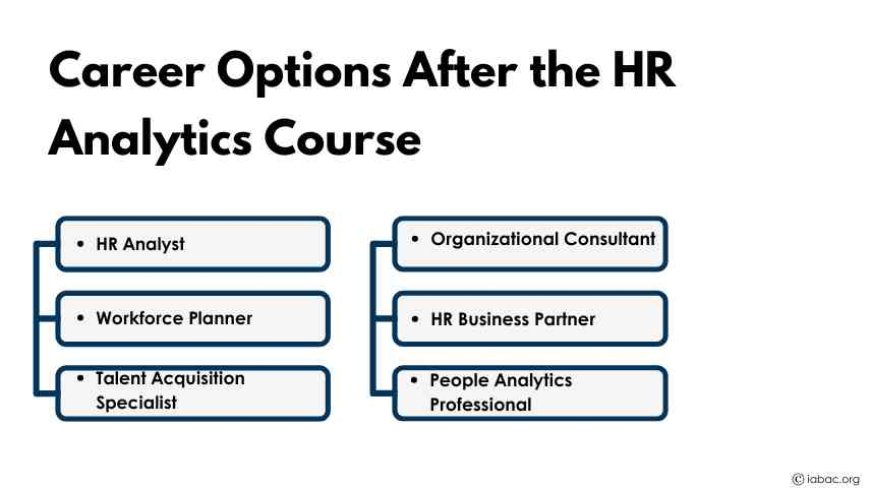
- HR Analyst
- Workforce Planner
- Talent Acquisition Specialist
- Organizational Consultant
- HR Business Partner
- People Analytics Professional
Career Opportunities After an HR Analytics Course
Completing an HR Analytics Course opens up diverse job roles where you can use data to make smart HR decisions. Here are some popular options:
- HR Analyst: HR Analysts collect and analyze HR data, providing insights on topics like employee turnover, performance trends, and hiring success. Their work helps organizations make better decisions.
- Workforce Planning Specialist: These professionals predict hiring needs, find skills gaps, and create strategies to prepare for future workforce demands.
- Talent Management Analyst: Talent Management Analysts focus on areas like employee engagement, training success, and career growth. They help companies keep top talent and improve employee satisfaction.
- People Analytics Consultant: People Analytics Consultants guide senior leaders by offering insights into organizational performance. They use advanced tools to tackle HR challenges like diversity or productivity improvement.
- HR Data Scientist: HR Data Scientists use AI and machine learning to analyze employee data. They uncover trends and patterns that drive important HR strategies.
- Recruitment Data Analyst: Recruitment Data Analysts analyze hiring metrics, sourcing channels, and candidate quality, often leveraging candidate sourcing software to improve efficiency and cut hiring costs.
- Compensation and Benefits Analyst: This role focuses on pay, benefits, and employee satisfaction with compensation. Their insights ensure fair and competitive salaries.
An HR Analytics Course is not just about learning new skills; it’s a step toward building an exciting and rewarding career. As companies rely more on data to make decisions, professionals with HR analytics certifications will remain in high demand. Whether you aim to become an HR Analyst, Workforce Planning Specialist, or People Analytics Consultant, investing in a recognized certification like Certified HR Analytics Professional equips you with the skills and credibility to succeed. Take the next step in your career by enrolling in an HR Analytics Course and make a meaningful impact on how organizations manage their most important resource—people.