


























































Roadmap to All Roles in Data Science
Learn about data science careers, key skills, and tools—from data analyst to AI researcher, and how to start your path in this growing field.

Data is everywhere. Every time we shop online, use an app, or watch a video, data is created. Companies use this data to understand people, improve products, and make better decisions. This is where data science comes in — it helps turn raw information into useful insights.
But data science is not just one job. It includes many roles that work together to collect, clean, analyze, and use data. If you are thinking about a career in this field, it’s important to understand what these roles are, what skills they need, and how to build your path.
1. What Data Science Really Is
Data science combines math, statistics, programming, and problem-solving to find patterns and insights in data. The goal is to help businesses make data-driven decisions.
The data science process often includes these steps:
-
Collecting data – gathering information from different sources.
-
Cleaning data – fixing errors and preparing it for use.
-
Analyzing data – finding trends and patterns.
-
Building models – using machine learning to make predictions.
-
Deploying models – putting them into use for real-world tasks.
-
Making decisions – turning results into business actions.
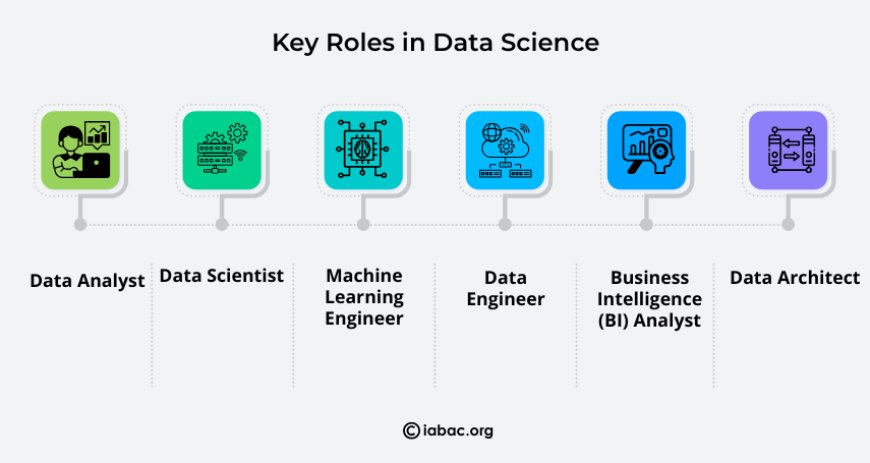
Each stage needs a different type of expert. A data engineer builds systems to handle data. A data analyst finds insights. A data scientist builds models, and a machine learning engineer helps those models work in real time. Let’s look closely at each role.
2. Key Roles in Data Science
a. Data Analyst
A data analyst focuses on interpreting data and presenting it in a clear and useful way. They work closely with business teams to understand what questions need answers, analyze data, and create visualizations or reports.
Key responsibilities:
-
Cleaning and organizing raw data.
-
Using SQL to query databases.
-
Creating dashboards and reports with tools like Excel, Power BI, or Tableau.
-
Identifying trends, patterns, and insights.
Skills required:
-
Excel, SQL, Tableau, Power BI.
-
Basic statistics and data visualization.
-
Communication and storytelling with data.
Career path:
Entry-level professionals often start as junior data analysts and can move toward senior roles or transition into data science or business intelligence over time.
b. Data Scientist
Data scientists go deeper into the data. They build statistical and machine learning models to predict outcomes or uncover complex patterns.
Key responsibilities:
-
Working with large datasets to build models.
-
Using Python or R for data exploration and analysis.
-
Applying algorithms for prediction and classification.
-
Communicating findings to decision-makers.
Skills required:
-
Python, R, SQL.
-
Statistics, machine learning, and data wrangling.
-
Libraries such as pandas, NumPy, Scikit-learn, and TensorFlow.
-
Problem-solving and business understanding.
Career path:
Many data scientists start as analysts or research assistants. Over time, they specialize in areas like machine learning, NLP, or computer vision.
c. Machine Learning Engineer
Machine learning engineers focus on taking models built by data scientists and deploying them into production environments. They bridge the gap between data science and software engineering.
Key responsibilities:
-
Building and optimizing machine learning pipelines.
-
Deploying models using APIs and cloud services.
-
Managing real-time data flow and system performance.
-
Collaborating with engineers and data scientists.
Skills required:
-
Python, Java, or C++.
-
TensorFlow, PyTorch, Scikit-learn.
-
Cloud platforms like AWS, GCP, or Azure.
-
Understanding of DevOps and model lifecycle management (MLOps).
Career path:
Typically, machine learning engineers come from software engineering backgrounds and build on their coding expertise to manage ML systems.
d. Data Engineer
A data engineer ensures that all data-related operations run smoothly. They create and maintain the data infrastructure — pipelines, databases, and data warehouses.
Key responsibilities:
-
Designing and maintaining data pipelines.
-
Managing data storage systems.
-
Ensuring data quality and reliability.
-
Working with big data tools and cloud technologies.
Skills required:
-
SQL, Python, Java, Scala.
-
Hadoop, Spark, Kafka, Airflow.
-
Cloud data services (AWS Redshift, BigQuery, Snowflake).
-
Understanding of ETL (Extract, Transform, Load) processes.
Career path:
Many data engineers transition from database administration or backend development roles. With experience, they can move into data architecture or cloud engineering.
e. Business Intelligence (BI) Analyst
A BI analyst focuses on helping organizations make data-driven decisions by converting raw data into strategic insights. Their goal is to align technical analysis with business goals.
Key responsibilities:
-
Building dashboards and visual reports.
-
Analyzing performance metrics.
-
Identifying business trends and recommending actions.
-
Supporting executives with data-driven strategies.
Skills required:
-
SQL, Excel, Tableau, Power BI.
-
Basic understanding of databases and business processes.
-
Analytical and presentation skills.
Career path:
BI analysts can grow into BI managers, data scientists, or product analysts depending on their interests.
f. Data Architect
Data architects design the blueprint for an organization’s data management system. They make sure data is structured, secure, and easily accessible across teams.
Key responsibilities:
-
Designing database structures and integration systems.
-
Managing data security and governance.
-
Setting up data standards and policies.
-
Collaborating with engineers to optimize storage solutions.
Skills required:
-
Database design (SQL and NoSQL).
-
Cloud data platforms.
-
Knowledge of data modeling and ETL.
-
Data governance and compliance.
Career path:
Data architects usually evolve from engineering roles. They often move toward data leadership positions or consulting.
g. AI Research Scientist
AI research scientists work on developing new algorithms and improving the performance of existing models. They focus on theoretical and experimental work.
Key responsibilities:
-
Conducting research on deep learning, NLP, or computer vision.
-
Publishing papers and presenting findings.
-
Building advanced AI prototypes.
-
Collaborating with research teams and engineers.
Skills required:
-
Deep understanding of mathematics and statistics.
-
Python, TensorFlow, PyTorch.
-
Research and experimentation.
-
Knowledge of neural networks and AI frameworks.
Career path:
AI researchers usually come from academic or research backgrounds with advanced degrees in computer science or mathematics.
3. Skill Roadmap for Data Science Careers
No matter which role you want, the journey usually follows a few key steps.
Step 1: Learn the Basics
Start by understanding the foundation:
-
Learn Python and SQL.
-
Understand basic math, statistics, and probability.
-
Get comfortable using Excel.
-
Try small exercises with data visualization tools.
Step 2: Practice Data Handling
Learn how to collect, clean, and visualize data:
-
Work with tools like pandas and Matplotlib.
-
Analyze sample datasets from Kaggle or public sources.
-
Focus on understanding what the data says rather than just coding.
Step 3: Learn Machine Learning Basics
If you plan to become a data scientist or ML engineer:
-
Study core algorithms like regression and classification.
-
Learn model evaluation and performance metrics.
-
Build small machine learning projects.
Step 4: Choose a Path
Once you know the basics, decide which role suits you best:
-
Like working with charts and trends? → Data Analyst.
-
Enjoy coding and system design? → Data Engineer.
-
Love algorithms and automation? → Machine Learning Engineer.
-
Interested in big-picture systems? → Data Architect.
-
Curious about advanced AI? → AI Research Scientist.
Step 5: Build Real Projects
Practical experience is key:
-
Build dashboards and reports.
-
Create a prediction model or recommendation system.
-
Join Kaggle competitions.
-
Share your work on GitHub or LinkedIn.
Step 6: Work on Soft Skills
Data roles need good communication and teamwork. Being able to explain technical work in simple terms helps you stand out.
4. Tools and Technologies in Data Science
Different roles in data science rely on different tools. Here’s a quick overview:
|
Role |
Common Tools & Technologies |
|
Data Analyst |
Excel, SQL, Tableau, Power BI |
|
Data Scientist |
Python, R, Jupyter, Scikit-learn |
|
Machine Learning Engineer |
TensorFlow, PyTorch, Docker, AWS |
|
Data Engineer |
Hadoop, Spark, Airflow, Kafka |
|
BI Analyst |
Power BI, Looker, SQL |
|
Data Architect |
Snowflake, BigQuery, Data Lakes |
|
AI Research Scientist |
PyTorch, TensorFlow, OpenAI frameworks |
Staying updated with new tools is important, but the underlying concepts matter more. Once you understand how data flows and how models work, learning new technologies becomes easier.
5. Industry Trends and Career Growth
The demand for data professionals continues to grow across industries. Companies in finance, healthcare, marketing, and technology all need experts who can turn data into insights.
Here’s a general idea of average annual salaries (may vary by region and experience):
-
Data Analyst: $60,000–$90,000
-
Data Scientist: $90,000–$130,000
-
Machine Learning Engineer: $100,000–$140,000
-
Data Engineer: $95,000–$135,000
-
AI Research Scientist: $120,000 and above
Many data roles now allow remote work, giving professionals a chance to work with teams around the world.
6. Challenges and the Future of Data Science
While the field is full of potential, it also has challenges:
-
Data quality and privacy issues.
-
Rapidly changing tools and frameworks.
-
The need for ethical and transparent AI systems.
-
Communication gaps between technical and business teams.
The future of data science is moving toward automation and smarter systems. Tools like AutoML and Generative AI are making data work faster and more accessible. But even as technology advances, human judgment, creativity, and responsibility remain at the center of good data science.
The world of data science offers many career paths. Whether you prefer analysis, coding, research, or system design, there’s a role that matches your interests. You don’t need to know everything to begin — just start with the basics, learn consistently, and build practical experience.
Data science is about curiosity, learning, and problem-solving. Each role contributes to making better decisions with data. Start small, explore freely, and over time, you’ll find your place in this growing field.
If you’re ready to start your journey, explore courses, work on real projects, and stay open to learning new tools. The data world is vast, and every skill you build brings you closer to a rewarding career in data science.