


























































Scope of World Certified Financial Analyst Certification
Understand the scope and benefits of the WCFA certification. See how it can boost your finance career with global recognition.


The Certified Financial Analyst Certification is one of the most respected and widely known qualifications in finance and investment. It is offered by IABAC and is often seen as the best choice for students and professionals who want to build a career in areas like asset management, equity research, corporate finance, or portfolio management. In this blog, we will explain the scope, benefits, cost, and job options related to the Certified Financial Analyst Certification, especially for students.
What is a Financial Analyst Certification?
A Financial Analyst Certification is a professional course or training that shows your skills in understanding company finances, making investment decisions, and preparing financial reports. These certifications help people in jobs like investment analysis, equity research, financial planning, and portfolio management learn both the technical skills and ethical practices they need to succeed.
Why Choose the Certified Financial Analyst Certification?
The Certified Financial Analyst program is made to help students and early professionals learn about finance, ethics, and how to manage investments. Here’s why it can be useful:
-
Recognized Around the World: Many companies across different countries know and value this certification.
-
Better Career Options: Many top companies in banking, consulting, and investment prefer candidates with this certification.
-
Strong Skills: It teaches real-world knowledge like how to build and manage investment portfolios.
-
Worth the Investment: Even though it takes time and money, it can help improve salary and job growth over time.
What Does a Financial Analyst Do?
A Financial Analyst helps companies understand their money—how it comes in, how it’s spent, and how to make smart choices. Their work includes:
-
Looking at financial data like income, expenses, and profits
-
Predicting future financial performance
-
Making reports and presentations for managers and leaders
-
Checking investment options like stocks, bonds, and business deals
-
Watching market trends and the overall economy
There are two common types of analysts:
-
Buy-side analysts help big firms like insurance companies or mutual funds decide where to invest their money
-
Sell-side analysts give advice to clients who are interested in buying or selling investments
Structure of the Program
The Certified Financial Analyst Certification has three exam levels:
|
CFA Level |
What You Learn |
How Often Held |
Study Time Needed |
|
Level I |
Basics, ethics, and financial tools |
4 times/year |
300 hours |
|
Level II |
Asset values and applied finance topics |
2 times/year |
300–400 hours |
|
Level III |
Managing portfolios and financial planning |
2 times/year |
400+ hours |
Each level builds on what you’ve learned before, and the difficulty increases with each step.
Cost of the Certification
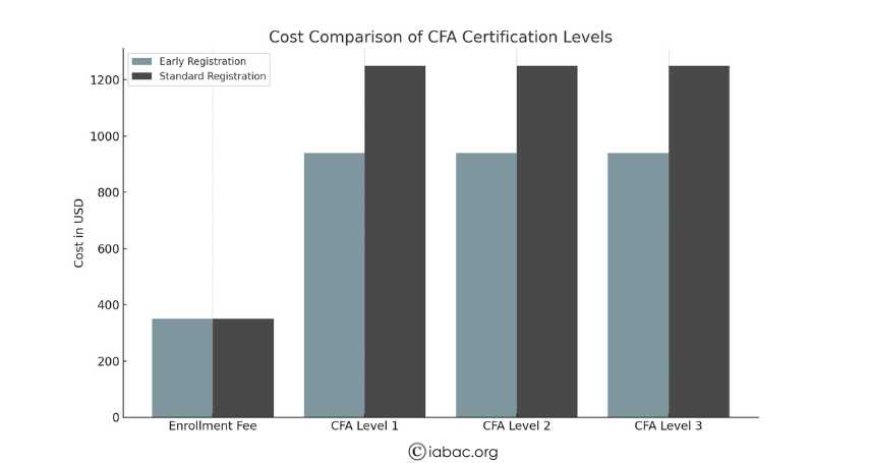
Here is a breakdown of the costs:
-
One-time Registration Fee: $350
-
Early Registration (each level): $940
-
Standard Registration (each level): $1,250
Estimated Total (Early Registration):
$350 + (3 × $940) = $3,170
Estimated Total (Standard Registration):
$350 + (3 × $1,250) = $4,100
Tip: If you register early, you can save around $1,000.
Job Opportunities After the Certification
Once you finish the program, many job roles open up in the finance field. Here are some examples:
|
Area |
Common Job Roles |
Average Salary (USD) |
|
Investment Banking |
Analyst, Associate |
$100,000 – $150,000 |
|
Portfolio Management |
Portfolio Manager, Investment Analyst |
$90,000 – $180,000 |
|
Equity Research |
Equity Analyst, Sector Specialist |
$80,000 – $140,000 |
|
Risk Management |
Risk Analyst, Compliance Officer |
$70,000 – $120,000 |
|
Corporate Finance |
Financial Analyst, CFO Trainee |
$65,000 – $100,000 |
Global Reach
This certification is respected in major financial cities such as:
-
New York
-
London
-
Hong Kong
-
Singapore
-
Mumbai
-
Dubai
Whether you plan to work in a large financial company or a startup, this certification proves that you have strong finance knowledge and follow ethical practices.
Who Can Benefit from It?
You should think about getting a financial analyst certification if you are:
-
A student thinking of a finance or investment career.
-
A graduate with a business, accounting, or economics background.
-
A working professional who wants to grow in their finance job.
-
An entrepreneur or consultant looking to make better financial choices.
How to Get Ready
To pass each level, preparation is key. Here’s how to plan:
-
Start Early: Begin studying 6 to 9 months before the exam.
-
Use Official Material: Stick to resources from IABAC for the best results.
-
Join a Study Group: Studying with others can help you stay motivated.
-
Practice Exams: Take mock tests to get used to the exam format.
If you're a student who enjoys finance and wants to build a strong career, the Certified Financial Analyst Certification is a smart choice. It takes time and effort, but it gives you the knowledge and confidence to grow in your career. Start your CFA journey today with IABAC and build a brighter future in finance.