






















































What Does It Take to Be a Certified Business Analyst
Learn the steps to become a certified business analyst. Discover the skills, certifications, and qualifications needed to excel in the business analysis field.


The role of a Certified Business Analyst (CBA) is more important than ever. Companies are constantly looking for professionals who can understand business needs, analyze data, and turn information into practical solutions. A Certified Business Analyst helps improve processes, increase efficiency, and support business growth.
If you’re planning to build a career in business analysis or want to strengthen your skills, earning a certification is one of the best ways to prove your expertise. In this blog, we’ll look at what it takes to become a Certified Business Analyst, why certification is valuable, and how IABAC can help you achieve it.
What is a Certified Business Analyst?
A Certified Business Analyst is a professional who has completed a recognized certification in the field of business analysis. Certification validates your ability to work with data, identify business problems, and suggest solutions that help organizations reach their goals.
The International Association of Business Analytics Certifications (IABAC) is one of the globally trusted bodies that offers certifications in business analysis, data science, and related areas. Earning an IABAC certification demonstrates your expertise and adds credibility to your professional profile.
What Does It Take to Become a Certified Business Analyst?
Here are the main steps to becoming a Certified Business Analyst:
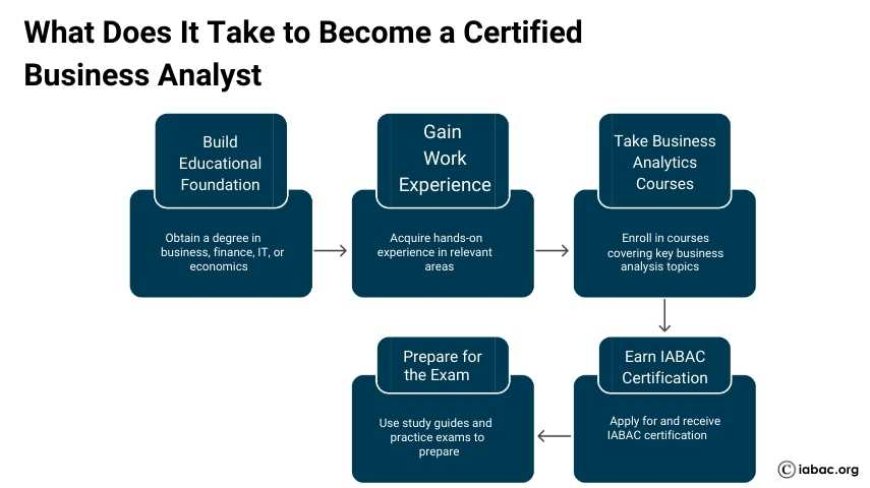
1. Build Your Educational Foundation
While a degree is not always required, having a background in business, finance, IT, or economics provides a strong base. Many business analysts have a bachelor’s degree, and some also pursue advanced studies to add more value to their profiles.
2. Gain Work Experience
Hands-on experience is important in this field. Many certifications require professionals to have real-world experience in gathering requirements, analyzing processes, working with data, and coordinating with stakeholders. This experience helps you develop the skills needed for certification and success in the role.
3. Take Business Analytics Courses
Enrolling in Business Analytics Courses can give you structured learning and prepare you for certification exams. These courses usually cover:
- Business Process Management
- Requirements Analysis
- Data Analysis and Modeling
- Stakeholder Communication
- Project Documentation
Some training providers also include real-world projects and tools like Excel, Power BI, and Tableau, which make learning more practical.
4. Earn Your IABAC Certification
Once you have the right education and experience, you can apply for an IABAC Business Analyst Certification. IABAC certifications are recognized globally and are designed to match industry needs. They focus on practical skills, frameworks, and tools that are directly useful in business analysis roles.
5. Prepare for the Exam
To succeed, you’ll need to prepare using study guides, online resources, and practice exams. IABAC provides a clear structure for its certification exams, which makes it easier for learners to understand what is expected.
You can visit the official IABAC website (www.iabac.org) to learn more about available certifications, course details, and exam requirements.
Why Become a Certified Business Analyst?
There are many benefits to pursuing a Business Analytics Certification through IABAC:
- Career Growth – Certified professionals often move into higher positions and get better opportunities. Employers value certification as proof of strong skills.
- Higher Salary – A Certified Business Analyst generally earns more than professionals without certification, making it a smart career investment.
- Job Security – With businesses depending more on data, the demand for skilled business analysts continues to rise. Certified professionals are in a stronger position in the job market.
- Professional Development – By getting certified, you show your commitment to continuous learning and keeping up with industry standards.
Who Should Consider Becoming a Certified Business Analyst?
This certification is ideal for:
- Aspiring Business Analysts who want to enter the field.
- Current Analysts looking to grow and strengthen their career profile.
- IT Professionals and Project Managers who want to add business analysis to their skills.
- Managers who want to make better decisions with the help of data analysis.
Which Certification is Best for a Business Analyst?
The right certification for a business analyst depends on where you are in your career and what direction you want to grow in. Certifications not only improve your skills but also give you recognition in the industry. Below is a breakdown of the best business analyst certifications you can consider, based on your experience and goals.
1. Entry-Level Business Analyst Certification
- Best for: Beginners or professionals just starting in business analysis.
- Why: It builds a strong foundation and helps you understand the basics of business analysis. If you’re new, this is the ideal first step.
2. Certified Business Analyst Professional (Advanced Level)
- Best for: Experienced business analysts with several years in the field.
- Why: This certification is widely respected and shows that you have deep knowledge and hands-on expertise in business analysis practices.
3. Business Analysis Capability Certification
- Best for: Mid-level business analysts.
- Why: Perfect for professionals with a few years of experience who are ready to take on bigger responsibilities.
4. Agile Business Analyst Certification
- Best for: Business analysts working in Agile teams.
- Why: It focuses on Agile principles and teaches you how to apply business analysis techniques in fast-moving projects.
5. Scrum Certifications (Scrum Master or Product Owner)
- Best for: Business analysts involved in Agile or Scrum projects.
- Why: Even though these are not direct business analysis certifications, they help analysts working closely with product and development teams.
6. Business Data Analytics Certification
- Best for: Analysts focusing on data and decision-making.
- Why: This certification connects business analysis with data analytics, which is very useful for professionals handling large amounts of business data.
7. Process Improvement Certifications (e.g., Lean Six Sigma)
- Best for: Analysts working on process efficiency and quality improvement.
- Why: These certifications focus on process optimization, productivity, and quality management, which are valuable in process-driven roles.
Why Choose IABAC for Business Analyst Certifications?
While many organizations offer certifications, the International Association of Business Analytics Certifications (IABAC) is a trusted name globally. IABAC certifications are designed to match industry needs and are recognized by companies worldwide.
By earning an IABAC Certified Business Analyst certification, you:
- Gain credibility as a skilled professional.
- Learn practical methods used in real-world business analysis.
- Strengthen your career opportunities across industries.
You can learn more about certifications and programs on the official IABAC website.
Where Certified Business Analysts Are in Demand in 2025
The role of a Certified Business Analyst is in high demand across industries, including:
- Technology – To improve systems and create solutions that match customer needs.
- Healthcare – To manage patient data and improve digital health solutions.
- Finance – To analyze risks, customer data, and improve decision-making.
- Retail – To strengthen supply chains, e-commerce platforms, and customer experience.
- Government and Non-profits – To improve processes and deliver better public services.
Becoming a Certified Business Analyst is a smart move if you want to build a successful career in data-driven decision-making. With IABAC’s globally recognized certification programs, you can prove your skills, grow your career, and stay ahead in today’s competitive job market.
If you’re ready to take the next step, visit the official IABAC website (www.iabac.org) to explore certifications and choose the program that fits your career goals.